Загрузка видео...

Не удалось загрузить видео

На главную

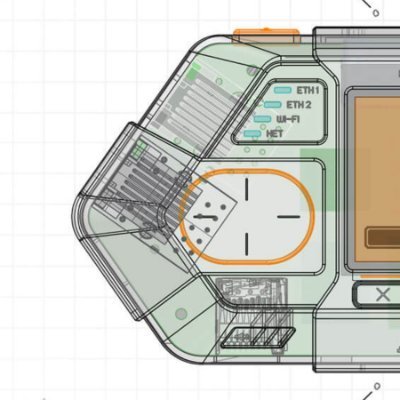
📡 LoRa (MeshCore) module for Flipper One — an off-grid radio messenger The video shows Flipper One sending a public message that's relayed by repeater nodes, reaching users over a long distance. The MeshCore network is built on LoRa technology (868 MHz in the UK) and uses repeaters maintained...

277,726 просмотров • 7 дней назад •via X (Twitter)

Комментарии: 31

Фото профиля punished car leak
punished car leak7 дней назад

шкода тільки що ви підори русняві, рулить якими хохол зрадник шнирь фсб

Фото профиля Alex
Alex7 дней назад

I made a similar module for flipper zero: Happy to collaborate on this initiative!

Фото профиля K
K7 дней назад

When will it be available?

Фото профиля Murdaruss
Murdaruss7 дней назад

Is this the future of group chats 🤔

Фото профиля ESPKVM
ESPKVM7 дней назад

I'm tired of waiting. Release it! ;)

Фото профиля _AG
_AG7 дней назад

is it available for purchase?

Фото профиля Gamer 𝕃𝕏𝕏𝕏𝕍𝕀
Gamer 𝕃𝕏𝕏𝕏𝕍𝕀7 дней назад

Could be dangerous to do. What if it’s a creepy old man or woman luring people into their van? There should be a passkey for messages to go out.

Фото профиля Thionne
Thionne7 дней назад

Videos like this...makes my wallet goes brrrrrrrr

Фото профиля Waren Gonzaga 🐜
Waren Gonzaga 🐜7 дней назад

Nice! I love it.

Фото профиля Oh Wait
Oh Wait7 дней назад

When the internet goes down, the garage invents a backup.

Фото профиля PILOT / SAFETY GEAR
PILOT / SAFETY GEAR7 дней назад

Do you think it has enough range and connection for use in emergency services or rural areas?

Фото профиля Emanuel Perez
Emanuel Perez7 дней назад

cc: @Darbybailey - may be interested

Фото профиля Jazzbox
Jazzbox7 дней назад

some are taking tech into very interisting directions, and some are applying it in break-out ways - it's inspiring ✨️

Фото профиля V4ytel historii
V4ytel historii7 дней назад

Руснява підарасня

Фото профиля Murdaruss
Murdaruss7 дней назад

Medium encryption group chats **

Фото профиля notime.base.eth
notime.base.eth7 дней назад

Want

Фото профиля mikemaz
mikemaz7 дней назад

We need those

Фото профиля d!giD0F
d!giD0F7 дней назад

Wow nice! A cooler sci-fi walkie talkie !

Фото профиля ➡️ NEEDcreations Midwest BTC Summit
➡️ NEEDcreations Midwest BTC Summit7 дней назад

@polycarpweb5

Фото профиля Shoel
Shoel7 дней назад

Great tech

Фото профиля Jamrick
Jamrick7 дней назад

Purchase here 🛒

Фото профиля JamesBlonde
JamesBlonde7 дней назад

too bad LoRa doesn't work for shit

Фото профиля d!giD0F
d!giD0F7 дней назад

Will this also have Spidey Sense for inside the Backrooms?

Фото профиля Elivagar
Elivagar7 дней назад

Trying to fit in, but a red parachute dragging behind spoils the whole game

Фото профиля Greg Pazo
Greg Pazo7 дней назад

Bitcoin transactions?

Фото профиля Diesel_Pan
Diesel_Pan7 дней назад

Back in the day, when the KGB wanted to plant a bug, they did it for free, now you have to pay for it. Capitalism!

Фото профиля Algambra67
Algambra677 дней назад

Офигеть котлета

Фото профиля m
m7 дней назад

Pointless, but okay 🙃

Фото профиля bluelotus99.base.eth 🍀💫
bluelotus99.base.eth 🍀💫7 дней назад

where and when is it available to get my hands on?

Фото профиля ☩ 𝔰𝔦𝔢𝔡𝔢𝔪 𝔟𝔶ł𒀭 ☩
☩ 𝔰𝔦𝔢𝔡𝔢𝔪 𝔟𝔶ł𒀭 ☩7 дней назад

nice ai slop

Фото профиля HouseOfUkiro
HouseOfUkiro7 дней назад

Coupled with @ANNE_p2p …

Похожие видео

Why you never touch AM radio towers. The invention of the AM radio tower revolutionized the way radio signals were transmitted and received, leading to a significant advancement in the field of broadcasting. The story of the AM radio tower begins in the late 19th century when scientists and inventors were exploring ways to transmit wireless signals over long distances. During this time, Guglielmo Marconi, an Italian inventor and electrical engineer, was conducting experiments with radio waves and had successfully achieved long-distance wireless communication using simple antennas. However, the range and quality of the signals were limited, and Marconi realized the need for more efficient methods of transmission. In 1906, a significant breakthrough occurred when Reginald Fessenden, a Canadian-born inventor, successfully transmitted the first audio program using continuous wave (CW) radio technology. This accomplishment set the stage for further advancements in radio broadcasting. As the demand for radio broadcasting grew, engineers began to realize the need for a more powerful and efficient means of transmitting signals over greater distances. The key challenge was to overcome the limitations of the existing antenna systems and achieve higher transmission power. Enter the invention of the AM radio tower. The concept behind the AM radio tower was to utilize tall structures to support and enhance the transmission of radio signals. The tower would act as an antenna, capable of radiating electromagnetic waves efficiently and effectively. One of the pioneers in the development of AM radio towers was Major Edwin Armstrong, an American electrical engineer and inventor. Armstrong made significant contributions to radio technology and is often credited with inventing the modern system of amplitude modulation (AM) for radio transmission. Armstrong recognized that by placing a radio transmitter high above the ground, the signal could be transmitted with increased power and range. He designed and constructed the first practical AM radio tower, known as the "Alexanderson Alternator," which was erected in 1908. The Alexanderson Alternator tower was an impressive structure, consisting of a tall steel tower with multiple antennas mounted on it. The tower's height allowed for better signal propagation and reduced interference, resulting in clearer and more reliable radio broadcasts. This breakthrough laid the foundation for the future development of radio broadcasting. Over time, advancements in tower design and engineering further improved the efficiency and range of radio transmission. Tall towers were erected in strategic locations around the world, enabling the establishment of widespread broadcasting networks. The AM radio tower not only enabled the transmission of music, news, and entertainment to millions of listeners but also played a crucial role in shaping the development of the broadcasting industry. It paved the way for the introduction of FM radio, television broadcasting, and other wireless communication technologies that we rely on today. In conclusion, the invention of the AM radio tower revolutionized the field of radio broadcasting by providing a more efficient and powerful means of transmitting signals over long distances. It was a key milestone in the evolution of wireless communication and laid the foundation for the modern broadcasting systems we enjoy today.

Historic Vids

4,285,454 просмотров • 3 лет назад

Hundreds of destroyed Shaheds in HD quality! Announcing the Hornet Vision digital video system for STING interceptors—a game-changer in drone warfare Hornet Vision is an all-in-one digital suite and unique 2-in-1 ground control station for digital and analog STINGs Thank you to supporters for helping make this revolutionary technology possible! Please keep supporting: The station’s antenna module is equipped with a 360-degree circular video antenna, which eliminates the need for troops to re-aim the antenna to follow the interceptor The Hornet Vision control station records video and includes a broadcasting function The Hornet Vision digital unit is equipped with night thermal imaging and daytime cameras and transmits HD video. It can be installed on any drone and costs less than Chinese counterparts Hornet Vision is: 👉A mass-produced technology with hundreds of confirmed successful uses 👉Detection of aerial targets at distances up to 2 km 👉Independent communications channels, with the ability to switch in flight 👉360-degree coverage for video and radio signals 👉Operating range: 30+ km 👉Autonomous operating time of the ground station: 24 hours 👉Developed by Ukrainian engineers Using STING drones equipped with Hornet Vision, Ukrainian forces have destroyed hundreds of Shaheds and Gerbera drones Coming soon to all Wild Hornets. More to come!

🇺🇦Ukraine Resists Russian Genocide... Yeah Again

46,784 просмотров • 8 месяцев назад

Part of our quest with Giiift is to make the internet fun again and actually make it easy and engaging to send digital assets between people. One of my recent brainwaves on AI was how it's now possible to create and build one to one experiences on the internet rather than the one to many model that we have had to use purely from a time and cost perspective with development, this is only feasible within the last six months and it's completely open territory. If you think of a fortnite skin for example, that's a one to many experience, where one skin is owned and purchased by many people, makes sense of course as creating individual experiences solely meant for one or a few people would have been incredibly costly for businesses, but that's simply not the case anymore. That's the thesis with Giiift, it firstly packages what onchain tech does best, provide the rails for sending assets from A to B in the most efficient manner possible, but secondly and most importantly it puts the end user experience first in a way that's very reminicent of the old school internet and I think this allows for an unprecedented level of virability in growing the userbase. All a trojan horse for getting onchain wallets and assets into the hands of everyday people around the world, powered by Prism and perfectly suits as retail assets come onchain through Agent to Agent commerce (more on this soon). Here's the progress we're making on the Box Lab, endless customizability! Oh and the music is:

Colby

18,008 просмотров • 3 месяцев назад

As I promised yesterday, I'll briefly explain LoRA training and share a workflow I made so you can do it quickly. First, let me answer a very common question: 'Why train LoRAs when we have such advanced models?' Even though we have incredibly advanced models now (like NBP), we still can't always get them to do specific things we want. Simplest example: the spritesheet LoRA I made the other day. I generated 1000 images with Nano Banana and only 100 were what I wanted. The LoRA I trained using those 100 images gives me nearly 100% consistent results. Second point is cost and speed. With LoRA, we can cut costs by 4-5x. And while doing that, we're generating 4-5x faster. How many images do you need for a good LoRA? This depends on your LoRA's complexity. For example, when I training the spritesheet LoRA, even though I used 100 images, I didn't include buildings in the training data, so this LoRA doesn't work for buildings. So think about your LoRA's use cases and add examples for as many use cases as possible to improve quality. What are paired images and how to train LoRAs for image-editing? When training LoRAs for image editing on fal, we call each edit example paired images - one with _start suffix, one with _end suffix. For example, if you're training a background remove LoRA, the unedited original photo will be your '_start' image. The image with background removed will be the '_end' image. Simply put: images we want to edit or use as reference get _start, target images we want to achieve get '_end'. Important: save both images with the same name. Like image332_start.jpg and image332_end.jpg. This way the system knows which images pair together. What about training LoRAs for models with multiple image inputs? Same logic. We still use _start and _end suffixes, but with one difference. Since there are multiple input images, we can number them: _start, _start1, _start2. Example: start images, 1st image = Woman portrait (image35_start.jpg) 2nd image = Glasses photo (image35_start1.jpg) 3rd image = Hat photo (image35_start2.jpg) Output image = portrait of woman wearing glasses and hat (image35_end.jpg) Can we do more detailed captioning? Yes. Similarly, you can improve training quality by creating a txt file for each set with the caption inside. Example: create image35.txt and write: 'Recreate the image by putting the glasses from the second image and the hat from the third image on the woman in the first image.' What are Steps? How many should I use? What's Learning Rate? Steps determines how many times the model sees and processes your training data (your images). Each step, the model learns a bit more. But as steps increase, so does the risk of overfitting. So there's no real default. But for a simpler LoRA with 20 paired images, 1000 steps is ideal. Here's a metaphor for the Steps and Learning Rate relationship: Imagine you have a balloon. Our goal is to inflate it to the optimal size. Steps = How many times we blow into the balloon Learning rate = How hard we blow each time If we blow too softly, we need to blow many more times. If we blow too hard, we risk popping it quickly and can't reach optimal size. Of course training won't explode, but it won't work as intended because it wasn't trained optimally. Training's done, now what? Once training's complete, you'll have a safetensors file. Every model you train on fal has a LoRA inference endpoint. In that inference, add your safetensors file link to the LoRA url input, and you can use your LoRA. Thanks for the read! The workflow in the video: If I forgot anything, let me know in the replies.

ilker

15,192 просмотров • 8 месяцев назад

‼️ Russia’s “"Doomsday Radio Station" is broadcasting Shaman and Swan Lake. Either a hack or a scary message... The song "I am Russian" by Shaman began playing on Doomsday’s airwaves, followed by "Swan Lake" and the USSR anthem. This is probably a hack. However, users have suggested that this is a signal "to those who need it" for more strikes with "Oreshnik" (or even something stronger). "Buzzer" began broadcasting back in the Soviet era, in the 1970s. It is believed that its signal came from the Moscow, Pskov, and Leningrad regions at different times. The purpose of UVB-76 is still unknown, but it is often called one of the elements of the "Perimeter" system - a complex for the automated launch of nuclear missiles in the event of war. According to one version, if the Buzzer's signal is interrupted, Perimeter will launch a retaliatory nuclear strike on the alleged enemy (that's why it is called the "Doomsday Radio Station"). According to other assumptions, the radio station broadcasts secret messages, including to confirm the readiness of operators at receiving stations. There is, however, another version - supposedly this is an old communication method used by Russian intelligence. They say that in "peacetime" the radio station makes normal noise, but when sounds break through, these are encrypted messages for Russian spies abroad. The last time UVB-76 was "broken into" was at the end of January 2022. Then unknown persons broadcast the soundtrack from the game "Touhou Project" and the track "Bad Apple" for a couple of hours. And you know what happened then...” - Baza Telegram Channel

Jason Jay Smart

35,930 просмотров • 1 год назад