Loading video...

Video Failed to Load

Go Home

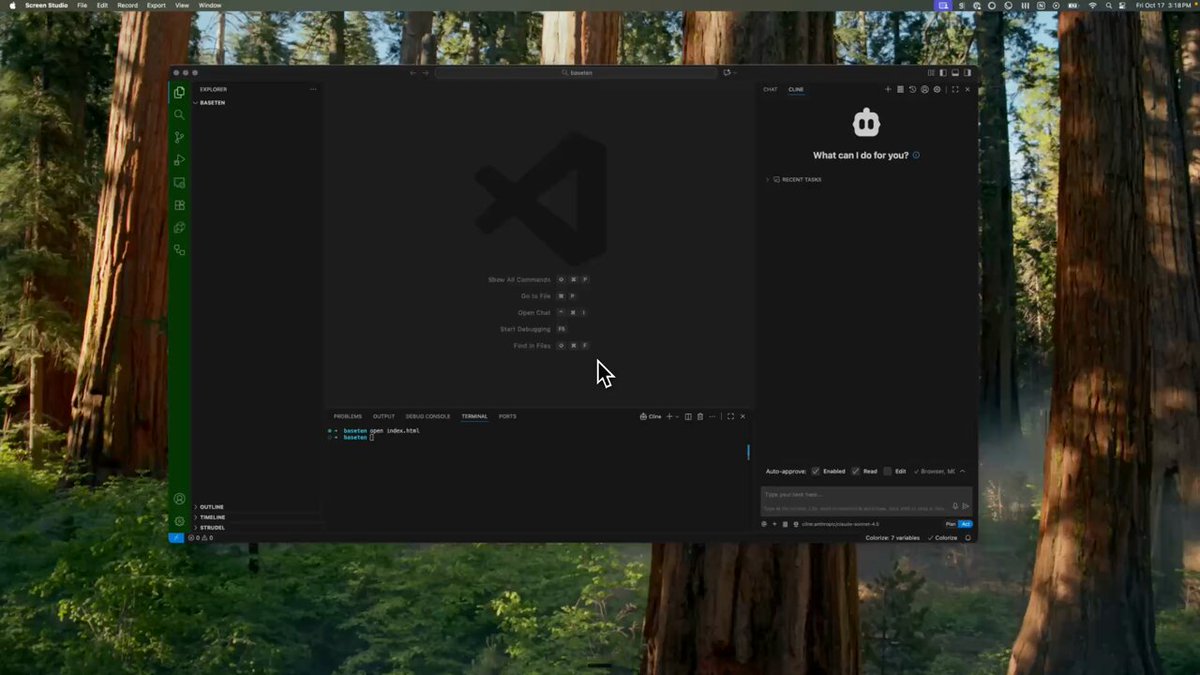
. M2 uses "interleaved thinking" - instead of one thinking block at the start, you get multiple thinking blocks throughout a single request. The model re-evaluates its approach as it goes, adapting based on tool outputs and new information. You'll see these thinking blocks appear in the UI showing...

53,426 views • 9 months ago •via X (Twitter)

0 Comments

No comments available

Comments from the original post will appear here

Related Videos

Jensen Huang doesn’t use AI to think less. He uses it to think past his own limits. Huang: “90% of my instructions are actually conflated with questions.” The man running a five trillion dollar company doesn’t give AI commands. He interrogates it. Huang: “I take the answer from one AI, give it to the other AI, ask them to critique itself.” Same question. Multiple models. Pit them against each other. Keep only what survives. Not because the machine can’t be trusted. Because challenging it is where the sharpest thinking happens. Huang: “The process of critiquing, criticizing the answers, applying your critical thinking, enhances cognitive skills.” AI doesn’t replace your thinking. It demands more of it than you’ve ever given. Every question takes reasoning. Every answer takes scrutiny. The machine isn’t thinking for you. It’s pulling thinking out of you that didn’t exist before you sat down. Huang: “In order to formulate good questions, you have to be thinking, you have to be analytical, you have to be reasoning yourself.” AI is not the shortcut everyone thinks it is. It is the most powerful cognitive amplifier ever built. It sharpens the engaged. It leaves the passive exactly where they started. Same tool. Same access. The only variable is what you bring to it. The world is debating whether AI will replace human thinking. Wrong conversation. The real question is what happens when a tool built to think for you becomes the thing that forces you to think beyond yourself. That’s not a threat to humanity. That’s the entire point.

Dustin

19,849 views • 1 month ago

Ordinary thinking is not yet spiritual. •Everyday thinking is automatic, associative, reactive •True thinking is consciously directed, self-sustained Most people don’t actually think —they are thought by their habits, culture, and impulses. ⸻ Thinking can become a spiritual organ: •It is the most controllable part of the soul •Unlike emotions or instincts, you can train it directly When purified, thinking becomes: •Clear •Quiet •Intentional At that point, it stops being personal noise and becomes a perceptive faculty—almost like a sense organ for truth. ⸻ Discipline is the doorway. —Knowledge of the Higher Worlds and Its Attainment, exercises: •Hold a single, simple thought (e.g., a pin, a seed) •Keep attention on it without drifting •Return to it again and again, without irritation This builds what he calls inner steadiness. ⸻ 4. Why thinking—not feelings—comes first This is where Dr Steiner differs from modern “spirituality”: •Feelings are unstable and subjective •Thinking can become exact, lawful, and reliable Only after thinking is trained does he say you can trust: •Imagination •Intuition •Spiritual perception Otherwise, you risk illusion. ⸻ 5. The turning point At a certain stage: •Thinking becomes silent but awake •You are no longer chasing thoughts—you are holding awareness itself That’s where, for Dr Steiner, spirituality actually begins—not in beliefs, not in vibes, but in mastered attention.

Zherka

14,134 views • 4 months ago