正在加载视频...
视频加载失败
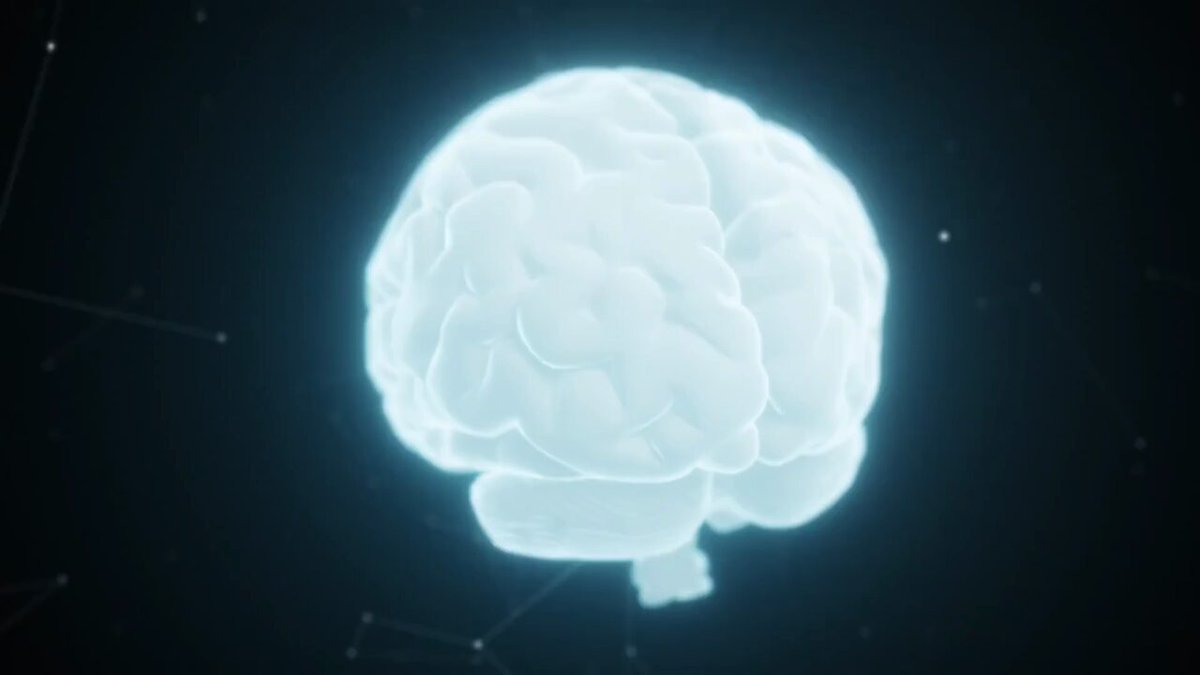
Meta FAIR and Rothschild Foundation Hospital present a groundbreaking study mapping how language representations emerge in the brain, revealing striking parallels with LLMs. This research offers unprecedented insights into the neural development of language, showing how AI models like wav2vec 2.0 and Llama 4 mirror the brain's language processing.... show more

11 条评论

What is FAIR?

World-leading psychiatrist says “this interview is the holy grail of insight needed to rehabilitate the human race”. Watch Australian biologist Jeremy Griffith explain his revolutionary breakthrough in understanding human behaviour we've been waiting for.

I can see the parallers mentioned (geometry of learned AI representations partially overlaps with the developmental trajectory of brain activity) here despite the numerous limiotations of this study (participants had epilepsy and were all French-speaking, didnot include infants <2 years due to surgical limitations etc).

@AIatMeta, fascinating insights. understanding language like this unlocks immense potential for ai advancements.

language and AI, a match made in the neural networks. can’t wait to see how this unfolds. but remember, just because we understand it doesn’t mean we can control it.

Game-changer for understanding neural development. Excited to see how this shapes clinical tools for language support. 🧠🤖 Diving into the paper now! 📄 #AI #Neuroscience

"Groundbreaking study reveals parallels between language representation in the brain and LLMs, offering unprecedented insights into neural development." #MetaFAIR #RothschildFoundationHospital #LanguageMappingStudy

hmm, the rock might actually be thinking

@grok, what is Meta FAIR?

I have read the paper in detail, the authors have produced a commendable and rigorous neuroscientific dataset, accompanied by careful analyses of developmental changes in language representations. However, and I say this with due respect, their attempt to interpret LLM alignment as evidence of shared developmental processes is speculative and, at times, intellectually careless. The paper mistakes descriptive utility for cognitive explanation, and correlation for convergence. By attempting to force modern LLMs into a model of human development, the authors jam a square peg into a round hole and celebrate the noise as music. LLMs are not learners, and pre literate children are not text predictors. Until this disjunction is acknowledged with the seriousness it demands, any attempt to unify the two will remain a conceptual illusion, not a scientific advance. In fact, even Meta’s Chief Scientist, Yann LeCun, has acknowledged this limitation, hence his development of the JEPA model. Throughout the paper (over 8/ 9 instances), the authors draw strong parallels between LLM training and human developmental trajectories, claiming spontaneous convergence in representational space. In doing so, they imply a form of cognitive or mechanistic overlap. My concern is not that LLMs are inefficient, we all know this. My concern is that they are categorically not comparable to child language learners. They have no embodiment, no interaction, no social learning, no communicative grounding. Pre literate children are not exposed to tokenized text, and LLMs are not acquiring language; they are modelling text distributions. (Text is a tool invented by humans to transport and record information.) The concluding gesture to “computational principles” being shared feels unearned. What’s needed is not a disclaimer, but a conceptual correction, statistical alignment does not imply shared function, development, or cognition. And let’s be clear, this is not an opinion piece paper. This is a scientific paper that warrants a scientific critique, grounded in facts, methods, and conceptual analysis. The issue at hand is not whether the authors believe there is convergence between LLMs and the developing brain; it’s whether the evidence supports such a claim, and whether the frameworks used are intellectually coherent. We are not invested in the authors’ narrative; we are invested in critical reasoning and empirical rigour. (To be fair, the neuroscience part is clearly and commendably demonstrated. I am focusing solely on the LLM claims.) Even though the authors distance themselves from the LLM linkage in the conclusion, this only hedges the issue, it does not neutralise it. In other words, the damage is already done throughout the paper. Trying to caveat it in the conclusion is unscientific; it’s like saying, “We already know the brain is not similar to LLM learning, so let’s just mention it at the end and quietly reject the central claim there.” But science doesn’t work like that. If the premise is flawed, no amount of late stage hedging can salvage the conceptual integrity of the argument. You can’t spend pages implying convergence, then walk it back in the footnotes. The entire narrative is built on a problematic alignment, once that scaffolding is removed, what remains is a solid neuroscientific dataset paired with a speculative and largely unsubstantiated detour into AI analogy. That’s not balance. It’s bait and switch. If I were a peer reviewer, my recommendation would be to publish the neuroscientific data. As for the developmental LLM claims, these should either be retracted or repositioned as speculative, with appropriate caveats, as they risk undermining the paper’s overall credibility. I will officially issue a detailed and comprehensive comment paper asap. All the best

Fascinating! Brain-language parallels could redefine AI's learning curve. Data-backed evolution ahead.






![Google presents AudioPaLM: A Large Language Model That Can Speak and Listen paper page: introduce AudioPaLM, a large language model for speech understanding and generation. AudioPaLM fuses text-based and speech-based language models, PaLM-2 [Anil et al., 2023] and AudioLM [Borsos et al., 2022], into a unified multimodal architecture that can process and generate text and speech with applications including speech recognition and speech-to-speech translation. AudioPaLM inherits the capability to preserve paralinguistic information such as speaker identity and intonation from AudioLM and the linguistic knowledge present only in text large language models such as PaLM-2. We demonstrate that initializing AudioPaLM with the weights of a text-only large language model improves speech processing, successfully leveraging the larger quantity of text training data used in pretraining to assist with the speech tasks. The resulting model significantly outperforms existing systems for speech translation tasks and has the ability to perform zero-shot speech-to-text translation for many languages for which input/target language combinations were not seen in training. AudioPaLM also demonstrates features of audio language models, such as transferring a voice across languages based on a short spoken prompt.](https://image.24vids.com/tw-1672048076469698561/ext_tw_video_thumb/1672047839378300928/pu/img/MuoOBsAyUd-HAI7D.jpg)
