正在加载视频...

视频加载失败

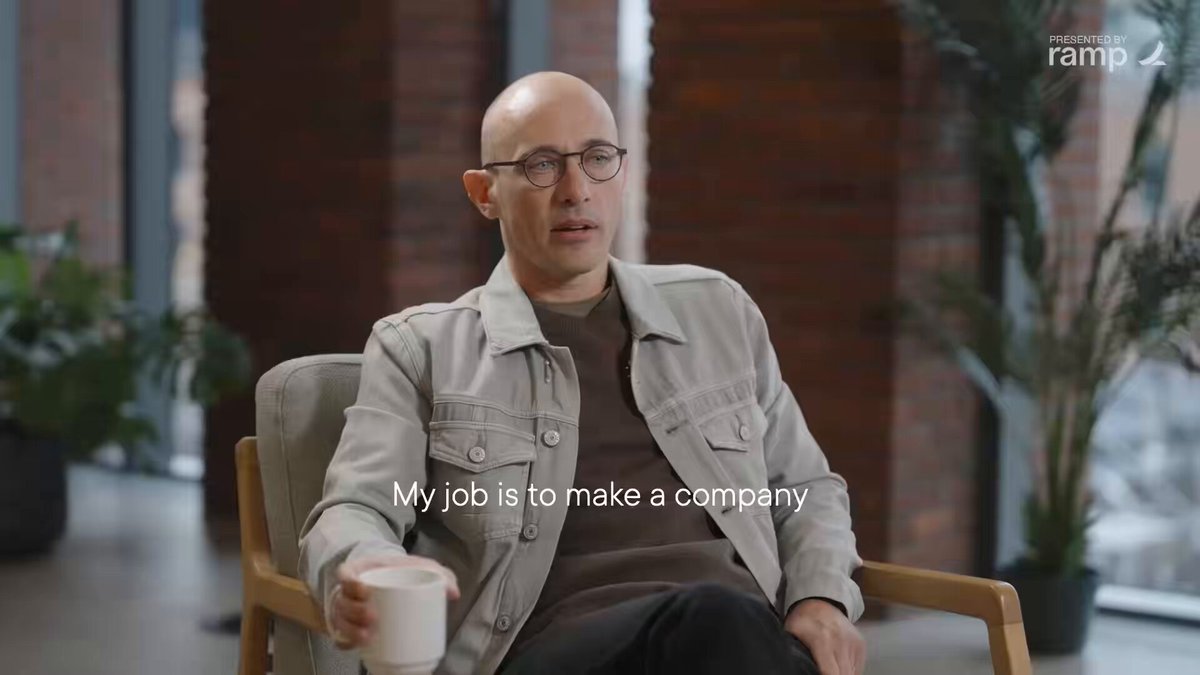
Most students chasing quant jobs are optimizing for the wrong thing: Agustin Lebron (Agustin Lebron), ex-Jane Street trader and author of The Laws of Trading, explains: "The number of seats at good shops doing interesting work is actually relatively small. Probably only a couple thousand new hires per year...

64,816 次观看 • 4 个月前 •via X (Twitter)

0 条评论

暂无评论

原始帖子的评论将显示在这里

相关视频

EDGE REVEALED: How an Ex-Jane Street Trader Finds Edge in Markets & Life Agustin Lebron Agustin Lebron (former Jane Street trader, author of The Laws of Trading, now working at an AI startup applying reinforcement learning to market execution) breaks down what edge really means — and how to find yours in trading, careers & life. “Edge is something that either you know or you can do that the marginal participant in that market either doesn’t or can’t.” We cover: - What edge actually means & how Jane Street builds organizational edge (their worst skill is still "pretty decent") - Why you can never truly know if you have edge — the statistical vs intuitive approaches - The consolidation of quant trading: from dozens of options firms to a handful of giants - The gamblification of everything — retail trading, sports betting & prediction markets fueling quant profits - What it was like having Sam Bankman-Fried (SBF) as a Jane Street intern: "Day one, I'm going to ask all the questions" - How to apply edge thinking to your own career: find what you're differentially good at - Raising teenagers in the AI age: why the traditional path still works, but other paths are opening up 00:00 Introduction 00:44 What is edge in financial markets 01:43 Jane Street and organizational structures for quant trading 03:46 Identifying and validating edge in trading 06:22 Navigating extreme market events and volatility 09:37 Future of quant trading and consolidation 12:15 Why quant firm profits have increased 14:42 The gamblization of everything 15:55 Who should pursue a career in quant trading 18:19 Applying the concept of edge to career and life decisions 20:56 Advice for interns to excel in quant trading 23:44 Predicting long-term success in trading interns 25:08 Sam Bankman-Fried as an intern and FTX reflections 28:15 Reasons people leave Jane Street and what they do next 31:19 Advice for young people in a changing world 36:09 Navigating job insecurity in tech-driven roles 38:55 Where to live if you want to be successful 40:28 Raising kids for a rapidly changing future 42:55 Questions young people should ask themselves 44:45 Outro and book recommendation

Ethan Kho

214,514 次观看 • 6 个月前

Rick Rubin tells Andrew Huberman how he deals with creative or writer’s block. He treats his work like a diary entry (and doesn’t worry about internal or external judgment): ➡️ “What's the cause of the block? The block is usually something that's either personal ("I'm not good enough") or it can be a confidence issue ("I don't have anything to say") or it could be...thinking about someone else ("nobody's going to like what I make"). Do you know what I'm saying? So, it's either fear of self-judgment or external judgment. If you're making something with a freedom of "this is something I'm making for myself for now", that is all [you have to do]. It is a diary entry. Everything I make is a diary entry. The beauty of a diary entry is that I can write my diary entry and you can't tell me that my diary entry wasn't good enough. Or that [the diary entry] is not what I experienced. Of course it's what I experienced: I'm writing a personal diary for myself and no one else can judge if it is my experience of my life. Everything we make can be that: a personal reflection of who we are in that moment of time. It doesn't have to be the greatest you could ever do. It doesn't have to have any expectation that it's going to change the world. It doesn't have to sell a certain number of copies for any reason. It doesn't have any of those things at all. It is "I'm making this thing for me and I want to do it to the best of my ability and to where I feel good about it". [The work] is honest of where I'm at and if you're living in this world of just being honest to where you're at, there's nothing blocking you. There are no blocks. The blocks are all based on dealing with a different force or a different perception that is made up.” ⬅️

Trung Phan

1,619,969 次观看 • 2 年前

Marc Andreessen explains the 3 Necessities for Start-up Success: "The general criteria for a successful high-tech startup, in my view, you see different sort of rules of thumb from different people. But the three big things you always come back to are, is there a big market? And by the way, that comes in two parts. Is there a big existing market that you think you can go after and sort of displace incumbents or do you believe there will be a new market that will be big? So big market. Is there a fundamental technology or economic change that causes you to basically justify having a new company? And that's really important. And the way I always think about that is, is there a 10X change happening in the technology landscape? Is something 10X faster or 10X cheaper or 10X better? And if it's not 10X, we as both VCs and entrepreneurs, we really have to ask ourselves like, is it really worth doing? Because it's really hard. I mean, it's really hard to start new companies. new companies generally shouldn't exist. Existing companies are usually pretty good at what they do. And so for a new company to exist, it not only has to like come in and go into business and bring a product to market, but it has to bring a product to market that's so much better than what already exists that it punches through the sort of status quo. And most customers in most markets are pretty happy buying from the current suppliers and so there has to be a real kind of edge on the thing and we look for that in either a technology change, usually a technology change or an economic change. which are often the same thing. And then the third is team. Is the team outstanding? And if you think about this as an entrepreneur, it becomes a question of the founding team. Some companies are solo founders and they can work, but generally most of us, like myself, we're human beings, we're mortal. You want to have a founding team of complementary skill sets. And so you want to have at least one super strong technologist, quite possibly more than one. Some of the best startups are actually more than one founding technologist and then it often helps to have somebody who's like a product or who's a market or sales person or has a sort of really good understanding of business on the team, certainly helps a lot. And so we sort of look at market, product, and team. And the reality is you need all three. I would say, interestingly, if you're going to compromise as an investor, if we're going to compromise on one of those, it would actually be the product. And the reason I say that is because a great market is a lot easier to make up for with iterative product execution than a poor market. Because the problem with a poor market, a small market, is even if you do a great job on the product, there just aren't that many customers. It's hard to ever get big."

Founder Mode

39,005 次观看 • 7 个月前

Pedro Franceschi explains why Brex doesn’t hire “people managers” anymore One day Brex founder Pedro Franceschi made a list of all of the leaders at the company who worked and didn’t work. “I was trying to find what was predictive of leadership success,” he explains. “A lot of things are important, but they’re not predictive. For example, being customer obsessed is important, but there are people who were customer obsessed who were on both sides of the list.” The only trait that Pedro found to be predictive of leadership success at Brex was what he calls “the ability to operate at all levels” — someone who even at the highest levels of leadership has a deep understanding of the details of execution at the individual contributor level. What this means in practice is a CTO who is actually a great engineer. A Head of Design who can actually design amazing products. And a great Head of Sales who can actually go and close deals themselves if they need to. “It doesn’t mean that they’re going to do that all the time,” Pedro explains, “But it means that they know the nuances of what makes someone great at the craft… If you don’t know how to identify greatness because you don’t know what the bar is yourself, there’s no way to build a team that’s great.” He continues: “A lot of companies develop this role over time that people call a ‘people manager.’ They’re Director of Engineering but they can’t really code because they manage people now… And that concept is just something we eliminated. At the end of the day, there’s no way to manage people divorced from the work — you’re managing the work itself.” Pedro uses Jony Ive as an example: “Jony Ive wasn’t managing the team that designed the iPhone. He was designing the iPhone with a group of people. It’s simple, but it is a very profound change in how you orient your relationship with the work and what you put out there in the world. And I think you have to select for people who appreciate the actual output of the work and the work itself, not the process of doing the work… What matters is: Do you know what great looks like? Can you do it yourself? And can you bring people along with a really high bar for doing it at all level.” Video source: Kleiner Perkins (2025)

Startup Archive

45,584 次观看 • 1 年前

Should Christian Nationalism and Catholic Integralism be taken seriously? Ben Sasse answers. “‘Should they be taken seriously?’ I mean, ultimately I think no — but I want to be humble about how and why we get there.” “Can people who are skeptical of a lot of Enlightenment assumptions be reasonable in making those cases? Of course. I'm pretty sympathetic to a lot of what the Enlightenment offered us in response to many of the things that had just come before. But that doesn't mean that the Enlightenment is at all a foretaste of heaven.” “I think there is a temptation right now to have an over-realized eschatology where people want to find a city that has foundations. ‘Right now, dang it, I'm ready to build it and I want it to be better and I want it now. And I want to smash the people who are in the way of it’ is tonally the way a lot of these folks talk.” “But philosophically, having a debate is one thing and claiming that they're doing practical politics is quite another. So I think it is important, without us, you know, trying to answer a lot of these questions, to at least acknowledge there are Catholic claims about integralism that a lot of Protestants seem to pine for and lust after without working through — what would that really mean?” “I just look at a lot of the debates of the last two months about women's suffrage and I just kind of want to shake my head and say, ‘Man, this is a weirdo online phenomenon.’ There is no chance on earth that any of these folks who are advancing some sub-varieties of Christian nationalism are actually thinking there's math by which they're going to end women's suffrage. And yet they talk like it. Because online, it seems really provocative to say things like that. And I don't really know what it's worth to linger on some of these silly online debates.” Watch: Listen:

Sola Media

38,681 次观看 • 1 个月前

Palmer Luckey explains the curse of being a billionaire "People also misunderstand. They think that billionaires work to make more money.....for most billionaires, the sickness is not gathering dollars..." Interviewer: "21 and you're a billionaire." Palmer Luckey: "That's right." Interviewer: "Why didn't you just go, 'Okay, that's me done. I've done all the hard work. I'm just going to enjoy my life now.'" Palmer Luckey: "It is a common question, and what I've observed with myself and everyone else I know who's made a billion dollars is that the type of person who makes a billion dollars is not the kind of guy who can imagine doing that. It's just people say, 'Oh, you know, if I had a billion, I'd go and I'd drink mai tais on the beach.' My point is, that's the attitude that won't get you to a billion dollars. It's very rare that the two things come together. And so, in a way, it's a little bit of a curse. And I'm not trying to make it sound like I have a terrible life. I love my life. But the curse of it is that anyone who can get to a billion probably has something wrong with their brain where no matter how much they get, they'll never stop working." "People also misunderstand. They think that billionaires work to make more money. Like, 'Oh, they're just trying to make more and more. They just want money.' I can tell you, for most billionaires, the sickness is not gathering dollars. It's working and doing things. If they didn't have any money, they would probably still be doing the same thing. You know, but money is a good scoreboard to keep track of who's doing more. But I couldn't imagine not working. My wife would be the first to tell you I'm a bit of a workaholic, and it's because I love what I'm doing. Why would I go sit on a beach when I could be working at Anduril? Why would I go get a massage when I can do a 12-hour shift?"

Tony Jacob | FindaClip.com

988,136 次观看 • 10 天前