Loading video...

Video Failed to Load

Go Home

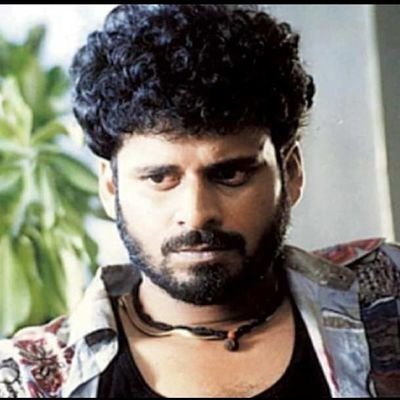
MP Dr Nishikant Dubey explains Jan-Nalayak in 'precise' words. "Rahul Ghandy is such LoP that, if I were to use Hindi word, it would be very cheap word in Bihari terms. He's MAJOR FIGURE of Visheshra dance famous in Bihar" Ps: Visheshra dance means Vulgar लौंडा डांस😂😂 This comes...

30,455 views • 5 months ago •via X (Twitter)

0 Comments

No comments available

Comments from the original post will appear here

Related Videos

This is gonna be so long omg but when it comes to translating in Korean, it’s very very important to take in consideration of 1) Culture 2) Seniority, the Closeness & Intimacy of the people involved in a conversation. Because this gives an entire different vibe for the context. And we have to keep in mind that there are Korean phrases and expressions that simply don’t have just One way, exact words that can be translated in English. Translators can find ways to convey the meaning, but it requires more explanation and understanding of the context while conveying it, and not relying on assumptions. How about “인상 덜 쓰기” or “인상 쓰다“ then? Here, a direct translation can simply be 인상 덜 쓰기 - be less grumpy/ frown less, etc 인상 쓰다 - being grumpy, frown, make a face, etc Here, I include an educational video of an English speaker talking with a Korean speaker where they’re discussing a similar expression, “인상 좀 쓰지마!“ (which in word by word in English, it sounds something like “Don’t frown/ Don’t make a face”) Now, as an English speaker, that sounds a bit harsh doesn’t it? That’s because such expression doesn’t exist in just One interpretation in English, so if we only read it as it is, without considering the context and the speakers’ closeness, we’re bound to misunderstand the context. Quoting some parts of this video, 💚: “Now, Tyler’s expression for today is ‘인상 좀 쓰지마!’. Have you ever heard of this expression? 🩶: I’ve heard something like that before 💚: Then doesn’t this mean there’s a same expression in English too right? 🩶: Oh! I’ve only heard it in Korea 💚: Ah really? The guy then explained that if you say something like this in english, it can be rude. so it’s better not to say it in English-speaking countries. He gave examples like “If you do that, you’ll get wrinkles”, and the other guy added something like “If you make an ugly face, you’ll have wrinkles” and said that “If someone (an English speaker) hears this they would think I must be crazy” Here, they’re talking about the cultural differences. A phrase like this, when expressed directly, without considering people’s closeness, and being translated exactly like that, would sound so negative to English speakers. *also notice how this phrase is being worded in various ways??? ‘HOW’ it can sound to someone, really depends on their culture, their closeness with the person, and context* So later on, he gave a few more examples like, “stop making such a long face”, and “stop wrinkling your forehead”. And concluded that: 💚: Well in that case, the phrase “인상 좀 쓰지마” is basically a phrase that doesn’t exist in English. 🩶: It’s an expression that we don’t use. It’s not that it doesn’t exist. (This part, he’s explaining that there’s no such a thing as word by word to explain this phrase in English, bcs we English speakers use different wordings that is more suitable for a situation’s nuances.) Then again, we have to consider speakers’ closeness as well because in Korea, it’s a huge thing. If you don’t understand how this works, you won’t understand the nuances of a conversation. You’re bound to misunderstand. If you refuse to understand it then, I don’t think you want to respect their culture. Because again, this is a huge thing.

✰ 𝐚𝐥𝐢𝐬𝐚 ✰

12,631 views • 7 months ago

Belly dancing history crosses many cultural boundaries, getting its start in Middle East and Africa, and moving on to evolve in western cultures as both a form of cultural dance and exotic entertainment. In 21st Century, genre has gained considerable popularity all around the world. Belly dance, an exotic form of dance that has a rich history that dates back over 6000 years. Some people consider ‘Oriental dance’ to be a dance of seduction, whilst others believe that belly dance originated as fertility ritual. Throughout Middle Eastern history, belly dance has been performed at special celebrations and occasions like weddings, birth announcements, and festivals. All over the world, belly dancing courses are taught to teach freedom of movement and to empower women to love their bodies and to have more confidence. Term "belly dance" a westernized name that originally referred to traditional Middle Eastern dancing. Earliest forms of belly dance were Egyptian ghawazi dance during 19th Century and Raqs Sharqi, an Arabic dance of 20th Century. Despite Egypt's location in Africa and contributions from other nations such as France, Turkey and United States, term belly dance is usually used today to include all traditional dances of Middle Eastern region, including those not geographically situated there. French explorers travelling in Egypt, in 18th Century CE, witnessed dancers performing an exotic dance that they decided to call ‘dance du ventre’ (dance of the stomach). In 1893 CE, promoter Sol Bloom, introduced belly dance to America, at Chicago World’s Fair. In those days, it was considered to be daring if a woman revealed so much as an ankle. Belly dance was therefore initially seen as being risqué and shocking. Interest in intriguing dance grew and quickly spread to other cities. Westernised form of belly dance grew in popularity following Hollywood film industry’s involvement in publicising dance as a form of entertainment. Egyptian dancers Tahia Carioca and Samia Gamal wore elaborate belly dance costumes in their movies and became international stars. Belly dance has been active in Turkey since 1400s, when travelling tribes known as ‘chengis’ performed on streets. Today, chengis still dance to entertain tourists and perform a style of belly dance that is authentically Turkish. In traditional Muslim society, women often gathered to perform a dance in evening. Known as Raks sharki (dance of the East), this type of belly dance helped women to ready stomach muscles for childbirth, and was also danced by young women to display their readiness for marriage. In present-day Egypt, it’s customary to hire a belly dancer to perform at a wedding, in order to bless happy couple with a fertility ritual blessing. In Egypt, belly dance performers used props like veils, canes and swords to entertain public on streets and during festivals and religious celebrations. Before 20th Century CE, public dance was not something that was tolerated by authorities, but it was accepted as part of cultural tradition. After this time, belly dancers performed at weddings, nightclubs and at other events. It was these Egyptian performers who popularised skirt and beaded bra (bedlah) that is widely accepted as being traditional belly dance costume of today. 🎥 : Helena Vlahos performing her Nine Quarters Belly Dance Act, 1979 ... #archaeohistories

Archaeo - Histories

13,395 views • 11 months ago

despite the weird question, jongseob’s answer on whether he would rather have a child with absolutely perfect qualities from birth or one born naturally as a ‘blank slate’ and just ‘normal’ is very well articulated 🙂‍↕️ 🐈‍⬛: ..if certain desirable characteristics were already universally agreed upon within society, there would likely be many objectively "perfect" people in the world. so in such a society, if i were to choose option b, and if my child who isn't born as exactly ‘perfect', were to enter said society, would that child think to themself, "am i a non-desirable being?" [..] i obviously wouldn't think in that way myself, but if one thought of it this way, then there could be a different answer to it. 🐈‍⬛: …but what i thought was, suppose if you were born as a truly exceptional person with all desirable genes and characteristics: truth be told, i don't think you'd have as many opportunities to learn new things. [..] when we put our time into studying and stuff, i think the sense of accomplishment gained from discovering, learning, understanding new things, and making them part of yourself is a very vital part of our lives in order to find such happiness as humans. so, if we don't have something like that, wouldn't there be something lacking in our lives, no matter how advantageous our genes might be? like, in terms of genetics, you might be perfect, but what i'm trying to say is that from a purely human perspective, looking at ethics and morality, i think that having some flaws is actually an essential part of being human. #종섭 #P1Harmony

🍊

158,705 views • 4 months ago

Right to Recovery Treatment evidence sessions in Scottish Parliament with Third Sector With You and The Salvation Army. What wording should replace “addiction” in the Bill to ensure people can access treatment without requiring a formal diagnosis? @GraemeCall78170 instead of answering his reply focuses on systemic access issues and the limitations of the Bill’s scope. Dr Sandesh Gulhane reminds him that the bill has narrow scope due to it not being a government bill and has to ask again about the use of the word addiction. Director of Addictions of The Salvation Armysays, "I think to give it a word or a title, it’s a really difficult thing". (Yes, its like a scene from the Ministry of Funny Walks) only none of this is funny, but deadly serious. Dr Sandesh Gulhane "Just on the point of addiction being used as a diagnosis, we heard from the Royal College of Psychiatrists, it was clear that perhaps the word addiction is not the right word to be used, and I'm sure that Douglas Ross, who is he member in charge of the bill, would be looking into that. So if we were to amend this because we need to say that you have something, not necessarily a diagnosis, but what is it that we should be saying in, in your opinion, as a way to have the right to have a treatment. Is it simply you would like to receive treatment or what exactly would you suggest?" @GraemeCall78170 "I think it for us, it's always been about access, right, so treatment is there. We recognise as an organisation we have a full clinical offer in England, not in Scotland, so we understand the importance of clinical process processes and in certain circumstances diagnosis is absolutely critical because there are other things that are going on, underlying mental health, underlying physical problems, so we completely recognise that. But the reality of the system is that people can't get access to the system, it's not about treatment. So services like ours here, all we do is we try and find ways to navigate the system to try and get people to where they need to be. But a lot of people that we engage with don't need a medical intervention, they dont. They just some mutual aid, some support, they need some practical stuff around their housing. So I think it's the disappointing thing as I read the bill as it was presented, it did feel narrow to me. I can't deny that. And I think it didn't reflect the experiences that we have as organisation." Dr Sandesh Gulhane "Being a member's bill it does need to be very narrow. It's not a government bill. If it was a government bill, that that's fair enough that this really does need to have enough scope. But my question was, what wording would you use in instead of a diagnosis of addiction? What wording would you like to see for people who do want to access treatment?" Lee Ball [Director of Addictions, Salvation Army] "For me, I think it's the person's right to want treatment. I think to give it a word or a title, it’s a really difficult thing. I don't envy your job trying to come up with a word for this because there are so many words that have so many different meanings."

FAVORUK 💜

22,503 views • 1 year ago