Loading video...

Video Failed to Load

Go Home

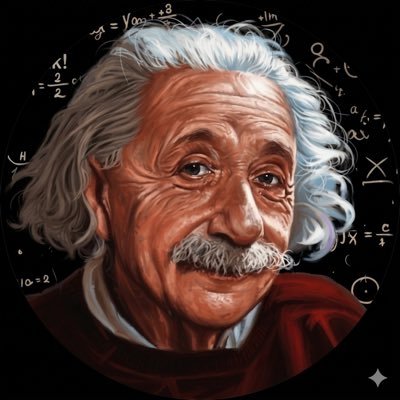
Musk says the simulation hypothesis is almost certainly true since 2016. And this is also why he renamed Twitter to X... Elon founded xAI on the mission of understanding the universe. He renamed Twitter to X in 2023, picking the only letter without an opposite. The thesis traces back...

20,844 views • 1 month ago •via X (Twitter)

0 Comments

No comments available

Comments from the original post will appear here

Related Videos

Elon Musk says Tesla swallows 1.5 GB of video into 2 KB of control. "We really are photons in, controls out. That is the vast majority of your life: vision, photons in, and then motor controls out." Musk reduced the human nervous system to a single equation. That theory runs in every Tesla on the road. "Your Tesla is taking in one and a half gigabytes a second of video and outputting two kilobytes a second of control outputs with the video at 36 hertz and the control frequency at 18." A 750,000-to-1 compression ratio. The car decides which photons matter. "You don't care about the details of the leaves on the tree on the side of the road, but you care a lot about the road signs and the traffic lights, the pedestrians, and even whether someone in another car is looking at you or not looking at you." Then Musk extended the equation past Tesla. The same architecture runs Optimus. **Photons in. Controls out.** Different number of degrees of freedom. A car has steering and acceleration. A robot arm has dozens of joints. Same compression. More fingers on the other side. Musk, who built one Tesla AI engine across two products: "AI is mostly compression and correlation of two bitstreams." The implication: a human, a Tesla, and an Optimus all run the same loop. Musk, looking back at the human equation: "This is what happens with humans." If you're new here, GeniusThinking is a gallery for the greatest minds in economics, psychology, and history. Follow along for more similar content. P.S. I made a playbook breaking down 100+ mental models used by history's greatest thinkers. 5,000+ downloads. 113 five-star reviews. Comment "MODELS" + Follow GeniusThinking and I'll send it to you. — Elon Musk ( Elon Musk ), CEO of Tesla and SpaceX, on Dwarkesh Patel's ( Dwarkesh Patel ) podcast

GeniusThinking

160,972 views • 1 month ago

Elon Musk says acquiring Twitter and electing Trump were the same bet... In two years, Musk had spent $44 billion buying Twitter and millions backing one candidate. Critics called it pure ego. Or politics. Or the end of his reputation. He spent another billion ignoring them. Musk had a different framing. "Those actions were good for civilization." Twitter. The election. America's runway. He named the framework: **the civilization hedge**. Musk, whose mission was extending consciousness off Earth, viewed Earth as the precondition. A SpaceX that built Mars colonies and a Tesla that scaled Optimus to billions of units required America to stay coherent for at least the next thirty years — a runway that depended on which laws got written, which agencies got built, and which speech got allowed. "America needs to be strong enough to last long enough to extend life to other planets." A platform with the speech he wanted. An administration with the policies he needed. A civilization with the runway to leave Earth. After Musk made the bets, his goal was unchanged — extending consciousness still required Earth functional. Musk, on the bet underneath both moves: "And to get AI and robotics to the point where we can ensure that the future is good." What's the bet you're making that nobody around you understands? P.S. I made a full playbook breaking down the timeless decision-making mental models used by history's greatest thinkers. So if you want to stop overthinking, control chaos, and navigate any decision with the clarity... Comment "models" and follow GeniusThinking so I can DM you a copy. If you're new here, follow GeniusThinking for content the greatest minds in economics, psychology, and history. — Elon Musk ( Elon Musk ), CEO of Tesla and SpaceX, on Dwarkesh Patel's ( Dwarkesh Patel ) podcast

GeniusThinking

1,126,278 views • 1 month ago

Elon Musk says AI will gut customer service — a $1 trillion industry — in months. Musk laid out the path AI takes to eat industry after industry. "If you have to integrate with the APIs of existing corporations — many of which don't even have an API, so you've got to make one, and you've got to wade through legacy software — that's extremely slow." Then he picked the industry that skips the slow part. "Take something as simple as customer service." Customer service is a human at a desktop, clicking through software the company already runs. "If AI can simply take whatever is given to the outsourced customer service company that they already use and do customer service using the apps that they already use, then you can make tremendous headway." No API. No integration. No engineering quarter to coordinate. Musk, on the size of the prize: "It's close to a trillion dollars all in, for customer service. And there's no barriers to entry." Customer service is 1% of the world economy. A trillion-dollar market sitting on top of software AI can already use. Then Musk drew the conclusion every CFO will eventually face: "You can immediately say, 'We'll outsource it for a fraction of the cost,' and there's no integration needed." The first wave will not be a smarter AI. It will be the same AI doing the same desktop work cheaper. Musk, looking at the digital human emulator about to ship: "You basically have access to trillions of dollars of revenue." Which $100M cost center in your business has zero integration moat? P.S. I made a playbook breaking down 100+ most powerful decision making mental models used by history's greatest thinkers. 5,000+ downloads. 113 five-star reviews. Grab a free copy here: If you're new here, follow GeniusThinking for content on the greatest minds in economics, psychology, and history. — Elon Musk ( Elon Musk ), CEO of Tesla and SpaceX, on Dwarkesh Patel's ( Dwarkesh Patel ) podcast

GeniusThinking

33,183 views • 1 month ago

Elon Musk says weekly skip-level meetings expose the 'glazed' lieutenants every CEO trusts. A typical Fortune 500 CEO held a meeting once a month. Their direct reports presented prepared slides. Their direct reports' reports never made the room. The CEO heard the version of reality their VPs wanted them to hear. "I have these very detailed engineering reviews weekly." Skip-level. No agenda. No prep. Everyone in the room. All reports flow up at once. The format was designed to make pre-meeting choreography impossible. Run the meeting before it runs you. Then Musk named what choreography produces. "Otherwise you're going to get glazed, as I say these days." Musk named the corporate disease: **glazed**. Polished. Predictable. Almost useless. Musk, who ran weekly engineering reviews across Tesla, SpaceX, and xAI, knew the glaze on sight. A direct report with 48 hours to prepare an answer would deliver the version of reality that protected their team, their roadmap, and their compensation — while the engineer two levels below them, asked the same question cold, would say what was actually happening on the floor. "I just go around the room. Everyone provides an update." No slides. No deck. No script. Question and answer, traded live. After Musk standardized the format, corporate truth started matching shop-floor truth. Bad news arrived earlier. Course corrections happened faster. Compensation arguments shortened. Musk, on what the weekly cadence buys: "It's a lot of information to keep in your head." What in your weekly meetings is already a rehearsal nobody admits to? P.S. I made a playbook breaking down 100+ most powerful decision making mental models used by history's greatest thinkers. 5,000+ downloads. 113 five-star reviews. Grab a free copy here: If you're new here, GeniusThinking is a gallery for the greatest minds in economics, psychology, and history. Follow along for more similar content. — Elon Musk ( Elon Musk ), CEO of Tesla and SpaceX, on Dwarkesh Patel's ( Dwarkesh Patel ) podcast

GeniusThinking

471,095 views • 1 month ago

Elon Musk says he underweighted one trait in hiring and learned it the hard way. For decades, talent acquisition built its scorecards on three pillars. Skills. Experience. Cultural fit. Resumes were ranked accordingly. Then the bad hires happened anyway. "Generally, I think it's a good idea to hire for talent and drive and trustworthiness." Talent. Drive. Trustworthiness. The first three felt obvious. The fourth had cost Musk careers. Hires he'd defended. Hires he'd promoted. Hires he eventually fired. Then Musk named the trait most rubrics skipped. "And I think goodness of heart is important. I underweighted that at one point." Musk named the trait: **goodness of heart**. Polished. Predictable. Almost useless without it. Musk, who had interviewed the first few thousand SpaceX hires himself, knew the longest training set. A high-talent, high-drive, trustworthy employee with bad intent could ship more damage to a company over a quarter than a low-output engineer could in a decade, because the same competence that delivered the win also delivered the harm. "Are they a good person? Trustworthy? Smart and talented and hard working?" You can teach domain knowledge. You can teach a process. You cannot teach a person to be kind. Or to mean well when nobody's watching. After Musk made the correction, his hiring filters added a layer most rubrics never named. Goodness of heart became a yes/no gate. Musk, on the four traits that can't be unlearned: "Those fundamental properties, you cannot change." What's the trait you keep meeting in great hires that doesn't show up on any resume? P.S. I made a playbook breaking down 100+ most powerful decision making mental models used by history's greatest thinkers. 5,000+ downloads. 113 five-star reviews. Grab a free copy here: — Elon Musk ( Elon Musk ), CEO of Tesla and SpaceX, on Dwarkesh Patel's ( Dwarkesh Patel ) podcast

GeniusThinking

257,812 views • 1 month ago

Elon Musk says BYD is about to match Tesla's quarterly sales. Tesla had been the world's largest EV maker for a decade. Cybertruck. Model Y. Model 3. Millions of cars shipped, every product line profitable. "BYD is reaching Tesla production or sales in quantity." Then Musk explained why BYD was the leading edge of a bigger wave. "There's going to be a massive flood of Chinese vehicles and basically most manufactured things." Musk named the wave: **the Chinese flood**. Musk, who had toured BYD's factories and seen their cost curves up close, knew the math wasn't theoretical. A flood of Chinese vehicles meant BYD, Geely, Nio, Xpeng, Li Auto, Zeekr, and a dozen more companies each shipping a million-plus units a year into export markets at price points Western manufacturers could not match without losing money on every car. BYD. Geely. Nio. Xpeng. Li Auto. Each one growing 30 to 50 percent year over year. Every shipping at a price point Detroit could not survive. After Musk drew the curve, every global automaker's 2030 forecast became a question of survival, not market share. Musk, on what scaling really meant: "China is extremely competitive in manufacturing." Which player in your industry is one quarter from making you the second-largest? P.S. I made a playbook breaking down 100+ most powerful decision making mental models used by history's greatest thinkers. 5,000+ downloads. 113 five-star reviews. Grab a free copy here: If you're new here, GeniusThinking is a gallery for the greatest minds in economics, psychology, and history. Follow along for more similar content. — Elon Musk ( Elon Musk ), CEO of Tesla and SpaceX, on Dwarkesh Patel's ( Dwarkesh Patel ) podcast

GeniusThinking

98,324 views • 1 month ago

Elon Musk says five-year deadlines gut every project before the work starts. Project schedules grow. Musk doesn't let them. He named the law nobody else does. "There is a law of gas expansion that applies to schedules." Then the consequence. "If you said we're going to do something in five years, which to me is like infinity time, it will expand to fill the available schedule and it'll take five years." Five years is infinity time. The fix is the deadline you'd never agree to. "I generally actually try to aim for a deadline that I at least think is at the 50th percentile." A deadline missed half the time on purpose. Musk, on what 50th percentile means: "It's the most aggressive deadline I can think of that could be achieved with 50% probability." Half the schedule slips. The other half ships impossible. Musk's whole operating system runs on it. "I have a maniacal sense of urgency. So that maniacal sense of urgency projects through the rest of the company." The urgency is not pressure. It is gas pressure. Without it, the project fills the room you give it. Musk, on what he's actually optimizing: "I'm constantly addressing the limiting factor." The limiting factor is rarely the work. It is the schedule. If you're new here, GeniusThinking is a gallery for the greatest minds in economics, psychology, and history. Follow along for more similar content. — Elon Musk ( Elon Musk ), CEO of Tesla and SpaceX, on Dwarkesh Patel's ( Dwarkesh Patel ) podcast

GeniusThinking

210,209 views • 1 month ago

Elon Musk says political tribalism makes reasoned debate physically impossible. For decades, civic culture had assumed that facts beat ideology. Debate it. Argue it. Persuade with data. Eventually the truth would prevail. Elon: "You often simply cannot reason with people." Same evidence. Different conclusions. No movement. Then Musk named the dynamic that surprised him most. "Politics generally is very tribal. People lose their objectivity usually with politics." He named the failure mode: **political tribalism**. Musk, who had spent a decade engineering vehicles that succeed or fail on physics, had assumed politics would yield to the same rules. The same engineer who debugged code by tracing root causes would defend their political party's worst decisions and condemn the opposing party's best ideas — because tribe was not a logical structure but an evolutionary one, predating language, science, and the concept of truth. "They generally have trouble seeing the good on the other side or the bad on their own side." Same facts. Two tribes. Two conclusions. Same engineer. Two completely different reasoning modes. After Musk's surprise sank in, he stopped trying to persuade the opposition and started trying to dilute their power. Musk, on what surprised him most about politics: "That, I guess, was one of the things that surprised me the most." What argument are you still having with someone whose mind cannot move? P.S. If you want to stop overthinking, control chaos, and navigate any decision with the clarity... I made a full playbook breaking down the timeless decision-making mental models used by history's greatest thinkers. Comment "models" and follow GeniusThinking so I can DM you a copy. If you're new here, GeniusThinking is a gallery for the greatest minds in economics, psychology, and history. Follow along for more similar content. — Elon Musk ( Elon Musk ), CEO of Tesla and SpaceX, on Dwarkesh Patel's ( Dwarkesh Patel ) podcast

GeniusThinking

14,799 views • 1 month ago

Elon Musk says one heat shield problem could kill Starship's reusability for years. Starship is the most complicated machine humans have ever built. The hardest part isn't the engines. It isn't the steel. It isn't even the explosion margin on liftoff. Musk named the one remaining bottleneck. "It's having the heat shield be reusable. No one's ever made a reusable orbital heat shield." The shield does two impossible jobs. "It's gotta make it through the ascent phase without shucking a bunch of tiles, and then it's gotta come back in and also not lose a bunch of tiles or overheat the main airframe." 40,000 tiles per ship. Musk reframed the consumable problem through brake pads: "Your brake pads in your car are also consumable, but they last a very long time." The shield must consume slowly. It must not require inspection between launches. Musk on the current state: "We have brought the ship back and had it do a soft landing in the ocean. But it lost a lot of tiles." A soft landing is not reusability. The bar is daily launches. One ship. Many flights. Musk, on the gap that's left: "You can't do this laborious inspection of 40,000 tiles type of thing." The first reusable heat shield in history is the last gate to Mars. If you're new here, GeniusThinking is a gallery for the greatest minds in economics, psychology, and history. Follow along for more similar content. — Elon Musk ( Elon Musk ), CEO of Tesla and SpaceX, on Dwarkesh Patel's ( Dwarkesh Patel ) podcast

GeniusThinking

634,613 views • 2 months ago

Marc Andreessen says Elon Musk runs 120 design reviews a day in 5-minute slots. He does this while running six different companies at once. Andreessen says Elon maps each company as a production process. Each process has one bottleneck — the single thing slowing it down. Elon finds the engineer working on that bottleneck and sits with them until it's fixed. He does this at Tesla 52 times a year. Personally. "There's no CEO like this." Most CEOs run their companies through a wall of middle managers. Andreessen watched IBM collapse under that model. Inside IBM, they had a name for the failure mode: the "Big Gray Cloud." It was the traveling court of suited men who kept the CEO away from engineers. After 12 layers of compounding lies, the CEO had no idea what was happening. Elon's method is the polar opposite. Design review math: - 5 minutes per engineer - 12 reviews per hour - 10 hours per day - 120 reviews per day An engineer described working for him as entering "a zone of shocking competence." On sustaining it, Elon's rule is: "I don't take vacations." What's the one weekly bottleneck in your work that nobody's fixing? P.S. I made a playbook breaking down 100+ most powerful decision making mental models used by history's greatest thinkers. 5,000+ downloads. 113 five-star reviews. Grab a free copy here: If you're new here, follow GeniusThinking for content on the greatest minds in economics, psychology, and history. — Marc Andreessen ( Marc Andreessen 🇺🇸 ), co-founder of a16z, on David Senra's ( David Senra ) podcast

GeniusThinking

68,019 views • 1 month ago

Elon Musk reveals Tesla is building a 30,000-robot academy where humanoids learn from each other. Cars were easy. Tesla had ten million on the road, beaming back driving data every second. But humanoid robots? There weren't ten million Optimi yet. There weren't ten. Robotics had run data-starved for decades. Tesla decided to fix it. You couldn't train a humanoid that had never been deployed. So Musk built a school for them instead. "We can have at least 10,000 Optimus robots, maybe 20-30,000, that are doing self-play and testing different tasks." Tesla called it the Optimus Academy. Picture a warehouse the size of a chip fab. Thirty thousand humanoid robots inside. Picking things up. Folding clothes. Walking. Tripping. Catching themselves. Failing in ways no human roboticist had thought to script. Each watching the others, learning what the human body shouldn't have made look easy. Every move generated a data point. Every failure generated a sample. Every robot taught every other robot. In simulation, Tesla could spin up a million robots overnight. But simulated physics lied about friction, slip, and drift. Real physics didn't. Cars learned from drivers. Optimi learned from each other. Each generation made the next one cheaper, faster, smarter. By the tenth generation, no human would recognize the curriculum. Recursive learning at electromechanical scale. Musk, on closing the loop: "You use the tens of thousands of robots in the real world to close the simulation to reality gap." Whoever opened the academy first owned the species. P.S. I made a playbook breaking down 100+ most powerful decision making mental models used by history's greatest thinkers. 5,000+ downloads. 113 five-star reviews. Grab a free copy here: If you're new here, follow GeniusThinking for content on the greatest minds in economics, psychology, and history. — Elon Musk ( Elon Musk ), CEO of Tesla and SpaceX, on Dwarkesh Patel's ( Dwarkesh Patel ) podcast

GeniusThinking

136,339 views • 1 month ago

Elon Musk says three casting foundries broke America's entire AI power buildout through 2030. Every AI company on Earth was racing to scale chip production. Doubling. Then doubling again. Then doubling again. Each cluster needed power the day chips arrived. Musk says the math broke at the generator. "Those who have lived in software land don't realize they're about to have a hard lesson in hardware." Permits. Interconnects. Power lines. The boring infrastructure decided who could turn the chips on. Then Musk drilled down one more level. The bottleneck wasn't power plants. It wasn't even gas turbines. It was a single component inside the turbine. "It's the vanes and blades in the turbines that are the limiting factor." The whole AI buildout funneled through one part: the **turbine blade**. Musk, who had ganged turbines together for Colossus, traced the supply line back further. "There are only three casting companies in the world that make these, and they're massively backlogged." Each blade had to survive 1,500-degree gas at 10,000 RPM, and casting one to spec required a process so specialized that only three companies in the world had mastered it. Three foundries. All backlogged. Sold out through 2030. After Musk traced the bottleneck, SpaceX and Tesla started casting blades themselves. Sold out. Backlogged. Internal-only. Musk, on what this meant for everyone else: "In order to bring enough power online, I think SpaceX and Tesla will probably have to make the turbine blades, the vanes and blades, internally." What's the supply line in your industry that's already booked through the next decade? If you're new here, GeniusThinking is a gallery for the greatest minds in economics, psychology, and history. Follow along for more similar content. P.S. I made a free guide breaking down 100+ mental models used by history's greatest thinkers. Grab your free copy here: — Elon Musk ( Elon Musk ), CEO of Tesla and SpaceX, on Dwarkesh Patel's ( Dwarkesh Patel ) podcast

GeniusThinking

244,436 views • 2 months ago

Marc Andreessen says Elon Musk runs 120 design reviews a day in 5-minute slots. He does this while running six different companies at once. Andreessen says Elon maps each company as a production process. Each process has one bottleneck — the single thing slowing it down. Elon finds the engineer working on that bottleneck and sits with them until it's fixed. He does this at Tesla 52 times a year. Personally. "There's no CEO like this." Most CEOs run their companies through a wall of middle managers. Andreessen watched IBM collapse under that model. Inside IBM, they had a name for the failure mode: the "Big Gray Cloud." It was the traveling court of suited men who kept the CEO away from engineers. After 12 layers of compounding lies, the CEO had no idea what was happening. Elon's method is the polar opposite. Design review math: - 5 minutes per engineer - 12 reviews per hour - 10 hours per day - 120 reviews per day An engineer described working for him as entering "a zone of shocking competence." On sustaining it, Elon's rule is: "I don't take vacations." What's the one weekly bottleneck in your work that nobody's fixing? If you're new here, GeniusThinking is a gallery for the greatest minds in economics, psychology, and history. Follow along for more similar content. P.S. I made a free toolkit breaking down 100+ mental models used by history's greatest thinkers. 5,000+ downloads. 113 five-star reviews. Grab your free copy here: — Marc Andreessen ( Marc Andreessen 🇺🇸 ), co-founder of a16z, on David Senra's ( David Senra ) podcast

GeniusThinking

478,180 views • 2 months ago