正在加载视频...

视频加载失败

My conversation with Michael Levin, a biologist at Tufts University whose research explores bioelectricity, regeneration, morphogenesis, and how cells collectively process information to build and repair bodies. Timestamps: 0:00 - Causes and downstream effects of aging 3:31 - Bioelectric patterns and memory in regeneration 9:30 - Cracking the bioelectric...

44,340 次观看 • 4 天前 •via X (Twitter)

13 条评论

Arjun Khemani 的头像
Arjun Khemani4 天前

YouTube: Apple Podcasts: Spotify: Substack:

Riva 的头像
Riva4 天前

@drmichaellevin two legends

sandipan 的头像
sandipan4 天前

@drmichaellevin Interesting

Sophie 🌟 的头像
Sophie 🌟4 天前

@drmichaellevin the cells-as-collectives thing still messes with me. regeneration isn't just tissue, it's a decision loop the body already knew how to run

Paul Brigner 🛡️ 的头像
Paul Brigner 🛡️3 天前

@drmichaellevin This was super interesting. Thanks @arjunkhemani

OMID🛡 的头像
OMID🛡4 天前

@drmichaellevin Thanks Arjun for the great content. Keep it up!

Aaron Newman 的头像
Aaron Newman4 天前

@drmichaellevin amazing!

Flying sky 的头像
Flying sky4 天前

@drmichaellevin awesome

Maxime Desalle 的头像
Maxime Desalle4 天前

@drmichaellevin Wow

nick 的头像
nick4 天前

@drmichaellevin loving these convos, arjun

Shorya Kumar 的头像
Shorya Kumar3 天前

@drmichaellevin how to work with you @drmichaellevin

along 的头像
along2 天前

@drmichaellevin 这个工作让我想起了我做大语言模型,我把一些一整个内容学进去之后呢,是我只提示一小部分内容,它其实就能复现其他的内容。

Zcash Maxi 🛡️ 的头像
Zcash Maxi 🛡️4 天前

@drmichaellevin Looking forward to this thanks

相关视频

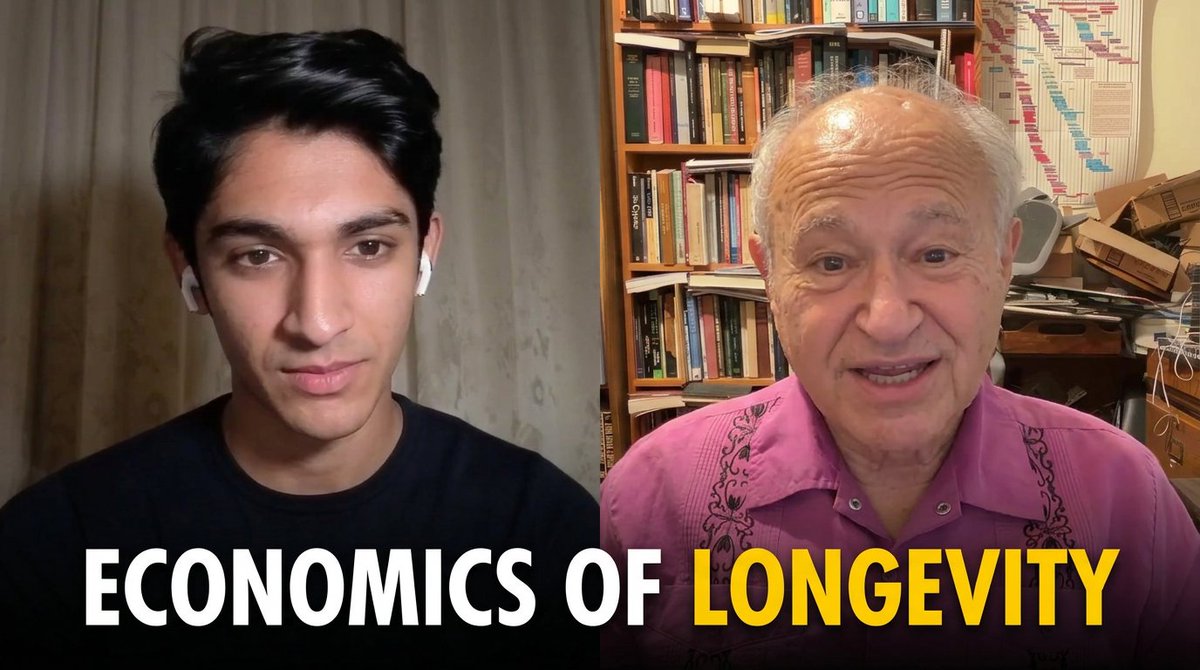
Today’s guest on the Free Radicals podcast is José Luis Ricón Fernández de la Puente, head of theory Retro Biosciences and blogger Jose is a prolific blogger, covering a wide breadth of topics across economics, philosophy, progress studies, science funding, much more, and of course longevity. His works have been published by a16z, Works in Progress and Adam Smith Institute. Our conversation is wide ranging, spanning a deep dive on Retro’s work to replace and engineer microglia to rejuvenate the brain and how our cells have the ability to turn back the aging clock but choose not to. We also covered the technological stagnation and why biological engineering is the new frontier of progress, as well as philosophical topics like transhumanism and how a future of total biological control might impact our values and way of life. Be sure to follow me and Eric Dai to stay up to date on the latest news in longevity biotech! And Special thank you to NFX & omri_drory for lending us their beautiful podcasting studio! 0:00 Intro 2:49 What is aging & why cells have a tough choice to make 9:02 When cells choose to reverse aging themselves 12:43 Cellular vs Organismal Aging & the magic wand experiment 18:31 What is reprogramming 22:40 How reprogramming plays a role in DNA damage repair 25:42 Do we already know how to cure aging? FOXO3! 28:37 How to cut through the complexity of interconnected biology 32:32 Why transcription factors are so great for intervening 36:49 Does a rejuvenation program exist already in the genome 38:51 Michael Levin: from thinking in terms of genes to morphogenesis 48:14 Tech stagnation and why physics is cooked 55:03 Why doesn't the world look more futuristic 57:26 Transhumanism & asking ourselves what we want out of life 1:05:34 Do we need war for technological progress 1:09:31 Government role in science funding 1:15:06 How Jose became the Head of Theory at Retro 1:24:53 How AI might put software engineers out of a job, and push them towards biotech 1:27:28 What it takes to get a flywheel in biotech 1:29:04 Rejuvenation vs Prevention 1:34:23 Aging is the coolest hardest problem to work on 1:36:09 What does it take to cure aging 1:42:25 Delivery mechanisms for genetic therapies 1:48:53 Retro's work to replace microglia and engineer them outside the body 1:59:10 Consciousness 2:00:39 Jose's Origin Story

Daniel Shur

13,644 次观看 • 6 个月前

Today’s guest on the Free Radicals podcast is Michael Ringel, JD PhD, COO Life Biosciences and former Managing Director at Boston Consulting Group. Michael is a leader in longevity and pharma who spent 25+ years advising top pharma companies on their R&D strategy. He is now COO at Life Biosciences where he is bringing the first ever partial epigenetic reprogramming therapy to human clinical trials - a major milestone for the longevity industry. In this episode, we discuss Michael’s insightful paper on why aging is an optimization by evolution, why that means it’s malleable, and how to push the longevity field forward. Michael also sits on the US board of Hevolution Foundation and on the board of the AFAR. Be sure to follow me and Eric Dai to stay up to date on the latest news in longevity biotech! 0:00 Intro 2:30 Why aging is an optimization by evolution 15:10 Why scientists miss the role of evolution in aging 19:31 Evidence that aging is a regulated process 24:40 Hormesis and adaptive stress responses 28:55 The promise of partial epigenetic reprogramming in humans 35:08 Life Bio's first therapy proceeding to clinical trials 47:47 Why targeting the eye, particularly glaucoma and NION, is a strategic choice 52:03 The pharma industry's perspective on anti-aging research 56:39 The importance of public engagement for funding and policy change 1:05:42 Reasons for optimism in longevity 1:08:26 Advice on how to have an impactful and interdisciplinary career 1:11:54 The ethical case for longevity 1:17:34 Concrete steps for audience members to support longevity research

Daniel Shur

16,988 次观看 • 6 个月前

New episode with Dr. Steve Horvath (Prof Steve Horvath), a pioneer in the field of epigenetic aging clocks. Steve developed the original Horvath clock, one of the first tools to show that DNA methylation carries a remarkably reliable signal of aging across human tissues. In this episode, he explains what biological clocks actually measure, why different clocks can disagree, and how to interpret a biological-age result without treating it like a literal lifespan forecast. We talk about chronological age vs. biological age, and we also get into the intervention evidence on exercise and VO2 max, calorie restriction, omega-3s, vitamin D, multivitamins, and weight loss/GLP-1 therapy, among other topics! The big theme is that biological clocks can be useful dashboards, but they are not diagnoses, fortune-telling tools, or proof that one supplement has reversed aging. This was Steve's second appearance on the podcast and he did not disappoint. You won't want to miss this episode. Links to the episode on all platforms in the comments below. Timestamps: 0:00 - Introduction 1:59 - Biological vs. chronological age 7:33 - Why one clock isn't enough 13:16 - PhenoAge vs. GrimAge 15:21 - GrimAge & mortality risk 19:04 - Epigenome as stress memory 23:02 - Can stress be inherited? 25:06 - Why clocks fail in sperm 26:30 - Can lifestyle reverse GrimAge? 28:18 - DunedinPACE as an odometer 32:20 - Judging longevity interventions 34:41 - Clocks as mortality surrogates 38:28 - Most validated interventions 41:25 - 5 years younger in 7 months? 45:43 - Can GrimAge predict death? 47:30 - Translating GrimAge to lifespan 52:16 - Blind spots of aging clocks 58:20 - More than inflammation 1:00:56 - Young blood, transient effects 1:04:46 - Calorie restriction 1:08:54 - GLP-1 drugs & weight loss 1:12:24 - Can a multivitamin slow aging? 1:21:05 - Omega-3, vitamin D, & exercise 1:28:55 - Removing an aging accelerator 1:31:24 - Vegetables vs. exercise 1:36:58 - Does red meat age you? 1:38:38 - Hard training moves the clock 1:45:59 - Heat as an exercise mimetic 1:47:23 - When cold slows the clock 1:49:48 - Does poor sleep speed aging? 1:51:19 - Can friendship slow aging? 1:57:49 - Are consumer tests worth it? 2:02:46 - Choosing a reliable test 2:07:33 - Different clocks, different lenses 2:12:21 - Can AI build better clocks? 2:13:53 - Partial reprogramming 2:17:47 - What reprogramming can't fix 2:22:37 - Do DNA mutations drive aging? 2:24:53 - The silver bullet problem 2:29:23 - Limits of polygenic risk 2:33:32 - Steve's longevity routine 2:38:05 - How stress affects aging

Dr. Rhonda Patrick

87,613 次观看 • 3 个月前

We hear a lot about improving gut health through food, probiotics, and supplements. But after more than a decade of major advances in microbiome research, the picture has become both more promising and more complex including about gut bacteria, biological symptoms In this episode, I’m joined by gastroenterologist and neuroscientist Dr. Emeran Mayer to explore how our understanding of the gut-brain connection has evolved—and what we may still be getting wrong. 0:00 Introduction and Dr. Emeran Mayer’s background 1:07 The impact of gut health on disease and current treatment approaches 2:17 The microbiome problem in America and research evolution 4:03 Challenges and limitations in microbiome research 5:13 Traditional and novel interventions for gut health 6:25 Future of bioengineered probiotics and research funding 8:09 Functional medicine approaches and case study 9:40 Bridging gaps in gastroenterology and historical context 12:24 Flaws in reductionist science and traditional medicine insights 14:09 Microbiome’s role in overall health and physiology 19:25 Microbial metabolites and modern challenges to gut health 21:10 Human biology vs. microbial adaptation and caring for the microbiome 22:59 The Mayer Model for microbiome health 29:04 Brain-gut communication 31:33 AI’s potential in advancing microbiome research 36:22 Aging and its effects on the microbiome 46:03 Practical steps for microbiome health: prebiotics and polyphenols 55:44 Factors harming the microbiome and using it for treatment 57:45 Gut-body communication and influence on traditional medicine 1:00:25 Future directions: research, applications, and health policy 1:02:56 Final thoughts on holistic health and The Mayer Model

Mark Hyman, M.D.

42,861 次观看 • 18 天前

"Aging is the process of a complex system slowly falling into its chaotic disequilibrium. And it's not like evolution necessarily even set a lifespan for us. It is merely the result of, once the system has been established, how long its intrinsic property stayed ordered before it became disordered." I’m excited to share my conversation with Jacob Kimmel of NewLimit. Every species who has ever lived has one shared certainty: we’ll age, decay, and die. Jacob and his team are among the small group of people on earth with the expertise and funding to work on this problem. We talked about why we age, whether cellular aging can actually be reversed, how evolution shaped our lifespan and our peaks, and how AI is fundamentally changing the next era of science. Recorded at New Limit’s HQ in South San Francisco. Timestamps: 00:00 Intro 01:25 Why Evolution Limits Lifespan 03:13 Evolution Tradeoffs Explained 07:44 Why Women Live Longer 10:15 Lessons from Long Lived Species 16:20 Peak Intelligence 23:26 What is Aging? 27:59 Yamanaka Factors 32:18 New Limit 33:56 AI's Role in Progress 37:28 Organ by Organ Longevity 40:28 Is Immortality Possible? 42:04 Lifespan Progress 45:44 How to Test Longevity Drugs 49:30 Placebo Mind Body Link 53:56 What longevity hacks actually work? 57:25 Peptides And Stem Cells 01:00:34 Gene Editing 01:05:10 Personalized Medicine 01:08:48 Philosophical Dilemmas of Longer Lifespans 01:14:57 Living Off Earth 01:16:55 AI And Bio Risks

Sabrina Halper

21,980 次观看 • 2 个月前

The next decade may be the most consequential longevity window of our lives. In a brand-new episode of the FoundMyFitness podcast, I sit down with immunologist and aging researcher Dr. Derya Unutmaz (Derya Unutmaz, MD) to explore a provocative possibility: AI may accelerate medicine fast enough to change what aging, cancer, and disease prevention look like within our lifetimes. Derya is not making these predictions from the sidelines. OpenAI has repeatedly featured his work as evidence that frontier models can contribute to real scientific discovery—including a case study in which GPT-5 helped his lab solve a three-year-old immunology mystery. We discuss how AI is already compressing months of biological analysis into hours, how digital twins could personalize treatment and shorten clinical trials, and whether disease could be predicted years before symptoms appear. We also get into: • Why he believes the next 10 years could add decades to human lifespan • Why cancer is so difficult to cure—and why he thinks that may change • When avoiding AI support could become medically irresponsible • What supercentenarians reveal about engineering greater resistance to aging • How cellular reprogramming might restore younger biological function • How to begin building a simple “mini digital twin” from your own health data You do not have to agree with every timeline to appreciate the stakes. This is one of the most ambitious conversations we have had about the future of biology and medicine. The episode is available now on YouTube, Spotify, and Apple Podcasts. Links in the comments below. Timestamps: 0:00 - Introduction 1:27 - Add 50 years to your life? 5:35 - Months of analysis in minutes 11:06 - Trials in weeks, not years 13:42 - How safe is safe enough? 17:57 - Have we hit AGI? 23:39 - The case for AI optimism 29:51 - Crossing the intuition threshold 36:32 - Is avoiding AI malpractice? 42:35 - Can AI catch cancer's next move? 46:09 - Which AI models to trust 51:45 - Claude vs. GPT in diagnosis 55:15 - Generalist vs. specialist AI 58:41 - Cancer's self-vs-self problem 1:02:35 - The end of cancer? 1:06:46 - A dog's custom cancer vaccine 1:08:47 - Can AI prevent overtreatment? 1:11:44 - Predicting disease years early 1:18:06 - Biology goes exponential 1:23:15 - Why prevention beats reversal 1:29:07 - Engineering aging resistance 1:34:23 - One gene, many outcomes 1:38:28 - Reverse-engineering the lucky 1:40:38 - From Dolly to Yamanaka factors 1:45:12 - Full-body rejuvenation 1:53:00 - What if AI thinks for a month? 1:55:42 - The biosecurity dilemma 2:00:28 - Limits of epigenetic clocks 2:06:51 - The cells that won't retire 2:09:38 - Can brain aging be reversed? 2:16:06 - The ultimate longevity prompt 2:18:06 - How to build a digital twin 2:27:42 - The personal health wiki 2:30:50 - When lab ranges mislead

Dr. Rhonda Patrick

240,837 次观看 • 2 个月前

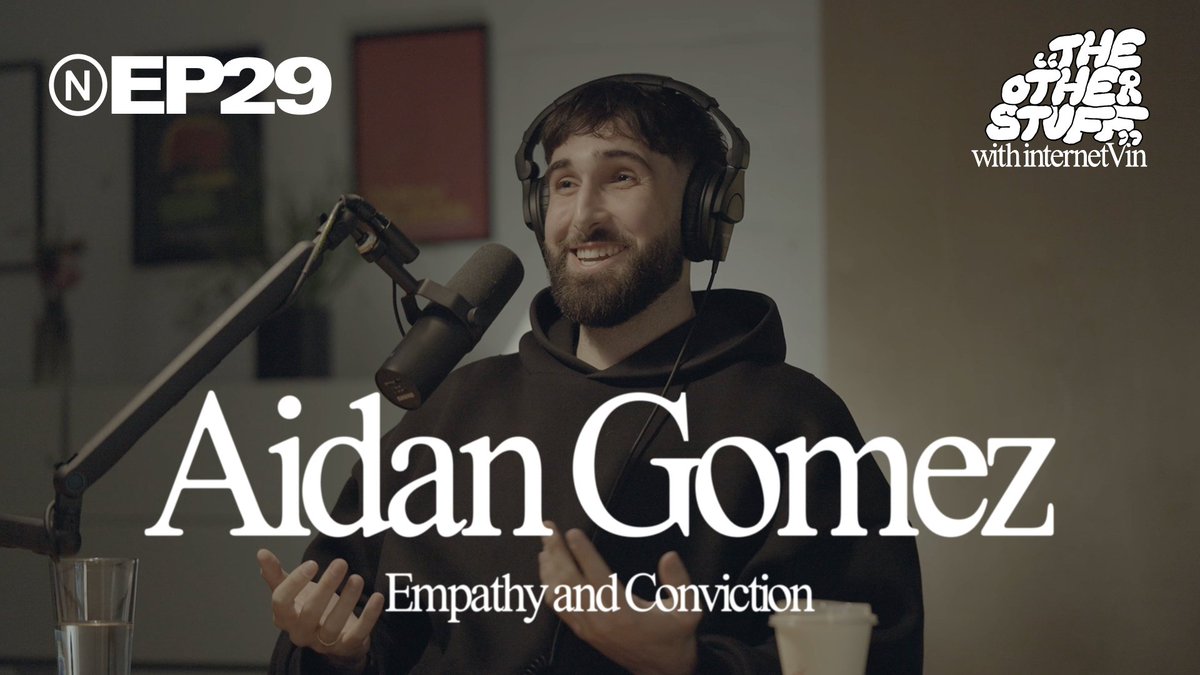
Aidan Gomez (Aidan Gomez) is a computer scientist, co-author of the seminal paper ‘Attention Is All You Need,’ and the CEO of Cohere. In this episode, we discussed his upbringing in the cabin his grandfather built in Codrington, a small town North of Brighton, and the values that were instilled in him through his family. We explored his path from Codrington to his undergraduate studies at the University of Toronto, emailing Geoffrey Hinton, and joining Google Brain where he co-wrote the paper on transformers. We discussed how he met his co-founders Ivan Zhang and Nick Frosst, and his insights on what it means to build a meaningful, successful company in Canada. Aidan shares his conviction about what is at stake — for Canada and for the world at large. This is a conversation about family, values, and what it means to live with conviction. The Other Stuff is hosted by internetVin — filmmaker, entrepreneur, and possibly the most curious man on Earth. Produced by New. The Other Stuff #29 — Aidan Gomez: Empathy and Conviction — Timestamps 00:00:00 Intro 00:03:10 The Malleability of Toronto 00:11:06 Growing Up in Codrington 00:13:50 The Story of Aidan Gomez’s Family 00:27:23 Introduction to the Internet 00:30:39 Values and Work Ethic 00:35:46 University of Toronto’s AI Scene 00:40:48 Emailing Geoffrey Hinton 00:42:16 Google Brain 00:45:15 Dropout: A Simple Way to Prevent Neural Networks from Overfitting 00:49:48 The Beauty of Research 00:54:24 One Model to Rule Them All 00:59:54 Meeting Ivan Zhang and Nick Frosst 01:04:00 The Birth of Cohere 01:06:56 Twitter Influencers and Alex Friedland 01:11:48 Being the CEO 01:12:51 Building for Canada 01:15:01 Three Fundamental Ingredients of Building a Company 01:21:39 Working with the Canadian Government 01:24:39 Reflexivity in Canada 01:36:22 What Is Evil? 01:42:40 The Role of AI in the World

The Other Stuff Podcast

45,297 次观看 • 9 个月前