正在加载视频...

视频加载失败

My much requested day of eats as an Olympic athlete 🤍 Breakfast * chicken bone broth * cawfee * 2 eggs on sourdough toast Pre training * watermelon * red apple * electrolytes Lunch (post training) * chicken Mexican rice bowl Snack * scone wit...
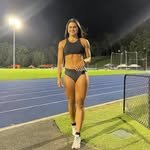
49,210 次观看 • 5 天前 •via X (Twitter)

9 条评论

Dewy Decimal 的头像
Dewy Decimal5 天前

Cut like a cake 🤙

Smitty 的头像
Smitty5 天前

That's it? I'd be starving

Stanford Clinic 的头像
Stanford Clinic2 天前

Bone broth, eggs on sourdough, then training fuel - that breakfast table looks like love in a mug. Simple and solid.

Jim Erickson 的头像
Jim Erickson4 天前

🔥🔥

Thomas Mack 的头像
Thomas Mack4 天前

Pure perfection!!💪🏻🙌♥️

Sports and Music 的头像
Sports and Music5 天前

Gorgeous abs 🔥🔥🔥

CJ Pallach 的头像
CJ Pallach4 天前

Olympic athlete?? That’s so sick!! What is your sport?

Daddy 的头像
Daddy3 天前

🔥

Leroy Luis 的头像
Leroy Luis4 天前

all looks good

相关视频

💥CHILE LIME CHIPOTLE CHICKEN This is the secret to making some of the easiest, best chicken right in your home oven. The spices come together incredibly well and the chicken come out so juicy, so flavorful, and it makes for easy meals all week long. You can make high protein bowls, tacos, quesadillas, or just pair the chicken with your favorite air fried veggies. I used my @kaizenfoodco high protein low carb rice, but use whatever rice you prefer! Here is how to make it: 1 Start with 2.5 lbs boneless chicken thighs. Trim off any excess fat to the extent you’d like and place inside a large bowl. 2 Season the chicken with a few generous pinches of salt & pepper, 1 tbsp paprika, 1 tbsp Aleppo pepper or chili flakes of choice, 1 tbsp garlic powder, 1/2 tbsp chipotle powder, 1/2 tsp coriander, 1/4 tsp cayenne pepper. We’ll also add 2 tbsp fresh cilantro, 1 tbsp olive oil, 2 tbsp yogurt, and juice of 1 large lime to add a lot more flavor and tenderize the chicken. 3 Mix it super well, then thinly slice 1/2 large red onion and mix it in with the chicken. You ideally let this marinate for 2-4 hrs but if you want to make it right away, you can. 4 When you’re ready to make it, remove the chicken from the fridge and let it come up to room temp before placing it in the oven, about 30 mins. Then preheat your oven to 425F. Pack the marinated chicken tightly inside a loaf pan (my size is roughly 8.5x4.5x2.5). Place in the oven for 50-55 mins at 425F. 5 Remove the chicken from the oven, tilt the pan over a glass bowl or container to pour out the excess juices. I like to pour this over the chicken before serving, or even use it as a broth or base for soups. 6 Flip the pan over a cutting board and cut the chicken into strips, cubes, or whatever shape you like. 7 Then serve it however way you wish. I made an amazing high protein lowcarb chicken and rice bowl with 55g protein with my kaizen lowcarb rice , baby kale, avocado, fresh cilantro, and a garlicky white sauce and it was SO Good. . ENJOY! . . . #highproteinmeals #healthyrecipes #lowcarb #lowcarbrecipes #ketorecipes

Shredhappens

36,257 次观看 • 27 天前

Osteoporosis...The Debilitating & Painful Condition Can Be 100% Reversed & Healed Without Big Pharma. The Remission Protocol That Never Involves Harmful Calcium Supplements & Toxic Prescription Medications. Even After Decades Of Chronic Pain & Fractures, Bones Can Be Rebuilt. Osteoporosis can be completely 100% healed thru nutrient dense animal foods & weight bearing exercise to rebuild bone. I did it 8yrs ago after suffering from Osteoporosis for 30yrs. Osteoporosis Rx meds do not rebuild bone, in fact they decimate the jaw bone & are causal for fractures. Calcium supplements are harmful as they are causal for calcification of the arteries & make bones brittle. I had chronic daily bone pain & 5 fractures between 2011-2016...It took 12 months using a 3 part protocol I researched & developed to reverse & heal. I no longer have the diagnosis of Osteoporosis, no pain, no injuries, no fractures....and definitely no Rx meds like Fosamax, nor any synthetic calcium pills. How To Reverse Osteoporosis 3 Part Protocol: 1⃣ Nutrition: Animal Sourced Protein & Fat Bones are made up of 50% protein & 50% minerals. The protein is within a collagen-protein matrix. Osteoporosis cannot be reversed without an abundance of animal sourced fatty meat & eggs, containing high amounts of collagen. These are the building blocks that bones need to rebuild. Consume daily a minimum of 1 gram protein & 1 gram fat per each pound of desired body weight. For example, someone weighing 150 lbs needs a minimum of 150 grams of protein & 150 grams of fat from animal sources. Here's an example of what that would look like in a day: 1 lb (454gr) of red meat, 1/2 lb (227gr) of wild caught salmon & 4 eggs, plus animal based cooking fats. Focus on natural collagen from whole cuts of meat, organs, connective tissue, eggs & beef stock, tallow, butter & ghee. Eliminate as much dietary sugar as possible, including Carbohydrates. Glucose removes minerals FROM the bones & is a direct cause of Osteoporosis. High glucose is bad for bones. 2⃣ Sun Exposure & Supplements Our bodies needs at least 20 minutes of daily sun exposure for cholesterol synthesis of Vitamin D3. Bone tissue is also a mineralised matrix of inorganic various salts. In order to rebuild bone, major & trace minerals must be in the diet everyday. The 12 major & 60+ trace minerals are contained in unrefined mineral salt which is needed everyday. Unrefined salt...NOT toxic table salt. 💊For example, Boron plays a critical role in bone density. Optimal Testosterone Levels in both men & women are required for rebuilding bone. Boron increases Testosterone production. 💊Magnesium is deficient in upwards of 80% of the population & is used in over 300 bodily functions including skeletal muscle health, bone density & is the activator key for D3/K2. Magnesium Glycinate & Threonate are the top bioavailable forms. 💊Vitamin D3 & K2 are also required in order to bind Calcium to the bone matrix. Natural food sources of D3 & K2 are best, abundant in eggs & red meat. 3⃣ Weight Lifting To Rebuild Bone Density 2 million fractures occur annually from Osteoporosis & 60% of those never regain full range of motion or strength. Current marketing heralds Calcium supplement intake & Rx medications as prevention, but both contribute to fractures & heart damage. Weight Bearing exercise like squats, presses, deadlifts & lunges using free weights, barbells, weight machine & weighted vest...signals the body's Osteoblasts to begin building. The Osteoblasts use the collagen-protein matrix & mineral salts from the diet as raw materials for your spine, pelvis, legs & arms stimulating new bone growth on whatever bones you are targeting with weights. The stronger your skeleton, the more protection against fracture. Cardio will not rebuild bone. 2 books that taught me foundational principles that have carried me thru the years as I have advanced to my current program. "The New Rules of Lifting" by Lou Schuler "The New Rules of Lifting For Women: Lift Like a Man, Look Like A Goddess" by Lou Schuler Aim for at least 3 days of weight lifting per week for at least 20 minutes for bone loss reversal. Comment 'SALT' & I will send you the link to the unrefined mineral sea salt I use for remineralization. And of course feel free to ask questions thru replies or DM, I am always here for all of my friends! 👇Calcium Supplements Cause CVD & Stroke👇 👇Fosamax Causes Fracture & Jaw Deterioration👇 👇Calcium Supplements Cause Urinary Stones👇 Speaker: Barbara O'Neill

Valerie Anne Smith

381,018 次观看 • 1 年前

Protein catalyzes nearly every biochemical reaction in our bodies, making it indispensable for life. Every day, our bodies renew and replace around 300 grams of protein – the same weight as a can of Campbell's chicken soup. In today's FoundMyFitness episode, Dr. Luc van Loon joins me to shatter myths about protein intake and muscle protein synthesis. His research showed we can utilize up to 100 grams of protein in one meal, far more than previously thought. We also dive into how to distribute protein optimally across the day, the top sources, and strategies to ward off anabolic resistance—a state where muscles dial down their response to protein and exercise. Timestamps: 0:00 - Introduction 1:16 - Why do we need protein? 2:20 - How the protein RDA (0.8 g/kg) was established 6:50 - Protein turnover in organs (brain, liver, etc.) 10:10 - How much protein do you really need? 14:58 - Protein intake when dieting for weight loss 16:15 - How the body adapts to higher protein 19:46 - Anabolic resistance 22:45 - Protein requirements for overweight individuals 24:58 - Gaining strength vs. muscle mass 29:20 - Optimal protein distribution 33:05 - 20g vs. 100g protein post-workout 36:01 - Can evening protein consumption stimulate MPS overnight? 40:45 - How does time-restricted feeding affect MPS? 47:07 - Protein before vs. after exercising 48:57 - How does spreading out protein intake affect hypertrophy? 51:55 - Protein shakes vs. animal protein 54:58 - Protein supplementation for weight loss & recomposition 56:14 - Casein vs. whey protein 59:09 - Factors that influence protein's anabolic potential 1:00:14 - Raw eggs vs. cooked — what's better for hypertrophy? 1:04:07 - Plant vs. animal protein 1:07:08 - Plant-based protein powder 1:11:47 - Whey protein isolate vs. concentrate 1:12:36 - Resistance training & the leucine threshold 1:15:47 - Do high-protein diets cause atherosclerosis? 1:23:45 - Muscle memory & resistance training 1:26:25 - Optimal resistance training frequency 1:28:22 - Advice for elderly who want to start resistance training 1:30:49 - Hormonal changes & resistance training 1:36:09 - Does cold-water immersion blunt gains? 1:45:19 - Hydrolyzed collagen powder 1:53:01 - Signaling roles of collagen peptides 1:55:31 - How hydrolyzed collagen powder affects pain perception 1:56:53 - Benefits of smaller peptides in hydrolyzed collagen 1:58:57 - Collagen's impact on skin health 2:02:46 - Amino acids from hydrolyzed collagen powder 2:07:30 - Luc's exercise routine & diet

Dr. Rhonda Patrick

153,330 次观看 • 2 年前

"I don't think I could eat that much meat." THAT MUCH MEAT..... I've had this comment from friends when talking about carnivore. Just this week, I had two other friends who do carnivore have comments from their friends saying this exact thing. I once had a friend tell me that people probably don't think we eat a ton of meat every day, they just wonder how we could eat "only" meat every day. So, when I saw the comments my friends got on their carnivore posts, I followed along to see what people really think. What I found is that people actually do think we eat a lot of meat every single day. So, I'd like to clear up a couple things about carnivore: 1. Many of us don't "only eat meat." We eat a variety of animal-based foods. Red meat, chicken, seafood, pork, eggs. Dairy like plain yogurt, cheese, cottage cheese, kefir, etc. Some of us add coffee or tea. Some add avocado, kimchi, olives, or pickles to their meals. Some add herbs, or make tomato sauces for things like animal-based lasagna or pizza, etc. 2. We don't eat a huge slab of beef every day. People see some carnivores on social media eating 3lb tomahawk steaks and think we eat like that every day. We don't. Many of us eat less meat than we did before going carnivore. How? Because we're eating extremely nutrient-dense food and not loading our bellies with fiber and non-nutrient-dense foods. So our bodies are getting more nutrients and our appetites are much more satisfied. When our appetites are satisfied and our bodies are nourished, we actually eat less. Before going carnivore, I used to eat a diet that was heavy in plants and whole-food carbs. I'd add lean meats and low-fat dairy, whey protein powders and creatine, "health food" protein bars and shakes. Even with a diet heavy in plants with some lean meats, I still ate 1lb or more of meat daily. It was all chicken breasts, fish, canned tuna, and ground turkey. Every once in a great while, I'd grill a couple tri-tips or a steak. But it wasn't often. I'd wake up hungry and go to bed hungry. I ate all day long because I was constantly hungry, always had cravings, and my appetite never felt satisfied. My body lacked energy, I always felt bloated from all the vegetables, fiber, and carbs, and I never truly felt nourished. I increased my carb and calorie intake to see if it would help with my lack of energy, but it didn't. It made the bloating and sluggishness worse, I still didn't feel nourished, and I was still hungry. I would seriously have an extended stomach that was full, but my body would still feel hungry. I never understood it, until I went carnivore and fed my body truly nutrient-dense foods. Everything changed. The way I see food changed. On carnivore, I just follow my appetite and let my body decide when it's hungry. I don't force meals if I'm not hungry. So, I typically eat once a day. That one meal usually consists of around 8oz-12oz of beef with a few eggs. Sometimes, I eat twice a day. One meal usually has about 8oz-10oz of meat, the second meal usually has about 6oz. So, a total of 1lb for the day. Not only do I eat less than what I used to eat, but I spend a lot less money on food too. I've heard people question this way of eating a lot. They claim it's unsustainable or it lacks nutrients. They think we're eating, "That much meat." They don't understand that we're eating foods that have extremely bioavailable nutrients that the human body was actually designed to efficiently break down, absorb, and use. But, they can question and I'll keep sharing and answering. Until they try it for themselves, they won't understand the benefits we all have experienced with this way of eating. Our bodies aren't lacking nutrients. They're now actually getting nutrients. Big difference. **Here's a breakfast I sometimes make. Biscuits & gravy with eggs. Sausage gravy made with HWC and milk, no flour. Butter biscuits made with butter powder and duck eggs, no flour. Yum!

The Carnivore RN

11,430 次观看 • 2 个月前

JJ Redick's offseason training was insanely rigorous and detailed: “If you want to have a full bucket of water, that’s the goal in life. You want a full bucket. But all you can do is add one drop at a time, so add as many drops as you can." "Every time you get in a cold tub. Every time you lift weights. Every time you have an hour-long shooting workout. Every time I did my pregame shooting workout. Every time I did my post-shootaround shooting workout. It’s all drops in a bucket." "My offseasons were harder than the season. That’s a fact. That’s a big reason I retired, because I couldn’t do another offseason." "My offseasons were six days a week, with two or three workouts a day. Saturdays were off. Every Sunday during the offseason, for the last 13 years of my career, I made exactly 342 shots." "Seven spots on the floor. Twenty spot-up twos. Twenty spot-up threes. Three-dribble pull-ups going right. Three-dribble pull-ups going left. Plus 20 free throws. That’s 342." "I started cold tubbing, and they wanted me to stay in for 12 minutes. Then I started thinking, ‘If I start my timer a little too early, I’m not going to get the full 12 minutes. I don’t want to cheat myself.’ So I started cold tubbing for 12 minutes and 25 seconds, just to give myself some wiggle room. "Everything in my routine was structured. On a normal game day, I knew exactly what I was going to eat for breakfast. I knew exactly when I was going to get to the gym. I knew exactly how many minutes I was going to spend in the hot tub before I got on the training table. "Then I got my activation work in the weight room. Then I did my pre-shootaround shooting. Then my post-shootaround shooting. Then my cold tub. I knew exactly what I was going to eat for lunch. "I knew exactly when I was going to nap. I had my naps timed out." "By the end of my career, if I said, ‘I need to fall asleep at 1:05 and wake up at 3:30,’ I could do it like that." "Especially once my kids were born, I didn’t take vacations. I would build three- or four-day breaks into the offseason just to give myself some clarity and relieve some of that pressure." "But my offseasons started the next Monday. If the season ended Saturday, I was in the gym Monday." "I loved the process. I loved everything that went into it.”

Josh Chambers

62,462 次观看 • 1 个月前

The Gerald R. Ford Carrier Strike Group is deploying next week to Europe. I took down an earlier post speculating about the composition. Here's what we know: • CNN reported today that GRFCSG "will likely move into the eastern Mediterranean Sea, near Israel, given the ongoing conflict." • Up to 6 destroyers will escort the world's largest, most lethal, and advanced aircraft carrier • Equipped with Anduril Roadrunner and Raytheon Coyote interceptor drone systems for the first time • Carrier Strike Group 12 (CSG-12) coordinates and directs the actions of USS Gerald R. Ford (CVN 78), USS Winston S. Churchill (DDG 81), Carrier Air Wing (CVW) 8 with its 9 squadrons, and Destroyer Squadron (DESRON) 2. (DVIDS, 11 April) • Ford and several escorts completed a 31-day COMPTUEX training in April, preparing for a potential conflict with Iran. COMPTUEX is the "most complex integrated training event and prepares naval task forces for sustained high-end Joint and combined combat." • On 6 May, destroyer USS Forrest Sherman (DDG 98) departed Norfolk as part of the GRFCSG for a scheduled deployment to U.S. 5th Fleet (DVIDS, 6 May) and currently in the Red Sea (USNI). U.S. Navy ships frequently disaggregate and operate independently under different command structures, such as 5th Fleet's Task Force 55. "As the first-in-class ship of Ford-class aircraft carriers, CVN 78 represents a generational leap in the U.S. Navy’s capacity to project power on a global scale." The flagship of CSG-12 "delivers the Joint force and Commander-in-Chief the combat capability to deter, and if necessary, defeat America's adversaries in support of national security and economic prosperity." More info, context, and sources below. Pre-deployment video released last month:

Ian Ellis

62,870 次观看 • 1 年前

Data has always been the bottleneck for physical AI in self driving and robotics. Tesla is taking two very different approaches for FSD and Optimus. Tesla’s Optimus Training Playbook: 1. Build 30k Optimus Gen 3 robots 2. Operate them in a mock environment where they can perform self-play “Optimus Academy” 3. Train in sim using the real robot data to close sim2real gap. Tesla FSD Training Playbook: 1. Sell millions of cars outfitted with cheap cameras 2. Collect diverse real world driving data (especially intervention and failure recovery data) for free as a byproduct of customers driving the cars. 3. Use driving data to train Autopilot/FSD and deploy policies incrementally as a supervised FSD product 4. Repeat until policy reaches robust unsupervised full self driving for robotaxi launch. The Tesla FSD playbook is a beautiful self-funding, customer subsidized, diverse real world data flywheel. The Optimus playbook is the opposite and shares none of the beautiful attributes of the FSD training flywheel that made FSD successful. The key differences: 1. Instead of having customers pay you for vehicles, Tesla will need to fund 30,000 Optimus robots. Assuming the current landed cost per unit is $100k, that will be $3B to build plus another ~30% per year for maintenance labor and spare parts given it’s still an unhardened pre-production prototype is another $900M per year. For reference, Tesla’s GAAP net income in 2025 was $3.8B. 2. Instead of having customers drive their Teslas on roads all across the world giving Tesla an insanely rich and diverse dataset that Waymo and other AV companies could never collect, the Optimus Academy is doing the equivalent of building a fake town in a parking lot and driving their car in that parking lot. No matter how real you try to make the environments for self-play you can never replicate the diversity, complexity and failure modes of the real world. Data collected in staged environments produces demo-grade policies and will not be rich enough to generalize to the vast diversity of environments, tasks, objects, etc. out of distribution. 3. Instead of having customers collect real world failure recovery data (DAgger style) for free every time FSD disengages, the Optimus Academy will need paid teleoperators or onsite operators to collect the recovery data. Assuming 1 person can manage 2 robots to start that would cost $3.5B in labor per year (30,000 robots, $40/hr fully loaded, 16 hrs/day, 365 days per year, 2:1 robot:operator). Tesla can come up with the money to do this but money doesn’t solve the “mock data” problem. Given the higher degrees of freedom in humanoids vs. cars, training a generalized humanoid will be harder and require more data than a self-driving vehicle. The best way to train your robot is by deploying them in the diverse real world, subsidized by real customer operations. Humanoids face a chicken and egg where it’s very hard to bootstrap your way to a first policy that’s good enough to deploy in real production environments. This is an extremely capital intensive playbook (which doesn’t even include cost of training). Time will tell if it works but a better playbook would be finding a way to copy the FSD playbook.

Simon Kalouche

34,671 次观看 • 7 个月前

No secrets. After the Leadville 100 record, maybe being an open book about my experience can help us understand a bit more about what humans can do in ultras. If I’m running 15:26, there is someone out there right now who will run sub-14:45, and people who couldn’t dream of 100 miles who will achieve a transcendent finish. Here’s a no-secrets rundown: Training: I stacked aerobic bricks for 18 years, and it took those years of hard work for some commentators who haven’t been following on Strava to view me as an overnight success. This one is for the brick-stackers. Other training elements: lower volume for ultra, fast hill strides 3-4 times per week at end of runs (including day before race), uphill treadmill 20% for 10-15 min after most runs (not on Strava), big uphill TM threshold and Z2 sessions, building bike fitness via Zwift racing and outside Z2, steady/moderate running after speed/hill workouts (inspired by Mike Smith at NAU), downhill vert consolidated in final few weeks to harness the repeated bout effect, long runs with tempo Recovery: Vega protein shakes (aiming for 100+ g protein daily), tons of food, stretching, Roll Recovery, hot tub 3-5x per week for blood volume (including race week) Strength: Mountain Legs routine, squats (2 x 10 at 135lb) 2x per week, back extensions, “Core Snack” 2x per day Supplements: AG1 (yeah, I said it 😂), First Endurance Multi-V 2x per week (single gene variant carrier for Hemochromatosis = some iron, but not too much), Momentous Ashwagandha and Omega 3s, Turmeric, post exercise Ketone IQ 3-5 times per week, sodium bicarb 12.5 before hard workouts (all NSF Safe For Sport) Fueling: 90-120 g/hr high carb on hard efforts (up to 150 on Zwift races) + caffeine, Precision 1000 tabs in all bottles, sometimes lower carb on easy training. Some Tylenol for race—please don’t do this, just want to truly have no secrets (search GlobalDRO for all medications) Gear: double belt with Janji built-in belt liner + Naked belt to carry all calories/liquid without pack, Adidas ASU supershoes, Coros Arm Band HR, inadequate lubrication (don’t ask), Chappel Roan playing in head (so hot to go) All questions welcome 🧡 THANK YOU ALL!

David Roche

99,303 次观看 • 2 年前

Seedance 2.5 vs WAN 3.0 - same viral video One of them is dead in the water - You judge Prompt: Handheld digital camcorder aesthetic, landscape framing. A gorgeous fitness and food influencer films herself by hand in selfie-cam and first-person style while cooking a late-night high-protein meal after training and a shower. Keep realistic hand shake, slightly crooked framing, autofocus briefly hunting between her face and the food, awkward zoom-ins onto the pan, occasional motion blur, brief lens steam-up over the hot pan that clears naturally, and small framing mistakes where her face or the pan edge slips out of frame. Mix handheld selfie footage with a few fixed external shots. Important: never show her placing, adjusting, or setting up a camera. When switching from handheld footage to a fixed external angle, use a clean jump cut as if the camera had already been positioned before the shot began. The camera itself must never appear on screen or in the window reflection. LOOK: Warm late-night kitchen light. A single warm pendant over the counter, cool blue night visible through the window behind her, under-cabinet strip light glowing on the backsplash. Slight camcorder softness, faint noise in the shadows, mild bloom on the pendant. Food realism is the core of the look: real sizzle with fine oil spatter, steam rising and curling from the pan, honest food textures with sear marks and glistening surfaces, knife cuts that separate cleanly, droplets on rinsed vegetables. Realistic skin texture, fresh-from-the-shower glow, clean dewy skin, realistic skin tones. STYLE: A realistic late-night what-I-eat-after-training vlog. The tone is relaxed, hungry, funny, quietly confident, and natural, talking to the lens like a friend while her hands keep working. She is clearly attractive and charismatic, but the video must feel like a believable self-recorded kitchen vlog, not a food commercial. Fast clean jump cuts, strong continuity, natural body language, real kitchen sounds, sizzle, chopping, no awkward dead moments. CHARACTER: The woman in the reference image. Her face, features, skin tone, body, and clothing must match the reference image exactly in every shot — she wears exactly what she is wearing in the reference image. Do not restyle, beautify, or alter her in any way beyond the reference. The one addition: a soft white towel wrapped around her head like a turban, as if she just stepped out of the shower. The towel stays neatly wrapped for the whole video. A few small damp strands of hair may peek out at the hairline and neck. Minimal or no makeup, fresh clean post-shower look. A small kitchen towel over one shoulder for most of the video. SETTING: A small warm real apartment kitchen at night. Wooden counter with knife marks, a gas hob with one cast-iron pan, a cutting board with chicken breast and vegetables, a bowl of cooked rice, a bottle of olive oil, salt in a small dish, a fridge with magnets and photos, dishes drying on a rack, dark window over the sink reflecting the warm kitchen. Lived-in and slightly cluttered. No other people, no pets. IMPORTANT CONTINUITY RULES: The same woman from the reference image must remain fully consistent in every shot. No face changes, no outfit changes, no body changes. The head towel stays wrapped in the same position in every shot — it never unwraps, falls, changes color, or disappears. The meal progresses in one direction only: raw ingredients, then chopping, then searing, then plating, then eating, and never reverses or regenerates. Food already cooked never becomes raw again. Hands and knife are the top priority: five fingers always, correct knife grip with curled guiding fingers, clean cuts, the knife never bends and never passes through her hand. The pan, board, oil bottle and rice bowl stay in the same positions. Steam and sizzle must behave with real physics. No extra people, including in the dark window reflection, and the reflection never shows a camera. No duplicated limbs. No camera visible. No camera setup shown. Keep her matching the reference image, warm, and photogenic in every shot. STORYBOARD: 30 seconds total, 10 cuts. (~3s, arm's-length selfie) She leans on the counter, towel wrapped on her head, clearly fresh from the shower after training, and grins tiredly at the lens. Dialogue: "Trained late. Showered. Starving. Let's cook." (~3s, handheld pan across the counter and back to her) The camera drifts across the board with raw chicken and vegetables, the pan, the rice bowl, then back up to her face. Dialogue: "Ten minute meal. Watch." (~3s, fixed external medium shot from across the counter) Jump cut. She is already chopping a red pepper with quick confident cuts, guiding fingers curled, pieces falling evenly. No camera setup shown. No dialogue, just the knife on the board. (~3s, same fixed shot) She slices the chicken breast into strips, seasons it from the salt dish with a high pinch, and rubs it in with her fingertips. Dialogue: "Protein first. Always." (~3s, tight handheld first-person shot over the pan) Oil shimmering, she lays the chicken strips in one by one and they hit with a loud real sizzle, fine spatter, steam rising into the lens which fogs for a beat and clears. No dialogue, just the sizzle. (~3s, handheld selfie while the pan sizzles behind her) She turns the camera on herself, fanning steam away from her face, laughing, one hand briefly steadying the head towel. Dialogue: "The smell. You have no idea." (~3s, tight handheld close-up of the pan) She flips the strips with tongs, showing deep golden sear marks, tosses in the peppers, and shakes the pan once so everything jumps and resettles. Dialogue: "That colour? That's the whole point." (~3s, fixed external shot) Jump cut. She plates it: rice pressed from the bowl, chicken and peppers over the top, a last drizzle of olive oil in a thin ribbon, and she wipes the plate rim with the towel like a chef, then smirks at her own seriousness. Dialogue: "Yes, I wiped the rim. Let me live." (~3s, tight handheld close-up) First fork bite, steam still coming off it, she chews, closes her eyes for a beat and nods slowly. Dialogue: "Ten minutes. That's it. Ridiculous." (~3s, arm's-length selfie ending) Plate in one hand, camera in the other, she backs out of the kitchen toward the sofa, flicking the kitchen light off with her elbow. Dialogue: "Okay. Eating. Good night." FINAL INSTRUCTION: The result must feel like a real self-recorded late-night cooking vlog by an athlete who actually cooks, filmed right after her shower. The highest priorities are matching the reference image exactly, correct hands and knife work at close range, one-directional cooking progression that never reverses, real sizzle, steam and food texture, the head towel staying consistently wrapped, honest warm kitchen light against the dark window, and subtle imperfection. Keep it warm, hungry, and real. Not a food commercial, not overhead recipe content, not stiff.

Stav Zilbershtein

29,730 次观看 • 17 天前

If you think AI is "not there yet" - You are not informed Here is what I did on maxfusion Full prompt: Handheld digital camcorder aesthetic, landscape framing. A gorgeous fitness and food influencer films herself by hand in selfie-cam and first-person style while cooking a late-night high-protein meal after training and a shower. Keep realistic hand shake, slightly crooked framing, autofocus briefly hunting between her face and the food, awkward zoom-ins onto the pan, occasional motion blur, brief lens steam-up over the hot pan that clears naturally, and small framing mistakes where her face or the pan edge slips out of frame. Mix handheld selfie footage with a few fixed external shots. Important: never show her placing, adjusting, or setting up a camera. When switching from handheld footage to a fixed external angle, use a clean jump cut as if the camera had already been positioned before the shot began. The camera itself must never appear on screen or in the window reflection. LOOK: Warm late-night kitchen light. A single warm pendant over the counter, cool blue night visible through the window behind her, under-cabinet strip light glowing on the backsplash. Slight camcorder softness, faint noise in the shadows, mild bloom on the pendant. Food realism is the core of the look: real sizzle with fine oil spatter, steam rising and curling from the pan, honest food textures with sear marks and glistening surfaces, knife cuts that separate cleanly, droplets on rinsed vegetables. Realistic skin texture, fresh-from-the-shower glow, clean dewy skin, realistic skin tones. STYLE: A realistic late-night what-I-eat-after-training vlog. The tone is relaxed, hungry, funny, quietly confident, and natural, talking to the lens like a friend while her hands keep working. She is clearly attractive and charismatic, but the video must feel like a believable self-recorded kitchen vlog, not a food commercial. Fast clean jump cuts, strong continuity, natural body language, real kitchen sounds, sizzle, chopping, no awkward dead moments. CHARACTER: The woman in the reference image. Her face, features, skin tone, body, and clothing must match the reference image exactly in every shot — she wears exactly what she is wearing in the reference image. Do not restyle, beautify, or alter her in any way beyond the reference. The one addition: a soft white towel wrapped around her head like a turban, as if she just stepped out of the shower. The towel stays neatly wrapped for the whole video. A few small damp strands of hair may peek out at the hairline and neck. Minimal or no makeup, fresh clean post-shower look. A small kitchen towel over one shoulder for most of the video. SETTING: A small warm real apartment kitchen at night. Wooden counter with knife marks, a gas hob with one cast-iron pan, a cutting board with chicken breast and vegetables, a bowl of cooked rice, a bottle of olive oil, salt in a small dish, a fridge with magnets and photos, dishes drying on a rack, dark window over the sink reflecting the warm kitchen. Lived-in and slightly cluttered. No other people, no pets. IMPORTANT CONTINUITY RULES: The same woman from the reference image must remain fully consistent in every shot. No face changes, no outfit changes, no body changes. The head towel stays wrapped in the same position in every shot — it never unwraps, falls, changes color, or disappears. The meal progresses in one direction only: raw ingredients, then chopping, then searing, then plating, then eating, and never reverses or regenerates. Food already cooked never becomes raw again. Hands and knife are the top priority: five fingers always, correct knife grip with curled guiding fingers, clean cuts, the knife never bends and never passes through her hand. The pan, board, oil bottle and rice bowl stay in the same positions. Steam and sizzle must behave with real physics. No extra people, including in the dark window reflection, and the reflection never shows a camera. No duplicated limbs. No camera visible. No camera setup shown. Keep her matching the reference image, warm, and photogenic in every shot. STORYBOARD: 30 seconds total, 10 cuts. (~3s, arm's-length selfie) She leans on the counter, towel wrapped on her head, clearly fresh from the shower after training, and grins tiredly at the lens. Dialogue: "Trained late. Showered. Starving. Let's cook." (~3s, handheld pan across the counter and back to her) The camera drifts across the board with raw chicken and vegetables, the pan, the rice bowl, then back up to her face. Dialogue: "Ten minute meal. Watch." (~3s, fixed external medium shot from across the counter) Jump cut. She is already chopping a red pepper with quick confident cuts, guiding fingers curled, pieces falling evenly. No camera setup shown. No dialogue, just the knife on the board. (~3s, same fixed shot) She slices the chicken breast into strips, seasons it from the salt dish with a high pinch, and rubs it in with her fingertips. Dialogue: "Protein first. Always." (~3s, tight handheld first-person shot over the pan) Oil shimmering, she lays the chicken strips in one by one and they hit with a loud real sizzle, fine spatter, steam rising into the lens which fogs for a beat and clears. No dialogue, just the sizzle. (~3s, handheld selfie while the pan sizzles behind her) She turns the camera on herself, fanning steam away from her face, laughing, one hand briefly steadying the head towel. Dialogue: "The smell. You have no idea." (~3s, tight handheld close-up of the pan) She flips the strips with tongs, showing deep golden sear marks, tosses in the peppers, and shakes the pan once so everything jumps and resettles. Dialogue: "That colour? That's the whole point." (~3s, fixed external shot) Jump cut. She plates it: rice pressed from the bowl, chicken and peppers over the top, a last drizzle of olive oil in a thin ribbon, and she wipes the plate rim with the towel like a chef, then smirks at her own seriousness. Dialogue: "Yes, I wiped the rim. Let me live." (~3s, tight handheld close-up) First fork bite, steam still coming off it, she chews, closes her eyes for a beat and nods slowly. Dialogue: "Ten minutes. That's it. Ridiculous." (~3s, arm's-length selfie ending) Plate in one hand, camera in the other, she backs out of the kitchen toward the sofa, flicking the kitchen light off with her elbow. Dialogue: "Okay. Eating. Good night." FINAL INSTRUCTION: The result must feel like a real self-recorded late-night cooking vlog by an athlete who actually cooks, filmed right after her shower. The highest priorities are matching the reference image exactly, correct hands and knife work at close range, one-directional cooking progression that never reverses, real sizzle, steam and food texture, the head towel staying consistently wrapped, honest warm kitchen light against the dark window, and subtle imperfection. Keep it warm, hungry, and real. Not a food commercial, not overhead recipe content, not stiff.

Stav Zilbershtein

86,429 次观看 • 1 个月前

Gojek completes more food deliveries than GrubHub, Uber Eats, and DoorDash combined, and more rides per day than Lyft. Vikrama Dhiman (Vikrama Dhiman) heads all things product at Gojek Tech, including product management, design, and research, across teams in Indonesia, Singapore and India. He is among the most well-known and respected product leaders in all of Asia, and one of my most requested guests. In our conversation, we discuss: 🔸 The most common traits of successful PMs 🔸 The 3 W’s framework for PM career growth 🔸 The right way to push back as a PM 🔸 The Four A’s of leveling up in product management 🔸 Common pitfalls that stall PM careers 🔸 Advice for transitioning into PM 🔸 Why intent alone is not enough 🔸 Much more Listen now 👇 - YouTube: - Spotify: - Apple: Some key takeaways: 1. As a PM—especially early in your career—make sure you’re nailing execution before you spend too much time on strategy. Effective strategic thinking requires context on the company, product, and stakeholders that you might not have yet. But you always have opportunities to execute and make your team members’ lives easier. As you execute more, you’ll begin to understand the strategic needs more deeply, and you’ll have more opportunities to contribute at that level. 2. Three traits that make you a great PM to work with: a. Raise difficult issues without being difficult to work with b. Bring up important topics without drawing importance to yourself c. Remember that you are in charge of getting decisions made, not making the decisions yourself 3. Good PMs produce good artifacts: PRDs, product notes, design briefs, etc. These demonstrate your proficiency across core PM skills, and they are your opportunity to “have impact on the impact”—to add value to a team that is adding value to the company. If you’re not sure what to focus on next in your PM career, go scrutinize your recent artifacts and ask how they could be improved. 4. To push back on ideas without being difficult to work with, ask clarifying questions and bring the conversation to a logical space rather than an emotional one. Here are some of Vikrama’s favorites: a. Why has this become suddenly important? b. So that I am clear, can you help clarify xyz? c. What would success look like? d. What time frame do you need this in? 5. Vikrama’s 3 W’s framework for PM career growth comprises (1) what you produce, (2) what you bring to the table, and (3) what your operating model is. Strong product managers excel at two of the three W’s. Product managers who rise in their career excel at all three. 6. Three mindset shifts that can enable faster growth: a. Focus on things you can control: Concentrate your efforts on aspects of your role that you can influence or control, especially as you advance in your career. b. Always embrace change: As an IC PM, you experience rapid change. It’s important that as you get to mid/senior level, you never stop looking for ways to improve. c. How you see yourself: Cultivate a positive and growth-oriented mindset about yourself and your capabilities. 7. Three core competencies to focus on when transitioning into PM roles are (1) data, (2) design/research, and (3) technology. Someone from a design background should focus on strengthening data or tech skills to complement their existing expertise. Similarly, someone from a tech background should pick a design skill to focus on. This approach allows for maximum leverage.

Lenny Rachitsky

115,463 次观看 • 2 年前

In the middle of baseball season, here are some Major League Major Facts: -Dennis Haysbert actually hit multiple home runs on camera while filming. In the final game when he hit his final home run, he was so excited he forgot to drop the bat and ran the bases with it despite that not being in the script. -For many of the wide crowd scenes of the climactic playoff game, there were over 20,000 extras in the stands. When the team first ran onto the field with the crowd roaring, Haysbert admitted to being emotionally overwhelmed by the experience. Former Major Leaguer and technical advisor Steve Yeager noticed Haysbert's reaction and said to him, "That's what it's like 162 times a year." -In the scene where Jake invades Lynn's party, one of the guests asks how much Jake makes in the Majors. He replies, "I make the league minimum." At the time (1989) the MLB salary minimum was $68,000. Average household income in 1990 was roughly $30,000. -The opponent slugger known as Yankees' home run threat Haywood was played by former pitcher of the Milwaukee Brewers, Peter Vuckovich. Vuckovich never hit a single home run in his entire 11-year major league career. In fact, during 8 of those 11 years he never made a single plate appearance since he was pitching in the American League, which uses a designated hitter to bat for the pitcher. -At the start of the "pennant race" montage, Willie Hayes is shown with 16 pairs of gloves nailed on his bedroom wall, indicating that he had stolen 16 bases in the first 101 games. At the end of the montage, he has at least 78 pairs on the wall, having stolen 62 additional bases in fewer than 60 games. -Haywood's line of "How's your wife and my kids?" was completely improvised by Pete Vuckovich. Ward couldn't think of a good insult that Haywood could say to Taylor, and Vuckovich, assured Ward that he could come up with something on the spot, which was what was caught on camera. -Chelcie Ross (Eddie Harris) played baseball in high school. He was a three-sport star, also playing football and basketball. -Wesley Snipes was not very skilled at baseball in real life, never having played much before. Ward said Snipes was so awful there were no scenes of hom throwing. -The vehicle that Willie Mays Hayes drives to opening day of spring training is a customized VW Beetle with a Rolls Royce grill, replacement trunk and hood ornament. The "Elegant Beetle" kit, as one was called, was popular in the mid-70s to the mid-80s until Rolls Royce sued a company responsible for one of the conversion kits. -Charlie Sheen admitted to Sports Illustrated that he took steroids to prepare for his role. He believed the steroids he took caused him to increase his fastball to 85 MPH. -Former Major-League catcher Steve Yeager served as a coach for the actors in training for the movie, also serving as a stunt double for Tom Berenger in many scenes when Jake Taylor would make a throw from home plate or be in a home plate collision, as well as play third-base coach Temple. -While not particularly specified, many of the players in the movie seem to be based on, or inspired by, former Major League stars. Pedro Cerrano, according to author/director David S. Ward, is based on Orlando Cepeda and Wade Boggs, who would superstitiously eat chicken before every game. Willie Mays Hays is based on Rickey Henderson. Ryne Duren was the inspiration for the character Ricky "Wild Thing" Vaughn, according to Ward. Eddie Harris appears to be inspired by Gaylord Perry, who was well known for using outside substances to enhance his pitches. Jake Taylor may be inspired by Carlton Fisk, a catcher who had a long career with the Boston Red Sox and Chicago White Sox. Lou Brown mentions early on that Taylor was an All-Star in Boston.

The Movie Professor 🎬🎥📺

111,179 次观看 • 2 个月前

On May 8, 2025 I underwent spinal fusion surgery, a 6 hour procedure in which I was filleted from front to back. First, my abdomen was opened up so that the surgeon could scrape out the disc between L5 and S1, replacing it with a perforated cage containing bone grafting material that was screwed into my vertebra. Then I was flipped over and opened up on my back so that my surgeon could screw vertical rods into L5 and S1 to secure my spine position to ensure the fusion sets properly. The procedure was successful, correcting 15 years of lower back debilitation due to severe Spondylolisthesis. However, the recovery process demanded I endure far more than I bargained for, debilitating me in ways I thought might handicap me permanently. For the first 3 months I could barely move. For the first six months my activity was limited to walking only. Pain was constant. At nine months I was still in so much discomfort, still so limited in my range of motion, still too unstable to do anything to elevate my heart rate. My weight ballooned. My muscles atrophied. My mood plummeted. And I was becoming resigned to the idea that my athletic identity (let alone performing extreme feats of ultra-endurance) was a thing of the past, a memory well behind me. But very slowly after that I began to turn a corner. At ten months, I finally felt stable enough to resume a very modest non-spine compressing return to fitness exercise regimen. Zone 1 indoor cycling, gentle core work, extremely low weight / high rep resistance training. Proceeding on a ‘less is more’ mandate in late November (which demands discipline for someone like myself prone to taking everything to the extreme, I just showed up every single morning to do what I could, and stop well before doing more than I should. Today I am down 35 pounds from November (207 to 171) including a body fat reduction from 20% to 11%. More importantly, I am beginning to feel like myself again. Grateful and hopeful. I still have a long way to go—it takes 12-18 months for the fusion to fully set. My surgeon was not optimistic that I will be able to run again. Time will tell of course, but I’m confident that provided I continue to proceed patiently that I have a future in which running can become part of my new reality. Towards that end I have a goal—which is to celebrate my 60th birthday this Fall by participating in the NYC Marathon. But here’s the thing. I’m not trying to return to who I once was. I’ve leaned into the stillness this experience has demanded of me to become someone new and better. I am posting this story not for external validation but rather to say that change is always possible. And the way to do it is the same way I have navigated every one of my many life transformations, from alcoholism to sobriety, from sedentary to middle aged ultra endurance athlete, and from a corporate lawyer career to becoming an author and podcaster: getting sober and staying sober: by taking contrary action consistently and religiously—one day at a time. As Chris Paul said on my podcast, “keep stacking days.” And remember, every obstacle life presents you is simply an opportunity custom-designed for your growth and evolution.

richroll

442,456 次观看 • 5 个月前

Creatine isn’t just for athletes. A growing body of scientific evidence now shows creatine helps preserve muscle during aging, maintains bone density, improves cognition (especially during stress), and speeds muscle recovery after intense exercise. To explore the mechanisms, optimal dosing strategies, and practical considerations, and more, I invited a leading creatine researcher Dr. Darren Candow (Darren Candow, PhD, CSEP-CEP, FISSN) onto the podcast. Even if you’re not an athlete—or you’ve dismissed creatine as a muscle supplement—you need to listen to this episode. Links to YouTube, Apple Podcasts, and Spotify in the comments. Timestamps: 0:00 - Introduction 0:56 - What makes creatine effective for exercise performance? 4:23 - The loss of explosive power with aging 5:59 - How creatine speeds up recovery between sets 8:36 - Two ways creatine boosts muscle strength 10:34 - Why creatine might not speed typical weight-training recovery 13:01 - Anti-catabolic effects 13:38 - Why do men and women respond differently? 15:12 - Dietary creatine vs. supplementation 15:59 - Is creatine supplementation necessary—or optional? 17:27 - Why plant-based may benefit most 18:38 - Should creatine dosage change with age? 19:23 - Loading vs. daily dosing 22:20 - Why 5 grams might not be enough—other tissues 24:11 - Can creatine prevent bone loss—even without weight training? 24:32 - How creatine supports osteoblast activity 26:13 - Preventing hip fractures with creatine 28:55 - Creatine vs. bisphosphonates 32:43 - Why creatine isn’t just for weightlifters 35:14 - Why stressed brains benefit most 37:19 - Why brain aging accelerates demand 40:16 - Why 10g per day might be the optimal dose 42:07 - Why creatine counteracts sleep deprivation 45:16 - Before vs. after concussion 47:39 - Should dosage be adjusted by weight? 49:01 - Does creatine improve sleep on training days? 51:56 - Creatine for Alzheimer’s and Parkinson’s 53:29 - Can creatine help with depression and anxiety? 56:46 - Creatine and glutamine for preventing respiratory illness 59:02 - Why creatine may enhance endothelial health and circulation 1:00:26 - Creatine’s role in cardiometabolic health 1:02:07 - When does loading actually make sense? 1:03:12 - Preserving muscle and enhancing recovery after injury 1:06:07 - Is creatine effective without exercise? 1:08:23 - Why creatine might improve male fertility 1:10:19 - Is it safe for children? 1:13:43 - Creatine supplementation during pregnancy 1:15:15 - Could creatine boost motor skills in kids? 1:15:55 - Creatine monohydrate vs. the rest 1:20:37 - How to avoid digestive issues with creatine supplementation 1:23:18 - Does timing matter—and should you cycle it? 1:24:54 - Should you take creatine every day—or only workout days? 1:25:39 - Why caffeine might blunt the effects 1:28:43 - Does creatine increase body fat—or is that a myth? 1:29:30 - Preventing cramps (the hydration myth) 1:30:55 - Why creatine won’t damage your kidneys 1:33:21 - Why creatine is linked (wrongly?) to baldness 1:36:44 - Debunking myths—sleep, cancer, urination 1:40:01 - How creatine affects homocysteine levels 1:42:54 - Creatine and protein—the ideal post-workout pair? 1:45:48 - How to pick the best creatine supplement 1:48:08 - What to know about micronized creatine

Dr. Rhonda Patrick

463,757 次观看 • 1 年前

"What are the fruits of Joseph Smith?" There are dozens of good fruits I can list-- our language training program the government tries to copy, our ministering program other faiths try to copy (and fail), our youth and missionary culture-- and so much more. But I'll focus on the three most important fruits: 1. The Book of Mormon I can't overemphasize this one. The Book of Mormon is the keystone of our whole religion-- a "sudden death proposition." All our claims live or die based on the veracity of that book. If it's a fraud, then Joseph, his revelations, the church he organized, priesthood authority, Joseph's successors-- everything goes with it. On the other hand, if it's true (as I know it is), then all that it implies is true, too: living Prophets and Apostles, priesthood, revelation, temples, dorky prom invites and carrots in your jello (obvious jk on those last two 😉). For 196 years, this book has been critically analyzed perhaps like no other book in modern religious history. No critic can account for how an uneducated farm boy correctly wrote inexplicable Hebraisms, dozens of short and long Near Eastern style poems, a story more intricate than Lord of the Rings with an internally consistent geography, verified distinct wordprints across characters, hundreds of names, interwoven storylines, rich theology, etc. Then to leave easter eggs for archaeologists and linguists to discover centuries later. He supposedly made scores of ridiculous (at the time) guesses about the Old and New World that were eventually corroborated by archaeology—making Joseph an astronomically good guesser if he wrote the thing. Oh, and he dictated one of history's most rich and complex religious texts in a single draft over about 65 work days. When you begin to study it, you'll find the case for the Book of Mormon is deeply impressive. The evidence, in the words of Farrer, "does not create belief, but it maintains a climate in which belief may flourish." For those who say "Well the Bible says any other scripture is impossible," we respectfully suggest that you're reading that message into 2-3 Bible verses when it's not there, and we'd be happy to explain why there is ample space in the Bible for continued revelation. 2. The lives of the people Charles Dickens (yes, that Charles Dickens) boarded a ship of Latter-day Saint immigrants. He fully expected to find the "Mormons" would fit the stereotypes he'd heard, and was prepared to write about all the horrid things he saw. But after observing the Saints, he wrote: "To my great astonishment they did not deserve it; and my predispositions and tendencies must not affect me as an honest witness. I [felt] it impossible to deny that, so far, some remarkable influence had produced a remarkable result, which better known influences have often missed... [they are] in their degree, the pick and flower of England." Most people who join our Church don't become interested by an ad for a free copy of the Book of Mormon or a 19-year-old in a suit. It's because they knew members of our Church and could tell, like Dickens, that there was something wonderfully different in their lives. And it's not anecdotes; it's quantifiable. The Church of Jesus Christ of Latter-day Saints produces higher outcomes in longevity, marital happiness, family togetherness, income, education, health, and virtually every other positive socioeconomic indicator there is. They are more devoted to God and more biblically literate than any other Christian faith per Pew Research. If you're interested in the stats, Clint Teeples has made it his hobby to accumulate all that data-- check his account for the receipts. Latter-day Saints are happier, more devoted to God, and successful in their personal lives than virtually any other group in America. That's because of the truths we build our lives on-- the truths we learned from the revelations of Joseph Smith. What about the "bad fruits?" "He was a con man, a fraud, an adulterer, etc!" None of those things are true. Dig past Reddit anti-Mormonism and look at the actual history. It's not that hard-- this was the nineteenth century-- not the ninth, after all. Thousands and thousands of documents-- journal entries and meeting minutes and newspaper accounts, etc. And I'm sure it will come as a shock 😉, but most credentialed historians aren't Latter-day Saints. Yet what do they see when they study his life? A get-rich-quick scheme? No. He lived and died penniless (and often houseless). He died in debt in large part because he was too generous with people who came asking. And he broke the mold by insisting members not be paid for their part-time service in the Church. A sorcerer and a gold-digger? No. He was as superstitious as other 19th-century rural Americans as a youth, then abandoned his superstitions when he began his work as a prophet. A philanderer? No. And the inspired, temporary practice of polygamy is a subject deserving a much longer explanation than a few sentences here. Historians as a group do not accept Joseph as a Prophet. But they almost universally acknowledge Joseph was sincere-- that Joseph truly believed God had spoken to him, that he believed the revelations he received. Even to the extent that as he knew he was about to die, he turned to the Book of Mormon (which he supposedly fabricated) for comfort and inspiration as he went to his Maker. Get past the sound bytes and caricatures and get to know Joseph Smith. 3. The ultimate fruit: Revelation I have studied the fruits of the Book of Mormon for 30 years. I have studied the fruits of Church membership for a little longer than that. I have studied Joseph's life and read the gamut of literature from apologetic to apoplectic. Most importantly, I have prayed to God about these things and received pure light and knowledge to my mind-- not "some warm fuzzies," but a divine witness, a seal, confirming to my spirit and my intellect the authenticity of the Book of Mormon and all that it implies. I echo all the words of Elder Jeffrey R. Holland below and likewise ask that my testimony "be recorded by men on earth and angels in heaven." I wish I could make the whole world know that I know. The Book of Mormon is true. And Joseph Smith was a Prophet of God.

Matthew Watkins

14,208 次观看 • 5 个月前

“I hear way too many of these stories. […] We have to provide the care; I mean we actually have court judgments on this. […] Well, you know, you do the math on it, I’m, yes, there is 23,000 patients a year that get, uhm, diagnosed with cancer. We have 120 oncologists. That’s about 191 patients for each oncologist. So you would think that they should be able to treat 191 patients. That’s less than 1 patient a day.” - Danielle Smith (*) 😳 sounds like she wouldn’t be surprised if a lawsuit were to come. 2.Does Danielle Smith have any idea what fills an oncologist’s day? Maybe it’s time for Premier Smith to finish her Stampeding activities to flip flapjacks at each of AB’s cancer centres to meet with oncologists, their support team, pathologists and patients. In the meantime, maybe the oncologists I know could add to this list, giving our United Conservative Party of Alberta Alberta Government and Alberta Health a better picture of what actually happens behind the scenes when an you treat <1 patient per oncologist per day. Here is the list I have come up with so far: ⁃Review incoming referral ⁃Review incoming patient’s medical history ⁃Preliminary meeting with new patient: confirming diagnosis, discussing next steps, including treatment options, answering questions, condoling patient, agreeing on treatment and getting treatment consent ⁃Writing doctor’s notes for patient’s employer for medical leave ⁃Writing and sending requisitions for additional tests and/or scans ⁃Writing detailed notes of patients in patient’s file ⁃Reviewing results from requested tests and/or scans ⁃Filling out patient’s short-and/or long-term disability forms ⁃Coordinating treatment ⁃Coordinating bloodwork for every treatment cycle. For example, mine was initially 2 weeks, then moved to weekly, then moved to every 3 weeks + quarterly infusions ⁃Between cycle patient appointment to review bloodwork, assess patient. listen to patient’s side effects, adjust treatment as needed, send referrals for side effects management ⁃Write prescriptions for outpatient medication(s) ⁃Update patient’s file with summary of meeting ⁃Review updates from providers addressing patient’s side effects ⁃Attend Tumour Board meetings ⁃Conducting research, including meetings with with the research teams, testing, reading other studies, compiling and analyzing mounds and mounds of data, then writing so results can get the results/findings published… ⁃training residents (who often leave because they see the chaos and uncompetitiveness of the AB system and pay) ⁃teaching classes at amedical school (many, if not most are university medical professors), grading papers ⁃speaking or attending medical conferences to remain up-to-date on what’s new in their area of oncology ⁃returning patient and other medical professionals’ phone calls. I didn’t factor in any time they may use running to the bathroom, having a quick bite to eat, or grieving when one of their patients take a turn for the worst, or dies. This just goes to show how much Danielle Smith is out of touch with how it works. This is only my view as a patient of my oncologists’ workload, and I only see a part of what they do. Alberta Medical Association (AMA) David Shepherd Dr. Luanne Metz AHS_CancerCare Alberta Health Services The Breakdown (*) Global News. (2024, June 1). Your Province. Your Premier. Edmonton, AB. Accessed: July 8, 2024. (around the ½ way mark of the show)

Mommy Has Cancer (she/her/elle/ella)

34,339 次观看 • 2 年前

Apple’s iPad “Crush” Ad Is Bleak, Ominous and Threatening I don’t know if you’ve seen Apple’s just-released commercial for the “New” iPad Pro, but it’s pretty awful. It is dark, humorless, and feels like a not-so-thinly veiled threat to writers, musicians, game makers, developers, and artists of all kinds. …and children, even. I’ve watched it at least five times today alone, and I’m left with one big question. “Who on earth approved this?” It’s absolutely baffling that the world’s largest technology company, with the world’s biggest marketing budget, thought this would be a good idea. What kind of idiot—or idiots, since dozens or hundreds of people had to be involved in the writing, staging, producing, recording, and editing—felt this kind of ad would somehow create a positive emotional connection with consumers? Seriously, it’s terrifying. In a dank, cold warehouse, devoid of all life and humanity, an industrial crusher comes to life, and slowly starts destroying a collection of musical, philosophical, and artistic devices and instruments. For no apparent reason, everything starts getting smashed: first, a trumpet, then an arcade video game, then cans of paint, a piano, a globe, a metronome, a guitar… on and on it goes, obliterating everything in sight into a colorful, gooey, explosive mess. Books, camera lenses, lamps, a guitar, a sculpture, and a typewriter—all tools of the liberal arts—get mangled into a garbage heap as Sonny & Cher cheerfully sing, “All I ever need is you.” In the penultimate moment, a goofy yellow smiley emoji becomes a bug-eyed scary-clown freak as it, too, is crushed to death. Worse, if you enable closed captions like I do by default, the video says: “[POPPING] [SPLAT]” right as its eyeballs pop out of its head when Cher sings, “Give me a reason to build my world around you.” It’s enough to make a child cry. It has all the comforting vibes of the burnt pink teddy bear floating in the swimming pool on Breaking Bad after two planes crash in mid-air. I have so many questions (aside from simply wondering the names of the soon-to-be ex-employees who greenlit this abomination). First of all, as a trumpet player myself, I am personally offended that they made me watch a perfectly good trumpet get smashed to smithereens like it’s no big deal. Why would they torture me like this? Second of all, what is the message here? No, not that “the most powerful iPad ever is also the thinnest,” as the voiceover artist states in the last few seconds of the clip. I mean: what is the message? Ostensibly, pulverizing children’s toys, arcade games, architectural models, and ceramic Angry Birds into a paste implies something like “We’re taking all the best of humanity; all the collective works of Western Civilization, smashing it into pieces and putting it inside this remarkably thin device so you can have all of it in the palm of your hand.” But my oh my, is there an elephant in this room… he’s hiding behind the monstrous destroying machine. Did anyone inside Apple realize that everyone outside Apple will recognize this imagery in a metaphorical sense, but not the one Apple intended? We don’t see a crushing machine gently consolidating the greatest output of all our artistic endeavors, simply reformatted for a digital age and consumed by everyone with instant, fingertip access. We see what is painstakingly obvious to us, and the timing couldn’t possibly be worse. We see a giant, soulless machine consuming our work in a very different way. Right now, AI models are training themselves on our intellectual property and even our very own personally-identifying data. We aren’t the ones doing the consuming. We’re the ones being consumed. The tech industry has become one massive gaping maw, opening wide and swallowing everything in sight, chewing it up into little bits and pieces of comminuted waste, like a paper shredder or a garbage disposal. It’s destruction in its most literal form. And for what? For a newer version of the iPad that is only slightly thinner than its predecessor? For an only marginally improved version of Apple’s tablet device that has been around for 14 years? For increased profits? This is a terrible look for Apple. They may as well be saying: “All your work are belong to us.” Personally, I am a fan of artificial intelligence. I am eagerly embracing our robot overlords and I welcome our new CSV god (as the actual developers of AI models like to say). I look forward to the freedom and innovation that will come as a result of humanity augmenting our intelligence with AI like a force multiplier on a battlefield. But if Apple has the same perspective I do, they’re selling it in the worst possible way. When I see this video, I see that Apple is definitely crushing something… but I’m not sure what. -Crushing small companies that develop apps for the extremely heavy-handed App Store, which imposes byzantine restrictions on what they can and can’t do with their own apps? -Crushing competitors by limiting what they can do on the iOS and MacOS platforms with arbitrary and capricious rules about enabling functionalities that Apple doesn’t like, even if users do? -Crushing publishers and content creators with a punitive 30% fee on all subscriptions and in-app purchases? -Crushing choice and competition by not allowing app makers to make apps and programs that do the same thing that native apps already do, even if they do it better? -Crushing all human creativity and innovation by automating and systematizing everything? In the early days of the “Google vs. Apple” fight over the web and app stores, I was really concerned that Google was becoming way, way too powerful. Specifically, in 2015, when Google came up with “app streaming,” they announced a desire to form a “web of apps.” This was concerning. Especially when coupled with Google’s efforts to steal content from other websites and provide it to users via the “knowledge graph” results, ending up with the creation of “zero-click” search results pages, which absolutely punished website owners and content creators. By taking the most valuable content off a website and showing it to Google users without them needing to click through to the website itself, Google had essentially stolen everybody’s intellectual property with only the most minimal attribution possible (to fend off lawsuits no doubt, but with no intention of users actually visiting the website in question anymore). “Google is eating the internet,” I thought, and said out loud, (although I probably wasn’t the first person to use that phrase) But what I meant was purely an analogy. It was vague and ambiguous, almost silly. Maybe I was wrong, though: maybe it’s Apple that’s doing the eating. Maybe Apple is not only gobbling up everyone else’s work, but also homogenizing it—and us—and forcing us to use their platform, pay their fees, abide by their rules, and constantly keep upgrading, upgrading, upgrading, to an ever-thinner iPad in order to use it. Watch the video again. This is the stuff of nightmares. To be perfectly fair, even if I were to take the commercial at face value and ignore it’s off-the-charts creepiness and just stick to its one stated claim—that the new iPad Pro is thinner—it still fails as a commercial. Why? Because nobody cares how thin an iPad is. Seriously. I’ve owned an iPad since 2010: that means I’ve carried around a version of Apple’s already-thin tablet every day for over a dozen years. Never once have I said to myself: “You know what improvement I’d really like to see in this thing? I wish it were thinner.” Never. That thought has never crossed my mind, even once. You know what has? -Better battery life. -I’d like my iPad to not get hot to the touch when I use the Apple Pencil to take notes. -I wish it wasn’t so fragile: I dropped my brand-new iPad 2 back in the day when it slipped out of the arm-hold I was carrying it in, it bounced on the pavement, and the screen shattered into a thousand pieces, making it unusable. -I wish it had more storage. -I wish Apple would stop changing the type of cable connector it uses: I’ve gone from the original 30-pin connector to the Lightning connector, and now to the current USB-C/Thunderbolt connector. -I wish I could view the screen in direct sunlight. -I wish it wouldn’t overheat and turn off automatically when I use it outdoors in the summertime. Those are announcements I would welcome in a new iPad Pro commercial. None of this “now even thinner” nonsense nobody needs or cares about. So, back to the commercial. In my opinion, whoever made this ad should be fired. I almost never say that about other companies, especially for good-faith marketing efforts gone wrong… those of us who work in marketing make mistakes sometimes, and we learn from them. But cases like this warrant a special exception. Marketing and advertising are designed to make people want to buy your products. This commercial doesn’t just not make me want to buy Apple’s products. It makes me not want to buy Apple’s products, which is something altogether different. It turns me from someone who likes iPads into someone who is almost rethinking iPads entirely. That’s not just a bad advertisement; it’s a harmful advertisement. Apple’s usually known for great commercials. The legendary 1984 Super Bowl commercial was, of course, their best. I thought “Hello, I’m a Mac” was absolutely brilliant. They have made some missteps along the way, but this one is really bad. Not even their nauseatingly preachy and woke “Mother Nature” ad from a few years ago was this bad. Steve Jobs once said, “Technology alone is not enough—it’s technology married with liberal arts, married with the humanities, that yields us the results that make our heart sing.” My goodness, that last line alone is poetry itself! This ad seems to be Apple signaling that they don’t believe in that anymore. And I don’t think all this handwringing is an overreaction to where you could say “Oh, c’mon, it’s just a commercial! What’s the big deal?” It is a big deal. It tells you about the values of the company, and what they intend to communicate. Really, how is this the same company that used to sell iPhones by showing grandmas using FaceTime to connect with their baby grandchildren from afar during the holidays? Everything about it is wrong: even the thumbnail they chose for it (the bulging-eyed smiley face) and the fact that they gave it the title “Crush!” It was fun to see the reactions to the video online today. I find it fascinating that Apple shared it on YouTube but turned off the comments. On X, Tim Cook shared it Tuesday, and the video, which so richly deserves to be mocked, is getting it in spades. Some people are calling it “anti-art.” One user called it “soul-crushing,” which was about as literal and logical a response as you’d expect. It turns out Apple actually made an announcement about the commercial. In response to the (apparently unexpected) poor welcome it got, Apple wrote: “We missed the mark with this video, and we’re sorry.” Lame response from a tone-deaf tech behemoth, but still, they hopefully got the message. C’mon, Apple. I have seen the future, and this ain’t it.

Ron Stauffer

19,249 次观看 • 2 年前