Loading video...

Video Failed to Load

Go Home

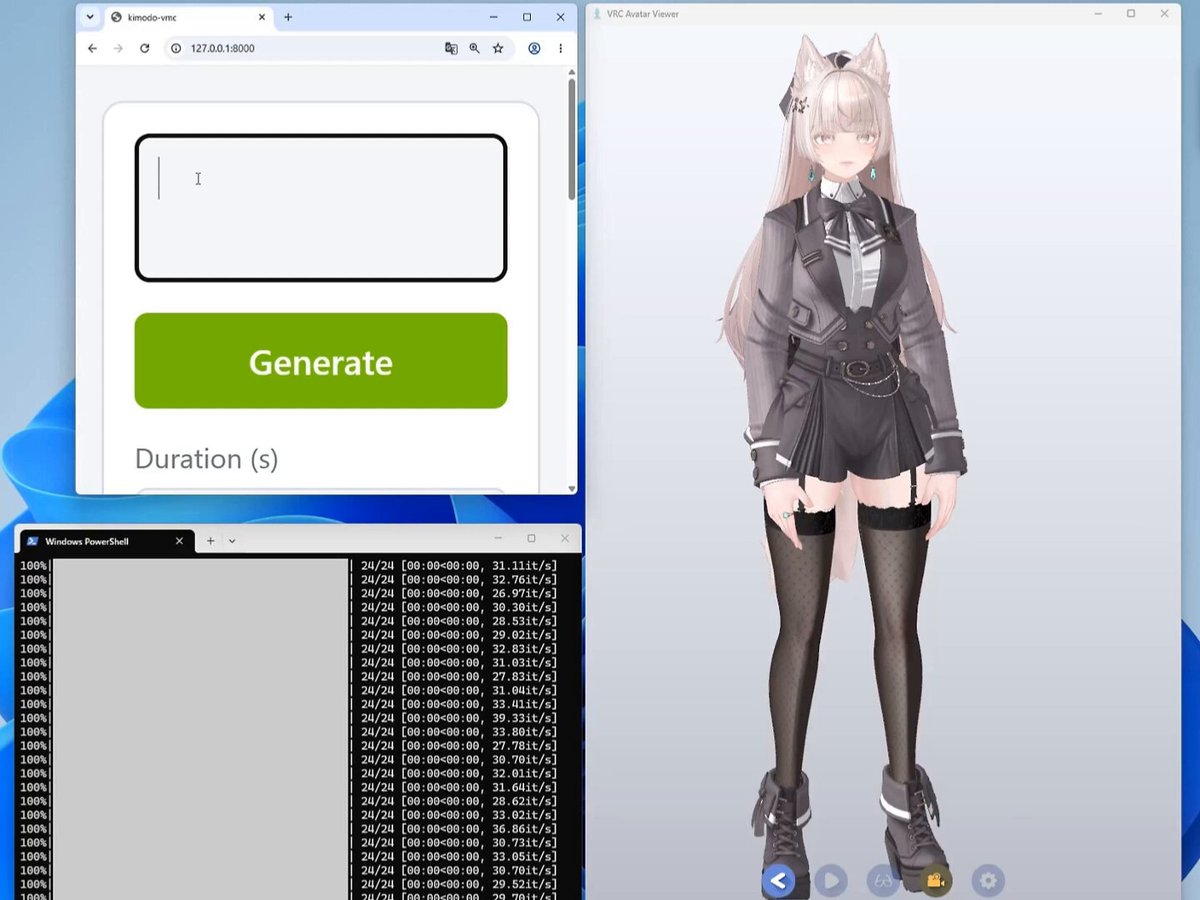
"My token usage is probably down 30x compared to before.” Tim Davis, Co-Founder & President Modular on why he builds AI tooling locally first: “Token usage is incredibly expensive. If you just throw your whole codebase into a model, you’re constantly uploading everything and burning hundreds of thousands or...

65,173 views • 7 months ago •via X (Twitter)

0 Comments

No comments available

Comments from the original post will appear here

Related Videos

how you can use openAI codex & gpt 5.5 completely FREE (the full guide) 100% legit. no subscription, zero API cost. up to 1M+ token/day. you need just an openAI account and here's how to set it up in 5mins. openAI has a program that gives eligible developers free API usage every day in exchange for sharing API data that helps improve future models. it's not a one-time credit, your allowance refreshes daily. depending on your usage tier, you can get access to hundreds of thousands, or even millions, of free tokens every single day on supported models. here's how to activate it: 1️⃣open your API dashboard: 2️⃣go to settings → data controls 3️⃣enable data sharing for your organization or project 4️⃣make sure your account has a positive API balance 5️⃣save the settings if your account is eligible, you'll see a message confirming access to complimentary daily usage. before you turn it on, know the tradeoff: • prompts and outputs from shared projects can be used to improve openai's models • don't use it for confidential information, client work, or sensitive data • eligibility depends on your account type and settings for everyone else, it's an incredible deal. use it to: • learn AI development • build side projects • experiment with codex • test agents and automations • prototype ideas without worrying about API costs most developers burn money testing ideas. this lets you experiment at scale while spending little to nothing.

m0h

70,509 views • 3 months ago

OpenAI chairman Bret Taylor talks to about 100 CEOs every month. His answer to the cheap open-weight model panic: cheaper to train does not mean cheaper to use, and the number that decides it is token efficiency. "One thing that I think is a little bit overblown about these open weight models is they're not necessarily cheaper to run. Whether or not they're cheaper to train, you don't care. Because you're using just as many tokens. In fact, they may be less efficient." "There's this thing called token efficiency. And it turns out the frontier models are much, much more token efficient." "A token is to intelligence like a watt is to electricity... how many tokens does it take to complete a task? Not every token is actually equal." "For a lot of tasks, it turns out these frontier models from OpenAI and Anthropic are actually just better than these open weight models... just having open weights isn't actually the main thing driving any of those costs." Later in the same interview he goes after the billing unit itself: "It would be like if you signed up for Gmail and you paid for CPU cycle or something... where the world is going is paying for outcomes." The unresolved column: the chart CNBC airs mid-answer, from Artificial Analysis, prices a completed task at $0.94 on Kimi K3 against $2.75 on Claude Fable 5, efficiency folded in. If that gap holds, the premium he is defending gets earned on quality, not price. - Bret Taylor (Bret Taylor), OpenAI chairman and Sierra co-founder, on CNBC's Squawk Box.

Karl Mehta

17,254 views • 1 month ago

David Sacks says companies are trapped paying OpenAI & Anthropic because they can't figure out how to use open source models "I think enterprise CTOs would like to shift their token consumption to cheaper models for the obvious reason that it would be more efficient. They are seeing compute costs or token costs skyrocket right now, so everyone's trying to figure this out." "You also have the AI sovereignty issue that Alex Karp talked about. They're worried about giving up the secret sauce or the alpha in their business to a frontier lab that may one day be competing with them. "The problem is, I think in most cases, they don't have the technical ability to do it. Coinbase figured out how to do it. DoorDash figured out how to do it. They built a token routing system that allows them to send frontier tasks to frontier models and non frontier tasks to more mundane models. But I don't think your average enterprise has the technical capability to do that." "This is why the share of wallet of closed models, it actually increased. I think that open source went from 19% last year to 11% this year. So open source as a share of enterprise spending is actually decreasing." "I don't think that means usage is decreasing. I think usage is skyrocketing. It also may be the case that because the whole point of using an open model is you just pay for the compute costs, you don't have to pay a lab, so it may be that it's hard to measure that usage in terms of spend." "But nonetheless, anyone who's saying that these closed models are going to lose or are somehow losing, you're just not seeing it in the data."

dnap

110,354 views • 2 months ago

So a core issues I see with a lot of crypto games is: No in game peer to peer economy. (ie. The game Devs make all the $$ off the items and you buy from them not other players) Couple of things I wanted to experiment with, in regards to on chain gaming is the peer to peer economy. So the way my team set it up, is you mine the token in game, but you sell the items peer to peer in SOL. (see video for a demo) This gives you two different ways to play to earn, you can farm items, from bosses and loot boxes, and sell them to players for solana:So11111111111111111111111111111111111111112 , then other players can buy them and use them to mine the token, and sell the token to traders who will speculate on the price. Or you can just buy the loot boxes, and use the items to farm the token. This should help with the sell pressure, because before the game flow was: Buy item (in token, From devs) --->farm a ton of token---> Sell token to recoup cost of item. New flow is : Player opens loot boxes (paid in token)/ Player Plays game (in game token sinks) ---> gets item ---Lists item--> other player buy Item (From players, In SOL) ----Farms token---> sells token. Now the equation is if the loot box-player spent more game tokens to get the item compared to what he gets for in sol, and it keeps more money in the in game economy, and the market will fluctuate more based on the price of the in game token. So players who play and are "locked in" can make money off arbing and this services the "trader" archetype of player, which I feel is the major player type in web3-games. (also the token name is just a test token so dont buy random shit on pump fun, thats just using the name)

Skely

15,064 views • 2 months ago