Загрузка видео...
Не удалось загрузить видео
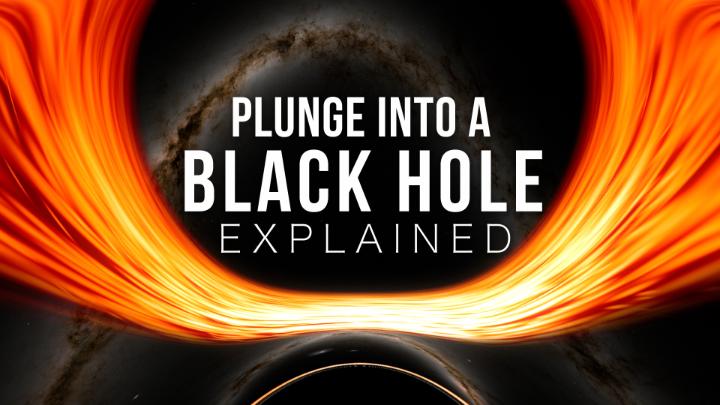
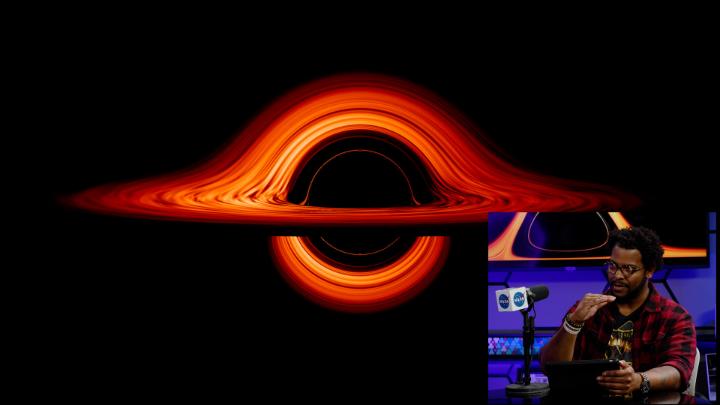
NASA used a supercomputer to build a mind-bending simulation of falling into a black hole. Once you cross the point of no return, you have 12.8 seconds left to exist. To visualize these final seconds, NASA scientists ran the math of general relativity on a supercomputer, generating 10 terabytes... show more

782,627 просмотров • 2 месяцев назад •via X (Twitter)
Комментарии: 34

Does the epic music play in the black hole as well?

All that computing power to make up some bullshit animation and they can't upload in HD?

Five days on a supercomputer to render 12.8 seconds. The black hole isn't the only thing stretching time.

on the one hand you have hours or maybe just seconds to live... and on the other hand you will outlive your grandkids grandkids... both are true. RELATIVITY.

You become Spaghettified

This is INACCURATE AF — Do your fucking research man — you want a true representation? BEHOLD:

Time would dilate and those 12.8 seconds would last forever..or not at all.

@Grok discourse on these infographics.

This looks very incredible, how accurate it is no one will ever find out

The problem with a simulation claiming you have 12.8 seconds to exist is it's not verifiable because nobody's actually fallen into a black hole and came back to tell us about it. Cool theory though.

I continued the simulation for several more hours. Khan Academy and Scratch were used generating 420 tb of data in 69 days. To the distant observer, you were turned into radio waves centuries earlier. This were the final seconds.

A realization has come to me, given the understanding that all observable physical elements of our universe is a perpetual process of matter energy conversion, that black holes function as the garbage disposal of this process providing a mechanism to deconstruct whatever version of matter is ingested and spit the resulting gook back into some other process of, let's say, star formation as one example. Our universe is a closed loop system of perpetual energy conversion, so black holes are a required end point funnel of energy conversion. Prove me wrong. 😄

Gaevity is a theory yet everything being simulated just assumes the unproven theory is a law. Got it 🤟

What it really looks like...

this is a much better simulation of what it would be like

coincidence? i think not

Way better quality version of NASA's simulation of flying into a black hole.

Clearly they missed the 2016 nobel prize winning work of Gerard T 'Hooft because this definitely isn't what happens.

Take enough LSD, or DMT, and you can see that without needing a supercomputer.

Shouldn't you also see the fate of the universe closing in upon you with time speeding up?

So, the black hole starts playing a Windows screensaver from early 2000’s. Terrifying.

Is Matthew McConaughey ok after that

NASA is using a supercomputer for THIS? And not to how go back to the moon? Or accurately spot astroids about to hit earth? They have the entire universe to explore, and this simulation that could be done with windows xp is what they focus on.

You don't enter a black hole. You get stuck to the outside of it. It's just a bubble in spaceTime

Does sound warp like light? Because if I'm falling into a black hole a fire orchestral soundtrack better be playing un-warped.

@colorsnfall @WireBrushWizard

You'd have 12.8 seconds compared to an external observer, but you would never know because for you it would last an eternity.

No idea what I’m looking at

I'm pretty sure that slop isn't even close.

There is a way out. :)

It’s good to see that even though US debt is almost $40,000,000,000 our tax dollars are being spent wisely on something that doesn’t matter in the least.

Except you would be blinded instantly when looking at such photon energy (assuming you weren’t killed by a thousand other factors.)

A 13yo boy with a Pentium can do a better job. Stop putting nasa-slop on this site.

How long until we come out the other side?