Loading video...

Video Failed to Load

Go Home

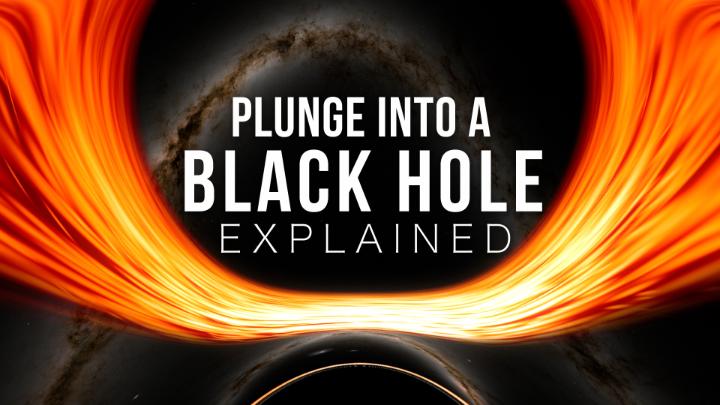
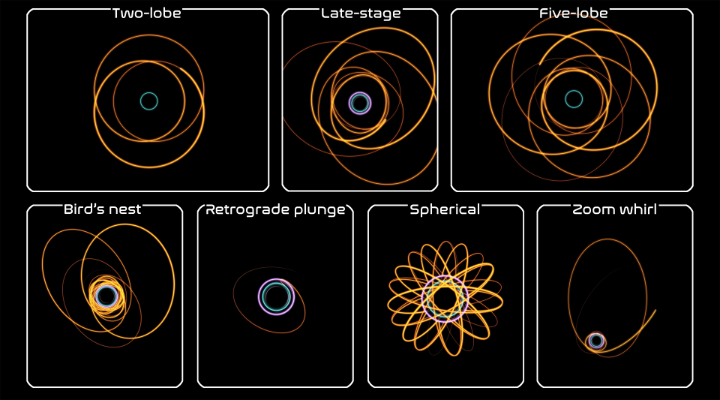
What happens if you fall into a black hole? NASA's Discover supercomputer created a visualization simulating an observer's approach to the event horizon of a supermassive black hole. Astrophysicists generated approximately 10 terabytes of data over five days, which would take over ten years on a conventional computer. The...

21,593 views • 10 months ago •via X (Twitter)

0 Comments

No comments available

Comments from the original post will appear here

Related Videos

What Would Happen if You Fell into a Black Hole? ✍️ Falling into a black hole is a journey into the extremes of physics, where the laws of nature as we know them are pushed to their limits. Here's what you might experience: Approaching the Event Horizon: As you draw near, the gravitational pull intensifies dramatically. The side of your body closer to the black hole experiences a stronger force than the side farther away, leading to a stretching effect commonly referred to as spaghettification. This term vividly describes how objects are stretched into long, thin shapes in a strong gravitational field. Crossing the Event Horizon: The event horizon is the boundary beyond which nothing can escape the black hole's gravitational grip. Interestingly, if you were to cross this threshold, you might not notice an immediate change; however, from an outside observer's perspective, time appears to slow down for you, and you'd seem to freeze at the horizon. This phenomenon is due to the extreme warping of spacetime predicted by Einstein's theory of general relativity. Inside the Black Hole: Once past the event horizon, all paths lead inexorably to the singularity—the core where density becomes infinite and the known laws of physics cease to function. Here, the concepts of space and time become indistinguishable, and the gravitational forces are so overwhelming that escape is impossible. The journey to the singularity would be swift, and the tidal forces would ultimately lead to your disintegration. Note : It's important to note that these descriptions are based on our current understanding of physics, particularly general relativity. The true nature of black holes remains one of the most intriguing mysteries in astrophysics, with ongoing research striving to unravel their secrets. 📹 Credit NASA

Physics In History

37,394 views • 1 year ago