Loading video...

Video Failed to Load

Go Home

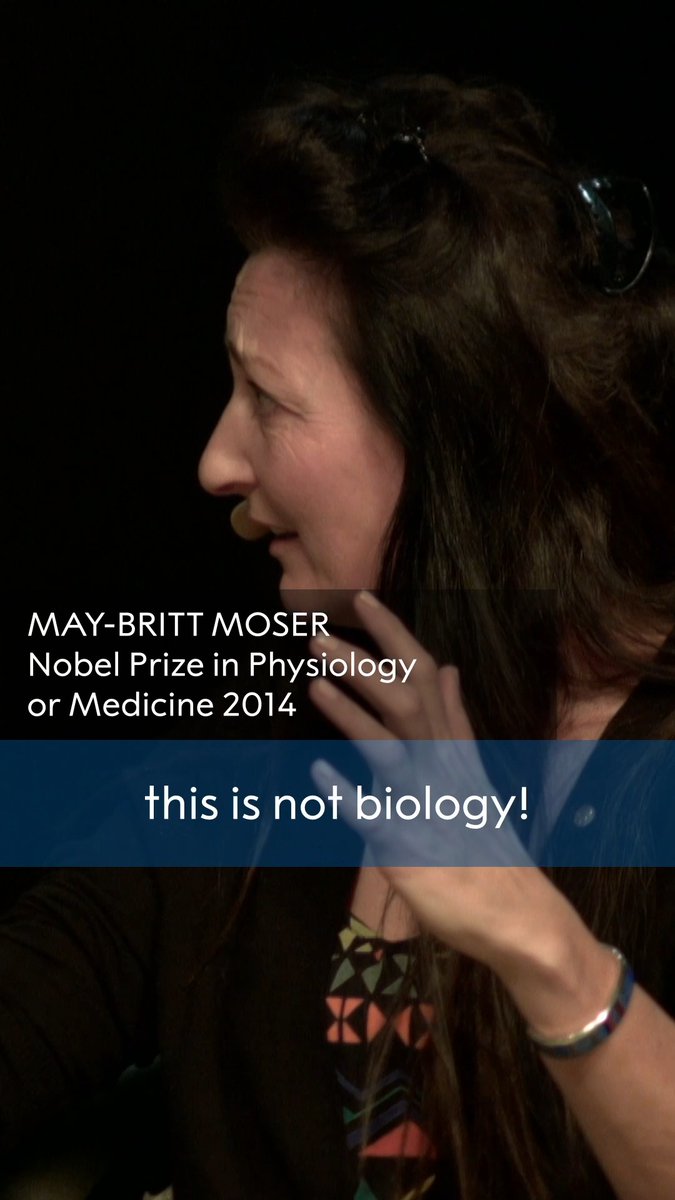
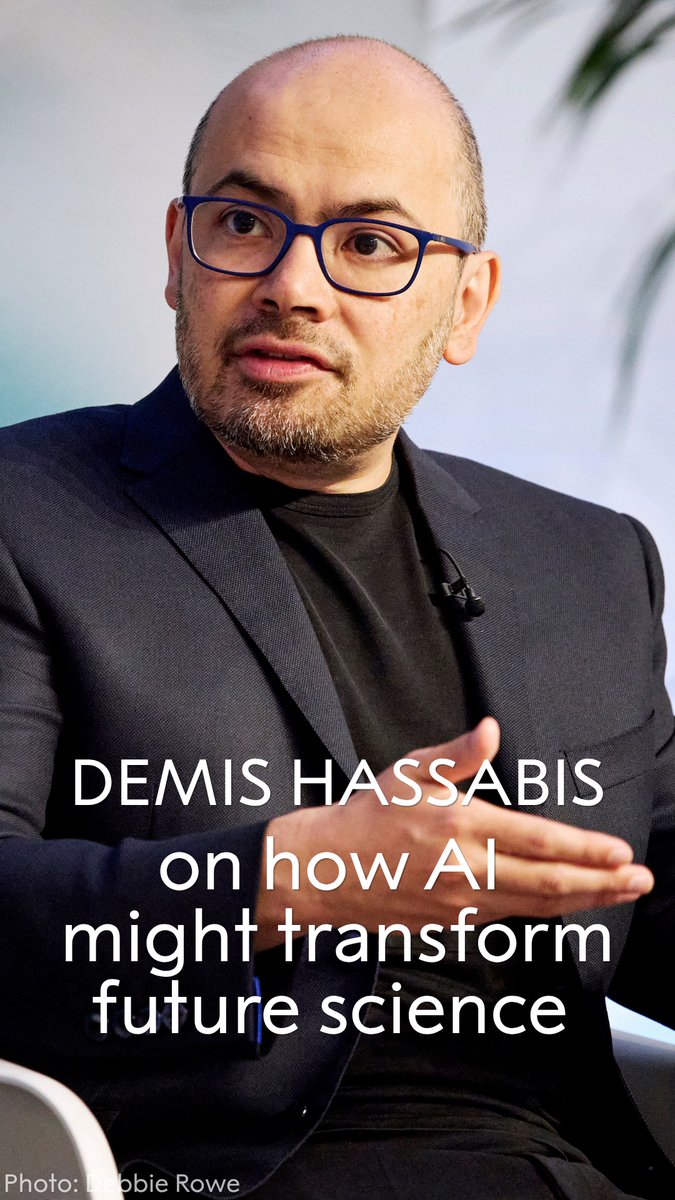
nobel laureate roger penrose: "consciousness is non-computable. your brain is not an algorithm, and standard science is looking at the problem completely backwards." in 19 minutes he shows exactly how quantum collapse in the brain might create human awareness with no artificial rules, no digital code. you already carry...

98,868 views • 1 day ago •via X (Twitter)

0 Comments

No comments available

Comments from the original post will appear here

Related Videos

Adding more GPUs will never make a machine conscious. Nobel Prize-winning physicist Roger Penrose just dismantled the entire AI race’s core assumption. Right now, the industry operates on one belief. Build massive data centers. Scale the models. AGI will just “wake up.” Penrose destroys this completely. Penrose: “There is this sort of view that once you make a computer complicated enough or something, it suddenly becomes aware. I just don’t believe that. There’s no reason to believe that.” A machine can compute better than any human alive. But computation is not awareness. Penrose: “There is something quite different involved in understanding things, in being aware of things, of feeling things, which is not part of computations.” We’re confusing rule-following with actual intelligence. Penrose: “The keyword is the word ‘understanding.’ You can follow rules alright, but we don’t understand what we’re doing. The understanding is the key point.” Models today are exceptional at processing data. At mimicking logic. But true understanding requires consciousness. Penrose: “It doesn’t make sense to say of a device that it understands something if it’s not even aware of it. There is something much more profound in being conscious of something.” And here’s what should terrify every AI lab on earth. Penrose: “I believe that the brain is following the laws of physics, sure. We don’t have a good picture of the laws of physics.” Penrose: “Quantum mechanics is not an answer to the way the universe operates. It’s a partial answer. It’s incomplete.” We’re trying to engineer synthetic consciousness using classical computation. While biological consciousness likely operates on physics we haven’t even discovered yet. The race to AGI isn’t just an engineering problem. It’s a frontier science problem. The labs are hiring engineers. The problem might require physicists who don’t exist yet.

Dustin

197,369 views • 6 months ago

Physicist: Consciousness DOES NOT Come From The BRAIN The prevailing materialist paradigm asserts that consciousness is a byproduct of neural activity, a mere epiphenomenon of biochemical interactions in the brain. However, this reductionist view crumbles under deeper scrutiny, as it fails to account for the vast spectrum of consciousness, from transcendent mystical states to near-death experiences and non-local awareness. Consciousness is not confined within the brain; rather, the brain is a transceiver, a finely tuned instrument that receives and modulates the vast ocean of awareness permeating the cosmos. Just as a radio does not generate the music it plays but instead decodes signals from an unseen field, the brain is an interface between the physical realm and the infinite, omnipresent field of consciousness. Mystic science, in alignment with ancient wisdom and cutting-edge quantum research, reveals that consciousness is fundamental-an organizing principle of reality itself. Walter Russell's work echoes this truth, demonstrating that mind is primary and matter is a consequence of its rhythmic pulsations. The brain, much like a crystalline matrix, is structured to interpret and shape consciousness into coherent experience, but it does not generate it. In this light, consciousness is not local, nor is it constrained by the physical form. It is the unseen architect behind the rhythms of existence, the hidden intelligence orchestrating the grand cosmic symphony to believe that the brain creates consciousness is akin to believing that the eye creates light or that a mirror generates the image it reflects. It is not the origin but the instrument. As mystic scientists, we recognize thay true awakening lies in shifting our perception from brain-centered awareness to the realization that we are conduits of an eternal intelligence, woven into the very fabric of existence. Consciousness is not inside us—we are inside it. ✨🙌🏾💫 © Dr. Jason Yuan

🧬Maxpein🧬

45,371 views • 11 months ago

David Chalmers on why consciousness is science's greatest unsolved problem: Science has mapped subatomic particles, distant stars, the chemistry of life yet it remains almost completely silent on the one thing we know most directly: our own conscious experience. In a rare early interview, philosopher David Chalmers explains why: "Consciousness is at once the most familiar thing in the world and the most mysterious. Consciousness is what we start with when it comes to knowing the world. I know that I exist. I know that I'm conscious. Everything else is secondary." And yet, despite this intimacy, consciousness sticks out like a sore thumb in the scientific picture. Chalmers points to a deep irony: science has made extraordinary progress on phenomena that are extraordinarily remote: subatomic particles, distant galaxies, the molecular machinery of biology while making almost no progress on the one thing closest to us. Why? Because science, by design, eliminates the subjective. "To do proper science, you have to be objective. You have to eliminate anything subjective from the picture." He uses heat as the perfect example. Physics gives us a complete account of heat molecules in motion, energy transfer, temperature gradients. It explains every objective aspect of the phenomenon. But it never explains what hotness actually feels like. "Science doesn't actually give a theory of the conscious feeling of hotness." This is what Chalmers calls the Hard Problem of Consciousness. You can trace every neural signal from your heat sensor along your nerves into your brain and still have explained nothing about the subjective experience of feeling warm. As interviewer Jeffrey Mishlove puts it: you can't even do science without a conscious mind to observe, interpret, and make meaning of data. Consciousness is the precondition for science itself and yet science has no framework to account for it. Chalmers' conclusion is striking: The methods of science may need to be expanded. Consciousness might not be something science explains away. It might be something science has to learn to start with.

Mateus — eu/acc 🇪🇺

31,662 views • 5 months ago