Загрузка видео...

Не удалось загрузить видео

На главную

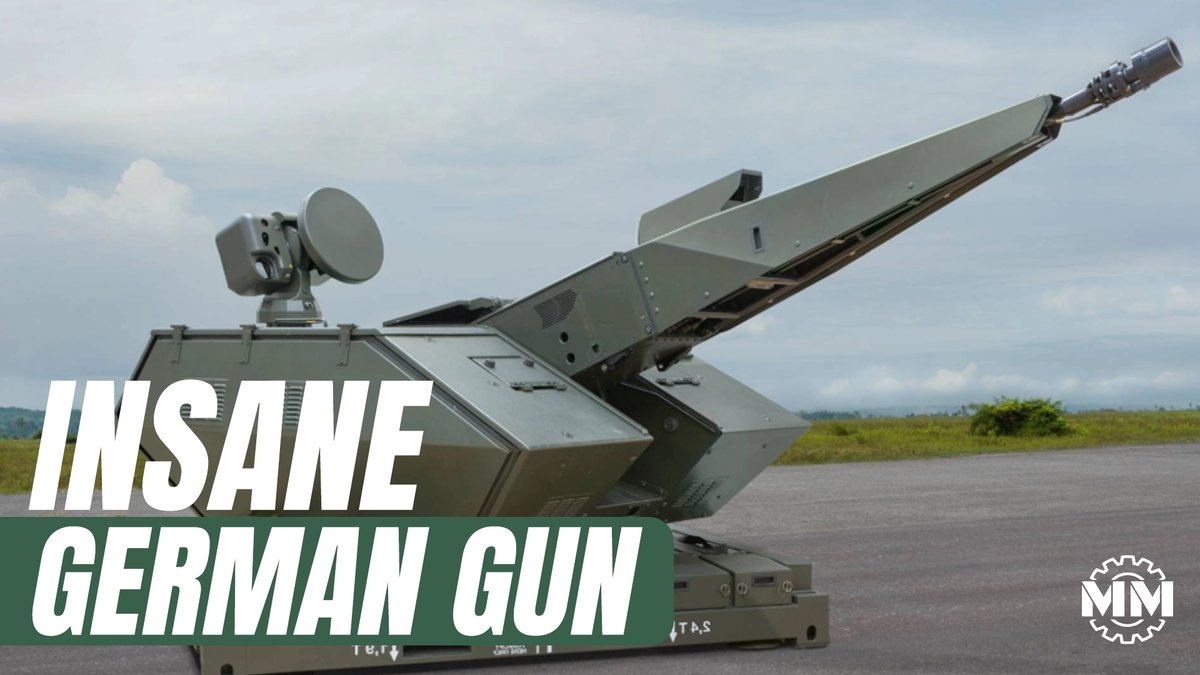
Northrup Grumman's Cannon-Based Air Defense: Long range artillery, medium-range autocannons and rapid fire HMGs all with guided projectiles could defend against swarms of drones/rockets/missiles much cheaper than an all-anti-missile-missile based defense.

19,367 просмотров • 2 лет назад •via X (Twitter)

Комментарии: 11

Фото профиля Seal of the Apocalypse
Seal of the Apocalypse2 лет назад

AI will enable drones to fly at treetop height, which means it'll be very, very hard to counter with massed direct fire because of hiding from sight.

Фото профиля Les Bien Pain
Les Bien Pain2 лет назад

So in other words, Bofors needs to revive this project.

Фото профиля ARK Electronics
ARK Electronics2 лет назад

Elevate your drone game with our USA-made, NDAA-compliant flight controllers! Trust in reliable technology that not only enhances your flights but also supports US drone manufacturing capability. 🇺🇸✈️ #USAMade #NDAA #drones #uav #uas #px4 #ardupilot #USA #unmanned #opensource

Фото профиля Hank
Hank2 лет назад

Flak cannons are so back baby!

Фото профиля BaldBishopsIronCollar
BaldBishopsIronCollar2 лет назад

I have a feeling that this works better for the older generation of expensive drones. More modern low cost drone swarms might make this fairly impractical. especially compared to lasers n the like. still vry cool, but i wonder how much one of those guided munitions actually costs

Фото профиля Tsing Shi Tao
Tsing Shi Tao2 лет назад

Return of the flak cannon.

Фото профиля Forge Maeiser 2077
Forge Maeiser 20772 лет назад

bro , cannon shells to intercept cruise missile? Serious??

Фото профиля David Mavis
David Mavis2 лет назад

Is it just a concept that will take billions to develop and a decade of cost overruns to see the light of day ? Just curious

Фото профиля van
van2 лет назад

Dome defense has to expend fullspec rounds against potential waves of cheaper decoy reconswarms before the mainevent when sensors will have battlefield map cleared of fog on shooters that the AI then Tees off on faster than human reaction time at the cyberwhiteboard showing score

Фото профиля NoSTs
NoSTs2 лет назад

Shells and Cannons are cheaper than Air defense rockets. BUT they cant really react to the attacking missile evading randomly. Only their shrapnel burst may be their upside. It would be cheaper alternative to counter "Flying Bomb like" Kamikaze Drone Swarms.

Фото профиля ToughSF
ToughSF2 лет назад

The upgrade here is that each projectile is maneuverable, able to track targets.

Похожие видео

🇮🇷 Iran’s Ballistic Missile Arsenal and the Regional Counter Strategy Fateh Series (SRBM) The Fateh family represents Iran’s core short range ballistic missile capability. These missiles use solid fuel, allowing rapid launch with minimal preparation time. Estimated range is around 300 km, designed for battlefield and regional targets. Later variants emphasize higher accuracy through improved guidance and terminal maneuvering, making them more difficult to intercept than older systems. Sejjil (MRBM) Sejjil is a two stage, solid fuel medium range ballistic missile with an estimated range of 2,000 to 2,500 km. Its solid fuel design significantly improves survivability by reducing launch detection time. Sejjil is intended as a strategic missile capable of reaching targets across the Middle East, including major military bases and infrastructure. Kheibar Shekan (Advanced MRBM) Kheibar Shekan is a newer generation solid fuel missile with a reported range of around 1,450 km. It features a maneuverable reentry vehicle, enabling mid course and terminal phase adjustments to complicate interception. This missile is optimized to penetrate modern missile defense systems rather than relying purely on range or payload. Why these missiles challenge air and missile defenses? Solid fuel propulsion shortens warning time. Maneuverable reentry vehicles reduce interception probability. High speed terminal phases compress response windows. When launched in salvos, these missiles are designed to stress and saturate defensive systems. How regional and allied forces aim to counter this threat Surrounding states and allied bases rely on layered missile defense. Patriot PAC 3 MSE addresses short range and terminal phase threats. THAAD provides high altitude interception against medium range missiles. Israeli systems such as Arrow complement regional coverage. Early warning radars, space based sensors, and shared command networks extend detection and response time. Base hardening, dispersal of assets, and redundancy reduce damage if interception fails. Intelligence driven preemptive strike capability remains a key deterrent factor. Strategic assessment Iran’s missile program emphasizes survivability and defense penetration rather than sheer numbers. In response, regional allies focus on integration, layered defense, and intelligence dominance. The outcome in any future conflict would likely depend less on individual missiles and more on coordination, saturation levels, and decision speed.. Can layered missile defense realistically stay ahead of evolving maneuverable ballistic threats?

Defense Intelligence

22,079 просмотров • 7 месяцев назад

Russian report: Gulf air defenses face a “million-dollar missile vs. a drone costing a few thousand dollars” dilemma The Russian Center for Analysis of World Arms Trade published a study and analysis concluding that Gulf states’ reliance on long-range U.S. air defense systems against low-cost threats such as attack drones creates a significant gap between the cost of the attack and the cost of interception. The center noted that an Iranian Shahed-136 drone is estimated to cost around $20,000–$50,000 , while a PAC-3 interceptor missile can cost approximately $4 million , making the interception of large-scale drone attacks extremely expensive. The report argues that systems such as Patriot and THAAD were largely designed to counter long-range threats and ballistic missiles, while Gulf states need diversified defensive layers, including short- and medium-range systems to counter drones, cruise missiles, and low-altitude targets. The center proposed strengthening air defenses with Russian systems such as Buk-M3 “Viking” for medium-range defense, Tor for short-range defense, and Pantsir-S1M to protect critical infrastructure from close-range threats. According to the report, combining long-, medium-, and short-range systems could increase the number of engagement channels and reduce the depletion of costly interceptor missiles, particularly around oil refineries, desalination plants, ports, and energy facilities. The Russian center concludes that addressing the cost gap between offensive weapons and interceptors could make large-scale drone attacks less economically viable by building a layered defense system capable of countering threats at a more balanced cost.

RussiaNews 🇷🇺

13,364 просмотров • 1 месяц назад