Загрузка видео...
Не удалось загрузить видео
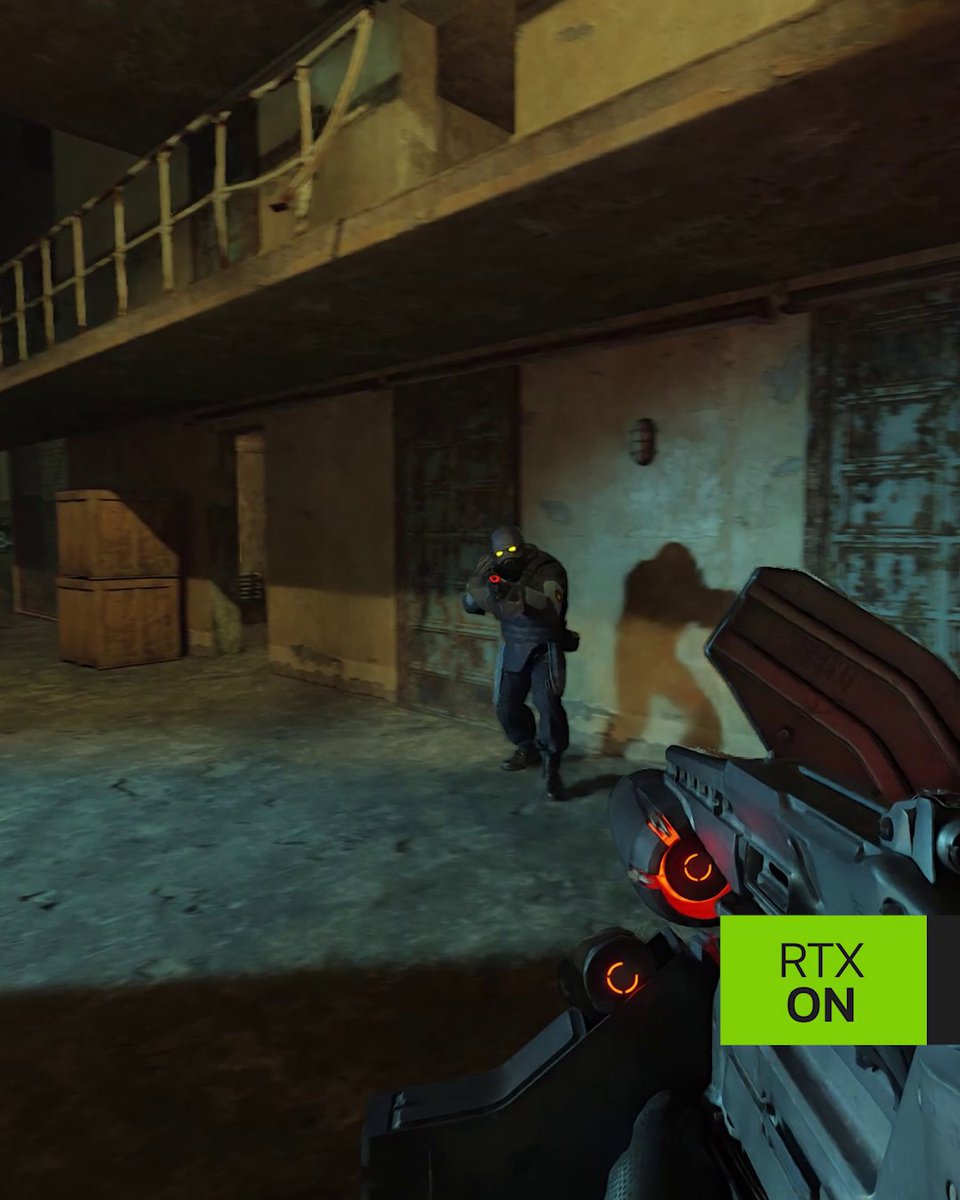
NVIDIA just showed some new relighting capabilities using gaussians, though this is pure ray tracing (no splatting). TRON extends their ray tracing library (3DGRT) to get an editable 3D material scaffold.

28,979 просмотров • 1 месяц назад •via X (Twitter)
Комментарии: 0
Нет доступных комментариев
Здесь появятся комментарии из оригинального поста




![[SIGGRAPH 2025] Photoreal Scene Reconstruction from an Egocentric Device Contributions: 1. We address the importance of employing visual-inertial bundle adjustment (VIBA) that accounts for the rolling-shutter behavior of the RGB camera. This provides a continuous camera trajectory to model pixel movement in neural reconstruction. Our experiments demonstrate that using VIBA consistently improves the novel view quality in Gaussian Splatting by +1 dB in PSNR. 2. We introduce a rasterization-based image formulation pipeline that addresses common artifacts in physical image formation, including rolling shutter, lens shading, exposure, and gain compensation. Our approach is distinct in that we represent image poses as posed pixel arrays sampled from a continuous trajectory, rather than assigning a single camera pose per image, and preserve the merit of Gaussian rasterization. Unlike existing methods that require ray-tracing Gaussians, e.g., [Moenne-Loccoz et al. 2024], our formulation is applicable to general-purpose rasterization-based Gaussian splatting. When applied to 3D Gaussian Splatting (3DGS) [Kerbl et al. 2023], our approach can further enhance reconstruction quality by +1 dB. We outperform existing baselines and demonstrate a substantial quality improvement in handling complex scenes observed by egocentric devices. 3. To reduce the effect of blur from rapid head motion in darker indoor scenes, we propose a strategy of deliberately underexposing input videos during capture, inspired by HDR+ [Hasinoff et al. 2016]. We demonstrate that we can reconstruct high-quality, noise-free scene radiance from noisy, dim input videos, and further render sharp, blur-free videos at a higher dynamic range.](https://image.24vids.com/tw-1930869546531074148/amplify_video_thumb/1930869490562293760/img/AMxv5TbQ_LRSOLJz.jpg)