正在加载视频...
视频加载失败
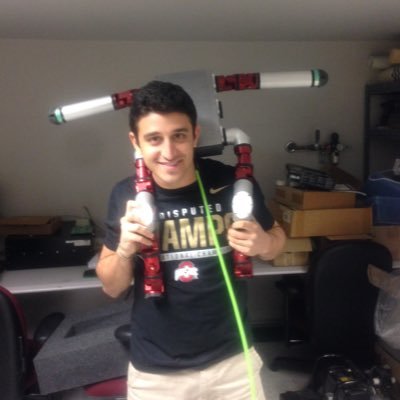
Occlusion will be a big challenge for robots operating in dense, obstacle rich environments common in manufacturing. Using low-res cameras mounted on limbs you can train a motion policy to outperform high-res head mounted or externally mounted cameras for obstacle avoidance.
11 条评论

Full paper here:

AI has made it easy for anyone to create realistic avatar videos without expensive gear. AKOOL and Synthesia are top choices for AI-generated "talking photo" videos. Which one is best for your team?

Thanks. Now I want low res eyeballs in my fingertips
Here ya go

occlusion is not a camera problem. Though this is a fun thought, I wouldn't build this.

For someone who seems to be anti humanoid, you sure post about humanoids a bunch? 😄
Also occupation is a harder problem when things are moving very quickly. Especially in crowded areas where feedback may be chaotic.

Interesting.

Use @TexavieInc MarsWear to make robots aware of environment and tactile information like hunan 🚀

Amazing. While the humanoid form-factor is, and will be for a while, more convenient in a world build by humans and for human workers, why not remove some of its limitations? Like this better targeted vision, more freedom of movement/rotation, and many more.

Point clouds are generated more efficiently with radar