Video wird geladen...

Video konnte nicht geladen werden

Zur Startseite

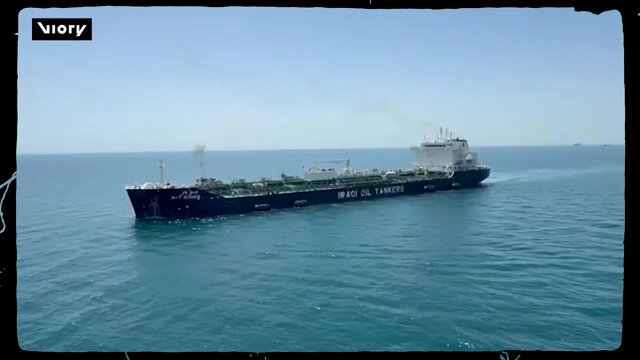
Oil power didn't stay where it started. The countries controlling energy today look nothing like the map from 50 years ago. And right now, that map is shifting again faster than anyone expected. 🇺🇸 US: from import-dependent to world's n.1 producer 🇸🇦 Saudi Arabia: 700K bpd knocked offline by...

62,767 Aufrufe • vor 5 Monaten •via X (Twitter)

0 Kommentare

Keine Kommentare verfügbar

Kommentare vom Original-Post werden hier angezeigt
Ähnliche Videos

Three attacks that happened in the past 6 hours confirm we are in global energy war. Valero's Port Arthur refinery exploded in Texas. Israeli strikes cut power to two Iranian cities. An Iranian drone knocked out electricity to part of Kuwait. This is not coincidence. This is the shape of a global energy war. Valero Port Arthur is not a random refinery. It is one of the largest in the US, configured specifically to process Venezuelan heavy crude. The Trump administration had just unlocked Venezuelan oil exports to US buyers to compensate for Hormuz disruption. That processing node is now offline. Valero Port Arthur is the next-door neighbour of Saudi Aramco-owned Motiva Port Arthur Refinery (1 km apart) with 640,000 barrels per day. The largest refinery in the United States. Motiva is the processing backbone for Venezuelan heavy crude that Saudi is helping the US redirect away from China and into Gulf Coast supply chains. Iran has been hitting Saudi energy infrastructure for weeks. The refinery that just exploded sits 1.3 miles from the crown jewel of Saudi oil processing on American soil. That is not a coincidence. Iran and its adversaries are hitting each other's downstream infrastructure. Refineries, power grids, gas terminals. The logic is simple. You cannot sustain a war economy without energy processing capacity. So you target the processing. What happened in Texas fits that pattern. This is not the first time a Gulf Coast energy facility has been hit during or after a Middle East war. It happened during the last conflict too. Port Arthur is close to the Mexican border. A drone launched from Mexican territory could reach it. That is not speculation. That is geography. The energy war is not coming. It is already global and running across 4 continents simultaneously.

MENA Unleashed

31,562 Aufrufe • vor 6 Monaten

Now that President Trump has declared that the US is in control of Venezuela and that the US plans on taking back the oil, it makes zero sense for there to still be sanctions on Venezuela under the Trump administration. The sanctions were imposed by the Trump administration in addition to an oil embargo and sanctions on entities involved in Venezuela's oil and gold industries, including "shadow fleet" tankers evading sanctions, because of Maduro’s behavior. Now that Maduro Nicolás Maduro has been captured, the Trump administration should immediately lift sanctions on Venezuela and restore all of the oil licenses to American energy executives and American oil companies. Why would you want to have sanctions on a country you yourself control when you could just re issue the oil licenses to Americans and retake the 1 million barrels of oil per day that are being exported to China from Venezuela? China shouldn’t be getting that oil. It should all be going to the United States. It’s time for America to neutralize Russia, Iran and China’s access to oil in the Western Hemisphere and assert energy dominance in Venezuela. Hopefully, we see the Trump administration reissue the oil licenses to American oil companies who have infrastructure in Venezuela. Maduro is out. Let’s make 2026 the year America controls the largest oil, rare earth minerals and gold reserves in the world. Cc: President Donald J. Trump Marco Rubio Treasury Secretary Scott Bessent

Laura Loomer

577,828 Aufrufe • vor 8 Monaten

🚨🇮🇷🇮🇱 Did Netanyahu just admit Israel’s real objective in this war? “I think that what has to be done is… just have oil pipelines, gas pipelines going west… right up to Israel, right up to our Mediterranean ports.” That wasn’t a leaked memo, it was Netanyahu saying the quiet part out loud. For years, every Middle East conflict comes wrapped in the same official packaging: security, deterrence, existential threats. And to be fair, when it comes to Iran, those concerns are real. Nuclear ambitions from a regime that wants to wipe Israel off the map is a genuine concern. But this isn’t just about centrifuges and missiles, it’s about maps. Energy maps. The Middle East runs on choke points, the Strait of Hormuz and the Bab el-Mandeb Strait, narrow arteries where a single flare-up can send oil prices into orbit. Netanyahu’s idea? Bypass them entirely. Build pipelines across the Arabian Peninsula. Route energy through Israel. Turn Mediterranean ports into the West’s new fuel tap. No choke points. No bottlenecks. No leverage for rivals. And suddenly, the question is: who benefits from redrawing the region’s energy map? Iran sits astride the current system of chokepoints and influence. Weakening Iran weakens that system. A weakened system makes alternative routes, like the ones Netanyahu is describing, a lot more attractive. Now layer in the timing. Every escalation with Iran gets framed as preemption, stop the threat before it materializes. But it also reshapes the strategic landscape in ways that just happen to align with this pipeline vision. Because if you can turn your country into the region’s energy corridor, the place where oil flows safely, predictably, profitably, you’re buying influence, leverage, and relevance. So is the Iran conflict all about this plan? Probably not. Security concerns are real. Ideology is real. Power struggles are real. But to pretend energy isn’t sitting in the background, quietly shaping incentives, quietly rewarding certain outcomes, is to ignore how the modern Middle East actually works.

Mario Nawfal

161,451 Aufrufe • vor 6 Monaten

🇺🇲🇮🇷 Iran doesn't need to win this war. It just needs to wait it out. That's economist Michael Hudson's read on where this actually stands. His comparison: Napoleon in Russia. The Wehrmacht at Stalingrad. Both defeated less by armies than by time and weather. This time, he says, the terrain is financial. Washington is draining the Strategic Petroleum Reserve to keep oil prices down before the midterms, pushing storage caverns toward limits most people don't even know exist. Iran doesn't have to escalate anything. It just has to hold the blockade and let the math do the work. And it's not just oil. Russia is now hitting Ukrainian grain shipments through the Baltic. Ukraine ships a huge share of the world's grain and sunflower exports, mostly to Europe. Harvest season is happening right now, with nowhere to put it and no safe way to ship it. Food inflation and energy inflation, compounding at the same time. Hitting economies that are already drowning in record bond yields. Here's Hudson's sharpest point: Treasury Secretary Bessent's threat, cut off anyone who helps Iran move money, doesn't just isolate Iran. It teaches every bank on Earth handling Iranian oil payments that dollar exposure is a liability. For 80 years, the dollar system let America control the world without occupying it. This war is the moment that control gets demonstrated as revocable. In front of everyone. So what's the alternative? Hudson doesn't think it's a rival currency. He goes further back, to a Keynes proposal Washington rejected at Bretton Woods in 1944: an international bank that writes down surpluses and deficits together, instead of letting creditor nations squeeze debtors forever. His case: China is the only power today with reserves large enough to sponsor something like that. And not get bankrupted trying. This was never really a clash of civilizations, he says. It's a fight over which economic order replaces the one built in 1944. And whose surpluses get to write the next set of rules.

Mario Nawfal

206,124 Aufrufe • vor 1 Monat

TWO THINGS WHICH ARE NOT TRUE: - Trump has snatched the world’s biggest oil reserve! - And cut China off from its top energy source! That’s what the world is being told – but neither is true, oil analysts said this week. In the summer of 2024, China GUESSED that the US would invade or "regime change" Venezuela and started dramatically lifting its purchases of oil from that country. It then further diversified its suppliers to have multiple oil sources. (Details in video.) As a result, Trump's latest move will have "no effect" on China's economy, western analysts say. . WORLD'S BIGGEST RESERVE? Furthermore, a number of analysts say that the claim that Venezuela has the world's biggest proven oil reserves is unlikely to be true. It comes from claims made by the exact same members of the Venezuelan government that the west keeps criticizing. Rather than 300 billion barrels of oil, the real number is more likely just one third of that, several specialists say. (See video for details and estimates.) And what oil the country does have is thick, heavy, tar-like and increasingly unwanted in the US and elsewhere. Saudi Arabia even cancelled its plans for a heavy oil processing plant. So that's what Trump is left with. And that's at a time when the world is transiting away from fossil fuels towards clean energy, renewable resources, and safe, modular nuclear power plants. . THE IMPLICATIONS From Trump's point of view, the Venezuela operation shows that the U.S. has LOTS of guns and helicopters and CIA agents and soldiers and stuff and can do anything it likes, whenever it likes, wherever it likes, without regard to morality or the rule of law. From the rest of the world's point of view, THAT is the problem.

Nury Vittachi

65,795 Aufrufe • vor 8 Monaten