Video yükleniyor...

Video Yüklenemedi

Ana Sayfaya Dön

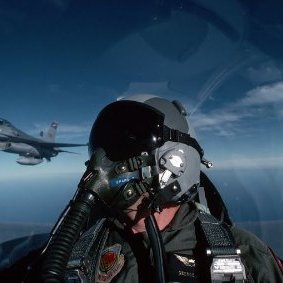
🚨One split-second decision separated this F-18 from disaster. This Spanish Air Force EF-18 Hornet shocked hundreds of thousands of spectators at the Gijón Air Festival when it suddenly rolled hard toward the sea during a low-level pass. It wasn't pilot error. The pilot detected a flock of birds directly...

714,700 görüntüleme • 5 gün önce •via X (Twitter)

0 Yorum

Yorum bulunmuyor

Orijinal gönderinin yorumları burada görünecek

Benzer Videolar

😓 Air India 🇮🇳 Flight AI171 with fully loaded Boeing 787-7 Dreamliner fatal accident: I‘m an airline pilot with >15‘000h of experience and a physics institute: My brief PRELIMINARY analysis of the visible facts from the video of the takeoff: * The flaps are only slightly extended, presumably to position 1 instead of 5. * The landing gear is still extended, which should have been retracted at this altitude and causes additional drag. * The aircraft is at a high angle of attack, which confirms the insufficient flap setting. * From the video and witness accounts, only low engine noise is audible. * Neither smoke nor fire is visible. * An engine failure is less likely. The most probable cause is presumably a human factor, an incorrectly chosen, insufficient flap setting for takeoff, and consequently an inadequately selected thrust. In this context, the correlated speeds were too low because they were calculated for a larger flap setting or a lighter aircraft. As a result, the aircraft took off with insufficient speed and intentionally but falsely derated thrust, was therefore on the unstable side, and rapidly lost more speed and altitude due to the additional failure to retract the landing gear in a timely manner, leading to a subsequent stall at low altitude and crash. For the experts: the aircraft got onto the wrong side of the speed vs drag curve and maneuvered itself into a corner from where there is no escape. Another possible cause could also have been an incorrect input of a wrong takeoff weight into the Flight Management System, resulting in too low thrust and too low speeds. The pilots got startled after takeoff, couldn’t wrap their head around what went wrong and incorrectly prioritized making an emergency call instead of flying the aircraft first, manually increasing thrust immediately to maximum, and retracting the landing gear. In summary of this very early and preliminary assessment (your confidence level should be as low as mine): The most probable cause is human error 😓 - as most of the time these days. Not because the pilots got worse (although that effect can be observed as well with prioritization of diversity over competence) - but because technology got so much better.

Iven‘s Dad

2,786,730 görüntüleme • 1 yıl önce

𝐏𝐂𝐆 𝐃𝐢𝐬𝐜𝐨𝐯𝐞𝐫𝐬 𝐒𝐞𝐜𝐨𝐧𝐝 𝐘𝐞𝐥𝐥𝐨𝐰 𝐁𝐮𝐨𝐲 𝐚𝐭 𝐁𝐚𝐣𝐨 𝐝𝐞 𝐌𝐚𝐬𝐢𝐧𝐥𝐨𝐜 𝐒𝐡𝐨𝐚𝐥 The Philippine Coast Guard (PCG) today discovered a second yellow floating buoy installed at the northern tip of Bajo de Masinloc Shoal during a routine Maritime Domain Awareness (MDA) flight conducted this morning. This follows the monitoring of an initial buoy placed in the center of the shoal yesterday, highlighting ongoing activities in the area. Moreover, the PCG has secured the precise coordinates of a reported structure observed during yesterday's operations. These coordinates have enabled a thorough review of historical satellite imagery, confirming the presence of structural debris dating back at least two years. This verification underscores that the debris is longstanding and not indicative of recent construction. Consequently, the PCG's MDA flight was subjected to aggressive interference by forces from the People's Republic of China (PRC). Immediately following the low-altitude pass of a People's Liberation Army (PLA) Navy helicopter directly beneath the PCG aircraft, a PLA Air Force Shenyang J-16 fighter jet was deployed to harass and endanger the safe flight path. Such actions pose a clear and unacceptable risk to the safety of PCG personnel and the journalists embedded on the mission. In the face of such aggressive actions, the PCG remains steadfast in its commitment to uphold international law and safeguard maritime jurisdiction in the West Philippine Sea.

Jay Tarriela

156,721 görüntüleme • 9 ay önce

In the first video, people in Donetsk are seen greeting a water tanker. In the second video, during the rain, people try to collect at least a drop of water because the water pipeline from the Siverskyi Donets was destroyed by the Russians. When Donetsk was not occupied by Russia, the city hosted the European Football Championship, as well as concerts by Rihanna and Beyoncé. Now, there is no more running water in the city. According to the schedule, water only appears in taps once every three days, and even then it doesn’t reach every household, so water has to be delivered by tankers, with long queues forming for it. People use plastic bags as toilets, and this filth spreads everywhere. This is happening not only in Donetsk - water is supplied once every two days in a number of other cities, including Mariupol. This is how Russia 'liberated' Donbas. Why is this happening? In the past three and a half years - since Russia launched its full-scale invasion of Ukraine in February 2022 - reservoirs in Donetsk Oblast have significantly dried up. The water supply system from the Siverskyi Donets River was destroyed. The region’s reservoirs and underground water sources are not enough to meet the needs of the population, in part due to the extensive network of coal mines. When the self-proclaimed “DPR” and “LPR” were created in 2014, Ukraine did not cut off this water channel, as it was still supplying water to Mariupol, which remained under Ukrainian control. But at the start of the Russian invasion in February 2022, the situation changed: the Russian army, during its offensive, destroyed a unique hydraulic structure that had supplied the region’s largest cities with water. The Russian authorities decided to build a new canal - the Don–Donbas canal - which was supposed to begin in the Rostov-on-Don area. It soon became clear that the new water pipeline, first of all, could not provide the region with the necessary amount of water, and second, it was built with numerous violations, with a large portion of the budget embezzled during construction. Crimea is also suffering from a water shortage, and the situation is worsening. One of the reasons why Russia is striving to seize southern Ukraine is that it sees this as a way to "solve the water issue" for the occupied territories.

Anton Gerashchenko

476,786 görüntüleme • 1 yıl önce

Apparently, I saw this video online and I decided to share. What this worker is applying is called bitumen, or what many of us know as bituminous coating. Most people think a wall is a solid, impenetrable block, but in reality, it is more like a sponge. Concrete and blocks have microscopic pores that pull water from the earth through a process we call capillary action. This thick black substance is the shield that stops that water from climbing up into the house. It is not about making the wall look good because this part will be buried under the dirt forever. It is about creating a skin that water cannot breathe through. When do you need to do this? The need for this arises because the soil is a very aggressive environment. Water is not your only enemy.. The ground also contains salts and sulfates that want to eat away at the cement. If this moisture finds its way to the steel bars inside the columns, those bars will start to rust. And when steel rusts, it expands, and that expansion is what cracks the concrete from the inside out. This coating is the only thing standing between your foundation and that kind of slow destruction. Thats is why if you see wet patches at the bottom of your walls inside your house, it usually means someone skipped this step or did it poorly during construction. You can apply this anytime you are building parts of a structure that will stay in contact with the ground. It is common in areas where the water table is high or where the soil stays damp for most of the year. This is a one-shot opportunity. Once you backfill the soil, you can never go back to fix it without a lot of expense and a lot of digging. It is about having the foresight to protect the heart of the building while it is still exposed. Please don’t ignore this if you need to. If you ignore it now to save a bit of money, you will be funding the future decay of your own home. I hope this helps.

A.Y.O

75,399 görüntüleme • 3 ay önce

Contrail lesson! 1. “Chemtrails” don’t exist. Just to get that out of the way. 2. Observe the satellite loop and Skew-T chart. In the IR satellite loop you can see yesterday, the West Coast had a decent short wave ridge suppressing moisture over California and Nevada. Today, you can see moisture from a low pressure over the Pacific spilling over the ridge that is now moving east of California. This is upper level moisture ADVECTING into the area. This upper level moisture is mainly above the 500mb level, or 20,000ft. 3. Now observe the Skew-T chart. Particularly clue into the 300mb level. This is a perfect example of what I talk about all the time, and why it’s important to pay attention to the 300mb level. This moisture layer is advecting particularly at the 300mb level, and synoptic scale cirrus development, and advection, typically occurs at 300mb. This is key because aircraft are flying at and above the 300mb level. 4. So, lastly, observe the pictures that I took of the sky over northern Nevada at the time of this post. You can see the layer of cirrus as well as contrails persisting in that moisture layer, exactly as depicted in the satellite shot AND confirmed by the Skew-T chart. Keep in mind that temperatures at this level of the atmosphere are typically -20 to -50°C. In this case, you can see that the temperature at 300mb is -40°C and relative humidities at this level are far different than what you experience at the surface. Any decrease in the gap between temperature and dewpoint at this level can significantly increase the relative humidity. This is why it’s referred to as “relative”because it’s far different than temperatures and dew points at the surface. So, to bring it all together, aircraft flying at these altitudes, which most commercial and military aircraft do, injecting warm, moist air from the engines rapidly into the super cooled environment, not only instantly form contrails, but when relative humidities are as depicted in this example, will enable contrails to persist for hours at a time supported by the moisture existing in that layer. This is what causes persistent contrails. These ARE NOT “chemtrails” and because they persist, does not, and will not ever, make them “chemtrails.” Now that you all needed your government to tell you that climate change was a hoax and I’ve been telling you for years that the “Geoengineering” and “chemtrail” nonsense are propaganda directly related to the climate change hoax, hopefully you can take some time to learn the basics of the atmosphere and understand what I’m showing you here, and how it works, so you’re not fooled by climate propaganda going forward. Thank you for your attention to this matter. 💪🏼🇺🇸

Dylan Tucker

26,804 görüntüleme • 9 ay önce

This is real gun camera footage from a P-51 Mustang, chasing a German Bf 109 down to the treetops until it goes down in flames. The American pilot flying it, Lt John Kirla, shot down five enemy planes in a single day, becoming an ace in one mission. This footage captures one of his victories over a Bf 109. This is his story.. From Trainee to the Yoxford Boys John Kirla was not a born fighter ace. He was an ordinary young American who had come up through flight training in Texas, graduating at the start of 1944. He learned his trade on trainers, moved up to fighters, and got just 15 hours in the P-51 Mustang before being sent to England as a replacement pilot. He joined the 362nd Fighter Squadron of the 357th Fighter Group, a unit based at Leiston that was already becoming a legend. The 357th was the first group in the Eighth Air Force fully equipped with the Mustang, and it would go on to produce more aces than any other fighter group in the Eighth, including Chuck Yeager and Bud Anderson. Kirla was the newest pilot in a squadron already filled with experienced aces. His job was to escort American bombers deep into Germany and protect them from the Luftwaffe. On November 27 1944, he got the day that would define him. Five Victories in One Mission That morning the 357th ran headlong into a massive swarm of German fighters trying to get at the bombers. Kirla's flight dropped their fuel tanks and dived straight into the middle of it. Almost immediately, the fight became a swirling, low-level brawl of Mustangs, Messerschmitts, and Focke-Wulfs twisting across the sky. Kirla picked out his first target and opened fire, and from that moment he did not stop hunting. In his own account, he spotted a Bf 109 that was attacking an American bomber. He went after it, closed to just 30 yards, and when the German threw his fighter into a tight barrel roll straight down toward the ground, Kirla stayed glued to his tail and, in his words, clobbered him all over until he went down. An Ace in a Day He kept finding more. Again and again through that wild, sprawling fight, Kirla latched onto an enemy aircraft and did not let go. At one point he watched a German fighter shoot down one of his fellow Mustang pilots right in front of him, and closed in for revenge. As he described it afterward, he opened fire, saw pieces start to fly off the enemy aircraft, and watched it fall out of the sky like a leaf drifting to the ground. Rather than breaking away and climbing back to safety, Kirla chased his targets down low, following them almost to the ground, the fighters weaving over villages and treetops until the enemy aircraft finally went down. By the time the fight was over, John Kirla had shot down five German aircraft in a single mission. He had become an ace in a day, one of the relatively few American fighter pilots to achieve that in a single mission. The Mustang That Changed the Air War The Mustang was the aircraft that made days like Kirla's possible. The P-51 combined long range, high speed, and deadly firepower, and it could follow the bombers all the way to their targets and fight the German fighters on equal or better terms. By the end of the war, P-51 groups had claimed close to 5,000 enemy aircraft shot down, about half of all American air-to-air kills in the European theater. Kirla's own group, the 357th, became the top-scoring Mustang group in the Eighth Air Force. Flying one of the finest escort fighters of the war, men like Kirla helped turn the tide of the air war over Germany. The gun-camera film rolling every time he pressed the trigger captured it all, including the footage you are watching. John Kirla's Legacy John Kirla flew on to the end of his combat tour and finished the war as a double ace, credited with 11 and a half enemy aircraft destroyed in the air. He was awarded the Silver Star and the Distinguished Flying Cross for his courage in the skies over Europe. He had gone from a trainee with a handful of hours in a Mustang to one of the deadliest fighter pilots in one of the deadliest fighter groups of the war, in the span of a single year. The footage of his Mustang chasing a Bf 109 down to the trees is only a few seconds long. But behind those few seconds is a young American who climbed into a fighter, dove into a swarm of the enemy, and shot down five of them before the day was out. This was the story of John Kirla. I post a story like this every single day. Most people never see them. Follow so you don't miss the next one.

Untold War Stories

156,432 görüntüleme • 1 ay önce