Video wird geladen...

Video konnte nicht geladen werden

Zur Startseite

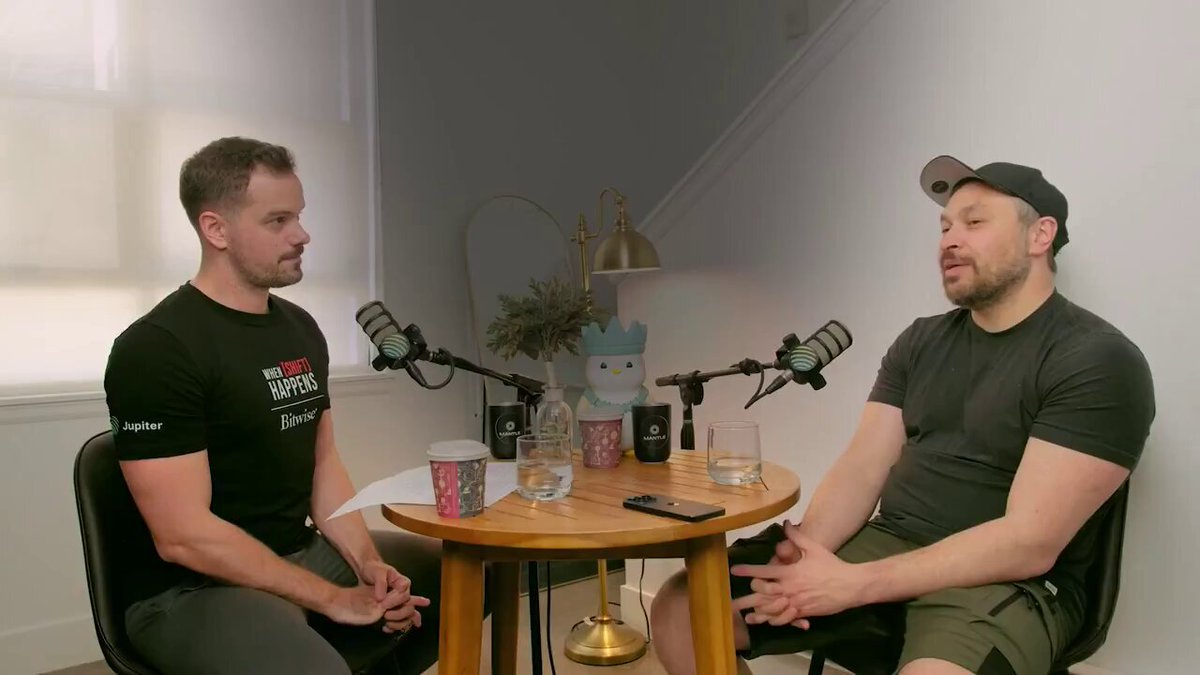
POD UP! Core four is back 🚨 Big show: -- SpaceX-Cursor deal, using compute as leverage -- SaaS debt bomb coming to PE?, venture debt risk -- Software bloodbath, buy low potential? -- New Apple CEO: future of the company -- SPLC indictment, major allegations, out of control NGOs...

235,709 Aufrufe • vor 2 Monaten •via X (Twitter)

0 Kommentare

Keine Kommentare verfügbar

Kommentare vom Original-Post werden hier angezeigt

Ähnliche Videos

"A Colonoscopy Is Far Too Dangerous, I Recommend Against Them." Dr John McDougall, MD "7 Out Of Every 100 People Suffer Serious Major Complications." "1 In A 1,000 Have A Colon Perforation & Half Of These People Will Die. "Colonoscopies Are Harming More Lives Than It Saves." ✳️Written Post Contains... 1⃣ Research data, 2⃣ Colonoscopy complication rates 3⃣ Alternative screening methods to colonoscopy 1⃣ The U.S. is the outlier of the world who uses colonoscopy as 1st line colon-cancer screening modality. There are about 15 million colonoscopies done in the U.S. every year. In 2001, Medicare agreed to pay for colonoscopy as a screening tool & that’s when the US made Colonoscopy as 1st line diagnostic. It is for money & profit, not health. Europe, Canada, Australia & parts of S America do not use Colonoscopy as a preventive screening. In those countries, the predominant colon-cancer screening is the stool test, or the newer version of that called FIT. The absolute risk of developing colon cancer for people following the Standard American Diet is 2.5%. Risk of cancer rate drops to almost 0% when a low carb/low sugar diet is followed. Yet, colonoscopy complication risk is 7%. One of the most serious hazards, often leading to death, is perforation of the colon, which occurs in about 1 per 1,000 procedures. It takes 1,250 people screened with colonoscopy to diagnose 1 cancer. This is almost an even exchange: for 1 cancer diagnosis & potential life saved, 1 life is lost from a complication, like perforation. 3 Highly regarded institutions warn colonoscopy does not reduce mortality... The Journal of the American Medical Association Internal Medicine boldly stated, “…there is no randomized clinical trial (RCT) (or other high-quality evidence) showing that colonoscopy reduces CRC (colorectal cancer) mortality. In fact, the only tests shown to reduce CRC mortality in RCTs are periodic FOBT (fecal tests). The lack of benefits, & substantial costs & harms, has caused the Canadian Task Force on Preventive Care to tell the citizens of Canada: “We recommend not using colonoscopy as a screening test for colorectal cancer.” The New England Journal of Medicine published the NordIC trial, the largest randomized study published on the possible benefits from colonoscopy 10 years after screening..."The risk of death from any cause was 11.03% in those who had colonoscopy & 11.04% in those who did not have a colonoscopy." Unfortunately, these undeniable findings that screening using colonoscopy will not reduce your risk of dying will have little influence on medical doctors & facilities performing this highly profitable procedure, which brings in $4Billion profit each year. 2⃣ Colonoscopy Complication Rates: GI Microbiome: The harsh prep of toxic polyethylene glycol (PEG) to clean out the entire digestive tract ahead of a Colonoscopy kills 99% of beneficial good bacteria. Resulting is months of digestive issues as the digestive tract attempts to recolonize. Cardiac Event: 1 in 100 will suffer an Arrhythmia or Myocardial infarction. Bleeding: 1 in 2,000 will suffer bleeding needing inpatient intervention. Bowel Perforation: 1 in 1,000 requiring emergency surgical repair with risk of fatality. Spleen Injury: 1 in 6,000 from colorectal endoscopy tool injures the Splenocolic Ligament, emergency surgery & possible fatality. Infection: 1 in 1,000 will suffer bacterial infection which can develop into Sepsis. 3⃣ Non Invasive alternative testing is superior to Colonoscopy, used in most other countries around the world: Virtual Colonoscopy: used for colon cancer screening & to detect polyps or other growths in the colon. Camera Pill: used for colon capsule endoscopy (CCE) to examine the colon. The M2-PK: (tumor M2-pyruvate kinase) test is a non-invasive screening test that can detect colorectal cancer & polyps early. FOBT: Fecal Occult Blood Test is a non-invasive stool test to detect blood, cancer & polyps. FIT-DNA: Fecal Immunochemical Test detects altered DNA in serum blood tests & in stool. 👇Cardiac Events Post Colonoscopy👇 👇Other Countries Use Non Invasive Colon Tests👇 👇Post Colonoscopy Infections👇 Speakers: Chris Wark & Dr John McDougall, MD

Valerie Anne Smith

709,625 Aufrufe • vor 9 Monaten

Today: a 1.5 hour interview with the co-founders of Coherence Neuro: Ben Woodington and Elise Jenkins They are, as far as i can tell, the only (neurotechnology x oncology) startup that exists today. 'Neurotechnology? For cancer?' you may ask. Yes! As it turns out, tumors interact with the nervous system a fair bit, and you can use the very same neuromodulation toolbox that exists for neuropsychiatric conditions, for monitoring and treating cancer. Coherence has built an invasive device to place at the site of a tumor to do exactly this. Their first indication is a form of brain cancer called glioblastoma; one of the most fatal subtypes of cancer to exist today. The standard of care (with one exception that we discuss) has not changed in 25 years. If Coherence works out, and there is a very real chance they will, that may change. Most interesting of all is that Coherence believes that the bioelectric properties of cancer are not just worth poking at for brain cancers, but for all cancers. And maybe even for diseases outside of it! This conversation covers how Coherence’s first neurotech device (SOMA) works, the molecular reasons behind why neuromodulation affects cancer at all, what the biomarker readouts look like, the obvious Michael Levin comparison, and a lot more. Also: shout to Nicole for setting up the connection here in the first place! Crazy to think that a meeting in mid-2025 ended up leading to this Youtube/Spotify/Apple Podcasts links in replies 0:00:00 - Introduction 0:01:42 - How is SOMA different from Novocure’s Optune? 0:08:57 - Why does neuromodulation affect cancer at all? 0:13:28 - How was cancer-nervous system crosstalk first discovered? 0:15:42 - Anti-epileptics and beta blockers as accidental cancer drugs 0:17:38 - What is molecularly happening when you block cancer-neuron crosstalk? 0:19:50 - What is SOMA actually reading out as a biomarker? 0:20:44 - What does it mean that cancer is “very electric”? 0:22:02 - Can you derive universal biomarkers across patients? 0:23:09 - How is the device placed? 0:24:45 - How does the blocking stimulation regime work? 0:26:43 - Is it fair to say this is closed loop? 0:29:05 - Why not just spam the tumor with constant stimulation? 0:32:31 - Why MRI safety is non-negotiable for oncology devices 0:33:35 - Walk us through the patient journey from diagnosis to implantation 0:36:13 - The Michael Levin question: can you reprogram cancer back to normal? 0:42:29 - Efficacy, hospice settings, and the utility of the neuromodulation literature 0:45:52 - Why start with glioblastoma instead of an easier cancer? 0:48:57 - Regulatory strategy and the reimbursement threat 0:55:37 - How well does mouse-to-human translation work for neuromodulation? 0:55:57 - What do in silico models of neuromodulation look like? 0:58:09 - Why didn’t this exist 10 years ago? 1:01:48 - The founding story 1:06:38 - Why build your own device instead of using off-the-shelf arrays? 1:08:35 - Speaking with glioblastoma patients 1:12:04 - What was it like to raise money for this? 1:13:56 - Beyond cancer: TBI, lung disease, and the pan-disease argument 1:17:40 - Hiring at Coherence + what is the hardest type of talent to find 1:23:17 - What would you do with $100M equity-free? 1:27:15 - Are you a neurotech company or a cancer company?

owl

37,299 Aufrufe • vor 4 Monaten

SpaceX’s AI arm is partnering with coding startup Cursor in a deal worth no less than $10 billion and as much as $60 billion. Can the pair topple the rising Anthropic-OpenAI AI coding axis? A lot of money is being bet that the answer is yes. Next up, Lon Harris and alex 🏴‍☠️🇺🇸🇺🇦 invited the bitstarter team on the show to discuss their work to help kickstart new Bittensor subnets. The dynamic duo had a new program to announce, so make sure to tune into their pitch if you have dreams of launching your own subnet. Then we brought TrajectoryRL onto the pod, a Bittensor subnet that holds competitions to improve agent skills. Yes, the markdown files that everyone who uses OpenClaw swears by. Hit play, let’s have some fun! 2:27 Plaud: If your work depends on conversations — interviews, meetings, calls — you need a Plaud NotePin. You can check it out at and use code TWIST for 10% off! 4:07 SpaceX/ xAI "partners" with Cursor! 9:35 Will the Cursor deal help pump a future SpaceX IPO? 9:57 LinkedIn Jobs - Hire right, the first time. Post your first job and get $100 off towards your job post at 12:14 How AI coding models like Cursor help xAI grow recursively. 17:24 Chris Zacharia and Brian McRindle of Bitstarter join the show. 20:23 Grasshopper Bank: Time is money. Don't waste either. Go to and get an exclusive $500 cash bonus just for opening an account. 29:59 Notion - Notion brings all your notes, docs, and projects into one connected space that just works with AI built right in. Try Notion, with Notion Agent, at 33:03 How Bittensor subnets monetize and how it compares to VC funds. 37:04 Is Bittensor hard-capped at 128 subnets? 42:37 Bittensor's biggest weakness. 46:10 Ning Ren of TrajectoryRL joins the show. 47:34 Skills now need entire agents just to write them! 48:26 Back up… What are skills? 1:07:38 Amazon and Anthropic's $5 BILLION deal 1:08:48 Google has 2 new chips! 1:09:50 Apple CEO, Tim is COOKED! John Ternus is in! 1:11:37 Alex is bullish on MacBook Neo! 🎥 Watch the full episode here 👇

This Week in Startups

19,991 Aufrufe • vor 2 Monaten

SpaceX was just rumored to be worth $800B But retail investors are still locked out Unless you buy $SATS It's the next retail favorite: a SpaceX treasury play trading at a HUGE discount to NAV. Shoutout @transhumanica for being the first to call this 🧵🚀 You know Echostar ($SATS) as the OG telecom behind Dish Network. It was on death's doorstep but 3 blockbuster Spectrum deals changed everything. 1. $17B deal with SpaceX (half stock/half cash) 2. $23B spectrum sale to AT&T 3. Another $2.6B deal with SpaceX (all stock) These deals turned $SATS into a SpaceX proxy. It got $11.1B in SpaceX stock at a $400B valuation. If the $800B is true. $SATS is now sitting on $22.2B of SpaceX stock and tens of billions in cash and other assets. But its market cap was only $23B after the market close Friday (even after +10% pop) So what is $SATS actually worth? Well even if these rumors are false the math is: ~$11.1B in SpaceX ~$17B in projected net cash ~$6.4B in other spectrum assets ~$3B Boost mobile So ~$37.5B NAV. SATS popped 10% Friday because of the rumor and only closed at a $23B. Let's compute NAV with SpaceX worth $800B. ~$22.2B in SpaceX ~$17B in projected net cash ~$6.4B in other spectrum assets ~$3B Boost mobile So ~$48.6B NAV Echostar is trading at ~100% discount to its balance sheet if this valuation rumor is true. What's crazy is that $SATS should be trading at a PREMIUM to net asset value. The closest publicly traded SpaceX proxy is DXYZ. It's a closed-end fund with about 50% of its assets in SpaceX. It trades at a whopping 270% premium. $3 for every $1 of SpaceX... Now you may be wondering why I’m projecting $SATS to have $17B in cash despite currently having $27B of debt, and the SpaceX and AT&T deals only offering around $30B cash. This is probably the biggest thing that investors don’t currently understand. The Echostar holding company isn’t responsible for paying off the debt of some of its subsidiaries like Dish Network and Hughes Network Systems. These account for around $14B of that debt. Echostar only needs to pay off $11.4B of its debt because its tied to its spectrum assets as collateral. Hence $17B in cash. It's worth noting that the deals aren't done yet + SpaceX $800B is a rumor. But the government wants these deals done and SpaceX will be worth $2-3T by 2030. So how can you not get in and buy discounted SpaceX stock through $SATS. Another reason $SATS will explode? 95% of Echostar's float is held by institutions. That remaining 5% will get attacked by retail once its figured out. At the time I'm making this thread $SATS jumped 10% Sunday night pre-market. That's +20% in 72 hours. The market is waking up but it's still very confused. Big thanks to @transhumanica who published the original thesis on Echostar being a SpaceX proxy. You MUST follow him as he was behind the $KRKNF Anduril proxy TOO. He's got some of the best research in the game and a must follow on this platform if you want real alpha. If you want to stay up to date with $SATS, I'm going to cover it more here Michael Sikand 🦑 Will also discuss on my stream tmrw with WOLF I highly recommend you just watch my YouTube video as it's far more comprehensive than this thread.

Michael Sikand 🦑

56,862 Aufrufe • vor 7 Monaten

🚨A 25 YEAR OLD BUILT THE FASTEST GROWING SOFTWARE COMPANY IN HISTORY.. WITH ZERO MARKETING SPEND.. AND SPACEX JUST OFFERED $60 BILLION TO BUY IT.. His name is Michael Truell.. He started coding at 11.. Interned at Google at 18.. Dropped out of MIT to start a company that built AI tools for mechanical engineering.. That company failed.. So he pivoted.. And built Cursor.. An AI-powered code editor that writes software for you.. Here's how fast it grew.. $100 million in annual revenue in 12 months.. Fastest in SaaS history.. Broke every record ever set by Slack, Zoom, and Wiz.. $500 million by month 21.. $1 billion by November 2025.. $2 billion by February 2026.. Projected to hit $6 billion by end of year.. Zero marketing spend.. Not a single dollar.. Pure word of mouth from developers who couldn't stop talking about it.. Over 1 billion lines of code accepted per day.. Used by 70% of Fortune 1000 companies.. Every single one of Nvidia's 40,000 engineers uses it.. Coinbase hit 100% adoption among their developers.. And he did this with a team of four MIT co-founders.. One of them was a three-time International Math Olympiad competitor from Pakistan.. Another was a college squash captain with zero startup experience who built the entire product strategy.. They spent zero on sales.. Zero on ads.. Zero on growth hacking.. The product sold itself.. But here's where the story takes a turn nobody expected.. Even at $50 billion valuation.. Even generating billions in revenue.. They hit a wall.. Not a market wall.. A physics wall.. They couldn't get enough GPUs to train their next AI model.. The physical chips didn't exist in sufficient quantities for them to buy.. Money couldn't solve the problem.. Enter Elon Musk.. On April 21.. SpaceX announced a deal to potentially acquire Cursor for $60 billion.. The largest acquisition option in tech history.. The structure is insane.. SpaceX gives Cursor immediate access to Colossus.. xAI's supercomputer equivalent to one million Nvidia H100 GPUs.. For nine months of joint development.. At the end.. SpaceX can buy the company for $60 billion.. If they don't buy it.. They owe Cursor a $10 billion breakup fee.. The largest breakup fee in corporate history.. Think about what that means for Cursor.. Either they get acquired for $60 billion.. Or they walk away with $10 billion in cash and nine months of free training on the most powerful supercomputer on earth.. There is no losing scenario.. And here's why Musk wants it.. SpaceX is preparing for an IPO at $1.75 trillion.. The biggest IPO ever.. But aerospace alone can't justify that number.. By merging xAI into SpaceX.. And now acquiring Cursor.. Musk transforms SpaceX from a rocket company into an AI empire that owns the compute, the models, and the developer tools.. Cursor is the missing piece.. The application layer that puts xAI's models into the daily workflow of every Fortune 500 engineering team.. Oh and one more thing.. In 2022.. FTX's trading firm Alameda Research made a seed investment in Cursor.. During the FTX bankruptcy.. Liquidators sold that stake for $200,000.. That stake is now worth approximately $3 billion.. Sam Bankman-Fried called it the worst liquidation decision in venture capital history.. From a prison cell.. A failed mechanical engineering startup.. Pivoted by four kids from MIT.. Zero marketing.. Zero sales team.. Built the fastest growing software company in history.. And now SpaceX is writing a $60 billion check for it.. This is the most insane founder story in Silicon Valley history.. And most people haven't even heard of Michael Truell.

Evan Luthra

988,417 Aufrufe • vor 2 Monaten

Research suggests that up to 40% of cancer cases could be prevented through lifestyle changes. The evidence is now overwhelming: exercise is not just supportive—it’s a therapeutic intervention that recalibrates tumor biology, enhances treatment tolerance, and improves survival outcomes. Today’s interview features Dr. Kerry Courneya. With over 600 peer-reviewed studies, he is one of the most influential figures in exercise oncology. Even if you aren't someone who has personally experienced cancer in one form or another, you need to watch this episode. Episode 99 is Available now on X, YouTube, Spotify, and Apple Podcasts. Chapters: 0:00 - Introduction 1:47 - Why exercise should be effortful 2:33 - How to meaningfully reduce risk of cancer 6:22 - What type of exercise is best? 7:59 - How exercise reduces risk—even for smokers and the obese 10:48 - Weekend-only exercise 13:49 - 150 vs. 300 minutes per week (more is better—up to a point) 16:03 - Why pre-diagnosis exercise matters 19:09 - Why resilience to cancer treatment starts with exercise 21:01 - Why low muscle mass drives cancer death 23:58 - Why BMI fails to measure true obesity 27:51 - Why daily activity isn't enough (structured exercise matters) 29:34 - Breaking up sedentary time—do ‘exercise snacks’ help? 31:50 - Supplements vs. exercise 32:32 - Where exercise fits with chemo and immunotherapy 35:30 - Why rest is not the best medicine 41:20 - Aerobic vs. resistance 42:13 - How weight training improves 'chemo completion' 44:41 - Why exercise creates vulnerability in cancer cells (limitations do apply) 47:09 - Why exercise might be crucial for tumor elimination 53:03 - Why cardio may be better at clearing tumor cells 56:18 - When cancer spreads quickly—and when it doesn't 57:43 - Why liquid biopsies may prevent over-treatment 1:02:56 - Exercise-sensitive vs. exercise-resistant cancers 1:06:06 - Prostate cancer therapy—why strength training matters 1:08:10 - When exercise is the only therapy—does it work? 1:09:26 - Why HIIT reduces PSA in prostate cancer 1:11:40 - Avoiding overtreatment—can exercise buy you time? 1:12:00 - Why high-intensity exercise boosts anti-cancer biology 1:13:11 - Turning a diagnosis into a wake-up call 1:16:11 - Why oncologists are rethinking exercise 1:18:50 - Why exercise eases anxiety about cancer—proven psychological benefits 1:25:00 - Before, during, and after treatment 1:27:02 - Why exercise is unique among cancer therapies 1:28:16 - Why cancer patients stop exercising—the risky mistake almost everyone makes 1:30:41 - How to get sedentary cancer patients exercising (realistically) 1:33:15 - The $1 million case for including exercise 1:34:56 - Why recurrence trials haven't convinced doctors—yet 1:37:36 - The bottom-line message 1:37:55 - The myth of a cancer panacea (exercise included) 1:44:07 - What's the best $50 investment for staying active? 1:44:40 - Only 15 minutes per day—what’s the best anti-cancer exercise?

Dr. Rhonda Patrick

219,784 Aufrufe • vor 1 Jahr

The new Huberman Lab episode is out: Master Self Control & Overcome Procrastination | Dr. Kentaro Fujita 0:00 Kentaro Fujita 3:08 Marshmallow Tests, Self-Control; Adult Modeling 8:24 Criticism of Marshmallow Tests, Learning Self-Control 15:08 Sponsors: David & Lingo 17:34 Movement & Motivation 21:42 Doing Hard Things; Exhaustion & Depletion Effect 29:02 Willpower vs Self-Control, Improving Self-Control 34:27 Aspiration or Fear for Motivation, Long- vs Short-Term Outcomes 40:55 Self-Control Toolkit, Tool: Failure & Exploration 46:44 Sponsor: AG1 48:28 Motivation Warm-Up?, Tools: Mindset; Motivation Orientation 57:30 Imperfect Conditions, Self-Control Conflicts, Tool: Why vs How 1:05:25 Tool: "Whys" & Motivation Goals 1:11:26 Competition, Tool: Motivation Types 1:17:13 Sponsor: LMNT 1:18:33 Abstinence vs Moderation, Consistency vs Rigidity 1:27:48 Burnout; "Invisible" Goals, Single Goal & Trade-Offs 1:35:17 Intrinsic Motivation for Sustained Goals 1:40:16 Sponsor: Function 1:41:53 Meaning in Simple Tasks, Ikigai 1:49:03 Self-Control Failure, Tools: Distancing, 3rd Person & Heros 1:55:04 Words as Motivation, Visualization, Social Validation 2:03:51 Music, Anchors, Nostalgia 2:06:46 Intrinsic vs Extrinsic Motivation, Job & Salary 2:14:11 Mindfulness & Taking Breaks, Wabi-Sabi & Imperfection, Ikigai 2:20:56 Future Directions 2:25:19 Zero-Cost Support, YouTube, Spotify & Apple Follow, Reviews & Feedback, Sponsors, Protocols Book, Social Media, Neural Network Newsletter Includes paid partnerships.

Andrew D. Huberman, Ph.D.

196,784 Aufrufe • vor 2 Monaten

Alex Behring and Daniel Schwartz have almost never spoken publicly about how 3G Capital invests and operates. The firm is different in many fascinating ways. Every fund they raise is designed to make exactly one investment. They invest more of their own money than any of their limited partners in every deal and send their own people to run the businesses as CEOs and CFOs. Over 20 years they have never lost money on a deal. The conversation includes the story of how they spent 15 years building a relationship with the founding family of Hunter Douglas before getting the opportunity to buy it. They describe receiving a two line rejection email from Tim Hortons after weeks of silence and how they managed to get back to the table and close the deal. They talk about how they bought Burger King for a billion dollars when no other firm showed up to compete. And they explain why Skechers being the third largest sneaker company in the world surprised even them. A major theme is how they develop talent. Daniel was an analyst who became CFO at 26 and CEO of Burger King at 32. Alex became CEO of the largest railroad in Latin America when he was 30. They explain what they look for in young people, why they give them significant responsibility faster than anywhere else, and what it takes to set them up to succeed while holding an unusually high bar. Daniel and Alex are two of the most talented and intense people I know. They are incredibly serious about business quality and disciplined about waiting for the right opportunity. They would rather do nothing than compromise. Enjoy! Timestamps: 00:00:00 Episode Intro: Daniel Schwartz & Alex Behring 00:01:20 The "One Investment Per Fund" Model 00:05:39 Characteristics of Great Businesses 00:08:40 The Unique Structure of 3G Capital 00:14:21 Why Hunter Douglas Was Appealing 00:20:15 Alex's Railroad Story 00:28:12 The "Burger King is Run by Children" Story 00:30:38 Negotiating with Tim Hortons 00:38:18 Be Wired for Urgency 00:46:43 3G's Operating System 00:55:35 Why Burger King Was Undervalued 00:59:43 From Zero to $2 Billion in France 01:01:42 Kraft Heinz: Concentration Risk 01:04:25 Skechers: Great Product Meets Great Distribution 01:13:10 Zero-Based Budgeting & When It Works 01:16:28 The Current State of Capital Markets 01:23:04 3G's Founder-Led Focus 01:28:57 The Kindest Thing

Patrick OShaughnessy

42,954 Aufrufe • vor 5 Monaten

The new Huberman Lab episode is out: Using Existing Drugs in New Ways to Treat & Cure Diseases of Brain & Body | Dr. David Fajgenbaum (David Fajgenbaum, MD) 0:00 David Fajgenbaum 4:06 Self-Agency in Healthcare; New Uses for Old Medicines 6:44 Other Uses of Aspirin & Viagra; Drug Development & Approved Use 8:53 Lidocaine & Breast Cancer; Pharmaceutical Companies & Incentives 11:36 Sponsors: Eight Sleep & Rorra 14:16 Pharmaceutical Companies, Patents & New Uses; Lithium 18:40 Tools: Finding Reliable Health Sources, Asking Questions & Disease Organizations; DADA2 Treatment 21:53 Medical Community & Connections; Integrated Medical Databases 24:36 Drug Repurposing, Thalidomide, Pembrolizumab 28:45 Medical Research Databases, Mapping Disease Connections 33:51 Every Cure Database & Programs, Bachmann-Bupp Syndrome; Colchicine & Heart Disease 37:57 Sponsors: AGZ by AG1 & David 40:41 David's Medical & Career Journey, Glioblastoma, Castleman Disease 49:10 Autoimmune Disease, Driven Personality, Stress & Immune System 52:52 Castleman Disease, Treatment, Chemotherapy 55:54 Physician Continuing Education, Santa Claus Theory of Civilization; Science Collaboration 1:03:32 Medical School, Relapse & "Overtime", Finding a New Treatment, Rapamycin 1:12:46 Sport, Football & Resilience; Challenge & Personal Growth, Family 1:18:41 Sponsor: Function 1:20:29 Social Support; "Overtime", Gratitude 1:23:19 Business School, Castleman Disease Treatment; Repurposing Drugs & AI 1:28:29 Drug Repurposing, POEMS Syndrome; Mitigating Risk 1:35:32 Nicotine, Compounds for Preventive Health; GLP-1 Agonists 1:40:51 Bioprospecting, Drug Development; AI, Prioritization & Novel Connections 1:46:18 Healthcare & Children; Hope, Action & Impact Circuit; Challenge & Super-Agers 1:52:50 Get Involved with Every Cure 1:56:20 Zero-Cost Support, YouTube, Spotify & Apple Follow, Reviews & Feedback, Sponsors, Protocols Book, Social Media, Neural Network Newsletter Includes paid partnerships.

Andrew D. Huberman, Ph.D.

682,927 Aufrufe • vor 8 Monaten

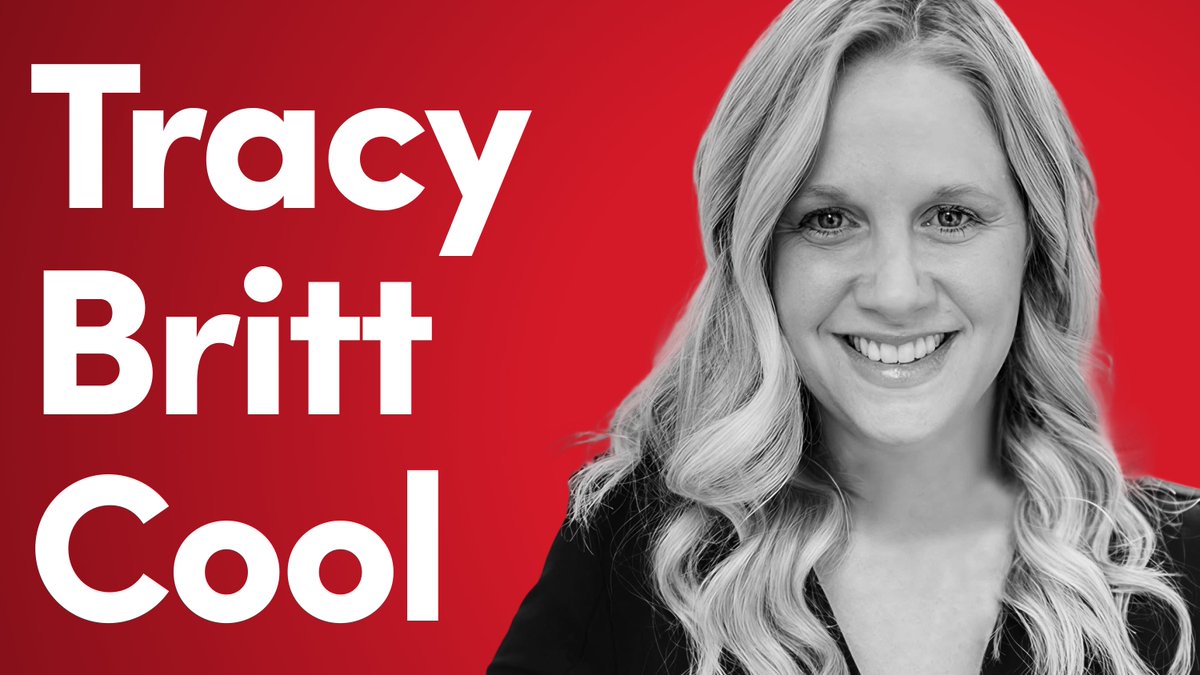
My conversation with Tracy Britt Cool. Warren Buffett called her his "fireman" because of her reputation at Berkshire Hathaway for turning around struggling businesses. In this conversation, you'll learn exactly how she did it, how she evaluates businesses, and the mistake that most people make when hiring. (0:00) Intro, recent reading, and family life (3:04) Alan Mulally's Turnaround at Ford (4:22) The Work Test (5:03) The Pampered Chef Turnaround (7:06) How Value Creation is Changing (8:38) Why Companies Fail to Adapt (10:09) Lessons from the Farm (16:57) Lessons from Warren Buffett (18:25) Ad Break (20:57) Buying Companies at Kanbrick (22:38) The 3 Components of Long-Term Thinking (25:11) Avoiding the Complexity Trap (26:23) How to Turnaround a Declining Business (28:03) Attracting Talent to a Declining Business (30:29) Matching Structure to Time Horizon (32:00) Growing Margins (33:25) The Process: What to Focus on (35:10) The 3 Buckets of Putting People First (37:00) How to Specifically Evaluate Talent (40:16) Identifying the People to Avoid at All Costs (42:23) Sourcing Deals (43:56) 5 Lenses to Evaluate a Business (45:14) How to Evaluate a Moat (49:29) How Quantitative Analysis Misleads (50:25) A Detailed Look at Return on Invested Capital (53:18) What Makes an Attractive Market (54:33) Finding High-Potential Businesses (57:00) The Post Close Playbook (1:02:03) Repeatable Business Systems (1:04:06) Why Copying What Works is Hard (1:06:01) Mistakes in the Past 5 Years (1:10:13) Debt and Leverage (1:12:20) 3 Ways to Think about AI (1:15:13) What Most People Get Wrong When Hiring (1:21:12) Businesses to Avoid (1:22:35) What Not to Do (1:24:31) Public vs. Private Company Boards (1:27:04) How Warren Buffett Taught Katharine Graham Business (1:29:28) Each Hire is a Million Dollar Decision (1:31:02) Evaluating Integrity (1:32:36) The One Word That Keeps People Honest (1:35:52) Principles & Lessons from Business History (1:36:59) Inflation (1:40:22) Public Company Heroes (1:41:41) Companies & Political Opinions (1:42:46) What is Success for you? Tracy Britt Cool is the co-founder of Kanbrick and the former CEO of Pampered Chef. At Berkshire Hathaway, she worked directly with Warren Buffett and was on the board of Kraft Heinz, Benjamin Moore, and Dairy Queen. (Includes paid partnerships. If you're interested in sponsoring, reach out.)

Shane Parrish

430,283 Aufrufe • vor 9 Monaten

Caryn Seidman-Becker (Caryn Seidman-Becker)… • Built a successful hedge fund and was inspired by investing in Amazon, Apple, and Priceline • then bought CLEAR for $6M out of bankruptcy and rebuilt it from scratch • Envisioned CLEAR not just as a travel tool, but a universal identity platform • Rebuilt software, tracked down old hardware, and relaunched in Orlando with no salary for 5 years • Bootstrapped to profitability • Once told a skeptical VC: "Because I'm a complete f*cking animal" when asked why she could be CEO • Pioneered face-first biometric tech (NV) — 5x faster than previous methods • Expanded CLEAR beyond airports into sports stadiums, healthcare, and digital identity • Left finance because she didn’t want her tombstone to say she just picked good stocks. I loved this conversation — including some very honest and raw elements about loss. And I too think Caryn is a complete f*cking animal, and the best kind. Timestamps 0:00 Intro 0:54 The Vision for Clear 2:58 Lessons from Wall Street 4:38 The Journey of Clear 7:53 The Acquisition Story 10:11 The Power of Biometrics 13:55 Launching Clear 2.0 18:30 Challenges and Innovations 21:41 Public-Private Partnerships 25:44 The Future of Travel 37:03 Action vs. Thinking 41:10 Business Model and Financing 47:03 Public-Private Partnerships & Airport Innovations 52:05 The Importance of Free Cash Flow 55:20 Biometrics and Privacy Concerns 1:00:45 Expanding Business Horizons 1:05:46 Personal Challenges and Leadership 1:09:52 Genetic Screening and Health Advocacy 1:15:43 Leadership Qualities and Company Building 1:27:00 Future Innovations and Opportunities 1:30:58 The Kindest Thing

Patrick OShaughnessy

342,700 Aufrufe • vor 1 Jahr

E119: - How Solana Mobile plans to disrupt Apple and Google! Anatoly didn’t just want a faster blockchain. He wanted to rethink how users interact with the crypto stack - and realized that most of that friction lives at the device level - this is how the Solana Mobile phone was born. We talk about: - How Anatoly went from the Soviet Union to Silicon Valley - How the Seeker | Solana Mobile Seeker hopes to change the problems Crypto users face - How will this disrupt Apple & Google's duopoly - The Vitalik Buterin tweet that saved Solana - The inflection point with the Mad Lads launch and the Helium migration - How to deal with FUD - Fartcoin strategic reserve - Balancing work, family, and passion projects And much more... Timestamps: 0:00 Intro 2:06 Partnerships: Jupiter, KAST, Bitwise, SUI, Mantle 2:55 Talking to Startup Founders 4:37 Coming Up of Big Ideas 6:16 Thinking Clearer Without Caffeine 7:10 Childhood Trauma to Success 8:22 Comfortable Being Different 9:40 Self Custody with Trezor 10:33 Moving to America Changed Everything 11:05 First Eureka Moment in Coding 13:47 What Happened to Voiceover IP 15:42 Thinking Small vs. Thinking Big 16:57 Why Loving Your Work Matters 20:00 Having Fun as an Employee 21:08 Focus on Progress, Not Perfection 23:13 Crypto World Fascination 25:32 Jumping Into Crypto's Gold Rush 31:42 Choosing Family, Job, and Side Hustle 32:38 The Power of Silicon Valley's Network 36:07 What is Solana 36:43 Understanding Proof of History 39:14 The Challenge of New Ideas 42:57 Ethereum's Limitations 44:26 Building Beyond Token Price 50:06 Surviving the FTX Collapse 52:31 Dealing with FUD 53:28 Vitalik’s Support for Solana 54:46 Ethereum’s Challenges and Response 57:04 Near Death to Blockchain Success 1:00:33 Mad Lads 1:02:16 Why Every Founder Should Be a CSO 1:04:20 What Should a Founder NOT Do 1:05:35 Finding a Co-Founder 1:07:19 Rise of Meme Coins on Solana 1:10:16 Fartcoin💨 1:11:11 Launching Seeker | Solana Mobile 1:13:51 Why Buy Solana Seeker Mobile Phone 1:17:06 What is Seed Vault? 1:18:29 Role of Solflare - The Solana Wallet 1:18:49 End Goal for Solana Mobile 1:20:02 What is Acceleration? 1:21:33 Top Solana Projects to Watch: Helium🎈 XNET ⓧ Hivemapper 1:25:56 Meme Coins Fueling the Infrastructure 1:27:23 Solana’s Biggest Achievement 1:27:56 Solana’s Biggest Problem 1:30:37 Has Solana "Made It"? 1:31:00 Success and Happiness 1:33:26 Non-Consensus Ideas 1:36:51 Concluding Remarks

MR SHIFT 🦁

165,411 Aufrufe • vor 1 Jahr

The new Huberman Lab episode is out: Peptides: The Science, Uses & Safety | Dr. Abud Bakri MD 0:00 Abud Bakri 3:33 What are Peptides?, Receptors 6:26 BPC-157, Discovery, Animal Proteins 11:19 BPC-157, Animal Data, Regeneration 12:27 Sponsors: Eight Sleep & Lingo 14:51 BPC-157, Regeneration & Healing, Neurological Effects 19:27 Adverse Events, Clinical Trials & Legality of BPC-157 29:41 GLPs & Compounding Pharmacy; Peptides & Gray Market 35:25 Manufacturing, Compounding Pharmacies, Gray Market, Black Market 41:32 Peptides & Tumor Growth?; Angiogenesis 45:17 Sponsor: AG1 47:01 Pharmaceutical Patents, Clinical Trials for BPC-157, Potential Outcomes 54:19 BPC-157 Healing, Patient Experiences 1:01:22 Physician Counsel, FDA Legality, Malpractice 1:07:25 Pinealon, Epithalon, Discovery; Sleep & Cognitive Performance, Risks 1:18:17 Sponsor: Function 1:19:55 Pineal Age Deterioration, Epithalon, Eye Health 1:29:38 Thymus, Age Shrinkage; Thymosin Alpha-1, Immune Function 1:38:13 TB-500; Pet Health; Thymic Peptide Doses, Thymulin, Zinc 1:49:13 Sponsor: LMNT 1:50:33 GHK-Cu (Copper GHK), Collagen 1:55:32 Illness Recovery, Thymic Score, Tool: Blood Test & Immune Cell Counts 2:04:01 Growth Hormone Secretagogues, Age Decline, Cancer Risk, Insulin 2:15:36 GHK-Cu, Topical Cream, Red Light Therapy 2:20:25 GLPs, Discovery, Physical & Cognitive Long-Term Effects, Fertility 2:33:53 Retatrutide; Drug Patents & Nomenclature 2:39:03 Peptides: Women Reproductive Disorders; TBI, Neurologic Effect; Safe Sources 2:45:34 Zero-Cost Support, YouTube, Spotify & Apple Follow, Reviews & Feedback, Sponsors, Protocols Book, Social Media, Neural Network Newsletter Includes paid partnerships.

Andrew D. Huberman, Ph.D.

2,401,421 Aufrufe • vor 1 Monat

Everyone is talking about Vibe Coding (Using AI to Create Apps Only using AI) This is the most Comprehensive Guide for Vibe Coding with Cursor (By Far) 250 Minutes, All the vibe code basics of cursor, plus 4 Projects in one video! This is how I, as someone who has never written a line of code, approach building apps (every day). Part 1A Intro to Cursor, Composer, and some basics --------------------- 00:00 Intro 03:41 Downloading Cursor 06:09 What the hell is Composer? 10:47 A Note on Context and Keeping Composer Threads Small 11:38 Simple Desings with Cursor Composer From Blank Project 14:04 Editing a Simple Animation With Cursor Composer 16:35 Setting Up The Voice to Talk to Cursor Composer Whispr Flow 17:54 Lets an Early 2000's Landing Page Part 1B AI Image Generator --------------------- 23:59 Using the GitHub Template to Create a NextJS App 26:43 Template is Open, Let's Edit it 28:55 Drawing Out My Idea With Whimsical 30:11 First Prompt Using Place Holders For Image Generation 32:10 Accept All Vs Save All and Restoring in Composer (Saving your work) 33:54 Adding AI Feature (Brief Teaser, Deep Dive Later) 35:15 What is an API 37:22 Perplexity the best place to learn about API's 40:21 Api keys and running prompt for first AI Feature 42:48 Debugging, Woohoo! Learn to love this :) 43:20 Inspect - Console, In Browser Debugging Hack 48:02 AI Image Generation Works! Lets add more Part 2: Landing Page ---------------------- 51:03 Pause and Reflect, What have we done so far? 53:41 Plan for rest of video 54:34 Ok Let's Talk about (1) Designs 56:19 GitHub is like --sref for those who do image gen 58:20 Starting Cursor project from a GitHub Repo we found on Perplexity 01:00:48 Yolo Mode... Wtf is that? 01:02:38 Inspecting GitHub Repo's Examples, to use in our landing page 01:02:58 The Project We're making - A landing page 01:03:56 Landing Page from Screenshot 01:06:17 Making Changes to Landing Page 01:11:42 Making a more epic section 01:13:42 The Essence of Vibe Coding 01:15:17 Creating Cool Testimonials Section From Screenshot 01:18:18 Deploy to Vercel! But First New Repo on GitHub 01:20:45 Ok it's on GitHub... Now lets do vercel 01:21:17 Untechnical Explanation of what Vercel is Lol 01:24:18 Connecting Custom Domain (Bought on Name Cheap) To Vercel Deployment Part 3: App With Database and Authentication ---------------------- 01:27:59 Recap and Prep For The Bigger Project! 01:35:13 Getting Started from Template (Again) 01:38:52 Setting Up Database and Authentication (Firebase) 01:44:01 Back To Cursor, Let's Set up The Auth in the app 01:48:35 Switching to mermaid because compatibility issues 01:51:13 Using AI (Claude) to Generate Mermaid Diagrams 01:52:19 Adding Docs to Cursor to use AI Features over and over again 01:54:38 Let's Troubleshoot 01:56:10 Adding View Button and EDIT WITH AI 02:01:45 AI Diagram Edit Feature is DOPE 02:03:17 Using Search Feature on Cursor to find text in Codebase 02:05:55 Lets add ability to save these to Database 02:09:33 What does saved to Google Firebase even mean? 02:13:00 We can Export as PDF! 02:15:48 GitHub and Vercel Again! 02:17:27 Vercel with CLI From Cursor 02:20:52 Setting Vercel Domain as an Authorized Domain 02:27:34 How To Learn More

Riley Brown

367,311 Aufrufe • vor 1 Jahr

NEW: Brian Armstrong, Coinbase Full Interview. Rebuilding Coinbase 🛡️ Around Intelligence Tokenized stocks, an SEC-registered AI advisor, +1,200 agents working inside the company We cover: › Pre-IPO perps (SpaceX, OpenAI, Anthropic) › Intelligent routing pushing 80% of workloads to models 99% cheaper (keeping token costs flat) › Tokenized equities backed 1:1, with 24/7 trading & access for 4B unbrokered people › Coinbase Advisor: SEC-registered AI investment advisor › 1,200 full-time AI agents, teams shrinking to 1 person, bugs/incidents down per line of code › Building the financial rails for the agentic economy › Economic freedom, Argentina, & why traditional media is dead 𝐓𝐈𝐌𝐄𝐒𝐓𝐀𝐌𝐏𝐒 (00:00) Brian Armstrong, Co-Founder & CEO of Coinbase (00:45) Backstage before the Announcements drop (01:47) Why Tokenized Stocks never worked before until now (03:58) Inside Coinbase Advisor: The SEC-Registered AI Investment Agent (05:36) The real mission behind every Coinbase product (06:55) Does the average American feel economically free? (08:42) What Argentina taught Brian about Capitalism (11:16) Why younger generations are drifting toward Socialism (13:01) What Roblox reveals about the next generation (13:57) Why no one in Argentina plans for the future (18:17) How Crypto is rewriting financial infrastructure (20:20) The Strategy behind Coinbase's "Everything Exchange" (21:28) Building the most trusted brand in the Crypto Industry (23:49) Prediction Markets, Dry Powder & Reading Market Cycles (26:07) The Pre-IPO loophole Coinbase built for everyone else (28:18) Why Coinbase wins the super app war (29:40) The tweet that got 24 million views (32:22) Will AI actually kill jobs? (36:03) How Brian stays on top of everything (38:19) Founder Energy vs. Operator Energy (39:33) AI has a branding problem (46:41) Will Anthropic and OpenAI just build every company? (48:12) Who is Coinbase's real competitor? (51:25) The Announcement Brian is most excited about (53:03) Getting $4 trillion of new IPO wealth onto Coinbase (54:08) The mentors who shaped Brian Armstrong

Molly O’Shea

568,245 Aufrufe • vor 20 Tagen

The current physical activity guidelines undervalue vigorous activity. Vigorous activity may be 4–9× more potent than moderate activity for reducing all-cause mortality, cardiovascular disease, diabetes, and cancer risk. The exercise guidelines assume a 2:1 ratio between moderate- and vigorous-intensity activity: two minutes of moderate activity equals one minute of vigorous. That's why the recommendations are 150–300 minutes of moderate or 75–150 minutes of vigorous activity each week. But new data suggest that ratio is wrong. In this brand-new journal-club episode, Brady Holmer (Brady Holmer) and I unpack a groundbreaking study that should change how we think about activity for disease prevention. The research identified that 1 minute of vigorous activity is roughly equivalent to 4–9 minutes of moderate activity, and 53–94 minutes of light activity, for disease risk reduction. It also shows a clear dose-response for vigorous activity that’s much weaker for moderate activity and barely detectable for light activity. We also do a deep dive into why vigorous activity is so powerful, the underlying mechanisms, and discuss practical takeaways, including how even very brief bouts of vigorous movement (think “exercise snacks”) can produce meaningful health benefits. Timestamps are below. You can find links to the episode on YouTube, Apple Podcasts, and Spotify in the next post. Enjoy! Timestamps: 0:00 - Introduction 2:14 - The 1:2 rule for exercise 6:28 - What counts as vigorous? 8:48 - Where exercise guidelines fail 9:32 - Inside the wearable-based study design 15:24 - Vigorous activity—easier than you think? 18:01 - Avoiding healthy user bias 19:12 - A better way to measure exercise 20:58 - Is vigorous 4–10x better? 25:08 - One vigorous min vs. one-hour walk 27:15 - Are light activity's benefits capped? 29:03 - Is vigorous 5x better for your heart? 30:12 - Does zone 2 count as vigorous? 31:24 - Dose-response comparison 32:35 - Vigorous exercise & younger arteries 38:29 - Why aging hearts need intensity 41:22 - Can intensity preserve VO₂ max? 42:40 - Moderate exercise & VO₂ max limits 44:34 - Is vigorous 10x better for diabetes? 51:01 - Why intensity boosts mitochondria 56:11 - Does intense exercise kill tumor cells? 1:02:28 - Hormonal benefits 1:03:19 - Preventing falls with intensity 1:07:49 - Fighting inflammation 1:09:42 - High-intensity training & brain aging 1:11:14 - The 2:1 ratio is out the door 1:13:03 - Could vigorous exercise become a pill? 1:14:21 - Short bursts for longer life 1:18:28 - Can short bouts match full workouts? 1:22:39 - Do wearables undervalue vigorous bursts? 1:25:19 - Can micro-workouts replace the gym? 1:30:23 - Updating exercise guidelines 1:41:48 - Is light activity useless? 1:44:17 - Is vigorous exercise safe for seniors? 1:48:41 - Is HIIT harmful to female hormones? 1:54:18 - Balancing intensity & recovery (80/20 rule) 1:56:43 - Brady’s exercise routine 2:00:30 - Vigorous activity & kids’ brainpower 2:03:27 - Are we undervaluing vigorous exercise? 2:05:16 - Why chasing steps doesn't work

Dr. Rhonda Patrick

305,962 Aufrufe • vor 7 Monaten