正在加载视频...

视频加载失败

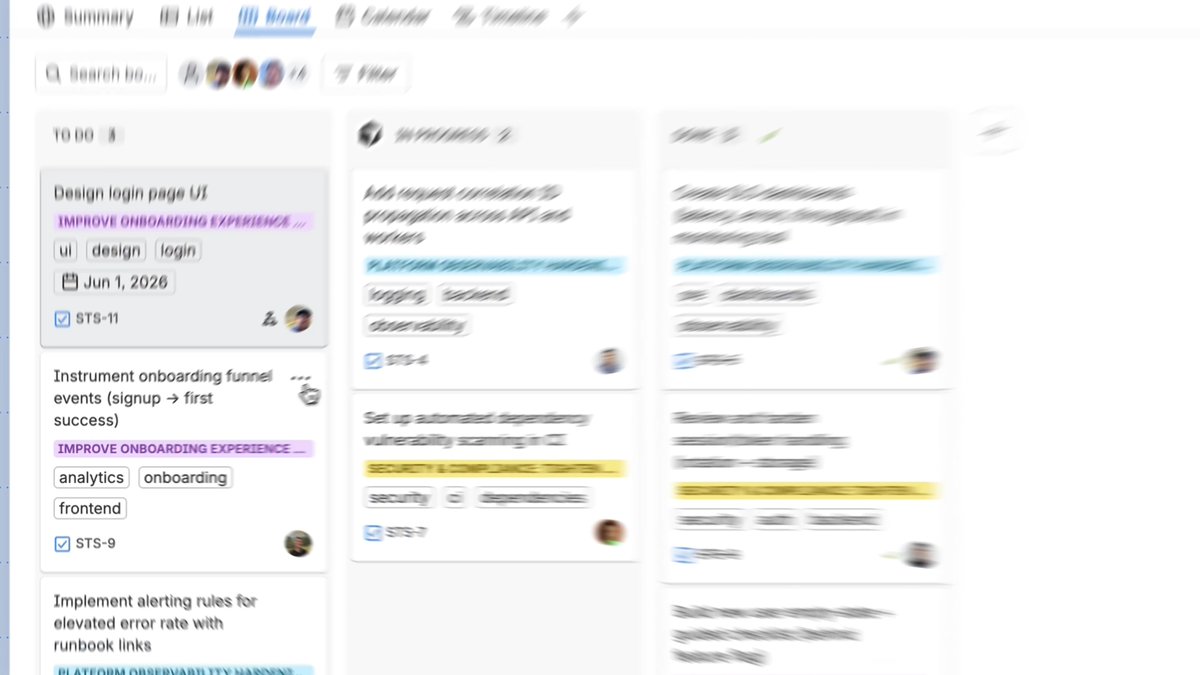
Published my first agent skill today: Cloud Stacked Diffs ☁️ npx skills add dabit3/cloud-stacked-diffs It orchestrates cloud agents to deliver large long running tasks as a stack of small, dependent draft PRs, reviewed and merged bottom-up instead of one giant PR. Combined w/ Linear you can hand off large...

63,546 次观看 • 17 天前 •via X (Twitter)

0 条评论

暂无评论

原始帖子的评论将显示在这里

相关视频

Start building for an agent-first world. If you have a product, you need to start offering skills for Claude, Codex, Cursor, and any other agents. Your skills should specify: • How to navigate and use your product • Best practices the agent must follow • Detailed instructions on how to accomplish things • Anti-patterns to avoid Redis is one of the most popular in-memory data stores in the world, and they just released their agent skills. It takes one second to install, and it will turn your agent into a Senior Redis Engineer: $ npx skills add redis/agent-skills In the attached video, I show you how to install it as a plugin in Claude Code and some of its benefits. This is the easiest way to "teach" models what they don't know and keep their knowledge up to date. If you ask me, skills is literally one of the most brilliant ideas that Anthropic has put out there. If you use Redis, their skill is a must-have. If you don't, this skill will show you how to build and structure yours. Here is what their skill teaches your agent: 1. Current patterns for common use cases: caching, rate limiting, session management, vector search, semantic caching, pub/sub, streams. 2. Which data structure to use and when: hashes vs. JSON vs. sorted sets vs. vector sets. 3. Anti-patterns to avoid: no KEYS in loops, no unbounded key growth, no large values that amplify every operation. 4. Production-aware defaults: connection pooling, pipelining, cluster compatibility, error handling that doesn't silently swallow failures.

Santiago

37,546 次观看 • 4 个月前

THIS GUY CONNECTED HIS AI AGENTS TO HIS OBSIDIAN AND BUILT A BRAIN THAT LEARNS ON ITS OWN. HERE'S HOW TO BUILD IT Obsidian is just markdown files sitting in a folder. That turns out to be the perfect memory for an AI agent, because an agent can read and write those files directly. He wired his agents into the vault so they pull context from it, do the work, and write what they learned back. The notes aren't the point. The loop is, and it gets sharper every cycle How to build it: 1. Point an agent at your vault. The fastest way, no plugins, no API keys: open a terminal and run npx obsidian-mcp /path/to/your/vault. That exposes your Obsidian folder to Claude as a tool it can read, search, and write to. Add it to your Claude Code or Cowork config and restart 2. Confirm it can see the brain. Ask it: "list the notes in my vault and summarize what's in them." If it reads them back, the connection is live. Now it starts every task with everything the vault already holds instead of from zero 3. Give each agent one job and a write-back rule. Tell it: "research this, then save what you found as a new note in /brain with links to related notes." One agent researches, one summarizes, one plans. Each writes its output back into the vault 4. Close the loop. Add one line to every agent's instructions: "read /brain before starting, write your result back when done." Now each task leaves the vault richer, and the next run reads that before it works. It compounds instead of resetting 5. You only steer. Review what the brain produces, point it at the next thing. The agents handle the reading, writing, and connecting The edge isn't better notes. It's a brain that feeds itself, so the work gets sharper every cycle instead of starting over Bookmark this

Yarchi

58,186 次观看 • 1 个月前