Video wird geladen...

Video konnte nicht geladen werden

Zur Startseite

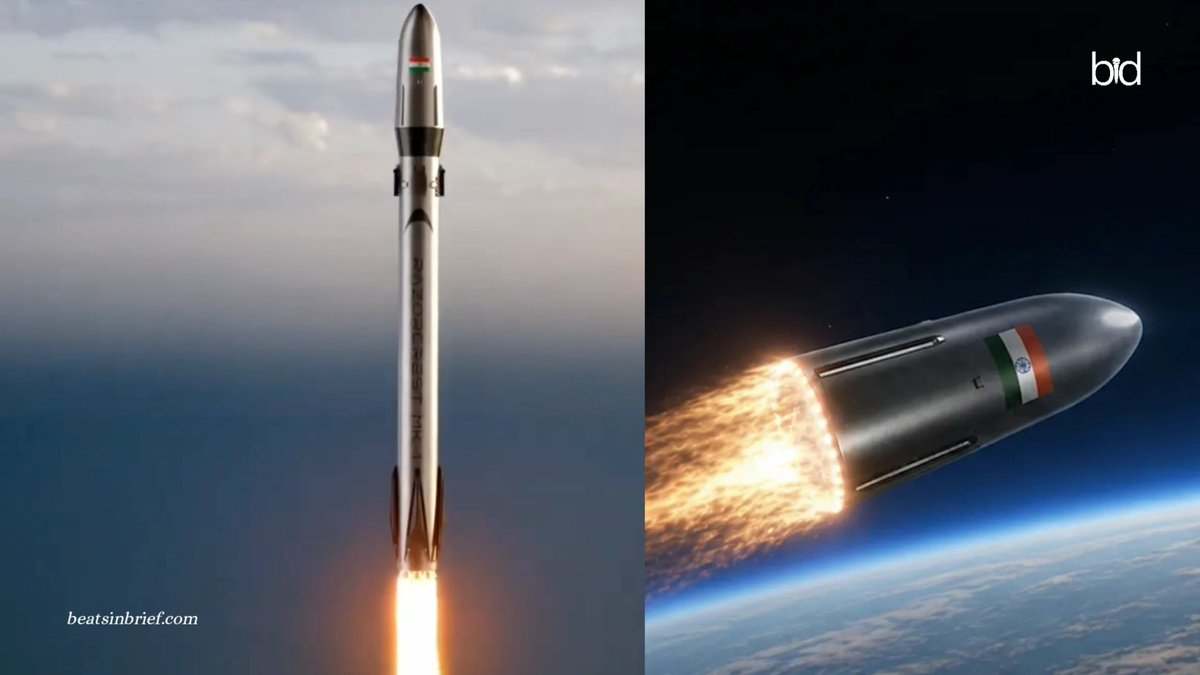
Pune-based space-tech startup Thrustworks Dynetics has validated its Resonance Ignition System in 3 KeroLOX hot-fire tests. The zero-moving-part system enables multiple restarts. It is developing ANYA, a 20 kN reusable semi-cryogenic liquid rocket engine platform. 🚀🇮🇳

13,699 Aufrufe • vor 6 Tagen •via X (Twitter)

0 Kommentare

Keine Kommentare verfügbar

Kommentare vom Original-Post werden hier angezeigt

Ähnliche Videos

China Achieves First Successful Net Recovery of Reusable Long March 10B Rocket China successfully launched the Long March 10B (CZ-10B) reusable launch vehicle today (10 July 2026) from the Hainan Commercial Space Launch Site, marking a major milestone in the country’s commercial space ambitions. The mission achieved China’s first successful controlled recovery of a rocket first stage and the world’s first successful net-based recovery of an orbital-class launch vehicle. The launch took place around midday from Launch Pad No. 2 at the Hainan Commercial Space Launch Site. Approximately six minutes after stage separation, the rocket’s first stage executed a controlled vertical return to the designated recovery zone at sea. Instead of landing on a conventional drone ship, the booster was successfully captured by the offshore recovery vessel “Navigator” (领航者) using a flexible net capture system, representing the first time such a recovery method has been successfully demonstrated for an orbital launch vehicle. The Long March 10B is a new-generation commercial reusable liquid oxygen-kerosene rocket featuring a 5-metre-diameter core stage and standing nearly 70 metres tall. It is powered by seven reusable YF-100N engines. Even when configured for first-stage recovery, the rocket is capable of delivering at least 16 tonnes to low Earth orbit (LEO). The successful mission represents a significant breakthrough for China’s commercial space sector and reusable launch technology. It fills a longstanding gap in China’s capability to operate a large-lift reusable commercial launch vehicle while demonstrating an innovative recovery approach that could reduce launch costs and improve operational efficiency for future missions. The achievement also positions China among the leading nations advancing reusable launch systems, with the successful net recovery introducing a novel alternative to traditional landing platforms used by other space-launch providers.

BRISL

63,848 Aufrufe • vor 1 Monat

New Fire Suppression System Dramatically Increases Superheavy's Performance! While the 2nd Integrated Test Flight of Starship ultimately ended in the loss of both vehicles, it was undoubtably a massive improvement from SpaceX's first attempt. This episode is a deep dive analysis of critical upgrades to Starship Superheavy. Disclaimer: There is a very large focus placed on Booster 7 in this episode. There were a lot of lessons learned from IFT-1 and its important to understand why each of the changes to Booster 9 were necessary. Hopefully this will help make sense out of a lot of the items listed in the 63 Corrective Actions from the FAA shared by Elon Musk a few months ago. If you enjoy this then please share it! Episode Timestamps: 0:00 - Intro: Tale of 2 Boosters 01:45 - Booster Bidet Performance 03:15 - Post IFT-1 Challenges 05:20 - Raptor 2 Electric TVC Upgrades 09:11 - Mitigating Raptor Explosion Risks 12:08 - Center Engine Blast Containment 14:32 - Original Boost Engine Blast Containment 16:47 - B7 Explosion - Insufficient Blast Shielding 19:25 - B7 Robustness Upgrades Finally Explained 20:41 - IFT-1 Engine RUD Isolation Failure 22:50 - B9 Upgraded Engine Isolation Explained 26:20 - Fire Suppression & Why Its Needed 27:55 - B7 Fire Suppression System Explained 31:15 - Why CO2 Instead of Nitrogen? 31:45 - IFT-1 Fire Suppression Failure 33:20 - B9's 15X Fire Suppression Upgrade 39:55 - Raptor Engine Startup Failures 40:45 - IFT-2 B9 Performance Analysis 45:35 - FTS System Upgrade 49:05 - Hot Staging??? 49:40 - Outro & End Credits

Zack Golden

1,077,726 Aufrufe • vor 2 Jahren

Humbled to share that we successfully test fired 4 semi-cryogenic rocket engines simultaneously, as a cluster. All the 4 engines are 3d printed as single pieces of hardware - designed and manufactured in-house at AgniKul Cosmos Rocket Factory - 1. As with all our propulsion systems, these 4 engines are also powered by electric motor driven pumps. This test involved calibrating 8 pumps, 8 motors and tuning 8 speed control algorithms to work together in perfect sync to achieve uniform startup, steady state and shutdown performance across the entire system. As with the last cluster test, to the best of our knowledge, this is the first time such a test has been performed in India with semi cryogenic engines. We are extremely grateful to have the opportunity to be building world class, original space technology from India, for the world with the support of IIT Madras ISRO and IN-SPACe From here on, the addition of engines to our clusters will likely increase non-linearly. #Agnibaan #RocketEngineCluster #ElectricPumpFedEngines #Agnilet #SinglePieceEngine #3dprinting #RocketEngineTest #AdditiveManufacturing #Agnikul #AgnikulCosmos #StartupIndia #MakeinIndia #madeinIndiaForTheWorld Srinath Ravichandran MOIN SPM Satyanarayanan Chakravarthy IIT Madras IITMRP IIT Madras Incubation Cell Technology Development Board DSTIndia Anusandhan National Research Foundation TIDCO Startup India StartupTN Guidance Tamil Nadu Kerala Startup Mission SIPCOT

AgniKul Cosmos

118,985 Aufrufe • vor 3 Monaten