正在加载视频...

视频加载失败

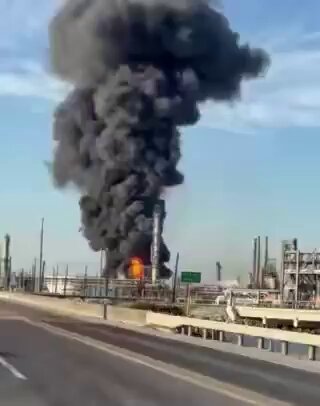
🇶🇦🇮🇷 Qatar confirms extensive damage after third attack on Ras Laffan Qatar's Ministry of Defense says two of three Iranian strikes on Ras Laffan Industrial City have successfully hit and caused extensive damage to the country's principal LNG production sites. This is the facility that supplies a massive share...

184,711 次观看 • 3 个月前 •via X (Twitter)

0 条评论

暂无评论

原始帖子的评论将显示在这里
相关视频

Iran just fired missiles at five countries simultaneously. Here is what actually happened to each of them. Bahrain. Confirmed hit on the US Navy Fifth Fleet headquarters. Bahrain’s own state news agency reported the strike. No casualty figures released yet. This is the command center for every American naval operation in the Persian Gulf. It was struck. UAE. Multiple missiles intercepted by Emirati air defenses. One civilian killed in Abu Dhabi from falling debris. The UAE defense ministry confirmed the intercepts. The Emirates just absorbed an act of war on its sovereign territory from a country it shares a maritime border with. Qatar. Missile intercepted. Zero damage. The Qatari Interior Ministry confirmed. The same country Iran just attacked is the country that hosted Al Udeid for twenty years as a gesture of regional balance. That balance ended this morning. Kuwait. KUNA state news agency confirmed missiles were “dealt with” in Kuwaiti airspace. No reported damage. Kuwait, which stayed neutral through every Gulf crisis since 1991, just had Iranian ballistic missiles flying over its cities. Jordan. Two Iranian ballistic missiles shot down by Jordanian military. Confirmed by the Jordanian armed forces directly. Jordan intercepted Iranian missiles in June 2025 as well. That was in defense of Israel. This time Iran targeted Jordan itself. Saudi Arabia. Fars News claims strikes. No confirmation from any Saudi source. No Tier 1 or Tier 2 verification. Either it did not happen or Riyadh is not yet ready to say it did. Both possibilities carry enormous implications. Now understand what Iran just accomplished strategically. In attempting to retaliate against Israel and America, the IRGC fired missiles at six sovereign nations in a single morning. Not one of those nations attacked Iran. Bahrain did not bomb Tehran. The UAE did not launch strikes on Isfahan. Qatar hosted diplomatic back channels. Kuwait maintained neutrality for three decades. Jordan was mediating. Iran just converted every neutral and semi-neutral state in the Gulf into a potential co-belligerent. Every nation whose airspace was violated, whose civilians were killed, whose sovereignty was breached now has legal and political justification to join whatever coalition forms next. And the damage tells the real story. One civilian dead from debris. Intercepts across four countries. No confirmed destruction of any US military asset. No reported American casualties among 40,000 troops in theater. Iran fired at the entire Gulf and the Gulf caught almost everything. Compare this to what Israel did to Tehran this morning. Precision strikes on the IRGC Intelligence Directorate. Explosions near the Supreme Leader’s office. Three detonations in central Tehran confirmed by Iranian state media itself. One side hit what it aimed at. The other side hit one civilian with debris. This is the asymmetry that will define the next 72 hours. Iran demonstrated intent to strike everywhere and capability to hit almost nothing. The Gulf states demonstrated they can defend themselves. And now those states must decide whether the country that just fired ballistic missiles across their borders gets to do it again. They will not let it happen again. Watch for the joint statement. Watch for airspace coordination between Riyadh, Abu Dhabi, Manama, and Kuwait City. Watch for the coalition that Iran just built against itself with a single salvo. Iran did not retaliate against Israel this morning. Iran gave every country in the Middle East a reason to retaliate against Iran.

Shanaka Anslem Perera ⚡

16,724,343 次观看 • 4 个月前

🚨🇮🇷 Iran just hit 9 countries in a single night, including 7 of the wealthiest nations on earth This was Tehran's answer to Israel striking the South Pars gas field, the world's largest, earlier today. The most intense retaliatory barrage of the entire war, and Iran is now the only country on the planet simultaneously attacking seven of the richest nations by GDP per capita: 🇮🇱 Israel: Ballistic missiles and cluster munitions over central Israel. Two killed in Ramat Gan. Four Palestinian women killed in the West Bank by an Iranian missile. 🇶🇦 Qatar ($110K GDP per capita): 14 ballistic missiles fired. Ras Laffan LNG hub suffered "extensive damage" confirmed by QatarEnergy. 🇦🇪 UAE ($100K): 13 ballistic missiles and 27 attack drones intercepted. Iran threatening imminent strikes on energy facilities. 🇸🇦 Saudi Arabia ($35K): Evacuation orders issued for Samref Refinery and Jubail Petrochemical Complex. Waves of missiles intercepted over Riyadh. 🇰🇼 Kuwait ($75K): Ballistic missiles intercepted. U.S. facilities targeted again. 🇧🇭 Bahrain ($65K): U.S. 5th Fleet headquarters under continued assault throughout the war. 🇴🇲 Oman ($32K): Drone strikes on industrial zones. Workers killed. The last neutral Gulf state is now taking fire. 🇯🇴 Jordan: U.S. bases struck as part of the widening multi-front campaign. 🇮🇶 Iraq: U.S. Embassy in Baghdad under nightly drone siege. Combined GDP per capita of the Gulf states under attack: over $417,000. These are some of the most prosperous, developed nations on earth, and Iran is hitting all of them simultaneously while its own economy collapses. This is Operation Madman at full throttle: torch the region's wealth until the world demands the war stops. Source: 🇦🇪 Rami Al-Hashimi رامي الهاشمي / Reuters / World updates

Mario Nawfal

3,846,443 次观看 • 3 个月前

🚨🇮🇷🇹🇷Is the Iran War Accidentally Rebuilding the Ottoman Empire? The Ottomans didn't dominate the world through conquest alone. They dominated by controlling Eurasian land trade routes and large swathes of the Mediterranean. The Iran war may be positioning Turkey to rebuild that same combination. For decades, the Strait of Hormuz carried nearly 20% of global oil and LNG supply. The Iran war has created an opening for alternative routes — and Turkey sits at the intersection of several plausible ones: 🔸 Turkmen gas via Trans-Caspian into the TANAP network — through Turkey to Europe, bypassing the Gulf entirely. 🔸 The Iraq-Turkey pipeline extended to Basra — up to 1.5 million barrels daily to Mediterranean markets, outside Iranian reach. 🔸 Qatar gas via Saudi Arabia, Jordan, Syria, and Turkey — directly to European LNG terminals, entirely overland. For 400 years, the Ottoman Empire sat at the crossroads of East and West not because it conquered everything, but because everything valuable traveled through it. If these three routes are built, a significant share of energy moving from the Gulf to Europe would pass through Turkish territory. The Ottomans understood this formula: control the routes, control the trade. And they backed it with a navy that, at its height, dominated the Mediterranean. Turkey is now rebuilding that same combination. 41 warships are under simultaneous construction, and 120 ships with 15,000 personnel recently completed the Blue Homeland-2026 exercises across three seas. This growing fleet allows Turkey to project power across the Eastern Mediterranean — a region already crowded with competing energy interests. Why does that matter? The Eastern Mediterranean is becoming a gas hub in its own right. 🔸Major discoveries (Leviathan, Tamar, Aphrodite, Zohr) have turned Israel, Egypt, and Cyprus into potential suppliers for Europe. 🔸Those countries are developing offshore LNG terminals and subsea pipelines. 🔸98% of Israeli foreign trade depends on Mediterranean navigation — including its ability to export gas. Turkey now actively contests this sea. By positioning itself as both an energy corridor and a naval power in the Eastern Mediterranean, Ankara could in the long run influence who ships what, where, and under what terms.

NewRulesGeopolitics

61,559 次观看 • 3 个月前

🇺🇸 🇮🇷 BREAKING: TRUMP JUST PULLED THE PLUG ON IRAN'S OIL MONEY! Iran wanted to play games in the Strait of Hormuz. Three tankers hit with unknown projectiles in a matter of days. Now the bill just came due. The Treasury Department is revoking the license that let Iran sell oil under the June ceasefire deal. That waiver was a gift, not a right, and Iran just spat on it. A US official put it plainly. "As President Trump and the administration have repeatedly affirmed, the MOU in effect with Iran is entirely performance based." Translation. Behave or lose the deal. Another official didn't mince words either. "Iran's actions in the Strait were wholly unacceptable to the United States and will be met with consequences." This is not a slap on the wrist. Oil exports are Iran's lifeline to China and its only real source of hard currency. Cutting that off is aiming straight at the regime's wallet. Iran signed up for a deal that required keeping the strait open. Instead they fired on a Qatari LNG carrier, a Saudi supertanker, and a third vessel hit by a drone. That is not a misunderstanding. That is a pattern. You do not get to torch tankers with one hand and collect sanctions relief with the other. Oil prices jumped more than three percent on the news, proof that markets know exactly what this means. Consequences are not just words anymore. Iran wanted leverage. What they got was a reminder that Trump's deals come with strings, and he is not afraid to pull them.

Bill Mitchell

158,343 次观看 • 7 天前

🇺🇸 🇮🇷 THE BIG QUESTION: SHOULD TRUMP FINALLY HIT IRAN'S INFRASTRUCTURE? History does not repeat, but it rhymes loud enough to hear. In 1945, Japan was finished. Its navy was gone. Its cities were burning. Its war machine could not replace what it lost. And still the leadership would not surrender. Iran today looks eerily familiar. Its radar sites keep getting flattened. Its small boats keep getting sunk. Its missile stockpiles keep getting hit. And still Tehran keeps shooting, mining, and lying its way through every ceasefire it signs. To be clear, nobody is talking about the weapon that finally ended Japan's war. Trump is not dropping a nuclear bomb on Iran, and nobody serious is suggesting he would. That is not the parallel. The parallel is the dilemma itself. What do you do with an enemy that is beaten by every rational measure, yet refuses to act like it? Trump has tried to solve that puzzle the hard way, the careful way. Hit the drone depots. Hit the coastal radar. Leave the power plants standing. Leave the water desalination facilities alone. Spare the bridges and highways ordinary families use every day. He said it himself. He does not want to punish a population for the sins of a regime they never chose, and he does not want American taxpayers footing the bill to rebuild a country we did not break in the first place. But restraint only works on an enemy capable of reading the signal. Iran keeps proving it cannot, or will not. So the real question is not whether Iran is beaten. It clearly is. The real question is what finally convinces a regime that will not admit defeat, without turning millions of ordinary Iranians into collateral damage for their leaders' stubbornness. That is the needle Trump has to thread. Escalate enough to end this, without becoming the very thing his restraint was designed to avoid. The world will be watching which targets he chooses next as closely as it watches whether Iran ever really surrenders at all.

Bill Mitchell

33,441 次观看 • 6 天前

🇺🇸 🇮🇷 IRAN JUST ATTACKED OUR ALLIES AND THE FAKE NEWS WON'T TELL YOU THE WHOLE STORY While you were sleeping, Iran launched missiles and drones at Bahrain and Kuwait. Two of our closest partners in the Gulf. In direct retaliation for Trump-authorized U.S. strikes that hit back hard after Iran targeted an oil tanker. This is what strength looks like. And Iran is rattled. Kuwait's air defenses knocked those missiles out of the sky. No casualties. No damage. Because unlike the Biden years, our allies are armed, ready, and backed by a president who means what he says. Bahrain took some hits to a residential building near the airport. That's on Tehran. Iran's Foreign Minister Araghchi is crying in Baghdad right now, warning the world that any attempt to open the Strait of Hormuz without Iran's blessing will "increase tension." Translation: they're scared of losing their stranglehold on one of the most critical shipping lanes on the planet. That strait once carried a fifth of the world's oil. Iran has used it as a hostage for decades. Trump struck 10 Iranian targets after they hit a Panama-flagged tanker hauling over two million barrels of crude. That's not aggression. That's accountability. That's a president who draws a red line and actually enforces it. For four years under Biden, Iran laughed at us. They funded proxies, armed terror groups, and pushed every boundary they could find while Democrats handed them cash and called it diplomacy. Now they're intercepting our missiles with their air defense systems instead of shipping drones to kill our sailors. The mullahs wanted to test this president. They got their answer.

Bill Mitchell

16,091 次观看 • 16 天前

🚨 OPERATIONAL UPDATE: ISRAEL U.S. WAR WITH THE ISLAMIC REPUBLIC - Reporting Window: LAST 24 HOURS • Iran widened its fire again with a broad evening missile barrage on central Israel and continued attacks across the Gulf, including a drone strike that hit a fuel tank at Kuwait International Airport • Israel intensified strikes across Iran, with reported hits in Tehran, Qazvin and Alborz industrial areas, plus continued pressure on missile infrastructure and launch cells • Hezbollah kept the northern front active, including a direct rocket hit on a building in Kiryat Shmona, while Israel deepened its Lebanon campaign and Katz publicly framed the objective as a security zone up to the Litani • The diplomatic track moved forward, but only in the strangest possible way: Trump says talks are progressing, Iran still publicly denies direct negotiations, and multiple reports now point to JD Vance as Tehran’s preferred American interlocutor • The big picture is unchanged: the war is still live on every major front, but the center of gravity is shifting toward a contest over how it ends, who gets to define victory, and whether the Gulf will stay adjacent to the war or be pulled fully into it The most important thing to understand about the last 24 hours is that this was not a quiet period masked by negotiations. It was the opposite. The battlefield remained active from Tehran to southern Lebanon to Kuwait, even as Washington and Tehran edged further into a murky negotiation channel. That is what gives the last day its character: not de escalation, but simultaneous escalation and diplomacy, both moving at once. Open source reporting reflects the same picture, with repeated indications of strikes in Tehran and Qazvin, attacks near Baghdad airport, a Kuwait airport fuel fire, and a large Iranian barrage toward central Israel late in the window. **Special thanks to Michael W for your continued contribution to the open-source intel picture behind these updates. ━━━━━━━━━━━━━━━━━━ 🚀 IRANIAN MISSILE FIRE ON ISRAEL Iran kept up the pressure on Israel in two different ways over this window. Earlier in the cycle, a cluster warhead strike wounded nine people in Bnei Brak, with additional damage in Petah Tikva, while Hezbollah fire from Lebanon killed a woman near Mahanayim Junction and wounded several more in Kiryat Shmona. Later, near the end of the reporting window, Iran launched another broad barrage toward central Israel, with warnings stretching across Gush Dan, Sharon, Wadi Ara, Samaria, Judea and the Dead Sea region. Open source reporting you provided tracked that second wave in real time, showing how broad the alert footprint was even though initial reports indicated no immediate casualties from that specific evening barrage. This is what stands out operationally: Iran’s missile campaign is not gone, but it looks increasingly built around selective disruption rather than the huge opening barrages of the war. The salvos are still dangerous, still capable of civilian casualties and still capable of producing visually dramatic and politically effective moments, but they are landing against a backdrop of steadily intensifying strikes on Iran’s launch network. That makes each successful hit feel more deliberate and more strategic. ━━━━━━━━━━━━━━━━━━ ✈️ THE AIR CAMPAIGN OVER IRAN KEPT MOVING Israel’s strike campaign inside Iran also remained broad and geographically layered. Reuters reported renewed Israeli strikes as talks were being floated through intermediaries. Open source intelligence adds texture to that by showing repeated reporting from open source channels of impacts in eastern and western Tehran, the Alborz industrial zone in Qazvin province, and additional blasts reported across Khuzestan and other regions. There were also repeated reports of targeted assassination attempts in east Tehran, which fits the broader pattern of not just degrading launchers and production nodes, but also hunting the people tied to them. The color here matters. This no longer looks like a campaign limited to air defenses and obvious military compounds. The picture from the last 24 hours is of a system being pressed from multiple angles at once: missile depots, industrial support zones, launch crews, command elements and regime infrastructure in and around Tehran. Open source reporting reinforces that sense of breadth, especially the repeated references to Qazvin and Alborz secondary explosions and to ongoing heavy activity over Tehran. ━━━━━━━━━━━━━━━━━━ ⚡ THE ENERGY WAR IS STILL HOT The clearest new regional energy development in this window was Kuwait. Reuters reported that a drone attack hit a fuel tank at Kuwait International Airport, causing a fire but no casualties. That matters not because the material damage was catastrophic, but because it again shows Iran or Iran aligned actors reaching directly for civilian and logistical energy infrastructure in Gulf states. This was not an abstract threat anymore. It was a live strike on a functioning international hub. Your outbox tracked the same event quickly and repeatedly, alongside additional open source reporting about nearby attacks and power disruptions in Kuwait. At the same time, the diplomatic and military discussion around the Strait of Hormuz kept shaping everything else. Markets moved on talk of a U.S. proposal and possible hosted talks in Pakistan or Turkey. Oil eased on negotiation optimism, but the underlying structure of the crisis remains the same: Iran still retains the ability to disrupt shipping and energy confidence without fully “closing” the Strait in a formal sense. That is why even modest signs of diplomacy can move oil sharply, and why even a localized drone strike in Kuwait still carries outsized weight. ━━━━━━━━━━━━━━━━━━ 🇱🇧 LEBANON IS NOT A SIDESHOW The northern front kept boiling. Reuters reported that Israel now intends to occupy a swathe of southern Lebanon up to the Litani River, with Defense Minister Israel Katz explicitly describing a “security zone” concept. That is not rhetoric you use if you still think this is a short punitive phase. At the tactical level, Hezbollah continued to demonstrate that it can still impose costs, including a direct rocket hit on a building in Kiryat Shmona and earlier casualties in the north. Meanwhile, open source reporting pointed to Israeli strikes in Nabatieh, Rashidiya, Bchamoun and broader southern Lebanese infrastructure, which matches the picture of sustained pressure rather than episodic retaliation. The broader meaning is straightforward. Israel is signaling that if the Iran war ends inconclusively on the Iranian front, it does not intend to leave Hezbollah’s northern threat structure intact and simply hope for the best. Lebanon is being shaped now as part of the endgame, not just the current fight. ━━━━━━━━━━━━━━━━━━ 🇮🇶 IRAQ STAYED ACTIVE TOO Iraq remained active in the background, but it should not be treated as background noise. Open source intel reporting includes repeated reporting on a targeted U.S. strike on a vehicle near Baghdad airport and continued militia related activity tied to U.S. positions and proxy structures. That comes after the prior cycle’s major strikes on PMF and militia command nodes. It fits the larger pattern we have now seen for weeks: Iraq is not the main theater, but it is still one of the places where the war keeps trying to widen horizontally. ━━━━━━━━━━━━━━━━━━ 🌍 THE NEGOTIATION TRACK GOT STRANGER, NOT CLEARER Trump is still publicly presenting the talks as real progress. Reuters reports that Pakistan conveyed a U.S. proposal, with Pakistan or Turkey possible venues, and that Washington has floated a broader framework dealing with nuclear capability, missiles and proxies. At the same time, Iran continues to publicly deny meaningful direct talks and has toughened its public stance, insisting on guarantees, compensation and no rollback of its missile deterrent. What makes the last 24 hours more interesting is the growing focus on who would even talk for the United States. Times of Israel and Jerusalem Post reporting both indicate that JD Vance is increasingly central to the diplomacy, with Tehran reportedly preferring him over Witkoff and Kushner. The diplomatic track here appears as both real and deeply unstable, with questions about who on the Iranian side actually holds authority and whether Washington is now seeking an end state short of outright regime collapse. That shift matters because it tells us something important: Washington increasingly seems to be searching for an off ramp that still looks like victory, while Israel and Gulf allies appear much less comfortable with ending this war before Iran’s military and proxy architecture are degraded further. That tension is now one of the defining features of the conflict. ━━━━━━━━━━━━━━━━━━ 📌 WHAT MATTERS MOST RIGHT NOW 1️⃣ The war is still fully active across multiple fronts Iran hit central Israel again, Kuwait airport was struck, Lebanon stayed hot and Israel kept pounding targets inside Iran. Negotiations did not replace combat. They were layered on top of it. 2️⃣ The pressure on Iran’s internal military system keeps deepening The accumulating pattern of strikes in Tehran, Qazvin, Alborz and other areas suggests a campaign that is still broadening the target set, not narrowing it. Open source reporting in your files strongly supports that picture. 3️⃣ The diplomatic track is real, but it is not clean Trump is selling progress. Iran is denying direct talks. Vance is becoming more central. And nobody looking at the battlefield would conclude that the war is genuinely close to stopping on its own. ━━━━━━━━━━━━━━━━━━ BOTTOM LINE The last 24 hours painted a clearer picture than some of the recent reporting windows. This is no longer just a war of salvos and counterstrikes. It is now a war over end states. Iran is still trying to prove it can widen the cost map, not just hit Israel but keep the Gulf under pressure too. Israel is still trying to prove that sustained, system level degradation inside Iran can continue even while diplomacy swirls overhead. And Washington is trying to find a formula that can stop the war without looking like it backed down. That is why the reporting feels different now. The battlefield is still violent, but the arguments over how this ends are becoming just as important as the strikes themselves.

Inside_Israel_Intel

23,818 次观看 • 3 个月前

Day 20: Iran reminded West Asia who the superpower is in the region! Tehran struck 9 countries in less than 24 hours, including all of the gulf slave states, Occupied Palestine, Jordan, Iraq and additional U.S. assets after all of the targets were forewarned in advance not to touch Iranian energy infrastructure. They FAFO and now they’re crying about the consequences. And the U.S. and Israel still think decapitation strikes work while the Straight of Hormuz remains closed and oil is above $110/barrel! GCC states are stupid enough to think the U.S. can protect them and Iran is the least bit intimidated by their barking. -Occupied Palestine: Ballistic missiles and cluster munitions over central Israel. 100s killed and injured and there is significant infrastructure damage. Kosher terrorists are trapped in a burning building in Tel Aviv. -Qatar: 14 ballistic missiles fired. Ras Laffan LNG hub suffered "extensive damage" confirmed by QatarEnergy. -UAE: 13 ballistic missiles plus drones struck energy facilities. -Saudi Arabia: Evacuation orders issued for Samref Refinery and Jubail Petrochemical Complex. Waves of missiles struck Riyadh’s oil facilities. -Kuwait: Ballistic missiles struck oil facilities and U.S. facilities targeted again. -Bahrain: U.S. 5th Fleet headquarters under continued assault throughout the war. -Oman: Drone strikes on industrial zones. Workers killed. -Jordan: U.S. bases struck as part of the widening multi-front campaign. -Iraq: U.S. Embassy in Baghdad under nightly drone siege. The GCC slave states have yet to take any responsibility for their complicity in the attacks on Iran, nor do they condemn the kosher American attacks on Iranian civilian targets that led to murdered women and children. Meanwhile there is an Iranian submunition missile strike in the skies of "Tel Aviv" in the midst of occupied Palestine and the activation of sirens. There are kosher terrorists stranded in a building that was destroyed in the Tel Aviv area after an Iranian missile attack. Kosher first responders are scrambling to keep up! American missile defence systems and radars remain inoperable or useless!

Truth_teller 🇷🇺

35,935 次观看 • 3 个月前