Загрузка видео...

Не удалось загрузить видео

На главную

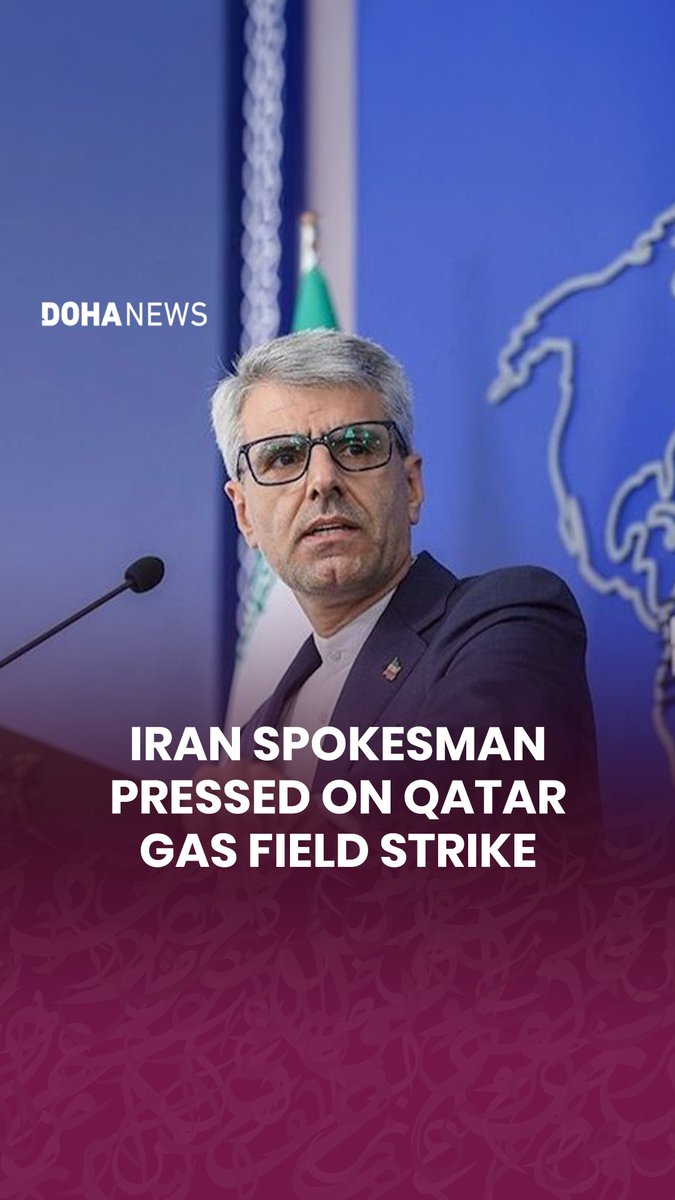
🇶🇦 Qatar just declared force majeure on LNG contracts after the Iran war disrupted supply. Shipments to Europe and Asia are affected. An Iranian strike hit Ras Laffan, knocking out ~17% of Qatar’s LNG capacity. That’s ~12.8M tons per year, offline for 3-5 years. Qatar is one of the...

144,377 просмотров • 5 месяцев назад •via X (Twitter)

Комментарии: 0

Нет доступных комментариев

Здесь появятся комментарии из оригинального поста

Похожие видео

Crazy facts about Qatar: It has the #1 GDP per capita in the world, on a per citizen basis, because it only has 320,000 Qatari citizens, and the other 90% of its 2.6 million population are all foreign labor workers. Because of this, 75% of Qatar’s population is male – a 3-1 male-female population. Its sovereign wealth fund holds $450 billion, which is $1.4 million per Qatari citizen. This is all possible because Qatar sits on the largest natural gas field in the world, the North Field, discovered by Qatar’s constant partner British oil/gas giant Shell. Qatar is tightly tied to the British empire. Qatar is the largest single property owner in London. It owns 20% of London Heathrow Airport. And it continues to be partnered with Shell on North Field expansion projects. Because Qatar’s entire economy is based on exporting LNG from the North Field, and the UK-led sanctions against Russia eliminated cheap Russian gas from the EU market, Qatar and its British gas partners became perhaps the world’s top #1 beneficiary of the war against Russia as Qatari LNG replaced Russian natural gas. After the war started in 2022, Qatar quickly became the EU's second-largest LNG supplier, after the United States and ahead of Russia. This includes massive expensive LNG exports to Germany, after we blew up their Nord Stream pipeline, and explains the UK push to eliminate the AfD party in Germany, which has campaigned on moving back to natural gas with Russia rather than LNG.

Mike Benz

1,929,918 просмотров • 1 год назад

JUST IN: Bapco Energies just declared force majeure. Bahrain’s only refinery. 405,000 barrels per day. Eighty-five percent exported. Ninety years old. The sole refining facility for an entire nation. Force majeure means the company is legally unable to fulfil its contractual obligations. Cargoes already paid for will not be delivered. Diesel, jet fuel, and refined petroleum products that buyers across Asia, Africa, and the Middle East were expecting will not arrive. The contracts are suspended. The supply is gone. The attack that triggered the declaration was an Iranian drone and missile strike on the Sitra refinery complex on 9 March. Fire broke out in at least one unit. Bahrain’s National Communication Centre confirmed containment with 32 civilians injured in the broader raids. Bapco stated domestic fuel supplies remain secured. But export operations, which account for 85% of the refinery’s output, are halted. This is not a full physical shutdown. It is something more consequential. It is a legal shutdown. Force majeure converts physical damage into contractual default. Every buyer holding a confirmed cargo from Bapco must now source replacement barrels from an already strained market where Hormuz is commercially closed, QatarEnergy is under its own force majeure, Iraq has cut production 70%, and VLCC charter rates sit at $424,000 per day. The replacement barrels do not exist at pre-war prices. Some do not exist at any price. This is the third force majeure declaration from the Gulf in nine days. QatarEnergy declared force majeure on all LNG exports after Iranian strikes hit Ras Laffan and Mesaieed, removing approximately 20% of global LNG supply. Kuwait’s national oil company announced precautionary production cuts. Now Bahrain’s sole refinery joins the cascade. Each declaration compounds the others. QatarEnergy’s force majeure tightened LNG markets. Bapco’s tightens refined product markets. When the refinery that processes crude into usable fuel goes offline, the disruption moves downstream from the wellhead to the petrol station, the shipping terminal, the airport fuel depot, and the industrial boiler. Crude oil prices capture the headline. Refined product margins capture the damage. Diesel margins were already surging before this declaration. Jet fuel crack spreads were at multi-year highs as 30,000 cancelled flights rerouted through Asian hubs burning additional fuel on longer routes. Bapco’s 405,000 barrels per day of refining capacity going offline removes a meaningful share of Gulf refined product supply at the precise moment global demand for alternative routing fuel is spiking. The IRGC’s 31 autonomous provincial commands did not need to close the Strait to cripple Bahrain’s energy exports. They needed one drone through the air defence screen. One hit on one unit of one refinery. The rest is done by lawyers, force majeure clauses, and a contracts market that cascades default through every buyer in the chain. The Strait was closed by insurance. The refinery was closed by a drone. The exports were closed by a legal clause. Three different mechanisms. One outcome. Supply removed from a market that cannot replace it. Hormuz. Qatar. Now Bahrain. Three force majeures in nine days. The Gulf’s energy architecture is being dismantled one legal declaration at a time. Full analysis here!

Shanaka Anslem Perera ⚡

263,350 просмотров • 5 месяцев назад

Stock markets around the world are crashing after the destruction of a single, massive liquefied natural gas (LNG) facility in Qatar by Iranian missiles last night. Shell’s Pearl GTL sat inside the larger Ras Laffan complex, which, before the war, produced roughly 20% of the world’s liquefied natural gas (LNG). It had taken four years, from 2007 to 2011, to build. Its loss will mean a long-term shortage of LNG. Europe’s LNG prices rose 35% since the attack and by more than 100%, from €32 euros per MWh to over €70 today, since last month. Asia was already returning to coal before the loss of the Pearl GTL facility, and will burn more of it now that LNG is being priced out of reach of poor nations. Already, Qatar’s North Field expansion had been delayed to mid-2027. With the rebuild of Pearl GTL expected to take three to five years, that expansion timeline slips further. But the underlying reason for this crisis is a lack of LNG plants. We didn’t need more natural gas infrastructure, said the media, Democrats, and climate advocates, over the last 15 years. Every new LNG terminal was, they said, a “climate bomb.” Groups including Reclaim Finance, Rainforest Action Network, Bill McKibben’s and Greenpeace waged a coordinated campaign to cut off financing for LNG terminals. They staged die-ins outside Bank of America. They cut up credit cards at Chase branches. They captured $130 trillion into the Glasgow Financial Alliance for Net Zero. They published annual scorecards shaming any bank that lent to LNG developers. The divestment movement boasted that $39.2 trillion in capital had been “blocked” from fossil fuels. The groups succeeded beyond their wildest dreams. Biden paused new LNG export approvals in January 2024 under direct pressure from climate groups. Investors have underinvested in LNG ever since. Please subscribe now to support Public's award-winning reporting, read the rest of the article, and watch the rest of the video!

Michael Shellenberger

39,657 просмотров • 5 месяцев назад

🚨BREAKING: Iran is striking major ports and oil tankers in the Middle East and this could trigger a crash in stock markets. The Strait of Hormuz is effectively blocked. Around 20 million barrels of oil per day pass through this route. Nearly 20% of global LNG exports, mainly from Qatar, also move through here. If this route stays disrupted, the impact spreads fast. 1. It could push oil toward $100–$120 per barrel. If that happens, petrol and diesel prices rise globally. Electricity costs also increase in countries that rely on gas. Airlines, logistics companies, and manufacturers all face higher fuel costs. 2. Qatar is one of the world’s largest LNG exporters. If LNG shipments are delayed or blocked, Europe and Asia face tighter gas supply. Power generation costs go up. Governments may need to use emergency reserves again. That’s why some analysts are comparing this to the 2022 energy crisis. 3. Shipping routes are being rerouted around Africa. That adds: 10–14 extra days to deliveries, higher fuel costs, and higher freight rates. Car manufacturers depend on just-in-time parts. If parts are delayed for weeks, production lines slow or temporarily stop. 4. The Gulf region exports key petrochemicals used to make fertilizer. If fertilizer supply tightens, farming costs rise and food prices increase in the coming months. This doesn’t hit instantly, but it builds over time. 5. War-risk insurance costs have reportedly jumped around 50%. For large vessels, that means hundreds of thousands of dollars in extra cost per trip. That reduces trade flow and pushes freight costs higher globally. The UAE has already shut its stock market for two days. Global markets are reacting. This is not just about oil prices moving up. It impacts energy supply, trade routes, inflation pressure, and global growth. If the disruption lasts more than a few weeks, the economic effects will compound quickly.

Bull Theory

1,417,400 просмотров • 6 месяцев назад