Video yükleniyor...

Video Yüklenemedi

Ana Sayfaya Dön

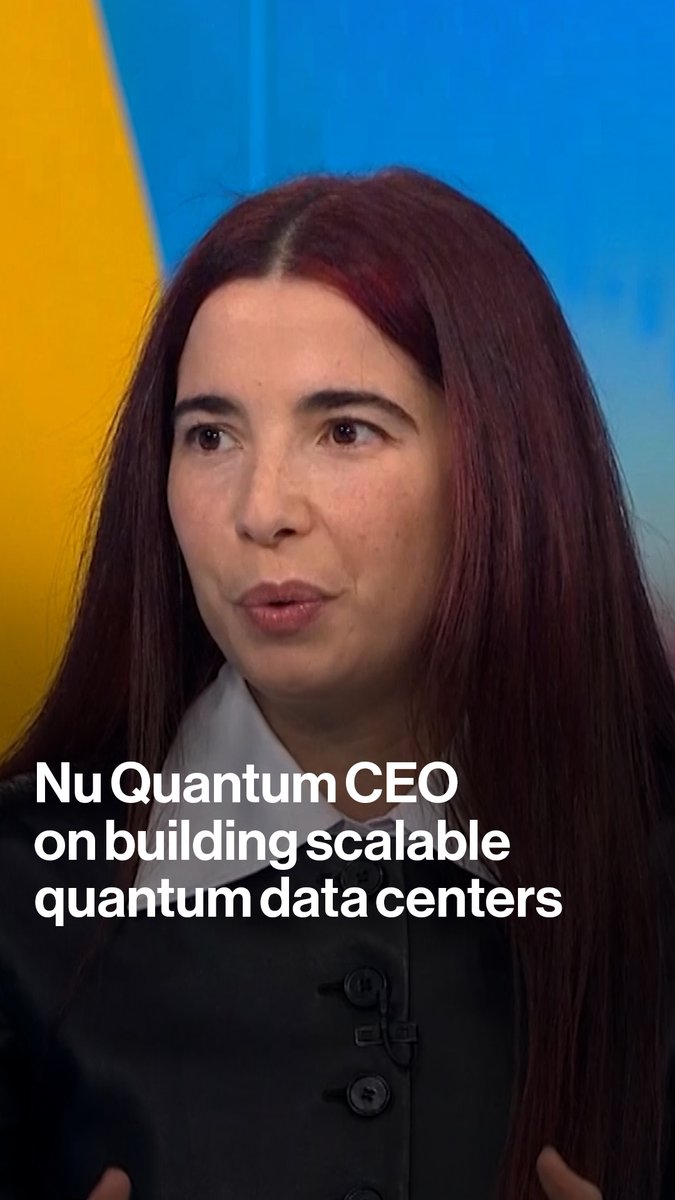
Quantum CEO explains how his startup intends to scale from 5 qubits to 5 million qubits.

34,915 görüntüleme • 2 yıl önce •via X (Twitter)

9 Yorum

Chao-Yang Lu profil fotoğrafı
Chao-Yang Lu2 yıl önce

Some start-up not having a good single-photon source claimed it is the only doable way to a million-photon practical quantum computer by 2020 (soon changed to 2025 and then 2027)

Nigam Arora profil fotoğrafı
Nigam Arora1 yıl önce

Money is to be made in quantum computing, but carefully. Know-nothing pumpers have pushed quantum stocks into fantasy land. I am a nuclear physicist and market veteran. Do not become a bag holder — get the truth from a nuclear physicist.

Lautaro Vergara 🇺🇦 profil fotoğrafı
Lautaro Vergara 🇺🇦2 yıl önce

😂

Patrik Spurzem profil fotoğrafı
Patrik Spurzem2 yıl önce

😅

Wendy🌸 profil fotoğrafı
Wendy🌸2 yıl önce

😂😂😂😂😂😂😂

Apuntes de ciencia profil fotoğrafı
Apuntes de ciencia2 yıl önce

@skdh Almost twelve inches. Almost 🤭

ItsBS profil fotoğrafı
ItsBS2 yıl önce

You know Alibaba and Baidu recognized the pseudoscience of Quantum Mechanical Computers. Maybe the Dulwich startup has the right formula to make it all work. 🤷‍♂️ Never give up!

Eric Copenhaver profil fotoğrafı
Eric Copenhaver2 yıl önce

"My manager explained it to me"

narcissist chronicles profil fotoğrafı
narcissist chronicles2 yıl önce

It would be a bit of a stretch, but this also works for 'current carbon capture technology and infrastructure' vs 'carbon capture required to reverse the GHG warming'

Benzer Videolar

The Google and Caltech quantum papers demonstrated 2 breakthroughs: that Bitcoin cryptography is much easier to break than previously thought, and that far fewer logical qubits may be necessary for physical qubits. Project Eleven CEO Alex Pruden explains: "These two papers are not necessarily about a quantum computer that's bigger or more capable. They're about what it takes to break cryptography." "So what changed? One of the things that changed was that physicists and quantum cryptographers that looked at this problem for a long time studied an algorithm called RSA — an older cryptographic algorithm." "But that's not what really any blockchains use, because RSA keys are very large. It turns out, and this was one of the key upshots of the Google paper, that if you focus on the cryptography used by Bitcoin, Ethereum, and other networks, it's actually way easier to break than they thought it was, compared to RSA." "The other big breakthrough, and this is from the Caltech paper: Quantum computers are very fragile, generally. So to be useful, they need to have what's called error correction applied. And that can result in a lot of overhead. You need to have tons of physical qubits to get to one logical qubit." "This Caltech paper basically showed, 'Hey, we have some new ideas for error correction. And it turns out if we apply those, we don't need hundreds or thousands of physical qubits, maybe we just need a handful to make one logical cubit.'" "The headline of their paper is 'You may only need 10,000 physical qubits to run Shor's algorithm.' And by the way, they demonstrated 6,000 last year."

TBPN

16,456 görüntüleme • 5 ay önce