Video wird geladen...

Video konnte nicht geladen werden

Zur Startseite

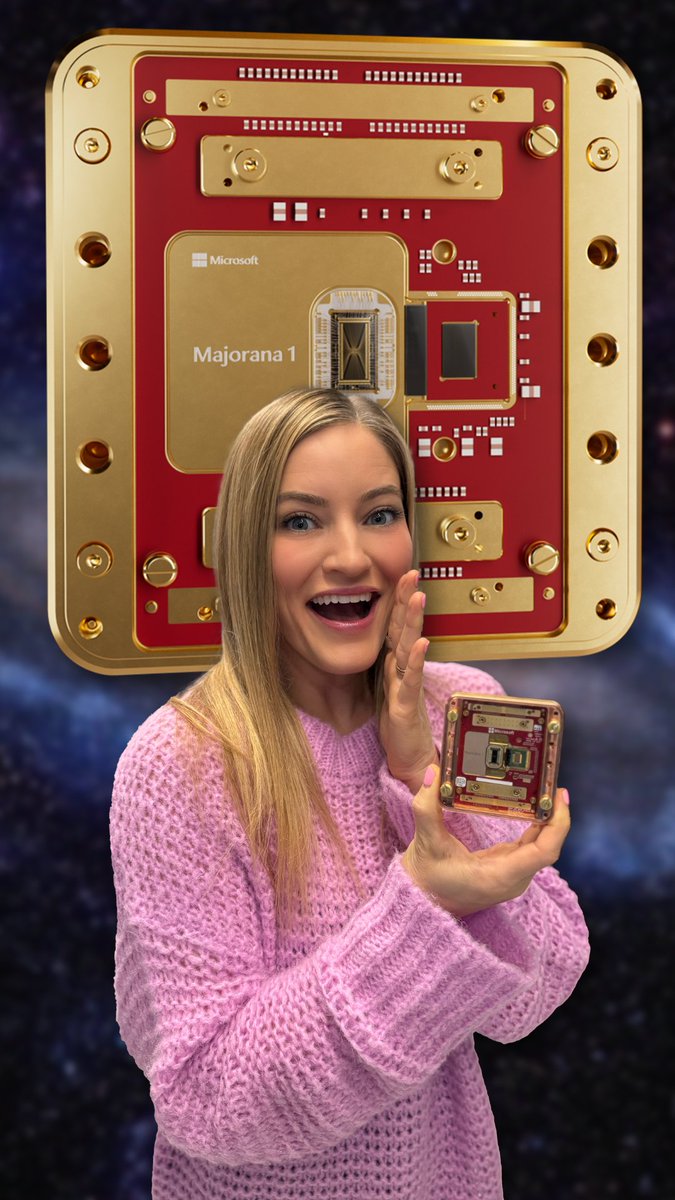
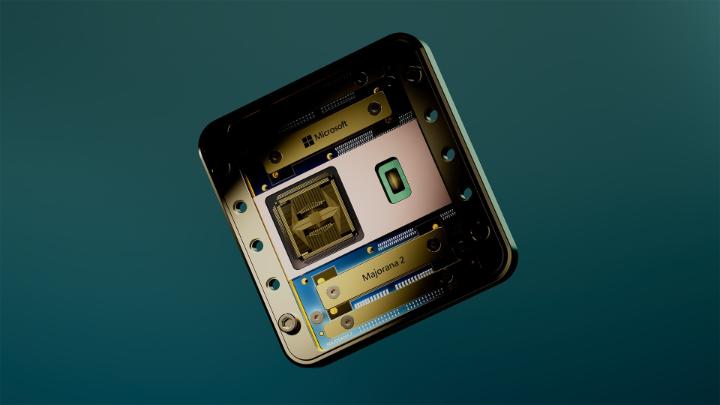
A breakthrough in quantum computing. Majorana 1 brings us closer to harnessing millions of potential qubits working together to solve the unsolvable—from new medicines to revolutionary materials—all on a single chip. #QuantumComputing #QuantumReady

10 Kommentare

Profilbild von NG_AGI
NG_AGIvor 1 Jahr

Quantum computing is the future 💜

Profilbild von Gaz
Gazvor 1 Jahr

Will it run Crysis?

Profilbild von RyanRejoice
RyanRejoicevor 1 Jahr

Imagine you have an ice cream cone on a super hot day. To keep it from melting, you'd need to put it in a special freezer. Now, quantum computers are like VERY sensitive ice cream - they need to be MUCH colder than any freezer in your house! So scientists built something like a magical Russian doll freezer. You know how Russian dolls fit inside each other? The quantum computer chip sits in the very middle, like the tiniest doll. Around it are bigger and bigger "freezer shells": The outside shell is as cold as the North Pole The next shell inside is WAY colder, like colder than any ice cream you've ever touched The very inside shell, where the quantum computer lives, is so cold it's almost as cold as anything can possibly get! Each shell helps keep the inside colder and colder, just like wearing lots of warm coats in winter - except these "coats" make things super cold instead of warm! The scientists use a special type of super-cold liquid (called helium) to make everything this cold. It's like having the world's most powerful ice pack wrapped around the quantum computer to keep it working properly!

Profilbild von Harv
Harvvor 1 Jahr

Looks like we better get the PQC sorted out. $QANX blockchain solution will arrive just in time. @QANplatform

Profilbild von George Hesketh
George Heskethvor 1 Jahr

Named after the Italian Theoretical Physicist I assume? What a great way to remember him. Will follow this processors story with interest. A million qubit processor is nothing short of immense. And maybe a little scary!

Profilbild von Steven
Stevenvor 1 Jahr

That’s some big news for quantum computing!

Profilbild von Eric Buchel
Eric Buchelvor 1 Jahr

With Microsoft's new quantum chip unveiled today, scammers might soon be able to crack Bitcoin private keys and global password encryption. Thanks, Microsoft! Now we need Quantum Encryption more than ever to counter this threat.

Profilbild von jimbovelure
jimbovelurevor 1 Jahr

Bye bye Bitcoin!

Profilbild von Liam Wilder
Liam Wildervor 1 Jahr

I think stockholders forgot $MSFT was doing Quantum Computing too 🥰😇💚🥚

Profilbild von KailRasha
KailRashavor 1 Jahr

Wow big news! I'm sure there will be an Intel / AMD style race to 1M qubits
Ähnliche Videos

6,100-Qubit Processor Shatters Quantum Computing Record | David Nield, ScienceAlert Another major quantum computing record has been broken, and by a considerable margin: physicists have now built an array containing 6,100 qubits, the largest of its type and way above the thousand or so qubits previous systems contained. It's the work of scientists from the California Institute of Technology, who used cesium atoms as their qubits, trapping them in place with a complex system of lasers that acted as tweezers to keep the atoms as stable as possible. Qubits differ from the classical bits of traditional computers by exploiting what's known as a superposition: not just binary states of 1 or 0, but a spread of probabilities that allows for algorithms that can solve problems considered out of reach of conventional computing methods. Related: Quantum Advantage: A Physicist Explains The Future of Computers A lot of qubits will be needed to make quantum algorithms practical, however. One reason for these large arrays is error correction, which helps overcome the inherent fragility of the qubit by providing a surplus to double-check the machine's operation. "This is an exciting moment for neutral-atom quantum computing," says physicist Manuel Endres. "We can now see a pathway to large error-corrected quantum computers. The building blocks are in place." There was no single breakthrough that enabled this jump in qubit numbers, but rather a series of engineering advancements in many key areas – from the laser tweezers to the ultra-high (very low pressure) vacuum chamber. Stability has also been a problem for quantum computing systems. The innovations in this latest array kept qubits in a superposition state for almost 13 seconds – almost ten times longer than previous configurations had managed. What's more, individual qubits could be manipulated with 99.98 percent accuracy, establishing a significant benchmark in the programmability of quantum technology. "Large scale, with more atoms, is often thought to come at the expense of accuracy, but our results show that we can do both," says physicist Gyohei Nomura. "Qubits aren't useful without quality. Now we have quantity and quality." To make quantum computers a practical alternative to modern supercomputers, more qubits and even greater levels of stability will be required. Experts are tackling the problem from several different angles, which is why records for some types of quantum computer don't necessarily apply to others. Next, the researchers need to work on exploiting entanglement, which will enable the system to make the leap from storing information to actually processing it. Not too far in the future, we could be using these computers to discover new materials, matter, and fundamental laws of physics. "It's exciting that we are creating machines to help us learn about the Universe in ways that only quantum mechanics can teach us," says physicist Hannah Manetsch. Read more:

Owen Gregorian

43,078 Aufrufe • vor 9 Monaten