Loading video...

Video Failed to Load

Go Home

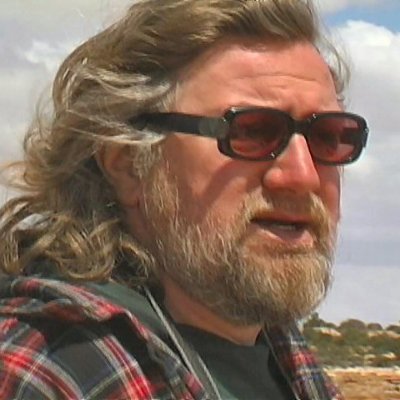
Randall holds a position that he frames not as speculation but as a scientific probability - levitation was a genuine technological reality for ancient cultures, and the evidence for it is hiding in plain sight within the most well known sacred object in biblical history. The Ark of the...

51,196 views • 4 months ago •via X (Twitter)

0 Comments

No comments available

Comments from the original post will appear here

Related Videos

The man who invented modern fantasy didn't publish his first novel until he was forty-five. By that age, J.R.R. Tolkien had already built a respectable life. He was an Oxford professor, an expert in ancient languages, with a wife and four children and a settled academic career. He was exactly the kind of man who might reasonably have decided that the shape of his life was already fixed. The work he would be remembered for, he had not yet even begun... The story, which Tolkien told himself, is that one summer he was grading examination papers, when he turned a page and found that a student had left it blank. Without quite knowing why, he wrote a single sentence on it: "In a hole in the ground there lived a hobbit." He did not know what a hobbit was. He had spent years inventing languages and mythologies as a private passion, and telling stories to his own children, never imagining any of it would reach the world. But that one line began to grow. It became a story, and then a book, and in 1937, at the age of forty-five, Tolkien published The Hobbit. It was a success, and his publisher asked for a sequel. Tolkien warned them it might take some time. It took 17 years... He wrote it in the margins of a demanding full-time job, revising endlessly, doubting it often. When The Lord of the Rings was finally published, in 1954 and 1955, he was in his early sixties. That book, begun as a middle-aged professor's private side project, went on to sell well over a hundred million copies, to invent modern fantasy as we know it, and to reshape the imagination of the entire world. Tolkien already had a full and respectable life behind him. And still, the thing he is remembered for, the thing that outlived him and reached hundreds of millions of people, was something he began at forty-five, at an age when it would have been the easiest thing in the world to tell himself he had already missed his chance. He didn't. It's never as late as it feels.

James Lucas

93,424 views • 1 month ago

In 1997 the greatest chess player who ever lived sat down against a machine, lost, and immediately accused it of cheating. IBM's answer was to switch the machine off, take it apart, and refuse to ever play him again. The match was carried on live television. IBM's market value jumped by billions in a single week. The man who lost spent years asking one question the company would never answer. His name is Garry Kasparov. The machine was Deep Blue. The footage is on YouTube. Kasparov was not just a champion. He had been the world's number one for more than fifteen years and is still argued to be the strongest player in history. In 1996 he had beaten IBM's Deep Blue with ease. IBM took it away, rebuilt it, and challenged him again in 1997 in New York, with the whole world watching. Then, in game two, the machine did something that broke him. In a position where every computer of that era would have greedily grabbed a pawn, Deep Blue quietly declined and played a slow, patient, deeply human move instead. Kasparov could not accept that a machine had chosen it. He became convinced a human grandmaster was hidden somewhere, feeding it moves. Rattled, he resigned a game that analysts later proved he could have drawn. He never recovered in the match. Deep Blue won, three and a half to two and a half. It was the first time a reigning world champion had ever lost a match to a computer. The papers called it the day the machines arrived. Kasparov demanded to see the machine's logs, the record of why it played what it played. IBM refused to release them, turned down the rematch he begged for, and quietly dismantled Deep Blue. Years later one of its own engineers admitted that an early move which had unnerved Kasparov may have come from nothing more than a bug, a meaningless fallback the champion had mistaken for genius. Nobody could ever fully settle it. The logs stayed private. This is not really a story about chess. It is about the exact moment human intuition stopped being the ceiling. For centuries the best move in any hard game was whatever the finest human mind could see. In one match a machine found a move a human could not even believe was real, and the greatest mind in the game turned his own genius into paranoia against it. Kasparov spent years bitter about it. Then he said the line that outlived the grudge: "I could feel, I could smell, a new kind of intelligence across the table." He stopped fighting the machine and started studying how humans and machines win together. That, not the loss, was the real lesson. The edge moved that day and it never moved back. It used to be intuition. It became computation. The people who win from here are not the ones with the best gut. They are the ones who stopped trusting their gut the moment the machine could out-see it. The film is free. The logs never came out. Most people will only remember that the human lost.

Voltex

407,140 views • 17 days ago