Video wird geladen...

Video konnte nicht geladen werden

Zur Startseite

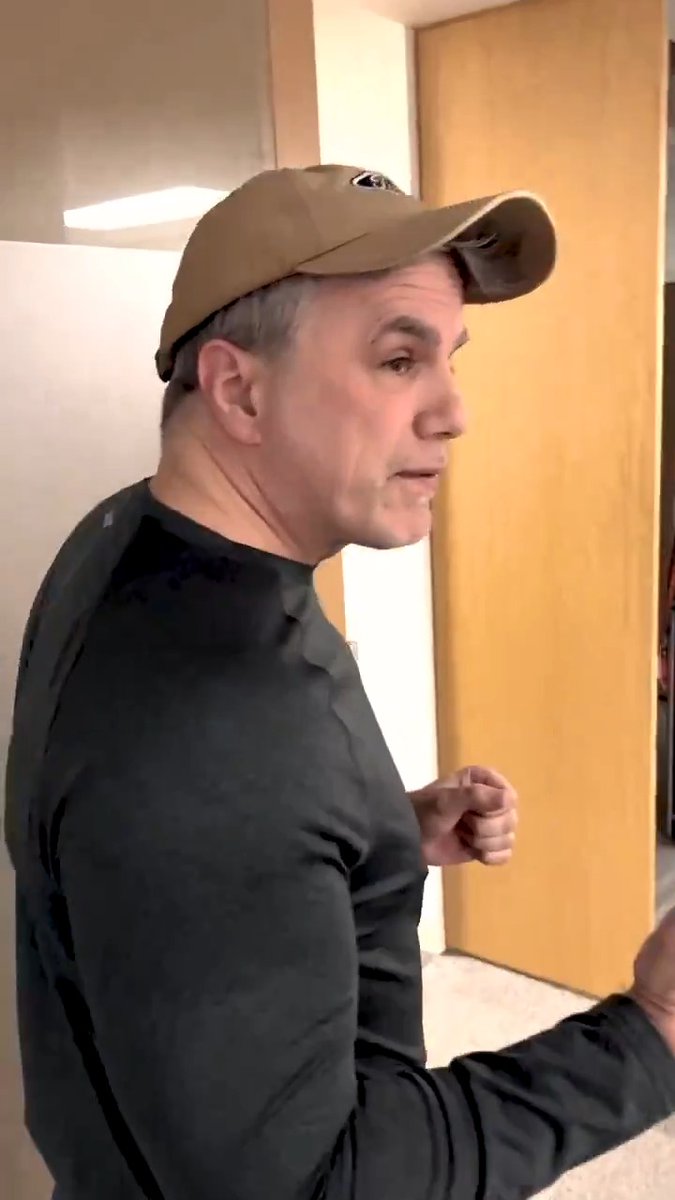
Renee good still had a pulse when paramedics showed up. Every second counts. Instead of helping her, as the law requires, ICE gave each other high-fives and tried to violate the First Amendment rights of bystanders taking video. This has legal implications that matter. Awful.

41,440 Aufrufe • vor 6 Monaten •via X (Twitter)

0 Kommentare

Keine Kommentare verfügbar

Kommentare vom Original-Post werden hier angezeigt

Ähnliche Videos

🚨BREAKING: Once again, ICE agents are admitting, on camera, that Renee Good was not shot in self-defense. In the video, a U.S. citizen is driving when he sees ICE agents. He stops his car, exits, and begins blowing a whistle… a lawful act protected by the First Amendment. An agent approaches him. The man backs away, does not interfere, does not block agents, and does not make physical contact. Despite this, the agent says: “Do you think this is a big game? Is this a game to you guys? That’s why that lady got hurt the other day.” That statement matters. The agent is threatening a U.S. citizen with lethal force for protected speech. That is illegal. Law enforcement cannot threaten, intimidate, or retaliate against civilians for exercising First Amendment rights. He said this to a man who was unarmed, on foot, and not posing any immediate threat. By the agent’s own words, Renee Good was not shot because of self-defense, but because she was drawing attention to ICE’s presence. That is not a lawful justification for using deadly force. This video shows constitutional violations in real time: • First Amendment retaliation • Threats of violence without legal cause • Abuse of authority under color of law I don’t know how many more videos need to come out before accountability happens. When federal agents threaten to kill Americans for making noise, the law has already been broken… and the Constitution is being treated as optional.

Jesus Freakin Congress

1,231,691 Aufrufe • vor 7 Monaten

⚖️A new form of UNRESTRICTED LAWFARE? Are politically-guided civil rights lawyers weaponizing their individual First Amendment rights to spew harmful misinformation? Does this misinformation tend to encourage unlawful, dangerous confrontations? Under the shield of commentary Jenin Younes, national legal director for the American-Arab Anti-Discrimination Council, incorrectly and absurdly advised X readers that ICE officers had “no law enforcement authority over” Renee Good, and “no authority to search a U.S. citizen or arrest her.” Younes, a former appellate advocate for indigent criminal defendants, prefaces her commentary with her credentials, framing herself as a neutral expert: “I’m a former defense attorney and currently a civil liberties attorney with no political dog in this fight.” Admitting she has “the right to change” her opinion “if additional information changes the calculus,” Younes says she has reviewed early video of the tragic confrontation between Renee Good and ICE and confidently asserts: “It is very clear that the officers instigated the confrontation.” As a trained attorney myself, I am astounded at Younes’ willingness to risk her reputation on such a strange hill without first investigating the facts of what occurred BEFORE the scene that emerges from the 9-second video clips. But what’s more astonishing (and frankly shocking) are Younes’ statements of law that are dangerously, absurdly incorrect. In the first wave of commentary about the encounter, many inferred Good was free to leave the scene — despite audio in some clips with the voice of an agent shouting to Good, “get out of the f—— vehicle!” There is no “right to flee” a law enforcement encounter simply because one believes it may be unlawful. And there is no reason to believe the encounter was unlawful. Because contrary to Younes’ assertions, ICE agents in the course of executing their enforcement duties have statutory authority to stop, question, detain and arrest U.S. citizens, codified at 8 U.S. Code § 1357(a)(5). For activists who seek to exercise their First Amendment rights, civil rights attorneys like Younes should advise on the limits of their rights to protest lawfully and on how to protest safely. And they should make it clear that actively interfering with ICE activities is absolutely outside the bounds of Constitutionally protected expression. Under Younes’ view, the assertion that ICE officers have “no law enforcement authority over” U.S. citizens tends to suggest that citizens can interfere with their operations or commit crimes against them with impunity. Clearly that is not the case. Statements from Good’s family members and eyewitnesses suggest that Good had coordinated with local activists and was consciously leading or participating in an operation to obstruct ICE by blocking the road with their vehicles. Obviously, investigation is ongoing, and more facts will come to light. I agree with Younes on one thing: Renee Good should not have died. If Renee had had a proper understanding of the law, and of the dangerousness of putting herself physically between ICE and the execution of their law enforcement duties, the 37-year-old mom might have thought twice before taking part. Was it foreseeable? Could a mistaken belief that the law does not apply to her, in someone who adheres to zealous anti-ICE ideology, be the catalyst to radicalize a mom to commit an act of obstruction, sabotage or terrorism? Being in a vehicle may have enhanced the dangerousness compared to anti-ICE activism we saw in 2025, where protestors blocked roads with their bodies. Driving a 2-ton vehicle means Renee was operating a potentially lethal weapon, justifying lethal force in a self-defense situation. Does Younes have a “political dog in this fight”? Glenn Greenwald touts Younes’ work combatting censorship, leading a lawsuit against the Biden administration, as evidence of her lack of political bias. But to assume, on the basis of minimal evidence, that ICE agents must be held accountable for “overreach” is the very definition of prejudice: to hold a preconceived opinion. Lawyers have opinions. But a preconceived opinion against law enforcement in this context strongly suggests a political agenda. Does Younes’ misstatement of law suggest a new form of “unrestricted lawfare”? You decide.

Amy Suzanne Martin MA JD

235,531 Aufrufe • vor 7 Monaten