Загрузка видео...

Не удалось загрузить видео

На главную

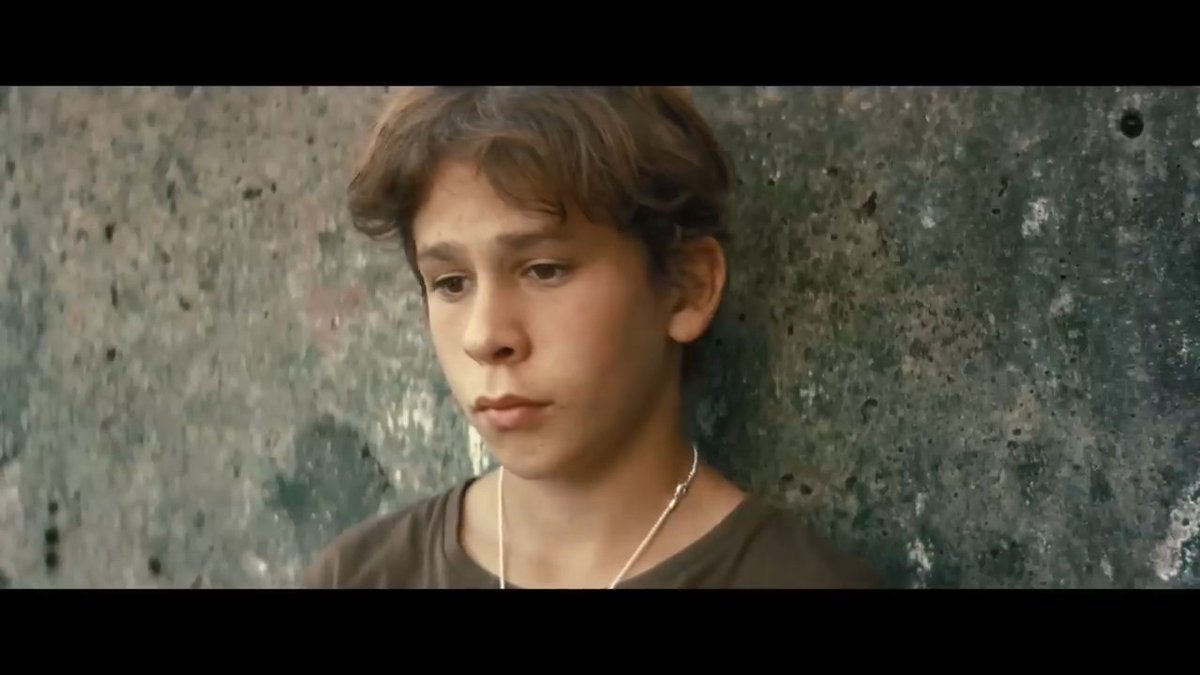
🎥🎬❤️‍🔥🧟 Resident Evil (2026) ❤️‍🔥🎥 The interesting thing about this version is that Bryan isn't a trained super-soldier or established Resident Evil hero. He's a medical courier who gets caught in the Raccoon City outbreak. That makes the horror feel more immediate because we're essentially experiencing the nightmare through...

12,113 просмотров • 11 дней назад •via X (Twitter)

Комментарии: 4

Фото профиля NuelFx🎥🎬
NuelFx🎥🎬11 дней назад

I actually like that approach. Seeing Raccoon City through an ordinary person’s eyes could make the horror feel way more intense.

Фото профиля Aduurah
Aduurah11 дней назад

Ita absolute classic horror. Many will love it.

Фото профиля letsCare💙🇬🇭🇺🇸🚶🏾🙏🏾
letsCare💙🇬🇭🇺🇸🚶🏾🙏🏾11 дней назад

I definitely want to see this movie Can’t wait

Фото профиля BAD WOLF
BAD WOLF10 дней назад

This is exactly why Bryan works. He doesn’t feel like a protagonist who already knows the rules. He reacts with the same confusion, panic and disbelief the PLAYER would have. He’s not surviving because he’s a badass. He’s surviving because he’s learning how to survive. That makes the horror hit harder.

Похожие видео

🎮 Resident Evil 4 Remake Gets a Co-op Mode Before Resident Evil 5 Remake. A modder known as claybtv has announced the launch of an open beta for a co-op mode in Resident Evil 4 Remake. The modification, called Multiplayer Mod, allows two players to experience the entire campaign together. According to the developer, the mod synchronizes enemies, story events, doors, switches, alarms, and many other gameplay elements between two separate game instances in real time. From a technical standpoint, it's a remarkable achievement. Resident Evil 4 Remake was originally designed as a single-player experience, meaning that creating stable synchronization between two players required overcoming numerous complex challenges at the engine level. The mod is currently in beta testing, and players may encounter performance issues, animation glitches, and other bugs. The developer is already working on fixes through ongoing updates. 🤔 Perhaps the most interesting part of this story isn't the mod itself, but the community's reaction to it. This is the first fully featured co-op project built for a Resident Evil title on the RE Engine, allowing players to experience nearly the entire campaign together from start to finish. In many ways, the project highlights the continued demand for cooperative gameplay within modern Resident Evil titles. The positive response it has received may be further evidence that there is still significant demand for cooperative experiences within the Resident Evil franchise.

RENEWS

747,139 просмотров • 3 месяцев назад

🔥A Resident Evil 3 Remake mod bringing back the original game is gaining attention — here’s what we learned. Resident Evil 3: Last Escape isn’t just another gameplay or difficulty mod. Its creator aims to transform Resident Evil 3 Remake into a much more faithful recreation of the original game. 👀The story behind the project is just as interesting. The creator isn’t a game developer, he’s a professional chef. Like many Resident Evil fans, he was disappointed by the remake’s short length and how much content from the 1999 original was left out. That disappointment inspired him to begin learning how to mod the game. He spent nearly a year and a half studying tutorials, documentation, and forum guides before finally starting work on the project. He understood that another Resident Evil 3 Remake was unlikely to happen within his lifetime, so instead of waiting for something that would probably never come, he decided to build his own vision. ❗️What makes Resident Evil 3: Last Escape stand out is the sheer scale of the project. The mod is expected to expand Resident Evil 3 Remake by more than 60%, largely through new playable locations. During development, the creator learned how to import virtually any location from any RE Engine game and make it fully functional with lighting, collision, doors, locks, items, resources, puzzles, enemies, and music. The project will also introduce new Nemesis encounters and boss fights, redesigned item placement and progression, brand-new puzzles and gameplay mechanics, and a reworked crafting system featuring multiple new gunpowder types. Everything has already been successfully implemented and confirmed to work reliably. 🧐He also learned how to create completely original locations that don’t exist in any RE Engine title. This will allow him to recreate several streets from the original Resident Evil 3 by transforming its classic pre-rendered backgrounds into fully explorable 3D environments. Everything described above has already been tested and confirmed to work. The long-term goal is to restore much of the original game's storyline through new cutscenes recreating events from Resident Evil 3 (1999). Confirmed additions include the fully playable Uptown, Clock Tower, Park, Cemetery, Dead Factory, and R.P.D., along with a working Ink Ribbon save system and other content cut from the remake. 👍One detail many fans will appreciate is that Resident Evil 3: Last Escape is planned to be released completely free of charge. The growing interest in the project once again shows how many fans remain dissatisfied with Resident Evil 3 Remake. Each new YouTube update draws thousands of views, while the comments are filled with fans supporting the creator and praising the project's vision. ❤️For many fans, it remains their favorite game in the series, and they continue to hope that one day it will receive the faithful, ambitious remake they believe it deserves. If Resident Evil 3 Remake were ever given a more faithful and ambitious reimagining on the level of Resident Evil 2 and Resident Evil 4, many players would likely be happy to buy it again. The next major development update is expected in about a week, with a new YouTube video showcasing the project's latest progress.

RENEWS

605,455 просмотров • 2 месяцев назад

Some songs make you remember a person. “A Different Corner” makes you wonder what would have happened if you had never met them. Watching George Michael perform the song on Parkinson, I kept coming back to how little there is between him and the music. There is no elaborate production to distract you, and no attempt to turn the performance into a grand moment. He simply sits with the song and lets it unfold at its own pace. That suits “A Different Corner” because the song has never needed much decoration. Its strength comes from the feeling that someone is looking backward, trying to understand how a relationship could have changed so much simply because two people happened to meet at the wrong — or perhaps the right — moment. Michael's voice carries that uncertainty beautifully. He doesn't sing as though he has finally figured everything out. There is control in the performance, but the control never feels cold. If anything, it makes the emotion more convincing, because the sadness is allowed to stay underneath the surface rather than being pushed toward us. The title keeps returning to my mind. A different corner. Such a small phrase for something that can contain an entire life. We tend to imagine the past in large pieces: another relationship, another career, another city, another version of ourselves. But regret rarely begins that way. More often, it starts with one tiny detail. A conversation we almost didn't have. A place we nearly didn't go. A decision that seemed insignificant at the time. Change that one thing, and the imagination immediately starts writing another story. That is what makes this performance feel so intimate. Michael isn't really asking us to feel sorry for him. He is sitting with a possibility that cannot be tested anymore. Whatever happened, happened. There is no alternate version available to compare with the one he lived. And perhaps that is why the song doesn't feel tied to the decade in which it was written. The television studio may look dated now, but the question at the centre of the song hasn't changed. What if? Almost everyone has one. A different person we might have stayed with. A different road we might have taken. A different corner we might have turned. We never get to find out. George Michael doesn't try to answer that question. He just sings from the other side of it, where all that remains is the life that actually happened. Maybe that's why this performance still feels so close. It isn't really about changing the past. It's about knowing you can't.

Emotion & Music

63,506 просмотров • 1 месяц назад

“Dancing in the Dark” Was Never Really About Dancing The easiest mistake with “Dancing in the Dark” is to listen to the title. You hear the beat, the synths, the handclaps, and Bruce Springsteen sounding almost impatient, and it is tempting to put the song in the same box as every other big 1980s anthem. Something to play loud. Something to sing along to. Something that makes a crowd move. But listen to what he is actually saying. He is tired. Not heartbreak-tired. Life-tired. He has been working on something and still doesn't feel any closer to where he wants to be. He knows he should change something, but he doesn't even know what the change is supposed to look like. That is a very different kind of frustration — the sort that doesn't give you a clear enemy to blame. And then the chorus arrives. “Dancing in the Dark” sounds like an escape, but there is desperation underneath it. The dancing isn't the solution. It is what you do when you don't have one. That makes the song much more American than its stadium-sized reputation suggests. It is about work, ambition, restlessness, and the nagging suspicion that simply trying harder may not be enough. Springsteen had already spent years writing about people trying to outrun circumstances. Here, the fight becomes more personal. He isn't singing about some distant character. He's talking directly from the middle of the frustration. Even the famous music video adds another layer. Springsteen is onstage, surrounded by thousands of people, and yet the song's central feeling is isolation. Then comes the moment when he pulls a young woman from the audience onto the stage and dances with her. That woman was Courtney Cox. It became one of the most recognizable images associated with the song, but the irony is easy to miss. The performance is about wanting something to change, and suddenly the video itself creates a change — one person from the crowd is pulled into the story. For a few seconds, the distance between performer and audience disappears. That is probably why the song has survived so well. Everybody knows what it feels like to be stuck. You can have a job, friends, plans, a full calendar — and still wake up with the uncomfortable feeling that you're standing in exactly the same place you were last year. Springsteen doesn't offer a grand solution. He gives that feeling a beat. Maybe that's why people still dance to it. Not because the problem has disappeared. Because sometimes moving your body is the first small sign that you haven't given up on moving your life. And that's the strange trick of the song: It turns frustration into something you can dance to without pretending the frustration isn't there.

Emotion & Music

17,054 просмотров • 28 дней назад

🧟 A Closer Look Inside the Resident Evil Experience at Universal Horror Unleashed in Las Vegas: Full Photo & Video Recap. 🚔 The adventure begins at the Raccoon Police Department, where guests are recruited to investigate the mysterious outbreak. Upon entering, each group receives one of three different investigation missions, meaning no two visits are exactly the same. Players examine evidence boards, missing-person files, maps, coded messages, and other clues before setting off on their assignment. After completing the first objective, guests receive an evacuation map and continue their mission across the venue. Along the way, they'll solve additional puzzles, including decoding traffic-light signals and searching for hidden clues to unlock the final escape route. The experience extends beyond the R.P.D., leading visitors through different parts of the attraction while the outbreak unfolds around them. 🎭 The world is brought to life by live performers portraying Leon S. Kennedy, Claire Redfield, Jill Valentine, Ada Wong, Brad Vickers, and R.P.D. officers. Meanwhile, zombies freely roam the streets, a Licker stalks unsuspecting guests, and Nemesis makes terrifying appearances throughout the experience. Several live performances also recreate the chaos of the outbreak as officers desperately attempt to contain the infected. The entire venue has been redesigned with Resident Evil-themed environments, including the R.P.D., downtown Raccoon City, Umbrella Corporation advertisements, warning signs, and countless references that longtime fans will immediately recognize. Rather than simply watching the action unfold, guests become part of the story as they interact with characters, solve puzzles, and try to escape the city. 🍗Those who successfully complete the investigation earn an in-universe reward that can be redeemed during their visit. Guests can also stop by the Umbrella Corporation Café, which serves Resident Evil-inspired food and drinks, including the Biohazard Elixir in a collectible laboratory beaker, the T-Virus Trio, themed desserts, and several exclusive menu items created specifically for the event. Thanks to X/StitchKingdom and fullhouseofhorrors portal.

RENEWS

62,854 просмотров • 3 месяцев назад

🎬 UNTHINKABLE (2010). HOW FAR WOULD YOU GO TO SAVE MILLIONS? Some thrillers ask you to figure out who the villain is. Unthinkable asks something much harder: What would you become if you believed millions of lives depended on you crossing a line? Released in 2010 and directed by Gregor Jordan, the film stars Samuel L. Jackson, Carrie-Anne Moss and Michael Sheen. The setup is terrifying. A suspect claims that three nuclear bombs have been placed in different American cities. The authorities have very little time to locate them. Then comes the interrogation. And that's where the movie stops feeling like a conventional thriller. 🎥 THE REAL BATTLE ISN'T OUTSIDE THE ROOM Helen Brody, played by Carrie-Anne Moss, approaches the situation from a law-enforcement perspective. She wants answers. But she also questions what can legitimately be done to obtain them. Then H arrives. Played by Samuel L. Jackson, H is an interrogator who operates according to a completely different philosophy. His argument is simple: If extreme measures can prevent mass casualties, why shouldn't they be used? And that creates the movie's central conflict. It's not really H versus the suspect. It's H versus Brody's conscience. WHY THE MOVIE FEELS SO UNCOMFORTABLE The film deliberately puts the audience in an impossible position. You know the threat is supposedly enormous. You know the clock is running. You know innocent people could die. But the methods being used to get information become increasingly disturbing. So you start asking yourself questions you probably don't want to answer. If you knew millions of people were in danger, would your principles change? If the suspect refused to talk, how much pressure would be too much? And if crossing one line didn't work... would you cross another? That's where the title Unthinkable becomes more than just a name. The movie keeps asking: What is the thing you said you would never do? And what happens when someone gives you a reason to do it? SAMUEL L. JACKSON'S PERFORMANCE What makes H frightening isn't simply his willingness to use violence. It's how calmly he approaches it. He doesn't behave like someone who thinks he's the villain. He believes he's doing what has to be done. That makes the character much more unsettling. Because the most disturbing question isn't: "Would a bad person do this?" It's: "What happens when someone believes doing something terrible is necessary?" Michael Sheen's performance works on the other side of that tension, while Carrie-Anne Moss becomes the character through whom the audience questions the methods being used. THE CLOCK MAKES EVERYTHING WORSE The movie doesn't give the characters unlimited time to debate morality. The bombs create urgency. Every minute that passes makes the argument for extreme action stronger. And that's clever storytelling. Because when there is no time pressure, morality can sound simple. But when lives are supposedly hanging in the balance, every principle suddenly becomes harder to defend. That is exactly where Unthinkable wants the audience. Uncomfortable. Unsure. And questioning itself. WHAT STOOD OUT TO ME What stayed with me isn't the threat of the bombs. It's the psychological battle. The movie makes you watch people justify increasingly extreme decisions while convincing themselves they're still on the right side. And that's what makes it difficult to simply label one character "right" and another "wrong." The film is deliberately built around that tension. Even the FBI agent who objects to the interrogation methods is forced to confront what might happen if refusing them costs innocent lives. THE ENDING Without giving away every detail, the final stretch pushes the central question even further. The situation becomes so extreme that the characters are forced to confront the ultimate boundary. And the ending doesn't leave you with an easy answer. It leaves you with a question. Is there a line that should never be crossed, even when the stakes are enormous? Or does the possibility of saving millions change the rules? That's why Unthinkable still works as a psychological thriller. Not because it gives you a comfortable answer. Because it refuses to. 🎬 MY TAKE I don't think the most disturbing thing about Unthinkable is what happens in the interrogation room. It's watching the characters slowly redefine what they consider acceptable. One decision makes the next one easier. One line gets crossed. Then another. And eventually you have to ask yourself: At what point does saving people become an excuse for becoming the very thing you're fighting? That's what made this movie stick with me. It's not just about finding three bombs. It's about discovering how much of your morality survives when fear, pressure and time are working against you. 🎥 UNTHINKABLE (2010) Would you keep your principles when millions of lives were supposedly at stake or would you cross the line?

Rabiat رابعة

69,041 просмотров • 11 дней назад

A very harsh threat, made by Netanyahu toward Iran. What is behind the heightened tone? It is not only harsh, it is also unusual. The event that took place in recent months was a paralyzing fear of what is called miscalculation. They will think that we will attack first, even though that was not the intention, and then they will attack, and the entire region will be dragged into another round of confrontation. In a region where there is fear of miscalculation, you are not supposed to announce this kind of thing in the Knesset. I just want to make that clear. Yesterday, Naftali Bennett promoted his press conference on the conditions of soldiers, okay? He gets six million views because the timing looks like a countdown and he is a former prime minister, so the Iranians are in hysterics that he is actually announcing that they are going to attack. That’s the atmosphere. So when Netanyahu attacks like this and makes an unprecedented threat—not only harsh but also unusual—one can’t help but think that for Netanyahu there is a message, or something more problematic than miscalculation. And he wants to warn the Iranians. Now, what’s the issue? The issue is that if the Iranians come to the conclusion that their regime is on the verge of collapse, there is one thing that might save them. And that is an attack on Israel. Because we saw during the war what is called “rally around the flag.” Even those who were in the opposition rallied around the flag when their country was attacked. It is not only the Islamic Republic that is under attack, but also the Islamic Republic of Iran. That is essentially the issue, and that is what Netanyahu, in my opinion, is trying to stop with the threat he issued after the security discussion.

Amit Segal

41,392 просмотров • 8 месяцев назад

The Lord of the Rings: The Fellowship of the Ring – Prologue: How Peter Jackson Turned a Legend into a Cinematic Experience Before Frodo’s journey begins, Middle-earth already carries a history that stretches back thousands of years. The greatest challenge of The Fellowship of the Ring was not simply introducing a fantasy world, but making audiences feel that this world had a long and meaningful past: with kingdoms that had risen and fallen, wars that had already been fought, and tragedies that continued to leave their marks. In just under seven minutes, the Prologue transforms an enormous amount of history into a concise cinematic experience, allowing viewers to enter Middle-earth as a world that had existed long before the main story began. What makes this opening remarkable is that it does not feel like a simple explanation of a fictional universe. Instead, it feels like a legend being retold from the perspective of someone who belongs to an age that witnessed the great changes of Middle-earth. This is the greatest achievement of the Prologue. In only a few minutes, Peter Jackson, Fran Walsh, Philippa Boyens, and Howard Shore transform Tolkien’s historical background into an accessible cinematic experience, allowing audiences to understand that Frodo’s story is not the beginning of a new world, but another chapter in a history that has already lasted for thousands of years. A Masterclass in Opening an Epic Film An epic film must answer three fundamental questions within its opening moments: What is at stake? How dangerous is the enemy? Why should the audience care? The Fellowship of the Ring’s Prologue answers all three with remarkable efficiency. Middle-earth does not appear as a newly created fantasy setting, but as a world shaped by countless ages, civilizations, and different races: Elves, Dwarves, and Men. This vast history is compressed into a continuous flow, allowing viewers to understand the scale of the story without becoming overwhelmed by excessive information. At the center of this entire history stands the One Ring. The film does not introduce it as merely a magical object, but as a vessel containing power, will, and Sauron’s desire for domination. From that moment, the audience understands that the wars and tragedies to come will revolve around something that appears deceptively small. Galadriel Does Not Simply Tell a Story — She Speaks as Someone Who Belongs to That Age One of Peter Jackson’s most important decisions was choosing Galadriel as the narrator. From the first Elvish words in the film version — “I amar prestar aen... The world is changed...” — the audience is immediately drawn into an atmosphere that feels ancient and filled with memory. Galadriel does not narrate like someone explaining history. She narrates like someone who belongs to an age that has witnessed the great transformations of Middle-earth. Her calm and measured voice, carrying a sense of memory and reflection, makes the audience feel that what they are seeing is not merely a conventional introduction, but a story being recalled from a distant era. This choice gives Middle-earth the depth of a civilization that existed long before Frodo entered the story. Howard Shore Transforms the History of Middle-earth into a Musical Language The music in the Prologue does more than simply accompany the images. It tells the story alongside the film. In the scenes connected with the Elves, the music carries a sense of elegance and mystery, suggesting an ancient culture and an era that is gradually changing. But when Sauron appears, the entire soundscape changes. Heavy drums, metallic textures, and tense rhythms create the feeling of a force threatening the balance of Middle-earth. Howard Shore does not simply create musical themes for individual characters or factions. He builds a complete leitmotif system, where music becomes a way for audiences to recognize different cultures, characters, and powers within Tolkien’s world. A Battle That Feels Real Because Technology Serves the Story The Battle of Dagorlad remains impressive even more than two decades after its creation. One important reason is the MASSIVE system, a software developed by Weta Digital to create large-scale CGI armies. Instead of moving like identical copies of one another, digital soldiers were designed with different behaviors through a simulation system, creating the impression of a vast and chaotic battlefield. What audiences remember is not the technology itself. What they remember is the feeling of a battle with a genuine sense of scale. It is a moment when technology supports the story rather than drawing attention to itself. Isildur Shows That the Ring Can Defeat Even a Hero The most important character in the Prologue is not Sauron. It is Isildur. He enters the story as the man who helped defeat the Dark Lord. Yet that victory immediately turns into tragedy when he cannot let go of the Ring. In the film version, Peter Jackson condenses this moment by showing Isildur rejecting Elrond’s advice and carrying the Ring away from Mount Doom. In Tolkien’s original work, this decision carries even greater complexity. Isildur initially keeps the Ring as compensation for the deaths of his father Elendil and his brother Anárion. However, although he does not fully understand the Ring’s true nature at first, its power gradually reveals its ability to influence his will. What makes Isildur’s story significant is that he is not portrayed as an evil person. His tragedy lies in the fact that even a hero can fail when faced with the temptation of power. The Ring does not create evil from nothing. It exploits and amplifies the ambitions, fears, and desires that already exist within individuals, allowing even a noble person to be overcome by its influence. A Transition That Tells Nearly Three Thousand Years of History After Isildur is killed at the Gladden Fields, the Ring falls into the River Anduin and disappears from history for many centuries. With a single transition, the film carries the audience across nearly three thousand years without lengthy explanation. During this period, the Ring is forgotten before being discovered by Sméagol. It then remains with him for nearly five hundred years, gradually consuming both his body and spirit, transforming a creature of Hobbit-kind into Gollum. When Bilbo accidentally finds the Ring, the film completely changes its rhythm. The lighting becomes warmer. The music becomes gentler. The epic world of kings and massive battles gives way to the peaceful world of the Shire and the Hobbits. This is not only a transition in time. It is a transition in the entire story. The fate of Middle-earth is no longer placed in the hands of powerful warriors, but into the hands of the smallest and most unexpected creatures. Conclusion The Prologue of The Fellowship of the Ring is a masterclass in opening an epic film. In only a few minutes, it builds an entire world, establishes the central threat, introduces the antagonist, and lays the foundation for the journey that follows. However, the greatest achievement of this sequence does not lie only in its scale or visual effects. It lies in the way Peter Jackson transforms a vast amount of historical background into an accessible cinematic experience. The audience does not understand Middle-earth only through information, but also through the feeling that this is a world with a real past — a world that has experienced ages of greatness, conflict, and decline long before Frodo’s journey begins.

🎼🌺Music Love♥️

16,451 просмотров • 1 месяц назад

One of the smartest scenes in Reservoir Dogs is the Commode Story. On the surface it's Mr. Orange telling a funny made-up anecdote about getting trapped in a men's room with cops, a drug dog and a brick of weed. It's a scene about acting. Mr. Orange is an undercover cop, and the only way he survives is by performing criminality better than criminals can detect it. So Holdaway hands him four pages and teaches him how to live inside them. An undercover cop's gotta be Marlon Brando. You gotta be naturalistic as hell. Bad acting is bullshit in this job. Then listen to what he tells him to learn. Whether they've got paper towels or a blower. Liquid soap or that pink granulated powder from high school. Hot water or not. Whether some nasty scum-ridden motherfucker sprayed diarrhea all over one of the bowls. It's the details that sell your story. Tom Shone called that speech as close to an aesthetic credo as Tarantino ever got, and he's right. But the scene goes further than that. Watch what stacks up. A cop pretending to be a criminal, rehearsing a fake story, telling it so well that the movie shows it to us like it happened. A story inside a story inside a story. And the fake one mirrors the real one. In the anecdote, his invented criminal is surrounded by cops and has to stay calm. In the film, Mr. Orange is a cop surrounded by criminals doing exactly that. He's pissing his pants in both versions. That's what makes Roth so good here. Orange doesn't just lie. He performs the anxiety of the lie while hiding the real one underneath it. The criminals think they're watching a man remember a dangerous moment. They're watching a man prove he can survive one. The best line in the speech is the one nobody quotes. Remember that this story is about you and how you perceived the events that went down. That's not advice for a cop. That's the whole movie. Everybody in that warehouse is telling a version of themselves and hoping the details hold. Mr. Orange's weapon isn't his gun. It's the story he can make dangerous men believe.

Quentin Tarantino Universe

77,970 просмотров • 2 месяцев назад

Not every memorable moment in cinema wins over audiences through cinematography, choreography, or music alone. Some moments endure because they touch something deeply rooted in human nature. Gene Kelly singing and dancing in the rain in Singin’ in the Rain (1952) is one such moment. At first glance, it is simply the image of a joyful man walking through the rain. He sings, spins his umbrella, steps through puddles, swings around a lamppost, and smiles in the middle of an empty street. But what allows this scene to remain in the memory of audiences is not only its visual beauty. Beneath the surface, it reflects a very special state of human existence: the moment when inner joy and outward expression become one unified whole. Perhaps this is the deepest source of beauty within this scene. From a Dance Scene to the Unity Between Inner Emotion and Outer Form What the audience first feels is a very simple sense of joy. Don Lockwood has just experienced a moment of happiness with Kathy. The emotion is so powerful that when he steps outside into the rain, he no longer sees the weather as an obstacle. He sings. He dances. He plays with the falling drops of water. The rain, which could normally be uncomfortable, becomes part of his happiness. But if we stop here, we are only seeing the surface of the scene. The deeper meaning lies in the way all elements come together in harmony. The music does not exist separately from the movement. The rhythm of the song becomes the rhythm of the body. Every step, every turn, every movement of the umbrella seems to come directly from the emotion within. The rain is no longer merely a background. The street is no longer just a setting. The entire world around him becomes part of his inner state. This reflects an idea often emphasized in Western aesthetics: beauty emerges when different elements achieve an organic unity. The outer form is no longer separated from the inner meaning. The Smallest Moment Can Contain the Greatest Spirit The entire scene can be condensed into one very small action: Gene Kelly steps into a puddle. This is not simply a humorous gesture. It is a symbol of the way human beings perceive the world. An ordinary person might avoid a puddle out of concern for dirty shoes, wet clothes, or losing a sense of neatness and control. But Don Lockwood deliberately steps into it. He transforms something that would normally be avoided into a source of happiness. In that moment, he is no longer controlled by hesitation or excessive awareness of himself. He is not trying to create the image of a happy person. He is simply living within that happiness. This is what makes the scene so special. The audience feels that they are not watching a performance about joy, but witnessing joy itself finding its own natural form of expression. Why Does This Touch the Human Heart? The deeper question is: Why does the unity between inner feeling and outer expression move us? Perhaps because, in everyday life, human beings often experience separation. We may think one thing but say another. We may feel something but have to hide it. We may want to act naturally but become limited by layers of worry and calculation. Yet sometimes, we encounter a moment when all those distances disappear. A child’s natural laughter is an example that closely reflects the spirit of Gene Kelly’s performance. When a child is truly happy, that happiness does not remain only within the mind. It appears through the whole person: The eyes brighten. The expression changes. The voice becomes clear and pure. The body moves together with the emotion. A child does not need to learn how to express happiness. Happiness naturally finds its way outward. This is exactly what Gene Kelly evokes in the rain. Although Don Lockwood is an adult, in that moment he returns to a very fundamental human state: when the soul and the body are no longer separated, when genuine emotion can freely express itself through every movement. This Principle Exists in Nature What is interesting is that this principle does not exist only in art. A similar pattern can be found in the natural world. A seed grows into a tree. The shape of the tree is not something added from the outside, but the expression of an inner process of life. A flower blooms not because it tries to become beautiful, but because the life within it has reached a form that naturally expresses itself. A river does not create beauty by resisting the landscape. It flows around rocks, adapts to the shape of the earth, and through this harmony creates its own unique form. The same is true within the human body. A genuine smile is not only found in the movement of the lips. It is the coordination of the eyes, facial expression, voice, and inner emotional state. A highly skilled athlete or artist often creates a similar impression: technique is no longer separated from emotion. The body becomes a natural instrument for expressing an idea from within. The Scene and the Beauty of Wholeness From an aesthetic perspective, what makes Singin’ in the Rain special is not simply that Gene Kelly dances beautifully. More importantly, the scene reveals a profound image of humanity: A person who is no longer divided between emotion and action. A person whose inner world and outer expression move toward the same direction. A person who encounters the world not as an obstacle, but as a part of life unfolding naturally. This is also why the scene continues to connect with generations of viewers. Regardless of the era, people can still recognize the beauty of a familiar state of being: the moment when a living being is able to exist in harmony with its own nature.

🎼🌺Music Love♥️

17,450 просмотров • 2 месяцев назад

Bilbo Baggins: When a Life Is Stretched to Its Limit There is a line spoken by Bilbo Baggins in The Lord of the Rings that has stayed with me: “I’m old, Gandalf. I know I don’t look it, but I’m beginning to feel it in my heart. I feel thin, sort of stretched, like butter that has been scraped over too much bread.” At first, this might sound like nothing more than the complaint of someone who has lived too long. But what caught my attention was not that Bilbo says he is old. It is the way he describes that feeling: “I feel thin.” He does not say that he is in pain. He says that he is being stretched. And from there, I began to see this line as an image of a being carrying a burden greater than the scope of an ordinary life. This is my personal interpretation. Tolkien does not directly present a concept of “capacity” or “the elasticity of a life” in the way I am using those ideas here. I am simply taking Bilbo’s own image of “butter and bread” and using it to look more deeply into the feeling he is describing. Too Much Bread and Too Little Butter If I had to imagine that feeling through another image, I would think of a balloon. When it is in its natural state, it has a certain shape. As the pressure increases, it begins to stretch. It has not burst. But it is no longer in its original state. And I think Bilbo is much the same. He has possessed the Ring for sixty years. Yet what is remarkable is that, after all that time, Bilbo is still Bilbo. He still loves the Shire, loves Bag End, cares about Frodo, writes books, smokes, and talks with Gandalf. The Ring has affected him, but it has not completely taken over who he is. That is why I do not think Bilbo’s endurance should simply be understood as: “He was so strong that the Ring could not affect him.” Quite the opposite. The words “I feel thin, sort of stretched...” show that he has already begun to feel that pressure from within. And this is where the image of “butter and bread” becomes especially interesting. The piece of bread does not necessarily have to be understood as the Ring itself. In the way I see it, it is something broader. It is the entire scope of what Bilbo is carrying: the passing years, his unusual existence, the pressure of the Ring, and everything that comes with it. The butter, meanwhile, is Bilbo himself. A finite being with finite capacity. A little butter is enough for a reasonably sized piece of bread. But when it has to be spread across a piece of bread that is too large, it has to become thinner. And that is what I feel in Bilbo. It is not that he suddenly becomes weak. It is that the same being is having to stretch itself to accommodate a burden that has grown beyond the boundaries of an ordinary life. “Stretched” Does Not Mean Destroyed This is the part I find most important. Bilbo is still alive. He is still himself. He still has things he loves and still has the ability to experience the world around him. But something has appeared within him that perhaps was not there before: He feels that he is being stretched too thin. So, being “stretched” does not mean that Bilbo has been destroyed. It shows that he is still enduring, but that his endurance has begun to leave a mark. Being able to endure does not mean being unaffected. A person can endure something for a very long time and still become tired. Someone can continue living almost normally while inwardly feeling that they are being stretched too thin. Bilbo is in precisely that state. And perhaps that is why his next words feel so natural: “I need a holiday, a very long holiday...” I like the way Bilbo says this. He does not try to prove that he can endure more. He simply realizes that he needs to leave. To me, this is a remarkable form of awareness. Bilbo does not wait until he has completely lost himself before recognizing the problem. He realizes that he is being stretched. And from that realization, he wants to step away from the circumstances creating that pressure. Recognizing Your Limit Is Also a Form of Strength If we continue with the image of the balloon, Bilbo has enough elasticity to withstand that pressure for decades. But that elasticity is not infinite. The more it is stretched, the farther it moves from its original state. And what catches my attention most is that Bilbo is still aware enough to recognize this. From this perspective, I see Bilbo’s decision to leave in a different way. He does not leave because he has failed. He leaves because he has recognized his limit. To me, this is much more meaningful than simply saying that Bilbo is “strong” because he was able to possess the Ring for so long. A being can be remarkably resilient and still have limits. And being able to recognize those limits is not weakness. It is awareness. Bilbo does not say: “I can endure more.” He says, in a very different way: “I need a holiday.” Perhaps that simplicity is exactly what makes the line so thought-provoking. He does not need to prove how strong he is. He only needs to be honest about what he is feeling. Why Is the Image of the “Butter” So Sad? That is also why I find Bilbo’s image of the butter so sad. Bilbo is still there. He has not disappeared. He has not been destroyed. But he feels as though he has been spread too thin. The image does not describe a moment of collapse. It describes a process. The burden creates pressure. The pressure forces Bilbo to adapt. That prolonged adaptation makes him feel increasingly stretched. And eventually, he realizes that he cannot continue that way forever. That is what makes the words “I feel thin” so important. “Thin” is not a declaration of weakness. It is a sign that a being has been pulled away from its natural state for too long. And recognizing that opens a choice for Bilbo: To leave. It makes me see Bilbo differently: “Bilbo is not a being that cannot be stretched; he is a being that has endured pressure for a very long time, yet remained aware enough to recognize that his capacity to stretch is not infinite.” And perhaps that is what I like most about this line. Strength is not always about enduring more. Sometimes, strength is knowing that you have endured enough.

🎼🌺Music Love♥️

15,306 просмотров • 1 месяц назад

Great balance of showing compassion while sharing truth as Wes Huff responds to the question of why a good God would allow evil: "Well, that is arguably the hardest and most pressing apologetic question there is, because ultimately, the very tidy philosophical and theological answer isn't the right answer sometimes. You know, sometimes the right answer to the wrong question is the wrong answer, because I've encountered situations where someone has brought up a variation of the problem of evil to me, and I've just felt uneasy about maybe the tenor that they're coming at with the question...and asking them, 'You know, that's a great question. Why are you asking that question in particular?' and finding out once again (like the previous question related to it), they're personally hurting. And so, in that sense, I could give a tidy answer about if you're positing that something is good, you're positing that there's an objective good and evil, and if there's an objective good and evil, then you're positing an objective law, and objective law needs an objective lawgiver. So where do we find the groundwork for an objective lawgiver to begin with? Otherwise, you may not like certain things, but to say they ought not to happen is actually an ethical leap to an objective reality that you may or may not have groundwork for. But if that person is struggling because a family member of theirs has cancer, then that particular, maybe tidy, tied-up-in-a-nice-bow answer is not going to speak to them whatsoever. And so that's why that's the hardest question because there are actually very good answers to it, but often it doesn't speak to the person in front of you, because questions have questioners that sit behind them. And one of the pitfalls of my chosen field of ministry apologetics is that sometimes we give answers where we talk at people rather than with people. And there's a danger to that because the Christian faith isn't just an intellectual assent, right? It's a personal relationship. And that should also be played out in the answers that we give..."

Melissa the Hopeful🏠Homemaker

116,176 просмотров • 5 месяцев назад