Video wird geladen...

Video konnte nicht geladen werden

Zur Startseite

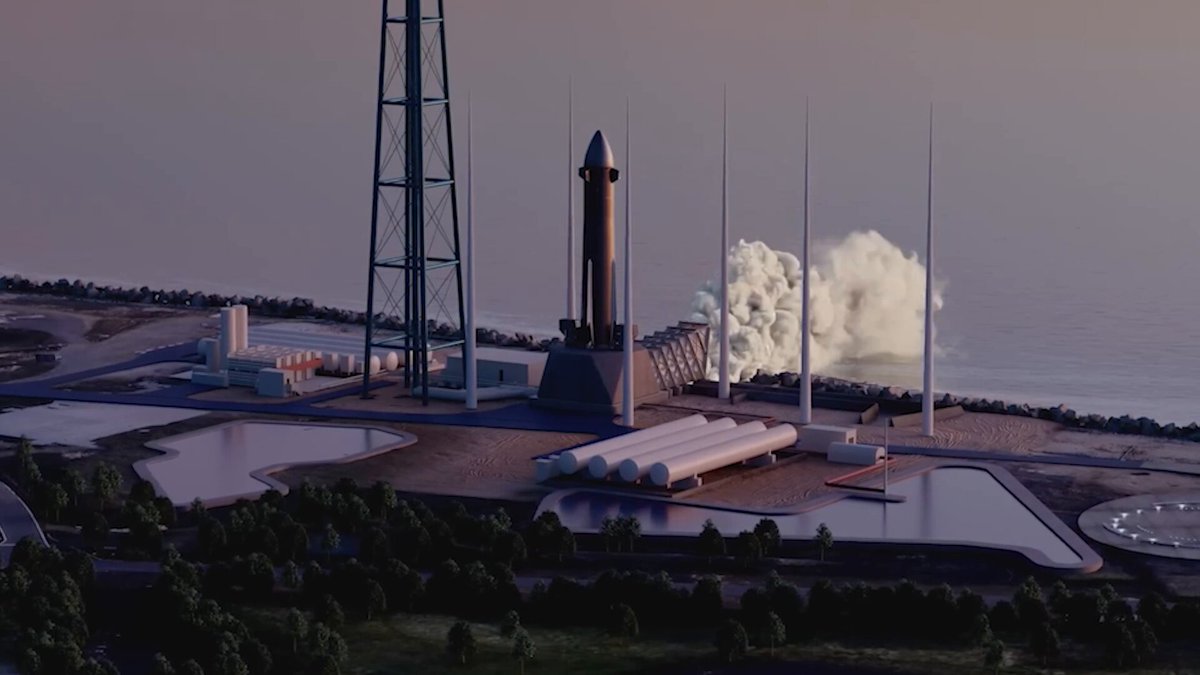
$RKLB Neutron Development estimated timeline. Adam Spice, Rocket Lab CFO - Needham Conference May 14, 2026. Proviso "Rocket programs are unpredictable"

32,338 Aufrufe • vor 3 Monaten •via X (Twitter)

0 Kommentare

Keine Kommentare verfügbar

Kommentare vom Original-Post werden hier angezeigt

Ähnliche Videos

BREAKING: Inside Rocket Lab ( $RKLB ) w/ Sir Peter Beck FULL INTERVIEW (Part I) We sat down with Peter Beck Founder & CEO of Rocket Lab after another record quarter, $234M in revenue & $2.36B in backlog "The lawyers hate me saying it, but global domination is definitely part of the plan." "I didn't want to build a space company that just lives for the lifetime that I'm running it. It needed to be multi-generational." We go deeper into Iridium, Neutron, the $397M Space Force contract to build + launch "Flatellites," & how 81% of revenue last quarter was outside of launch. Covering: › Why the fix for a 9-month lead time was buying the supplier › The $8B Iridium acquisition & why he was surprised nobody saw it coming › Why the Neutron question should be about the 10th rocket, not the 1st › The 24-hour turnaround constraint that produced Hungry Hippo › Flatellites, building satellites for volume rather than one at a time Plus: building a launch industry in New Zealand from zero suppliers & no regulation, staying out of broadband to play in L-band, going public before SpaceX, GHOST & the launch site that ships in a container, & why the Archimedes engines are painted black. 𝐓𝐈𝐌𝐄𝐒𝐓𝐀𝐌𝐏𝐒 (00:00) Sir Peter Beck, Founder & CEO at Rocket Lab (00:59) Rocket Lab's biggest quarter (02:53) The competitive edge in Space (04:10) Rocket Lab's Acquisition Strategy (05:04) Reason behind the Iridium Deal (06:13) Competing with Blue Origin & SpaceX (09:56) Rocket Lab's Global Domination (11:19) Building a Launch Monopoly in New Zealand (12:33) Is this why Peter got Knighted? (16:42) Beating SpaceX to the Public Markets (20:05) Why Neutron is still facing delays (24:24) The reality of running a Rocket Company (27:38) Rocket Lab's latest contract wins (29:04) How defense became a prime mover for Rocket Lab (30:39) Ghost: Rocket Lab's portable launch pad (31:30) Has he seen Aliens? (33:18) What's next for Rocket Lab? (34:30) Where does Peter draw his inspiration? (36:12) Why he's never read a Business book (37:31) Why their Engine is painted black

Molly O’Shea

767,152 Aufrufe • vor 4 Tagen

. Rocket Lab is bolstering its in-house production of satellite thrusters and lasers as demand grows for constellations. In our latest interview, CEO Peter Beck shares his thoughts on where the space industry is going and how his company is preparing to benefit. TIMESTAMPS 00:00 - Intro 01:01 - Why Peter Beck axed his own salary 02:17 - Electric Propulsion: Introducing Gauss 05:25 - How Rocket Lab’s Special Projects team solves space industry pain points 08:47 - Mynaric acquisition: Why satellite laser communications is critical 10:55 - $RKLB ’s satellite constellation strategy 12:28 - “The biggest opportunity is yet to be thought of” 13:55 - Are space-based data centers legit? 15:16 - Hyperscaler's strategic access to orbit 17:21 - US$2 billion-plus backlog: Military v Commercial revenue mix 20:06 - NASA 's Artemis II moon mission! 21:15 - Permanent lunar base thoughts (cc. NASAMoonBase ) 22:58 - Competition for Mars missions 25:06 - The Big Rocket Race: SpaceX 's Starship, Blue Origin New Glenn & Rocket Lab’s Neutron 26:58 - Neutron 2026 launch: “We work our ass off” 28:40 - “It’s all about the economics. This is where a lot of space companies go wrong.” 29:37 - Launch cadence & reusability 31:40 - Durability of rocket hardware (does useful lifetime compress with demand, like GPUs?) 33:06 - Outro Disclaimer: I own shares in Rocket Lab. This content is of a general nature and is not intended to be personalized financial advice.

Madison Malone

283,898 Aufrufe • vor 4 Monaten

BREAKING: Inside Rocket Lab ( $RKLB ) HQ Tour in Long Beach, CA w/ Sir Peter Beck FACTORY TOUR (Part II) Rocket Lab reached space in 2009 on ~$60,000 in total capitalization, using fittings pulled out of a junkyard. "From that adversity, comes good ideas" Electron reached orbit in 2017 on <$100M w/ 80 people. Meanwhile, their nearest competitor, billionaire-founded Virgin Orbit, burned $1.2B & went bankrupt. Rocket Lab now runs 13 acres of factory across 9 locations, globally. But before any of that, with dream of reaching space, Peter Beck applied to NASA: "I was objectively too dumb & also a foreign national. So foreign national, no degree, it wasn't looking good." NASA turned him down. He ended up launching their payloads instead, including CAPSTONE to the Moon, NASA's lunar pathfinder for Artemis, which operated out of the mission control room we walked through. We cover: › The $3.20 ferrules that got Rocket Lab to space › Why $100M & 80 people beat $1.2B at Virgin Orbit › Going public as a succession plan, not a financing event › Why a reaction wheel is a moat › The reality of buying companies Plus: the 2001 lobby, his take on "number eight wire," the CAPSTONE spare that stayed home, 12-year missions that cannot fail, & where new space entrants actually die. Check out the rest of the series: › Part I: Full sit-down interview w/ Peter Beck › Part II: Tour 01 - *This episode* › Part III: Tour 02 - Engine Development Center (Friday) 𝐓𝐈𝐌𝐄𝐒𝐓𝐀𝐌𝐏𝐒 (00:00) Touring inside Rocket Lab HQ (01:44) The origin story (05:45) What "Number Eight Wire" actually means (07:14) Too much Capital can kill a startup (09:03) Why Rocket Lab decided to go public (10:45) From Rockets to an entire Space Ecosystem (15:11) Where Escapade & CAPSTONE were flown (16:44) Inside the satellite build floor (17:15) In search for life on Venus (18:08) Inside the Electric Propulsion Lab (19:58) Inside the Thermal & Shock Testing Facility (20:47) How big is this facility? (21:45) Inside the NASA LOxSAT project (23:06) Why so many Space startups fail (24:00) Up Next: Inside the Engine Lab

Molly O’Shea

275,208 Aufrufe • vor 2 Tagen

NordSpace is pleased to announce a groundbreaking Canada-Germany R&D collaboration and funding towards medium-lift rocket engine development with Fraunhofer ILT, receiving advisory services and up to $335,000 from the National Research Council of Canada Industrial Research Assistance Program (NRC IRAP). This collaboration will support a research and development project that will advance our large format multi-material additive manufacturing capabilities for medium-lift rocket engines. This collaboration between NordSpace, the Fraunhofer Institute for Laser Technology, and SWMS (Systemtechnik Ingenieurgesellschaft mbH) builds upon the recent launch of our Advanced Manufacturing for Aerospace Lab (AMA Lab), and marks an important step toward our ongoing efforts to advance orbital launch vehicles that are fully scalable from light to medium-lift payload capacities. NordSpace's Tundra and Tundra+ light lift vehicles, capable of 500 kg and 1,100 kg to LEO respectively, are being designed specifically to scale to the medium-lift Titan vehicle (5,000 kg+ to LEO) by the early 2030s. This advanced manufacturing project for space propulsion harnesses breakthrough methods such as large volume, high-speed, high-resolution, multi-metal deposition to optimize rocket engine design, fabrication, and testing. NordSpace will partner with Fraunhofer ILT – the German research institute that has developed the world-leading EHLA laser-based high-speed additive manufacturing capability, and SWMS – the German company that has developed the CAESA software for AI-powered advanced manufacturing path planning optimization. This collaborative project will support NordSpace in developing next-generation, large-scale, regeneratively cooled liquid engines, validated through rigorous hot-fire test campaigns and positioned for flight qualification and commercial scale-up.​​ This announcement builds on NordSpace’s AMA Lab launched earlier this year with Ontario Centre of Innovation support and another advanced manufacturing project that received funding from the Canadian Space Agency. The AMA Lab has already accelerated the design of our 3D-printed Hadfield engines and enhanced development cycles through AI-driven design methodologies and direct validation at our test range. Now, this new Canada-Germany collaborative R&D project will go further into efficient production methods for these advanced rocket engines. We will also present updates on this initiative at the Canadian Space Launch Conference on May 5, 2026 in Ottawa. NRC Canada Canadian Space Agency National Defence Defence Research and Development Canada Transport Canada Ontario Centre of Innovation (OCI) Fraunhofer-Gesellschaft Fraunhofer-Gesellschaft

NordSpace 🇨🇦

26,703 Aufrufe • vor 7 Monaten