Video wird geladen...
Video konnte nicht geladen werden
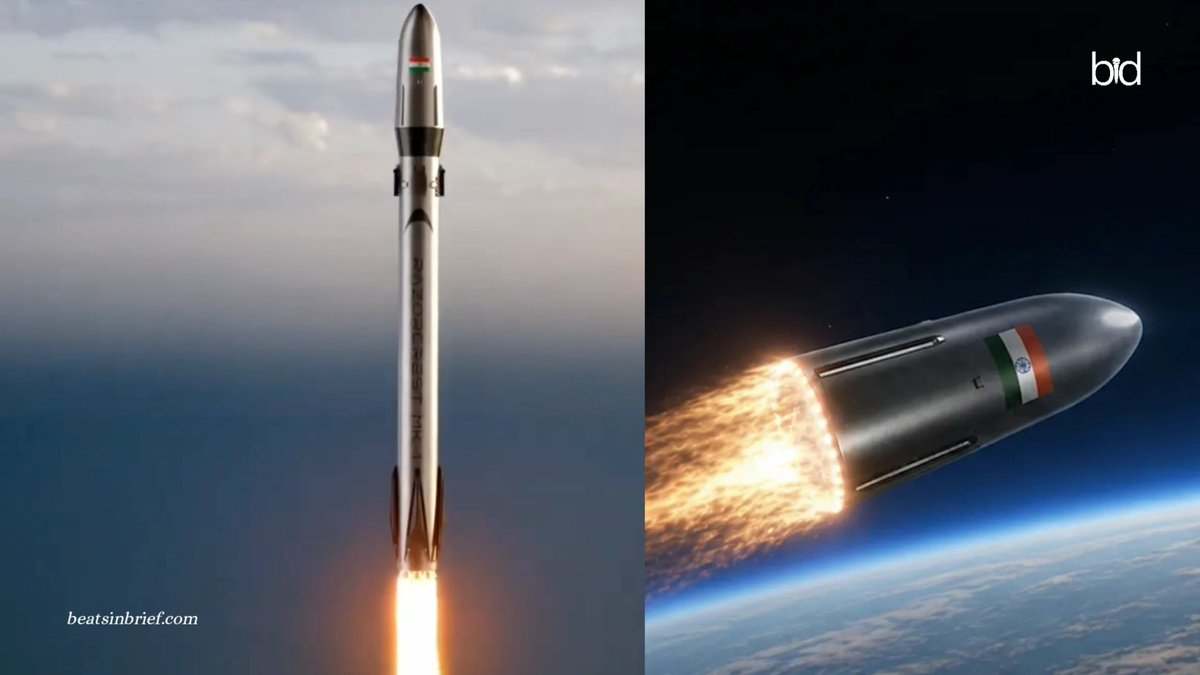
Rocket Lab just built a rocket that competes directly with SpaceX Falcon 9. This is Neutron a Reusable medium-lift, built to carry 13,000 kg to low Earth orbit. Nine Archimedes engines on the first stage. One vacuum-optimized Archimedes on the second. Liquid methane and oxygen. Built for satellite deployment... show more

458,184 Aufrufe • vor 3 Monaten •via X (Twitter)
57 Kommentare

Blue Origin had one "built" also. Its launching it successfully that counts - this IS rocket science ...

That's amazing, to see falcon 9 have others do what it does.

Its inaugural test flight is schedule for late this year. Glad they are doing it but they are a long way from competing with SpaceX.
Sure, but it's a step forward doing what Falcon 9 having been doing for years now.

The Archimedes engines remind me of the first generation of SpaceXs Merlin engines. SpaceX is currently at their gen 3 of their engines.
This is good information. Amazing.

In nearly every case competition in industry made the world better.
Yeah having another company build something that falcon 9 has been doing for years is great.

Reminder that rocket science is hard…
Rocket science has always been hard. Seeing another company doing this is great work.
Wish them the best…

$rklb electron worked from the start. Only rocket program to do this. Unlike many others.
Sure Amazing work done here.

Delete immediately. Garbage slop giving Rocket Lab’s actual accomplishments to date a bad name. A year from now this post will likely be true but not yet.

😂😂😂 SpaceX is about to retired falcon. Probably in the next 2 years. Starship is the future.
Retired don't think so, but let's say they have a major competition.

Nice how many have they built and how many have made it to orbit?
They are still working on it, probably have built many.

Competition is always good. How many have reached orbit so far?
Competition is always healthy, having other options apart from falcon 9 is always something amazing.

Not really, as: - it won’t be ready for years - the Falcon 9 is about to retire in favour of the much more efficient Starship with a 100-ton-to-orbit capacity. By the time Neutron enters service, SpaceX will be operating the larger Starship with nearly 200 tons of capacity at 1/10th of the cost. Not real competition 😉
Rocket science is always something that take alot of time to perfect. This good having another company do what Falcon 9 have been doing.
It’s good, of course, from a research point of view. As an investor, I don’t see it as profitable to throw money at something that won’t be anywhere near, nor ever competitive with SpaceX, which has a full decade’s advantage and innovates at a faster rate with the best and largest team on Earth. Besides, the Neutron won’t be competing with the Falcon 9, but with the Starship and its 100 tons to orbit capacity at 1/10 of the cost. Not a chance they succeed. If there’s space for one more American space operator, that’s Blue Origin. If Neutron has something really good and useful, Bezos will buy it and end their struggle 😉

.. 😏
This is amazing.

Wow. Tbh this looks like a lot of cg and not a real video.
It's a real video but you could also do your personal research.

Love that the engines are named after the greatest mathematical mind of the ancient world.
@historybookguy Yeah, that's Amazing.

Neutron has not flown, therefore does not compete directly. They have not orbited nor recovered the booster. It is exciting though, and its first mission is targeted for Q4 2026.
The first mission targeted in Q2026, show that they have actually grown. And doing amazing work.

Are you sure? This looks like a cartoon...
You could always do your personal research but this is legit.

I'm with Rocket Lab, I truly am, but let's talk about competition when Neutron have a weekly launch cadence with paid payload.
Sure that's something to look out for

Liquid methane. Reusable. Medium lift. This is the exact gap nobody filled until now.

@grok stop showing me all of these bullshit accounts.

Nine Archimedes engines on stage one. They built their own engine family for this. That's not a startup move anymore.

Neutron is not competing with Falcon 9, it is a complement to Falcon 9. I hope it succeed becaus it's really different in its philosophie and technology. We'll see by the end of the year if it's viable.
@robertdorazi Rocket science is always something, we don't see everyday. This is a great step.

About time for the first "SpaceX killer." Probably destined to the same unhappy ending of the dozen or so "Tesla Killers" Anybody can make a prototype of anything, but now starts the hard part of delivering in high numbers, please let us know when we will be able to buy one.
The delivery is usually the hardest part. But most definitely this would turn out good.

The satellite deployment market just got a second serious option.

13,000kg to LEO and it lands back. SpaceX took years to get here. Rocket Lab just skipped the line.
We are building an educational platform for our core audience as we’d like to know your opinion on what you actually need. Your answers go directly into how we build this. Please fill below

Yeah, obviously they aren't marketing it very well. Let me know when they get one off the ground. But honestly, I hope it works out for them. We need more commercial companies in space.
Sure having a company that does what space X does is an advantage to the world at large.

They had that in the 60's

has one flown yet

Looks fukn awesome

Rocketlab is excellent in PPT engineering, it was supposed to deliver recoverable electron ….. 🤥
There have been progress we should look forward to that. Rocket science is not something we see everyday.

We can all create a cartoon using ai to make it look like our rockets work The proof is in the launch testing pudding

And all they are able to show are some 3d renderings?

А кроме ии запусков есть ещё что-нибудь, прежде чем записывать в конкуренты?

Excited to see Neutron fly.

😂😂😂😂 pump that stock