Video wird geladen...

Video konnte nicht geladen werden

Zur Startseite

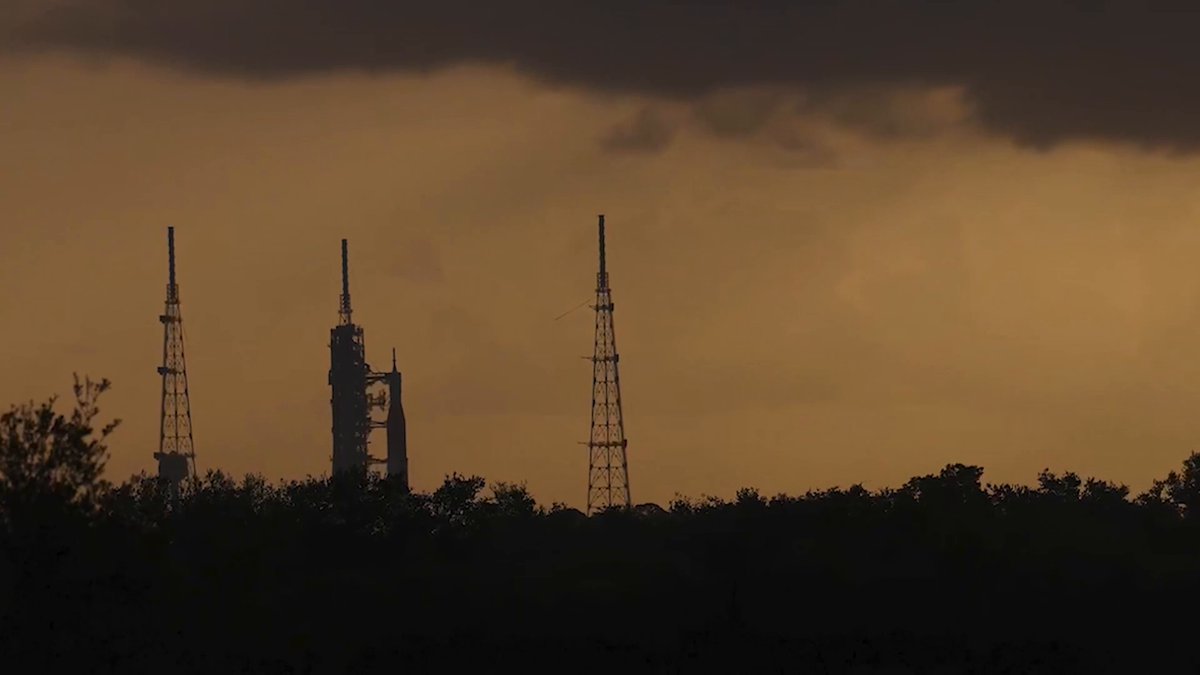
RS-25 engines powering the NASA_SLS (Space Launch System) rocket use liquid oxygen and liquid hydrogen as propellants – the same elements that combine to create water (H2O). For an RS-25 engine test, liquid hydrogen and liquid oxygen are mixed in the engine combustion chamber and ignited, which results in...

25,421 Aufrufe • vor 1 Jahr •via X (Twitter)

0 Kommentare

Keine Kommentare verfügbar

Kommentare vom Original-Post werden hier angezeigt
Ähnliche Videos

Satya Nadella: Microsoft’s latest Wisconsin AI data center keeps yearly water consumption no higher than that of 1 local restaurant. "The cooling loop is filled once and the data centre can operate effectively with zero water consumption. Daily water usage across a year is roughly equivalent to what a single restaurant would use" The mechanism is mainly about replacing evaporative cooling with closed-loop direct-to-chip liquid cooling, so water moves like coolant inside a sealed machine rather than being boiled off into the air. Hot GB200-class AI racks produce too much heat for normal air cooling, so cold liquid is pushed through pipes into the servers and across metal cold plates touching the hottest chips. The liquid enters the rack cool, absorbs heat from the chips through cold plates, then exits the rack at a higher temperature and carries that heat through pipes to a huge cooling system outside the compute floor. Microsoft says Fairwater sends that hot water to cooling “fins” beside the datacenter, where 172 20-foot fans blow air across the fins and dump the heat into the outside air. The important detail is that the air cools the water through metal surfaces, so the water does not need to evaporate the way many older datacenters use cooling towers. The cooled liquid then returns to the servers, repeats the loop, and keeps absorbing heat from the chips. In older data centers, heat is often removed partly through cooling towers. Hot water meets moving air, some water evaporates, and that phase change carries heat away. Effective, but it consumes fresh water continuously. But Firwater is a closed loop because the same coolant keeps circulating through sealed pipes: it absorbs heat from the chips, releases that heat through radiator-like fins, then flows back to the chips again. For Wisconsin Fairwater, Microsoft says more than 90% of the facility uses closed-loop liquid cooling, while the remaining portion uses outside air and switches to water only on the hottest days. ---- From "Microsoft" YouTube channel, (link in comment)

Rohan Paul

26,957 Aufrufe • vor 25 Tagen

In the first video, people in Donetsk are seen greeting a water tanker. In the second video, during the rain, people try to collect at least a drop of water because the water pipeline from the Siverskyi Donets was destroyed by the Russians. When Donetsk was not occupied by Russia, the city hosted the European Football Championship, as well as concerts by Rihanna and Beyoncé. Now, there is no more running water in the city. According to the schedule, water only appears in taps once every three days, and even then it doesn’t reach every household, so water has to be delivered by tankers, with long queues forming for it. People use plastic bags as toilets, and this filth spreads everywhere. This is happening not only in Donetsk - water is supplied once every two days in a number of other cities, including Mariupol. This is how Russia 'liberated' Donbas. Why is this happening? In the past three and a half years - since Russia launched its full-scale invasion of Ukraine in February 2022 - reservoirs in Donetsk Oblast have significantly dried up. The water supply system from the Siverskyi Donets River was destroyed. The region’s reservoirs and underground water sources are not enough to meet the needs of the population, in part due to the extensive network of coal mines. When the self-proclaimed “DPR” and “LPR” were created in 2014, Ukraine did not cut off this water channel, as it was still supplying water to Mariupol, which remained under Ukrainian control. But at the start of the Russian invasion in February 2022, the situation changed: the Russian army, during its offensive, destroyed a unique hydraulic structure that had supplied the region’s largest cities with water. The Russian authorities decided to build a new canal - the Don–Donbas canal - which was supposed to begin in the Rostov-on-Don area. It soon became clear that the new water pipeline, first of all, could not provide the region with the necessary amount of water, and second, it was built with numerous violations, with a large portion of the budget embezzled during construction. Crimea is also suffering from a water shortage, and the situation is worsening. One of the reasons why Russia is striving to seize southern Ukraine is that it sees this as a way to "solve the water issue" for the occupied territories.

Anton Gerashchenko

473,808 Aufrufe • vor 11 Monaten