Video wird geladen...

Video konnte nicht geladen werden

Zur Startseite

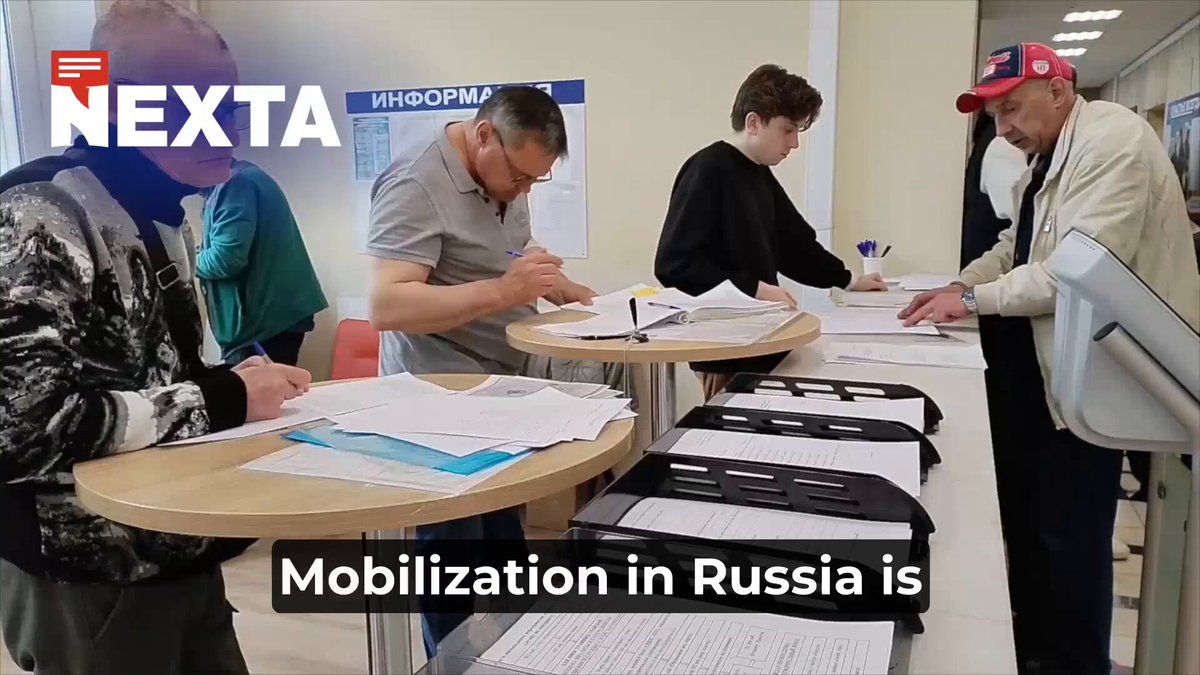
🚨🇷🇺⚰️ Russia is reportedly preparing for a broader mobilization after the autumn elections. As manpower shortages deepen, the Kremlin is increasingly turning its attention to civilians with no prior military experience. According to The Wall Street Journal, a "hidden mobilization" is already underway, with growing pressure being placed on...

42,763 Aufrufe • vor 2 Monaten •via X (Twitter)

0 Kommentare

Keine Kommentare verfügbar

Kommentare vom Original-Post werden hier angezeigt

Ähnliche Videos

🇺🇦🇷🇺🇰🇵 Ukrainian President Volodymyr Zelensky has warned that Russia is preparing for a major escalation of the war, including a new wave of mobilization and deeper military cooperation with North Korea. According to Zelensky, Ukrainian intelligence has obtained comprehensive information on Moscow's plans for the autumn. He stated that Vladimir Putin is laying the groundwork for an expanded mobilization, preparing to send more Russians into the war while masking the effort through different rhetoric and political messaging. Zelensky also claimed that Russia intends to receive an additional 30,000 North Korean troops, with preparations reportedly underway in Russia's Voronezh region to accommodate their arrival. In addition, he said North Korea is preparing to supply Russia with new ballistic missile launch systems, while Moscow continues to help Pyongyang improve its military capabilities by providing battlefield experience, weapons development, and operational expertise. Zelensky concluded by saying that Ukraine is aware of these plans and will continue to resist them. If these assessments prove accurate, they would signal a significant deepening of the Russia-North Korea military partnership. Beyond reinforcing Russia's manpower, the cooperation could accelerate North Korea's military modernization by exposing its forces and weapons to real combat conditions, creating long-term security implications that extend far beyond the war in Ukraine. See the latest updates with us: Visioner

Visioner

25,402 Aufrufe • vor 2 Monaten

Fifth year of the full-scale war - what to expect next? According to military analyst Anders Puck Nielsen, the key dynamics of the war will be shaped less by the frontline itself and more by the state of the economy, mobilization capacity, and international support. ▪️ War of attrition reaches a critical phase Ultimately, victory will favor the side whose economic system can sustain military production, logistics, and resource mobilization for longer. ▪️ Kremlin’s strategy after the blitzkrieg failed After the failed invasion plan in 2022, Russia faced two strategic options: consolidate and declare victory, or shift to a prolonged war of attrition. Putin chose the latter, fully aware that the combined economic potential of Ukraine’s supporters far exceeds Russia’s. The Kremlin’s bet was on political will, assuming that over time Western societies might lose interest in supporting Kyiv, increasing pressure on their governments. ▪️ Challenges for the Russian economy The first years of the war saw some growth in Russia’s economy, driven mainly by sharply increased defense spending. This model is limited, and Russia is already struggling to maintain current levels of military production. As economic difficulties deepen, the defense industry will be affected, giving Ukraine an advantage in a war of attrition. ▪️ Potential negotiations One indicator of serious economic strain could be a shift in Moscow’s negotiating position. If the Kremlin is willing to discuss terms beyond its original "special military operation" objectives, it may signal significant internal pressure. ▪️ Risk of a new mass mobilization Russia has so far relied heavily on contract soldiers and volunteers motivated by high pay. But this resource is finite, and the financial burden on the budget is increasing. Recent Russian losses on the front have outpaced the recruitment of new personnel. Mass mobilization could address manpower shortages and reduce budget pressure. ▪️ Risk of protests Economic hardships and mobilization measures could spark social unrest within Russia. Protests are unlikely to target the war directly; the focus will likely be on worsening economic conditions, dissatisfaction with mobilization, and criticism of military leadership. Authorities are expected to respond with increased repression. ▪️ Situation on the frontline As resources are exhausted, Russian offensive pressure may weaken, and Ukrainian counterattacks could become more effective. If more territory is liberated than captured, it would deal a severe blow to Russia’s narrative of inevitable victory. ▪️ Expansion of hybrid warfare against Europe The Kremlin understands that support from allies is key to Ukraine’s ability to continue resisting. Moscow is likely to try to influence European public opinion through information operations, political pressure, and other hybrid warfare tools. The fifth year of the war is likely to test the economic and political endurance of both sides. Increasingly, the outcome will depend less on individual operations and more on the ability of states to sustain a prolonged confrontation. The war’s trajectory will largely hinge on Russia’s economic resilience and continued international support for Ukraine. 📹: Anders Puck Nielsen / YouTube

Anton Gerashchenko

13,713 Aufrufe • vor 7 Monaten

Several reports indicate that the number of people willing to sign contracts with the Russian defense ministry has plummeted. The Kremlin is discussing a new wave of mobilization in the autumn of 2026. ▪️According to data obtained by the Verstka media, the influx of new recruits in Moscow collapsed by a third in the spring of 2026 compared to last year. In April, 1,708 contract soldiers were sent to the front; in May, that number fell to 1,378, and the deficit continues to grow. ▪️Homeless people, mercenaries from Africa, and elderly convicts with severe illnesses who cannot carry 20 kg of gear are being shipped to the front. According to sources, these contract soldiers survive on the positions for no more than a month, and mass desertion is rampant among the survivors, with hundreds of men fleeing frontline villages every week. ▪️Russian authorities see forced conscription as the only way out of the manpower crisis. Eight sources close to the Presidential Administration, the FSB, and military enlistment offices confirmed that the Kremlin is discussing a new wave of mobilization for October 2026, immediately following the September elections. While some officials fear economic collapse and protests, military personnel on the ground are certain: "The fools willing to die for money have run out. From here on, it’s either mobilization or a backroom deal where they lose face and fail the goals of the "special military operation." 📹:Serdobsk, Penza Oblast, Russia

Anton Gerashchenko

52,711 Aufrufe • vor 3 Monaten