Sensitive content

This media may contain sensitive content.

Video wird geladen...

Video konnte nicht geladen werden

Zur Startseite

Ryan Cummings taking loads from random strangers at Elysian park. 34 loads in 3 hours. 🐷 🎬 Full Vid Here ⬇️ 🍑 Ryan Cummings ✈️Van Pride ✈️Seattle Aug 7 - 10

78,455 Aufrufe • vor 2 Monaten •via X (Twitter)

0 Kommentare

Keine Kommentare verfügbar

Kommentare vom Original-Post werden hier angezeigt

Ähnliche Videos

Someone replied “There is a thing called time. One picture at one time doesn’t show another.” So I went back and reviewed all C.F. McCarthy’s footage shown at trial. During MSP Yuri Bukhenik’s and other witness testimony, video was played from Aprox 7:30 PM to just after 10:30 PM. Yuri testified the timestamp was 12 minutes behind real time. At no point in that footage do we see Heather Maxim, Ryan Nagel Richie Dauntono or even Julie Nagel! Not at the bar. Not at the tables on the left side near the bathroom, the exact spot Ryan testified they sat. In fact, many times those tables are completely empty. Heather said she drove from Ryan’s house to C.F. McCarthy’s, doesn’t remember where she parked, remembers sitting at the bar, then said Richie drove all three to the Hillside Pub. Richie testified he went to C.F. McCarthy’s to meet Heather and Ryan, said they sat at the bar, stayed a couple hours, then he drove all three to Hillside until around midnight. Ryan testified they were at C.F. McCarthy’s 2–3 hours, sat at the tables near the bathroom, then went to Hillside and left around midnight and that Richie dropped Heather and Ryan back at Ryan’s house. That places them at C.F. McCarthy’s roughly 9–11 PM, the same window Karen and John were there and the same footage used by the Commonwealth to count Karen’s drinks. Ryan Nagel testified about going to C.F. McCarthy’s to meet his sister NOT 1 TIME BUT 2x Those are two different sequences, and sequence matters. We know Ryan’s sister was at 34 Fairview later that night. That means an investigator Like YURI should have immediately asked, If Ryan went to the bar to meet his sister, how did she get there? If he met her there, who arrived first? What time did she leave the bar? Once surveillance is used to place Karen Read, track John O’Keefe, and count drinks, it should also be used to exclude or challenge other claimed presences. Yet across hours of video, adjusted for timestamp error, none of them appear. Heather testified she drove from Ryan’s house, doesn’t remember where she parked, later left with Ryan and Richie, and was dropped back at Ryan’s house. That implies her car was left somewhere during a blizzard, either on the street or Walgreens lot, yet no follow-up questions were asked about retrieving it, and no effort appears to have been made to anchor that to time, snow, or location. If Bukhenik acknowledged these witnesses are not on video when they say they are, Ryan’s story about his sister shifts, and transportation accounts don’t align, then investigators would be required to revisit timelines, re-interview witnesses, reassess credibility, and potentially adjust conclusions about later events. That’s real work…..So this isn’t “one picture at one time.” It’s hours of surveillance relied on, for other witnesses where this group is simply absent. With civil litigation still ahead, these gaps matter.

Dixie Normus

14,415 Aufrufe • vor 6 Monaten

This guy built a $5,000 passive income stream off one Claude Code SEO workflow. The whole thing runs on skill files that turn YouTube videos into ranking blog posts, fully hands off. One prompt, and Claude writes the post, pulls screenshots from the video, sets the meta data, and publishes the draft to WordPress. He's also vibe coding entire local business websites that hit page one of Google in 2 weeks. Ryan Doser came on the pod to walk us through it. Here's what I learned: 1. He repurposes every YouTube video into an SEO blog post with one prompt. Claude Code grabs the transcript, writes the article, takes screenshots from the video, compresses them, uploads to WordPress, sets the title, slug, meta description, and category. Zero manual work. 2. The secret is skill markdown files. Think of them as SOPs for AI. His SEO writer skill encodes every best practice, past example, and formatting rule. The prompt is 5 lines because the skill does 99% of the work. 3. "Triple check this" is a cheat code. Tell Claude Code to triple check anything and it spins up parallel agents to verify the work. Better output, one extra sentence. 4. The money math: $5,000+ in passive sales from a $99 digital product. 80% attributed to blog traffic from this workflow. Site started at zero authority in February. Took off by mid April. 5. He runs the same workflow for a real client at several thousand a month. A national dental IT provider. The client's inbound leads are up and the retainer keeps renewing. 6. AI search impressions are the new currency. His client shows up #1 in Google's AI Overview for their money keyword. That's AI literally telling the searcher "this company is the best." Worth more than a blue link. 7. He vibe coded a fake septic tank website in 3-4 hours. Astro framework, GitHub, Cloudflare. Two weeks later it's on page one for "septic tank pumping near me," beating Better Business Bureau and HomeAdvisor. 8. The stack is basically free. GitHub: free. Cloudflare: free. Astro: free. The only cost is a Claude subscription. $100/month can realistically support 2-3 clients paying $2,000-4,000 each. 9. Target boring local businesses PE hasn't touched. Skip HVAC, plumbing, and roofing. Go after septic, junk removal, dumpster rental, funeral homes. Million-dollar businesses with websites from 2002. 10. Walk in the front door. Cold email and cold calls are drowning in AI spam. Go talk to 10 owners in person. You could be the worst salesperson alive and still close one. His 2 key takeaways: 1. Be your own case study. Spin up a demo site in a weekend, show it ranking in 2 weeks, then pitch: "imagine this on your established domain." 2. SEO is an evergreen asset. A tweet dies in 48 hours. A ranking blog post pays the client back for years, even after you stop working together. That's the pitch that justifies the retainer. Ryan is a non-technical marketer doing this at a level most developers are not. Go follow Ryan Doser. Full video below. (Also available on the Build With AI podcast wherever you get your pods)

Corey Ganim

13,900 Aufrufe • vor 2 Monaten

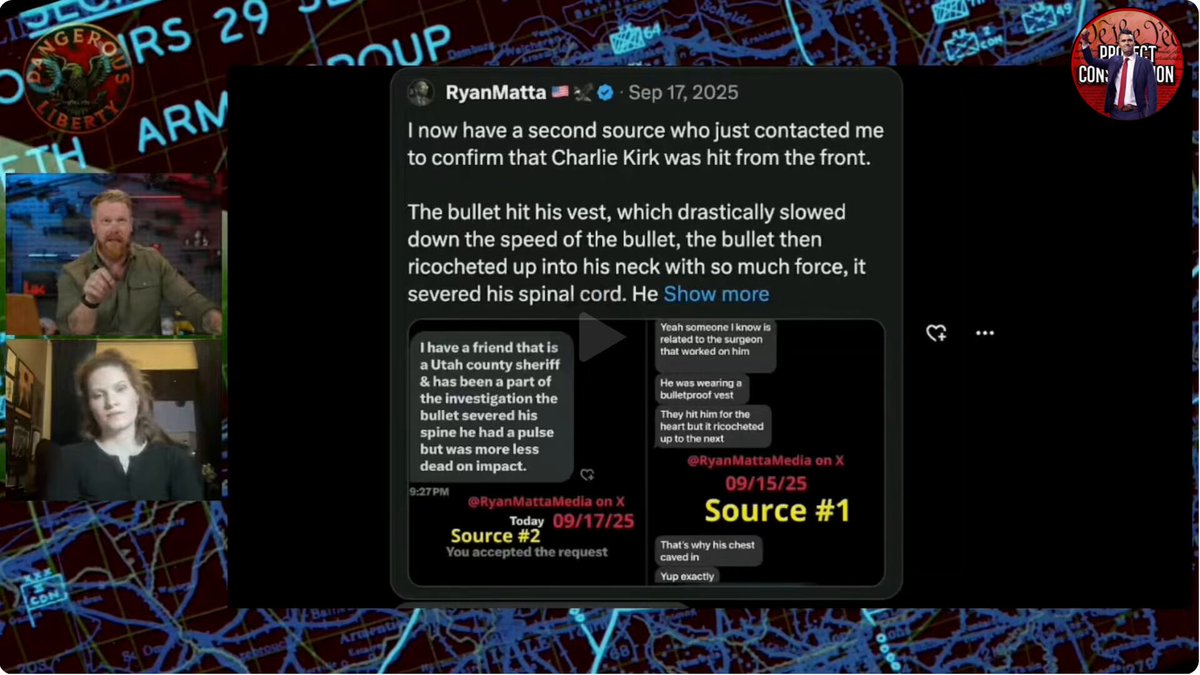
🚨 BOMBSHELL: Obscure Youtuber Gary Melton Just Exposed Himself AGAIN — He Casually ADMITTED On His Live That He Was Taking To Brian Harpole Just 7 Days After Charlie Kirk’s Assassination😳 Gary Melton Paramount Tactical - Gary Melton went on his livestream last night and accidentally exposed himself yet again. He admitted he was in direct contact with Brian Harpole as early as September 17th — just 7 days after Charlie was publicly executed. He showed text messages from Ryan Matta dated Sept 17 claiming Charlie was wearing body armor. Gary says he “quietly” tried to confirm it… then after talking to Harpole, he came out and pushed that Charlie was NOT wearing body armor. Let that sink in. While the public was still in shock, while the timeline was still forming, while real investigators were digging… Gary was already on the phone with the very people pushing the Fed-slop story. This wasn’t organic. This wasn’t some random YouTuber “just asking questions.” This was a controlled asset being activated early to steer the narrative. They saw the public wasn’t buying the official story, so they dropped Gary in as the “credible independent voice” to lend legitimacy to their lies and muddy the waters. Classic counter-intelligence move. Gary Melton isn’t some truth-seeking researcher. He’s been working with the very people shaping the official narrative from the beginning. The timeline just got a whole lot clearer. One More Thing: Early on in this investigation, many of us — myself included — were being told by multiple sources that Charlie was wearing body armor. That’s exactly what RyanMatta 🇺🇸 🦅 reported at the time. Gary’s pathetic attempt to discredit Ryan Matta is a massive fail. In independent journalism — especially on fast-moving breaking news — sources don’t always pan out. That doesn’t make the reporter wrong or dishonest. Ryan did nothing wrong. He was simply relaying the best information available at the time, just like the rest of us. If you have any information on Gary Melton, his FED contracts, or anything else related to this, please reach out. DM me or email: [email protected] Full anonymity guaranteed. Tag Candace Owens and RT this. The American people deserve to know who’s really feeding them the narrative. The mask is slipping.

Project Constitution

215,834 Aufrufe • vor 5 Monaten

losers spend money on club tables and take home zero girls buying bottles at liv miami trying to impress models who make $500/night when you could be recruiting them for onlyfans with 0% apr tables and take 90% of their revenue... $300k/month from girls you met at clubs here's the onlyfans mafia system destroying simps: every weekend desperate mfs drop $50k cash on tables models pretend to care for 3 hours everyone goes home alone money wasted meanwhile smart operators run different game: THE CREDIT CARD TABLE HACK: get $150k in business funding at 0% apr book owner's tables at tier-1 miami clubs never spend cash - everything on cards earn 300k points while recruiting cards to get approved for today: - chase ink preferred: $30k typical - amex business gold: $50k typical - capital one spark: $40k typical - wells fargo business: $30k typical $150k at 0% in 30 days if you're not stupid THE RECRUITMENT PSYCHOLOGY: table attracts 10-15 models per night they think you're a whale you're not you're a businessman the pitch that converts 40%: "i manage content creators everything's handled - photographer, editor, marketing creators keep 10% pure profit most make $3-5k/month passive here's my portfolio..." show them your roster: girl #1: was bartending at bodega now: $50k/month on OF her take: $5000 your take: $45,000 girl #2: was bottle service at e11even now: $31k/month her take: $3,100 your take: $27,900 they all say yes THE MIAMI CLUB RANKING: recruit here in exact order: 1. liv (fontainebleau) - international models 2. e11even (24/7) - party girls who need money 3. story (south beach) - college girls 4. space (downtown) - underground scene 5. basement (edition) - high-end escorts transitioning wednesday-thursday better than weekends less competition from actual rich guys girls more desperate for attention THE ONLYFANS ASSEMBLY LINE: week 1: professional shoot ($500) week 2: launch with 50 posts ready week 3: tiktok spam campaign week 4: instagram reels push month 2: optimize pricing month 3: $15-30k/month steady your only job: - recruit - manage photographers - collect 90% THE BUSINESS MODEL MATH: monthly costs: - tables: $40k (on 0% cards) - photographer: $8k - editors: $5k (philippines) - shoot apartment: $4k total overhead: $57k 20 girls at $15k average: $300k your 90% cut: $270k monthly profit: $213k started with credit cards ending with empire THE SCALE FORMULA: month 1-3: recruit 20 girls month 4-6: optimize content month 7-12: $300k/month automated year 2: expand to NYC/LA year 3: sell for $20m to PE fund 3-year exit from credit cards THE DARK PSYCHOLOGY: these girls could do this alone but they won't they need leadership need someone to blame when dad finds out need the infrastructure you're not exploiting you're organizing they were already selling bottle service now they're CEOs making 10x more THE EXACT RECRUITMENT SCRIPT: "hey i know this is random you're exactly the type my agency represents we manage exclusive content creators everything's handled professionally creators keep 10% pure profit most hit $3-5k/month within 90 days here's my card, let's talk monday" success rate: 40% they all call THE CREDIT TO CASH CONVERSION: $150k in business cards approved liquidate through: - plastiq for "rent": 2.85% fee - paypal "consulting": 2.9% fee - square "services": 2.75% fee $150k credit becomes $145k cash fund entire operation at 0% pay minimums from profits THE COMPETITION ELIMINATION: other "managers" take 50% and provide nothing you take 90% but provide everything: - professional content - daily posting - fan management - marketing strategy girls make more with you at 10% than alone at 100% that's why they stay THE EXIT REALITY: building "talent management agency" 30 active models = $500k/month revenue $6m annual agencies sell for 3-5x exit value: $18-30 million from credit cards to 8 figures in 36 months you're either buying bottles like a sucker or building an empire with bank money choose your side Get $100K at 0% APR guaranteed Link in bio → Scale With Credit

hunter

15,066 Aufrufe • vor 8 Monaten

THE OBSIDIAN CEO BUILT 5 CLAUDE CODE SKILLS, AND NOW A 2,400 NOTE VAULT CAN SORT ITSELF AT 7 A.M., FIX BROKEN LINKS, AND RESURFACE IDEAS FROM 2019 IN 10 SECONDS 00:06 he loads the obsidian skill inside claude code, and the graph stops being decoration. claude can read markdown, follow backlinks, edit canvas files, repair dead links, pull project context, and move through the vault like it understands the workspace instead of guessing from one prompt. most people do not have a note problem. they have an abandoned memory problem: 800 notes, 12 folders, 40 unfinished drafts, and a beautiful graph view that never actually helps. the article shows a 33 year old editor with 2,400 markdown files, 8 years of thinking, and zero useful access for a full year. that is why the ceo angle matters. this is not another random plugin. it is claude code learning obsidian’s actual language: backlinks, daily notes, canvas boards, raw captures, processed ideas, broken references, and old drafts buried so deep they might as well be gone. a real system only needs a few rules. one inbox for messy thoughts, one raw folder nobody edits, three backlinks on every new note, and a 7 a.m. run that sorts yesterday before you even open the laptop. weekly synthesis is where it gets dangerous. claude can compress 7 days of notes into one file with themes, contradictions, abandoned ideas, repeated promises, and the exact old note where the next article was hiding. bookmark this before your second brain becomes 2,400 dead files with a pretty graph.

Gipp 🦅

17,790 Aufrufe • vor 1 Monat

10 repos that cut your ai agent token bill by up to 80% 1. microsoft/LLMLingua → cuts prompt size by up to 95% compresses prompts before the api call. 20x compression. published at EMNLP + ACL. near-zero quality loss. 6,100 stars 2. mem0ai/mem0 → replaces full conversation history in context stores what matters. retrieves only what's needed. 10,000 token history → 200 token memory. per agent. 54,800 stars 3. BerriAI/litellm → routes each call to the cheapest model simple task → haiku. complex task → sonnet. tracks cost per agent, per call, per day. 45,700 stars 4. run-llama/llama_index → replaces sending full documents rag: 100-page doc → 3 relevant chunks → same answer. 98% fewer tokens per query. 49,100 stars 5. chroma-core/chroma → replaces keyword search in full context vector store. finds the closest match. feeds only that. 50-200 tokens per query instead of thousands. 27,800 stars 6. letta-ai/letta → replaces infinite context window crashes paged memory for agents. loads only relevant memory. stops your agent from hitting limits and retrying. 22,400 stars 7. guidance-ai/guidance → cuts output token bloat by 30-50% structured generation. constrains model output natively. no more 100-token prompts to get json back. 21,400 stars 8. Aider-AI/aider → replaces pasting entire codebases builds a repo map. sends only files relevant to the task. not your whole project. just what the agent needs. 44,300 stars 9. openai/tiktoken → count tokens before you send know the exact cost before the api call happens. not after the bill arrives. 18,100 stars 10. simonw/ttok → hard cap on what gets sent cli tool: count tokens, truncate to budget limit. pipe any text in. get truncated output back. 389 stars most agents are expensive not because the model is expensive. because nobody checked what was being sent to it.

self.dll

39,554 Aufrufe • vor 3 Monaten

🚨 Weigh in 21 🚨 ALL TIME LOW: 306 LBS FRANK HAS SHREDDED 220+ pounds Frank was 520+ pounds in 2016 (scale couldn’t go higher). Here is his monthly progress since we started Frank Walks (644 days in a row and counting): 383 pounds before walking daily Weigh in 1: 373 pounds Weigh in 2: 352 pounds Weigh in 3: 343 pounds Weigh in 4: 340 pounds Weigh in 5: 339 pounds Weigh in 6: 333.8 pounds Weigh in 7: 331 pounds Weigh in 8: 323.8 pounds Weigh in 9: 319.8 pounds Weigh in 10: 324 pounds Weigh in 11: 330 pounds Weigh in 12: 327.8 pounds Weigh in 13: 318.5 pounds Weigh in 14: 321.8 pounds Weigh in 15: 326 pounds Weigh in 16: 314 pounds Weigh in 17: 316 pounds Weigh in 18: 312.5 pounds Weigh in 19: 315 pounds Weigh in 20: 307.5 pounds Here are the results from weigh in 21: ◦306 pounds. FRANK HAS LOST 220+ POUNDS SINCE HIS ALL TIME HIGH ◦Blood sugar: A1C is 5.7% down from 11.1% (years of life expectancy 12+ 📈) I wish I had more details on his body composition but clearly he has turned loads of fat into muscle. We are focused on continuing to overhaul his diet and talk about it almost daily. I am sure I am annoying at times, but Frank needs to be pushed and challenged. If he is capable of completely changing his daily physical habits, he is capable of changing his diet. It has simply proven to be much more challenging. A couple of the biggest struggles are stress eating and discipline on boring days at home. Frank will crush unhealthy snacks after a Mets loss or if he is stuck in his house on a boring weekend with bad weather. He shot up to 315 this month but then locked in to close the month at an all time low. To anyone who makes food in the Belleville, NJ area, I am desperate to show Frank he has local options that cook both delicious and relatively healthy food. Same goes for anyone near MSG (lunch after walks). Frank’s energy, quickness, coordination, stamina, strength, flexibility, and confidence continue to increase with each passing step. Congratulations, Frank (even though I know you aren’t reading this). TANK299 feels imminent. Anudder weigh in in the books

Matteo Piper Jenks 🧲 🇮🇹

1,409,614 Aufrufe • vor 1 Jahr

Here are 10 AI video editor GitHub repos worth bookmarking: 1. Shotcut Most actively maintained open source video editor in 2026. 14K stars. Cross-platform with AI-assisted features. Just shipped a new release April 30, 2026. 2. Kdenlive The closest open source alternative to Adobe Premiere Pro. Multi-track editing, proxy editing, VST audio, and customizable workspace. Best for professional workflows. 3. OpenShot The easiest entry point for beginners. Drag and drop, 400+ transitions, 3D titles, and AI-assisted trimming. 5,700 stars. 4. Blender Not just 3D. Blender's video sequence editor and compositing pipeline is used in professional film production. 18,300 stars. Unmatched for VFX. 5. Recordly Screen recorder with auto-zoom, cursor polish, webcam overlays, and styled frames built in. Built for demo videos and walkthroughs. 6. Wan2.1 Alibaba's open source text-to-video model. Cinema-grade 1080p generation. Apache 2.0. The gold standard for open source video generation in 2026. 7. HunyuanVideo Tencent's 13B parameter open source video model. 11.9K stars. Handles 720p and 1080p with high temporal coherence. 8. CogVideoX Apache 2.0 licensed. Loads natively via Hugging Face Diffusers. Strong prompt following and smooth frame transitions. Needs 16GB VRAM minimum. 12.5K stars. 9. Open-Sora Most starred open source video generation project at 24K stars. Full training pipeline for $200K. Production-level output quality. 10. Mochi 1 Focused entirely on motion quality. The most natural-looking physics of any open source video model. Water, fabric, and human gestures without AI jitter. Apache 2.0.

Kanika

17,726 Aufrufe • vor 1 Monat

‼️🚨🔵PRESSER🔵🚨‼️ 🎙 Liam Rosenior’s Full Pre-Crystal Palace Press Conference – Part 1/2 🔹 Liam Rosenior on Injury news: “In terms of sickness, the players are coming back to full health 🤧➡️💪. We had to be very careful with that. Thankfully the lads have come through that. Cole is in a good place, he joined training today which is really positive ✅. Jorgensen had his scan and it was positive 📊. He won’t be available for Palace but might be for Napoli.” 🇮🇹 🔹 Liam Rosenior on Disasi and Sterling: “We know the last week of January can get very busy 📅🔥 but no, there’s nothing to report. For me, I want every player I work with to have the best career possible. Whether that’s here or elsewhere, those two are no different.” ⚽🤝 🔹 Liam Rosenior on how happy Palmer is: “I’ve had numerous conversations with Cole and he seems very happy to be here 😊. He’s a huge part in our long-term plans 🔮. My job and the club’s job is to get him into a situation where he can consistently perform to the level he wants to. There was frustration in the Brentford game. We need to look after him and that’s why I didn’t involve him in the last game.” 🛡️ 🔹 Liam Rosenior on whether Cole Palmer is 100% fit: “That’s my job [to get him there]. I need to look after the players 👥. Not just in terms of Cole, but there’s a number of players in the group to look after. I want us to be involved at the end of the season in big games and big competitions 🏆.” 🔹 Liam Rosenior on lessons from first games: “Loads in terms of individual performances, the improvements I have asked for — there have been very positive signs 📈. There are loads of lessons for me and my staff to learn. I’m loving it ❤️.” 🔹 Liam Rosenior on if it’s a good time to play Palace: “It can be reported in that way but what I do know is that they’re an outstanding team ⚔️. Selhurst Park is one of the most difficult places to play in the Premier League 🏟️🔥. We are not taking the game lightly. I know what a good team they are. We are going to have to be very good to win the game.” #CFC | #Chelsea | #CRYCHE | #Interviews 📲 CFC_ChelseaFC via Telegram

Miki Djan

19,386 Aufrufe • vor 6 Monaten

🚨 Erika Kirk's ALIBI Is Destroyed —Baron Coleman PROVES Erika Was Likely In Provo BEFORE The Shot.😱 Baron Coleman just released the most damning timeline yet. Using contemporaneous flight logs, transponder data, and deleted police dispatch audio, he has reconstructed the real movements of September 10th. The Conclusion: Erika Kirk didn't fly in to hold her dying husband. She was likely on the ground in Provo two hours before he was shot. Here is the step-by-step breakdown of the "Shell Game" they played with the planes to hide her location. 1. THE "GHOST FLIGHT" (10:06 AM) The Evidence: Flight N560TW (a private charter) left Scottsdale, AZ, and landed in Provo at 10:06 AM. The Theory: Baron believes Erika Kirk was on this flight. The Connection: At 10:05 AM—exactly one minute before this plane landed—the transponder of the mysterious Egyptian Jet (SU-BND) turned on at the Provo airport. The Implication: If Erika was on this flight, she was in Provo 2.5 hours BEFORE the "Big Bang" (which happened at 12:23 PM). 2. THE "REPOSITIONING" SHELL GAME After dropping its passenger (Erika?) in Provo, that same plane (N560TW) immediately took off for Santa Barbara. Why? To pick up Andrew Kolvet. It then flew Andrew from Santa Barbara to Scottsdale, arriving around 1:40 PM. The Switch: Meanwhile, the Kirk family plane (Delta Zulu) flew empty from Salt Lake City to Scottsdale to meet Andrew. The Decoy: Andrew likely boarded the Delta Zulu flight in Scottsdale to fly back to Provo, making it look like the plane was bringing Erika. 3. THE "FALLING INTO ARMS" LIE Official Story: Andrew Kolvet claimed that when he landed in Provo, he "fell into Erika's arms" on the tarmac. The Problem: The flight Andrew supposedly took (Regency) didn't land until 4:36 PM. The flight Erika supposedly took (Delta Zulu) landed at 3:12 PM. The Contradiction: Are we supposed to believe Erika landed and then sat around the airport for 90 minutes while her husband was dying at the hospital?. The Real Story: If Baron is right, Erika had been at the airport since 10:06 AM. When Andrew arrived on the decoy flight at 3:12 PM, she was there to meet him and stage the scene. 4. THE DELETED POLICE AUDIO ("SIGNATURE" VS. "DUNCAN") Baron played a saved dispatch recording that has since been scrubbed from the internet. The Audio: Police/Fire dispatchers are coordinating Erika's arrival. Officer 1 (Jesse): "Charlie's wife is coming to Signature" (The main FBO for rich travelers). Officer 2 (Corey): "No, no, no. They're landing at Duncan" (A remote terminal on the far north side). Why the confusion? If she was flying in on the family jet, she would go to Signature. The confusion suggests she was already on the ground, possibly hiding at the remote Duncan terminal, and the team couldn't keep their story straight. 5. THE EGYPTIAN JET CONNECTION Baron points out that the Egyptian Jet (SU-BND) transponder turned on three separate times that day—and each time was within 5 minutes of an Erika/Andrew flight taking off or landing. The Photo: A photo taken between 11:00-11:30 AM shows the Egyptian jet sitting on the tarmac with its ladder down and windows closed. Baron's Theory: Erika may have been sitting on that plane (a communications hub) while waiting for the event to unfold. THE VERDICT The timeline destroys the alibi. If Erika Kirk was in Provo at 10:06 AM, she lied to the police, she lied to the public, and she placed herself at the scene of the crime. "If you say you weren't at the scene of the crime, but you turned out you were... you look guilty." Be sure to FOLLOW Baron Coleman and go watch his FULL Episode, linked down below👇

Project Constitution

194,911 Aufrufe • vor 5 Monaten

AI models currently have a 50% chance of doing something that takes a human expert one hour. This doubles every 7 months. In 2 years? They could automate full workdays. In 4 years? A full month. I discuss the most important graph in AI today with Beth Barnes, the CEO of METR, which uncovered this rule of AI progress. Her bottom line: "It really doesn't seem like 2 years would be surprising for recursively self-improving AI." Beth also explains: where company safety testing fails, why there are no true closed-weight models, AI undermines leading powers, why she's come around on open weighting, and why models might be about to start playing dumb much more often. Enjoy! Available on the 80,000 Hours Podcast in all apps. Links below. 1:51 Can we see AI scheming in the chain of thought? 12:50 Alignment faking 17:33 We have to test models before they're even used inside AI companies 31:56 Each 7 months models can do tasks twice as long 51:31 METR's research finds AIs are solid at AI research already 58:18 AI may turn out to be strong at novel and creative research 1:07:55 Recursively self-improving AI might even be here in two years 1:14:29 Could evaluations backfire? 1:39:55 Do we need external auditors doing AI safety tests? 1:54:09 Why not work at AI companies 2:08:40 The new more dire situation has forced changes to METR's strategy 2:21:49 Overrated: Interpretability research 2:32:55 Overrated: Major AI companies' contributions to safety research 2:39:15 Could we ban using AI to enhance AI, or is that just naive? 2:45:31 Open-weighting models is often good 2:50:22 What we can learn about AGI from the nuclear arms race 3:10:43 AI is more like bioweapons because it undermines the leading power 3:42:09 What research METR plans to do next

Rob Wiblin

93,669 Aufrufe • vor 1 Jahr

Chicago Bears: No Excuses Truth: Bears front office and Caleb Williams supporters are anxious right now.They truly believed that Caleb Williams could elevate a team that went 7-10 the year prior just to go 5-12 Every single coach, GM, Tv analyst, and fan said that Caleb Williams was the most generational QB they have ever witnessed! Beyond Stroud and on par with Mahomes. Poles was gonna draft Caleb Williams regardless of anything. The magazine covers and negative press didn’t matter… The losing streak at USC didn’t matter… The emotions on display didn’t matter… Not performing at the combine didn’t matter… The arrogance displayed in interviews didn’t matter… The unwillingness to release medicals didn’t matter… The postponing of a top 30 visit with the number 1 team didn’t matter… Y’all think Shedeur had red flags…Williams had loads of em but they were ignored due to his talent and the media hype Ryan Poles became obsessed and relentless in his pursuit to the point that he ignored everything Fields brought to our team and the possibility of taking any other draft eligible QBs. The irony of keeping Flus and booting Fields… It was Fields that won despite of talent and coaching It was Fields that won despite being beaten up by a bad line and late hits It was Fields that was our QB1 and RB1 It was Fields that kept us in games with our defense giving up 30 pts a game It was Fields who won despite being coached to play off the opposite foot in an offense that ignored his deep ball throwing potential It’s harvest time folks. We gon see who is who this year. I love the pieces we added to the Bears offense. Loveland is my guy! But it seems Bears are taking the stacked roster with mediocre QB route. Why couldn’t Poles do this with Fields? This offense with a 4.4 speed Qb that is accurate down the field?! Williams better cook!!! For this situation to not be a disaster, Williams would need to have a better year than Fields, Nix, Daniels, Penix, and McCarthy. Anything less would lead to more questions and tough decisions…

Black Ditka

93,322 Aufrufe • vor 1 Jahr

A White Lifeguard, Two Black Teens, and a City That Spun the Bullet: Douglass Park Pool Shooting by drkugler June 28, 2025 (Chicago) A white lifeguard shot two Black teens at a West Side pool. One is dead. One is in intensive care. The city’s response? Obfuscation, distraction, and a propaganda blitz to protect its institutions. At 7:03 p.m. on June 26, gunfire erupted near the Douglass Park pool and fieldhouse. Fifteen-year-old Marjay Dotson was shot in the back and died. Fourteen-year-old Jeremy Herred, a student at UIC College Prep and cousin of Laquan McDonald—the 17-year-old whose police killing in 2014 sparked national protests—was shot in the neck and remains hospitalized with possible brain damage. The shooter is confirmed as a 55-year-old white lifeguard employed by the Chicago Park District. A concealed carry holder and military trained, he told responding officers: “Those two kids attacked me and followed me. I defended myself. I have a license.” He was found kneeling beside his bicycle with a 9mm handgun on the pavement next to him. One witness confirmed the teens approached him near the bike. He reached into his bag and fired two shots. "He was knelt down with his hand overtop of his gun. His right hand on top of his gun, his left hand on top of his backpack," said witness Lydia Abraham. "He seemed calm. He seemed normal." Sent in from a reader ... "I believe last year that same man had an altercation at that same pool involved troubled youth and had to close and shut down the park early toward the end of summer due to the same acts and threats of violence towards him and his staff." While the lifeguard had been detained, no one has been charged. The Manufactured Narrative Within hours, the media-industrial complex went to work. Block Club Chicago, which branded the shooting a racist hate crime before police confirmed the shooter’s identity, framed the story with emotional quotes, racial outrage, and a ready-made legal villain. Attorney Jeff Neslund, who represented the McDonald family in their civil suit, is now calling for hate crime charges: “There’s absolutely no justification ever to shoot someone in the back, let alone a child.” Park District officials issued a bland statement. Alderwoman Monique Scott, a former Park District employee herself, added: “I can’t see myself waking up, taking a weapon to work, and firing at children.” But no one has addressed the root cause: Why did a city employee feel compelled to bring a gun to work at a public pool? If his fear was justified, this is a collapse of city safety. If it wasn’t, then the Park District hired a man incapable of handling the job. Either way, the system failed—again. Employee Protection or Executable Offense? According to Illinois law (720 ILCS 5/12-3.05), assaulting a government employee—like a lifeguard—is a felony. If the teens physically confronted the lifeguard prior to the shooting, as the suspect claims, it may form the legal basis for a self-defense case. But if the teens were retreating or non-threatening when the shots were fired, then the lifeguard escalated a conflict into a homicide. What is clear: city systems sent this man to supervise children—armed—without any backup, de-escalation plan, or meaningful oversight. The Week Started with a Murder on the CTA — and Ended in Bloodshed Across Chicago’s Public Spaces If city officials want to portray Douglass Park as an isolated tragedy, they’re ignoring the week that led up to it—and the systemwide failure that followed. It started with a murder on the CTA. On Wednesday, June 25, 42-year-old Jason Rowinski was stabbed to death during an argument aboard a CTA Blue Line train near Rosemont. His attacker, 66-year-old Lawrence Strother, plunged a sharp object into his thigh—likely hitting a major artery. Rowinski bled out and died. Strother was arrested hours later and charged with First Degree Murder. That same night, less than an hour later, another mass shooting unfolded inside Ogden Park in Englewood. At 6:52 p.m., gunfire erupted in the 6500 block of South Throop Street, near the park’s swimming pool. A 25-year-old man, a 32-year-old woman, and a 37-year-old man were all shot multiple times by an unknown assailant. Their bloodied clothes, shoes, and hats were left strewn across the pavement as first responders rushed them to the University of Chicago Hospital in serious condition. Police recovered a black sedan, doors open, near the scene. Bullet casings littered the street. A dozen officers processed evidence while local violence interrupters from Integrity & Fidelity Peacekeepers showed up to try to prevent retaliation. “This goes on a lot,” said outreach worker Jason Perry. “We try our best to keep it down as much as possible.” No arrests. No press conferences. No justice. Then, just 24 hours later, came Douglass Park, where a 55-year-old white city employee shot two unarmed Black teens—killing Marjay Dotson and critically wounding Jeremy Herred. And hours after that, CPD fired a shot during a crowd incident in Armstrong Park in Bronzeville. On June 26, at approximately 10:28 p.m., CPD officers approached a large, unruly gathering in Armstrong (Lillian Hardin) Park at 4400 S. St. Lawrence. When an offender pushed an officer and fled, a foot pursuit ensued. The suspect ran around a building and advanced on the officer, who discharged one round. No injuries were reported. A suspect was arrested. The incident is under investigation. Three parks. One train. Four days. Six people attacked with extreme violence. Two dead. No city official held accountable. Yet the mayor shows up with talking points, and the Park District dares to claim: “In spite of this tragic event, Douglass Park remains a safe and vibrant community anchor.” It isn’t. And if parks, pools, and trains are no longer safe for children, working families, or even city employees—then what is? This wasn’t a tragic week. It was a warning shot. And the city is still trying to spin it. The Bottom Line This was not a random act. It was not unforeseeable. It was not isolated. It was the logical result of a broken city placing workers and children into chaotic, violent, under-resourced environments—and then letting them fend for themselves. Two teens were shot. One died. A lifeguard pulled the trigger. The city spun the story. And now, the public is left to bury the truth: Chicago’s parks are not safe. And neither is the system that pretends they are. References Homicide, Person Shot – 1400 block of Sacramento (26 June 2025 7:03 p.m.) Chicago shooting: 3 shot, seriously injured in Ogden Park (25 June 2025) Man fatally stabbed on CTA Blue Line – Jason Rowinski (25 June 2025) Police-involved shooting, Armstrong Park – 4400 S. St. Lawrence (26 June 2025) While there are many rumors floating around ChitownCrimeChasers Facebook post (27 June 2025) Lifeguard tells police teens attacked him (27 June 2025) Families call for hate crime investigation (27 June 2025) Lifeguard questioned, video exists (27 June 2025 11:56 p.m.) Police report confirms lifeguard shooter (27 June 2025) Illinois Criminal Code 720 ILCS 5/12-3.05(c) Aggravated Battery Based On Status Of Victim (d) A person commits aggravated battery when, in committing a battery, other than by discharge of a firearm, he or she knows the individual battered to be any of the following: (6) An officer or employee of the State of Illinois, a unit of local government, or a school district, while performing his or her official duties. 720 ILCS 5/12-3.05(b) Aggravated Battery Based On Location (c) A person commits aggravated battery when, in committing a battery, other than by the discharge of a firearm, he or she is or the person battered is on or about a public way, public property, a public place of accommodation or amusement, a sports venue, a domestic violence shelter, or in a church, synagogue, mosque, or other building, structure, or place used for religious worship. Video Credit Two Teens Shot, One Fatally at Douglass Park by Lifeguard North Lawndale, Chicago Douglass Park Jun 26 7:10:55 PM CDT #ChicagoScanner #Crime #chicago

SubX.News®

88,397 Aufrufe • vor 1 Jahr

WHY YOU WAKE UP IN THE MIDDLE OF THE NIGHT Your brain has 20,000 neurons clustered in the hypothalamus. They form the suprachiasmatic nucleus. This is your master clock. It's been running since before birth. At 25, this clock kept you unconscious until morning. At 65, the same clock runs on less melatonin, weaker signals, and a rhythm that physically shifted 2-3 hours earlier. It fires a wake signal between 2-4 a.m. Four systems inside your body shifted with age. They converge at the same hour every night. The thoughts that arrive at 3 a.m. feel different from the same thoughts at 3 p.m. because your brain runs a different program in the dark. The part that would normally tell you those thoughts aren't emergencies is still asleep. THE CLOCK MOVED FORWARD The suprachiasmatic nucleus generates a near 24-hour rhythm controlling when you feel alert and when you feel sleepy. In young adults, peak sleepiness arrives around 11 p.m. Peak alertness arrives around 9-10 a.m. Blue light at 480 nanometers activates melanopsin cells in the retina. These cells send signals directly to the suprachiasmatic nucleus, synchronizing your clock to the day-night cycle. With age, the clock shifts earlier. This is circadian phase advance. The sleepiness signal arrives at 7-8 p.m. instead of 11 p.m. The wake signal arrives at 3-4 a.m. instead of 6-7 a.m. The entire sleep-wake window moves forward 2-3 hours. The suprachiasmatic nucleus itself degrades. Neurons deteriorate. The amplitude of the circadian signal weakens. Peaks become shallower. Troughs become less deep. The radio station loses transmitter power until the signal becomes fuzzy and inconsistent. The clock's sensitivity to light cues diminishes through two mechanisms. The aging lens yellows and thickens, filtering more blue light before it reaches the melanopsin cells. The suprachiasmatic neurons themselves respond less robustly to whatever signal does arrive. Weaker input through a cloudier window. Less responsive neurons processing that input. The clock drifts. When the circadian clock drifts without strong light cues, it drifts earlier. Phase advance is the default direction of an unanchored aging clock. MELATONIN COLLAPSED The pineal gland releases melatonin at night to initiate and maintain sleep. This hormone declines with age. The pineal gland calcifies gradually over decades, reducing functional tissue and capacity to produce melatonin. By 65, nighttime melatonin levels can be one-third to one-quarter of what they were at 30. Sometimes less. Melatonin doesn't just initiate sleep. It maintains depth and continuity across the full night. When melatonin is low, sleep is shallower, more fragmented, more vulnerable to interruption. Even if you fall asleep at a reasonable hour, low melatonin cannot hold you through to morning. Your body tries to put you to sleep at 8 p.m. and wake you at 3 a.m. That's a 7-hour sleep window. It might be enough sleep for your shifted clock. But you fight the 8 o'clock drowsiness. Social life, television, family, habit. You stay up until 10 or 11. The clock doesn't adjust to your social schedule. It fires the wake signal at 3 regardless. The clock runs on light and biology, not preferences. You lost 2-3 hours from the front of your sleep window by staying up late. The alarm still goes off on the original schedule. The 3 a.m. waking isn't a malfunction. It's your shifted clock doing exactly what it was programmed to do. This is social jet lag. The gap between your biological clock time and your social clock time creates the same physiological mismatch as flying across two or three time zones. Your body is in one time zone. Your social life is in another. The drowsiness you fight at 8 p.m. is your body's genuine sleep onset signal. The waking at 3 a.m. is your body's genuine wake signal. The problem isn't the signals. The problem is overriding one without being able to override the other. There's a compounding factor. The shifted clock means your body wants to sleep earlier. The reduced melatonin means it cannot hold sleep as deeply or as long. You're caught between two problems: a clock that fires the wake signal too early and a chemical supply that cannot maintain the sleep signal through the full night. Even if you went to bed at 8, the reduced melatonin might still fail to hold you past 3 or 4. The clock shifted the window. The melatonin shrank it. DEEP SLEEP DISAPPEARED Sleep cycles through stages roughly every 90 minutes. Light sleep, deeper sleep, deeper sleep, then REM. The stage that matters most for feeling rested is slow-wave sleep, stage N3, the deepest phase. Brainwaves drop to large, slow delta oscillations at 0.5-4 hertz. During slow-wave sleep, the glymphatic system activates. Cerebrospinal fluid flushes through brain tissue along channels that open when neurons shrink slightly during deep sleep. This clears metabolic waste: adenosine, the molecule that builds sleep pressure during the day, and amyloid beta proteins, the plaques associated with Alzheimer's disease. Growth hormone pulses during N3. Tissue repair peaks. Memory consolidation occurs. The hippocampus replays the day's experiences and transfers them to long-term cortical storage. This is the sleep that makes you feel like you actually slept. At 25, roughly 20% of the night is spent in slow-wave sleep. By 65, that drops to 10-15%. By 75, some people get almost none. My sleep tracker tells me that I almost never get less than 30%... and I'm 60. It is possible to have restorative deep sleep no matter what your age is. In my case even at lower sleep duration. High energy availability alsp plays a big role. The slow wave generating circuits in the medial prefrontal cortex usually deteriorate with age, producing weaker and less frequent delta oscillations. The deep sleep itself becomes shallower. The waves are smaller. The duration shorter. The restorative process is less complete. If deep sleep is the period when the brain clears amyloid beta, then reduced deep sleep means reduced clearance. Less deep sleep leads to more amyloid, which leads to less deep sleep, which leads to more amyloid. The relationship is bidirectional and self-reinforcing. If you never feel fully rested no matter how many hours you spend in bed, if 8 hours produces the recovery that 6 hours used to produce, if you wake in the morning with the sense that something was missing from the night, the missing component may be slow wave sleep. The hours were there. The depth was not. Slow-wave sleep that remains concentrates in the first half of the night, the first two to three sleep cycles. By 2-3 a.m., most of the deep sleep budget has been spent. What remains for the second half of the night is lighter stage one and stage two sleep, interspersed with REM. Light sleep has a dramatically lower arousal threshold. Stimuli that would not have registered during slow-wave sleep can push you above the waking threshold in light sleep. A slight temperature change in the room. A bathroom urge from a bladder that fills faster with age. A noise from outside. Even the natural shift in body position. You wake at 3 a.m. partly because the sleep you're in at 3 a.m. is physiologically different from the sleep you're in at midnight. The fortress walls got thinner as the night progressed. By 3 o'clock, you're sleeping behind a screen door instead of a vault. You could sleep through thunderstorms at 30. Now you wake at the sound of a refrigerator cycling on. The physics isn't about the noise. It's about the stage of sleep you're in when the noise arrives. At midnight, during slow-wave sleep, your arousal threshold is high. The brain runs delta waves that suppress responsiveness to external stimuli. At 3 a.m. in stage 1 or stage 2, the threshold has dropped to a fraction of its midnight level. The same sound that the sleeping brain would have filtered at midnight wakes you at 3 because the brain is no longer running the program that filters it. CORTISOL ARRIVED EARLY Your body runs a cortisol rhythm called the cortisol awakening response. In the final hours of sleep, the adrenal glands begin increasing cortisol output, preparing the body for waking. Mobilizing glucose into the bloodstream. Priming the immune system for the day's pathogens. Raising blood pressure and heart rate toward daytime operating levels. In a young adult, this cortisol rise begins around 4-5 a.m. and peaks roughly 30-45 minutes after waking. With age, the rise begins earlier. 2-3 a.m. in many older adults. Low-carb diets can also trigger a relatively strong cortisol release, waking you up early.. The same circadian phase advance that shifted the sleep-wake window also shifted the cortisol curve. Every rhythm the suprachiasmatic nucleus controls moves in the same direction. Cortisol alone doesn't wake you. But combined with already light sleep and a shifted circadian clock, the cortisol rise adds a third signal, pushing you toward wakefulness at precisely the hour when the other two systems have already weakened your defenses. Three systems converging on the same window. The clock says wake up. The sleep stage says the walls are thin. The cortisol says the body is preparing for morning. All three signals arrive at 3 a.m. Not by coincidence. All three are governed by the same shifted circadian master clock. If the waking comes at almost exactly the same time every night, not randomly scattered across the early morning hours but clustered within the same 30-minute window, that precision is the signature of a circadian event. Cortisol is antagonistic to melatonin. The two hormones suppress each other. Cortisol inhibits melatonin production. Melatonin suppresses cortisol. In a young person with high melatonin and correctly timed cortisol, the two hormones hand off smoothly. Melatonin dominates the night. Cortisol rises toward morning. The transition is seamless. In an aging body with depleted melatonin and early-arriving cortisol, the handoff happens too soon. When cortisol starts rising at 2-3 a.m. and melatonin is already low, the biochemical conditions for staying asleep collapse. The melatonin that should be holding you under is insufficient. The cortisol that should not be arriving for another two hours is already here. Two hormones that are supposed to hand off like relay runners, one finishing as the other begins, instead collide in the same hour because both shifted on the same aging clock. The balance tips toward waking. THE WORST THOUGHTS ARRIVE When you wake at 6-7 a.m., cortisol is high, light enters your eyes, and your prefrontal cortex comes online in its task-oriented mode. You think about what to do, what to eat, where to go. Executive function engages. The thinking is directed, practical, forward-looking. Problems that exist at 7 a.m. feel like problems to be solved. Manageable, bounded, addressable. When you wake at 3 a.m. in the dark with no tasks to perform and no light to signal daytime, a different network activates. The default mode network. The brain's self-referential processing system fires in the absence of external input and directed task. This is the rumination network. It runs replays of conversations you had years ago. It generates worry scenarios about events that may never happen. It revisits regrets from decades past with a vividness that feels more real than memory should. It rehearses confrontations that will never take place. It asks questions that have no answers at any hour, let alone at 3 a.m. At 3 a.m., the default mode network has nothing competing with it. No light. No task. No external stimulation. No social interaction. And the executive prefrontal cortex that would normally evaluate, contextualize, and override the rumination is still partially offline. The prefrontal cortex is the last brain region to fully activate upon waking. It requires light exposure and time to reach full operating capacity. This is the region that says this thought is not an emergency. This worry is not proportionate to reality. This problem can wait until morning and will look different then. At 3 a.m., that region is sleeping while the default mode network runs at full power. You're awake enough to think. But the thinking is the uncontrolled, self-referential, catastrophizing kind. The system that controls and contextualizes thought has not caught up with the system that generates it. The worry loop feels more intense at 3 a.m. than the same thoughts would feel at 3 p.m. because the brain regions that regulate emotional response and assign proportionality are not yet operational. You're running the worry software without the control software. The thoughts feel urgent and catastrophic because the part of your brain that would tell you they are neither is still asleep. The thoughts are not true in the way they feel true. They're running on hardware that cannot evaluate them yet. The 3 a.m. thoughts have a specific quality that daytime worry doesn't. A sense of certainty. Of inevitability. Of problems being larger and solutions being fewer than they actually are. The distortion isn't emotional. It's architectural. The brain regions that generate worry are online. The brain regions that evaluate worry are not. By 7 a.m., when the prefrontal cortex has fully activated and light has entered the eyes and cortisol has reached its appropriate peak, the same problems that felt catastrophic at 3 a.m. feel manageable. Nothing changed about the problems. Everything changed about which brain regions are processing them. If you've lain in the dark at 3 a.m. and felt that your problems were larger, your regrets sharper, your fears more certain than they would be by breakfast, that wasn't weakness. It wasn't anxiety disorder. It was the default mode network running without prefrontal supervision, amplified by cortisol that arrived early, in a brain that had already run through its deep sleep budget and could not pull you back under. Four systems, all doing what the physics of aging programmed them to do, all converging on the same hour. Subscribers have access to detailed practical applications of remedies in a second attached post.

Metabolic Uncle

12,138 Aufrufe • vor 4 Monaten

Episode #92: How AI Changes Governments & Business Models Mike Vichich is the Co-founder and CEO of Pursuit, which helps companies drive more revenue from the public sector. We talk about how AI is changing Helmer’s 7 Powers, how it’s impacting the government, if DOGE is actually working, building a startup in the Midwest (specifically Ann Arbor, MI), and how to disagree with your team. We also get into Mike’s prior company Wisely, and how they went from $11 in the bank account and unable to run payroll for six months, to over $10 million ARR and a $187 million exit to public company Olo a few years later. Thanks to Jack Altman and Blake Robbins for their help brainstorming good topics for Mike! Full episode here on X, or grab a link in the replies. Timestamps: 3:21 How AI changes Helmer’s 7 Powers 17:06 What becomes important in AI-first economy 21:02 How AI interfaces with the government 24:02 “The rules intended to save taxpayer money ironically cause taxpayer money to be wasted” 29:34 How change orders impact public sector costs 33:20 Why DOGE has not impacted US government spending yet 38:15 Three pieces of wisdom from 2nd-time founders 41:44 Starting Pursuit to make selling to the public sector as easy as the private sector 45:35 Why cities grow expenses 5x faster than tax revenue 51:42 Pros + Cons of building startups in Ann Arbor, MI 57:43 Hiring talent density in the Midwest 59:30 Starting his first company to fix consumer credit cards 1:08:50 Pivoting Wisely to restaurant loyalty 1:12:49 $11 in the bank, missing payroll for six months 1:15:21 Embarrassing demo at an Ann Arbor tech meetup 1:18:18 Why CEOs don’t always have to be right 1:20:54 How to disagree 1:25:48 Hiring at Pursuit 1:28:30 “A bad day with customers is better than the best day in the office” 1:31:33 Crashing their first customer’s PoS on Labor Day Weekend 1:35:55 Using “The Cadence” to hit $10M ARR 1:41:55 Selling Wisely to Olo for $187M

The Peel

27,474 Aufrufe • vor 1 Jahr