Loading video...

Video Failed to Load

Go Home

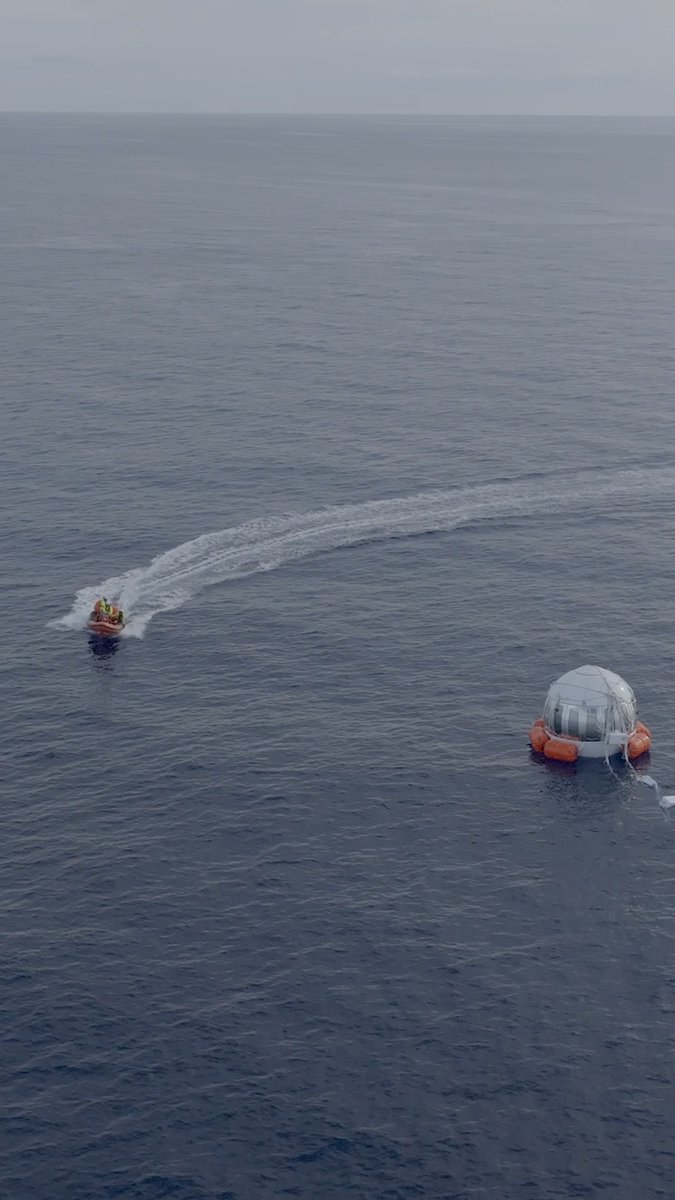
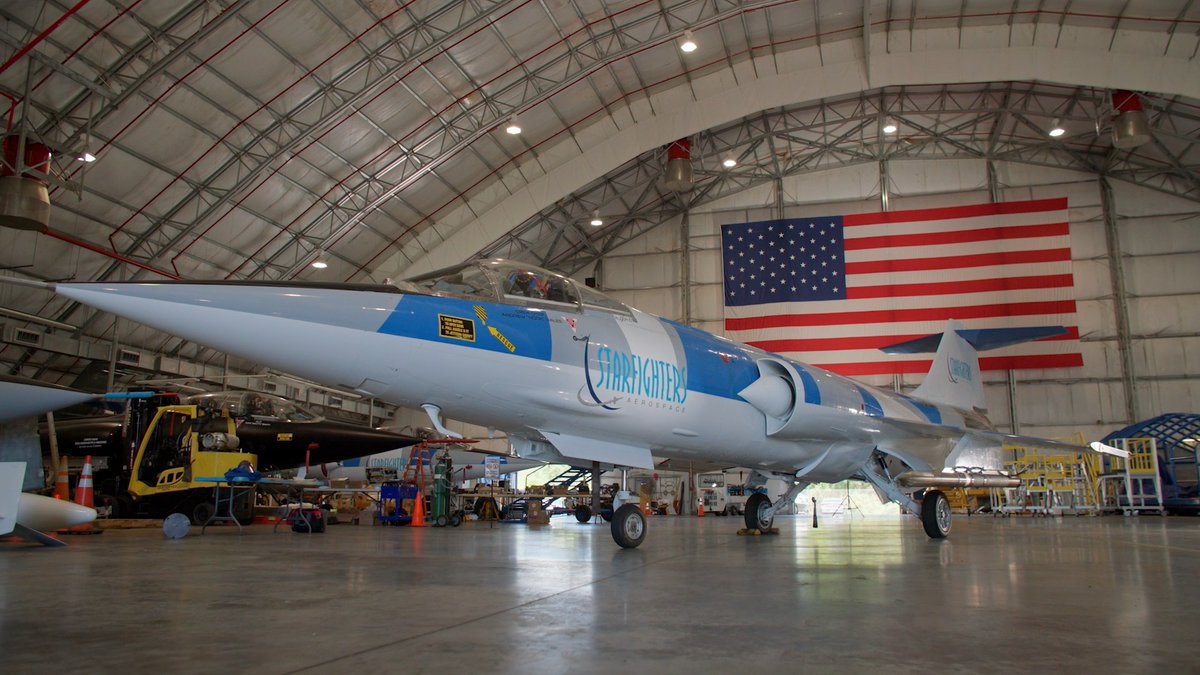
Space Perspective has successfully completed a historic flight demonstration of Spaceship Neptune-Excelsior, the fully-operational test vehicle that will take Explorers to space. Around sunrise on Sunday, it launched from the deck of Marine Spaceport (MS) Voyager, propelled by our SpaceBalloon™ to ~100,000 feet (~30 km). Over the course of...

65,495 views • 1 year ago •via X (Twitter)

10 Comments

Joe Barnard 🚀's profile picture
Joe Barnard 🚀1 year ago

It will not take them to space, it will take them to 30km, 70km short of the Karman line - That’s still cool and the views are probably incredible! It’s a great idea, just be honest about it - If you keep misrepresenting what this thing does, you’ll keep getting clowned on for it

Space Sudoer's profile picture
Space Sudoer1 year ago

👏STRATOSPHERE👏IS👏NOT👏SPACE👏

OV-101 (Enterprise)'s profile picture
OV-101 (Enterprise)1 year ago

Not space guys, youre not taking them to space.

DKiS's profile picture
DKiS1 year ago

Not going to space no matter how many times you say it.

Landon Young 🇺🇸🚀's profile picture
Landon Young 🇺🇸🚀1 year ago

Once again, it’s not a spaceship

NominalJoe🌎🍻🚀's profile picture
NominalJoe🌎🍻🚀1 year ago

Say it with me: "near-space". You need to consider fixing your language if you're going to attract customers and do social outreach.

SLS's profile picture
SLS1 year ago

Ship Neptune-Excelsior*

Mahdad Borhani's profile picture
Mahdad Borhani1 year ago

It won’t get anywhere near space 🤡

chudly McChuddington's profile picture
chudly McChuddington1 year ago

This has got fuck all to do with Space.....you are con artists with a balloon

Tom Gabriel Warrior Ⓥ's profile picture
Tom Gabriel Warrior Ⓥ1 year ago

Why do you see fit to start your venture with a lie?
Related Videos

Success! 🚀 🇨🇦 At 3:45 PM EDT on Friday May 16th, 2025, we successfully tested both our new orbital Darkhorse engine test cell and our new third generation 3D printed Hadfield liquid rocket engine for the first time, marking a significant step towards Canada’s first commercial space launch. The test ran for 7 seconds at our propulsion test range, a company-owned secure site in Northeastern Ontario, successfully delivering nominal thrust, active cooling, and impulse results. This major test of the Darkhorse test cell and Hadfield Mk III engine lays the groundwork for NordSpace's Tundra orbital rocket, as the test cell is specifically designed to integrate with our turbo pump assembly in the next phase of propulsion development. Long duration tests are scheduled for the coming days, along with refinements to fuel mixture ratios and higher-pressure scenarios to test the limits of Darkhorse and our new engines. Minor upgrades and fixes to address a harmless leak in the cryogenic liquid oxygen line and design changes to our experimental control rods have already been made. Hot on the heels of our successful integrated test of our Taiga sub-orbital launch vehicle back in January, rapid developments and approvals at our spaceport in Newfoundland and Labrador, announcement of the SHARP (Supersonics and Hypersonics Applications Research Program), hosting the inaugural Canadian Space Launch Conference in Ottawa, and more - NordSpace is strengthening its position every day to ensure sovereign space launch is not just possible, but probable for Canada. Our historic first experimental flight is scheduled for 2025 from our spaceport, Spaceport Canada. NordSpace's CEO and founder, Rahul Goel, said “This successful test is not only a testament to NordSpace’s unmatched technical competency, but also to the success of our new project management framework, design philosophy, and engineering mindset used to deliver results for complex projects on time and within budget. Success on the first try with countless potential sources of failure is not common in the development of complex rocket systems, but our team succeeded by prioritizing first principles engineering. This test confirmed that we do have the right stuff, and that we will deliver this incredibly important sovereign launch capability for all Canadians. Like the land, air, and sea, space is no longer some final frontier for Canada. Space is an essential domain we must unlock, and launch a capability we must own. Without it, we are jeopardizing not only our security, sovereignty and economy, but are also relegating Canada to a participatory instead of a leadership role on the world stage. We must not let this happen.”

NordSpace 🇨🇦

50,877 views • 1 year ago

Hey Canada, we have a spaceport! 🇨🇦🚀 NordSpace's beautiful Atlantic Spaceport Complex (ASX) is officially under construction outside the town of St. Lawrence, in Newfoundland and Labrador! With our first launch of a Canadian commercial rocket from a Canadian commercial spaceport set to take flight in the coming weeks, the future of a true sovereign capability for assured access to space has never looked so promising. We're thrilled to share footage of ASX's SLC-02 publicly for the first time. ASX will support NordSpace’s first commercial launch of our Taiga suborbital rocket with Taiga's launch window opening on August 25th 2025. Taiga is powered by the company’s proprietary 3D-printed Hadfield Mk III liquid rocket engine, and the mission is named "Getting Screeched In". The launch window is subject to road and power interruptions due to the ongoing state of emergency in Newfoundland and Labrador. This launch follows a series of successful tests, including a fully integrated rocket test and a month-long qualification campaign for the Hadfield Mk III engine. Both demonstrated rapid refurbishment capabilities and turnarounds between tests, paving the way for reusable and cost-effective launch operations from Canadian soil. ASX is designed to support our Tundra orbital launch vehicle and partner launch vehicles, facilitating a wide range of orbital and suborbital missions situated at a 46 degree latitude. The initial $10M phase of development for the Atlantic Spaceport Complex will feature two sites: 🚀 SLC-01 will feature two launch pads for orbital missions including NordSpace’s Tundra vehicle and international launch partners from the U.S. and Europe. 🚀 SLC-02 will consist of at least one smaller launch pad for suborbital missions, radar systems for vehicle tracking and space domain awareness, and other ground support equipment to enable all launch operations at the ASX. The ASX will also support NordSpace’s broader portfolio, including our SHARP (Supersonic and Hypersonic Applications Research Platform) program. NordSpace’s CEO and founder, Rahul Goel, said, “The start of construction at the Atlantic Spaceport Complex is a seminal moment for Canada. This is not just about building a launch site; it’s about building a future where Canada leads in space exploration, innovation, and security. The ASX is critical national infrastructure that will unlock assured access to space, ensuring our sovereignty and fostering economic growth for generations. We are committed to making the vision of a true sovereign end-to-end space missions capability a reality, and today’s groundbreaking is a testament to our team’s relentless dedication, speed, and capability.” We thank Government of Newfoundland & Labrador, Transport Canada, National Defence, Canadian Space Agency and NAV CANADA for their support.

NordSpace 🇨🇦

65,053 views • 10 months ago

We are proud and excited to announce a historic $5M investment in our new spaceport, Spaceport Canada! This investment and project is being developed to support NordSpace's Tundra launch vehicle and bring Canada one major step closer to sovereign launch as the nation's first operational spaceport. Read all the details in our press release: Canada is the only G7 nation without sovereign launch capabilities. In addition to countless benefits for Canada’s national security, environmental protection efforts, and global leadership, such a capability would result in an estimated 650 new highly qualified personnel (HQPs) over the next decade alone and $2.5B in economic development. NordSpace is working actively with the Canadian Government to ensure the success of Spaceport Canada, and would like to thank Transport Canada, NAV CANADA, Global Affairs Canada, Canadian Space Agency, and Space Canada | Espace Canada for their continued support. A second launch pad, Pad B, is also planned to support partner launch vehicles under the upcoming Technology Safeguards Agreement with the United States. NordSpace has been working with the @DeptofDefense, Space Systems Command, and the @SpaceForceDoD to ensure the development of Pad B is strategically aligned. --- NordSpace’s CEO, Rahul Goel, commented - “We are facing another Avro Arrow moment in Canada, and have a decision to make as a nation. Will we remain spectators, or will we aspire to be participants and leaders in the new commercial space era? Canada's environment, economy, security and sovereignty are at stake. Opening the floodgates to space with a Canadian launch vehicle, from a Canadian spaceport, carrying a Canadian payload - that is the definition of sovereign launch, and it will change the shape of our great nation for generations.” When asked to comment on NordSpace's announcement of Spaceport Canada, Space Canada's CEO and former Premier of New Brunswick, Brian Gallant said "The value of developing domestic space launch capabilities, including commercial, cannot be understated as it will allow us to launch Canadian space technologies from Canada. In addition to the fact that the demand for commercial launch services is growing both nationally and globally, given space is a strategic sector playing a pivotal role in defence by protecting our security and sovereignty, Canada needs to enhance its domestic launch capabilities."

NordSpace 🇨🇦

52,859 views • 1 year ago

Here is one of our experimental 3D printed Hadfield liquid rocket engines going through some thrust vector control (TVC) profiles! As we scale to our first light-lift orbital launch vehicle, Tundra, and then our medium-lift reusable launch vehicle, Titan, precise control of the rocket at every phase of flight is critical to mission success. Guiding a rocket to orbit, and eventually back to Earth, demands close coordination across every sub-team. Some of the key challenges we’re tackling: ➡️ Reliable & repeatable TVC actuation: ensuring the engine gimbal responds consistently across every test and flight ➡️ High-frequency control loops: real-time systems that keep the vehicle stable from liftoff to orbital insertion ➡️ Propellant sloshing: accounting for the movement of fluids in tanks and its effect on vehicle dynamics ➡️ Wind shear compensation: countering atmospheric disturbances during ascent ➡️ Structural bending & flex modes: managing how the vehicle’s primary structure responds to aerodynamic and thrust loads ➡️ Precision payload delivery: hitting the exact target orbit, every time Our team at NordSpace has been advancing our propulsion systems on many fronts, as we work to unveil our orbital-scale, pump-fed Hadfield and Garneau rocket engines in the near future — the engines that will carry Canada to orbit for the first time, and unlock sovereign access to space. Check out some of our rocket hardware, meet our engineers, join over 400 attendees and over 40 speakers at the Canadian Space Launch Conference, taking place this May 5th in Ottawa. National Defence Defence Research and Development Canada Canadian Space Agency NSERC / CRSNG

NordSpace 🇨🇦

48,876 views • 3 months ago

That’s a wrap! NordSpace has successfully completed an intense month long campaign to qualify and test the limits of our Hadfield Mk III liquid rocket engine - metal 3D printed, regen cooled, and Earth-shakingly powerful. Next up is our first flight, scheduled for this summer, which will make Canadian history as the nation’s first commercial launch from a commercial spaceport 🇨🇦 Assured access to space will completely reshape Canada’s sovereignty, security, and economy. NordSpace is working around the clock to ensure this future for our nation by building an end-to-end space missions company backed by a launch and propulsion architecture designed to be competitive in the modern launch era: ✅ Scalable to medium lift (~5 tonnes to orbit) to address the most profitable and critical commercial and defence markets ✅ Rapidly reusable to drastically reduce cost and increase launch cadence ✅ Highly portable for tactical responsive launch and low operational overhead Our Hadfield Mk III engine was our most successful iteration yet. We achieved many new feats: ➡️ 24-hour turnaround and rapid refurbishment of the engine after multiple tests, developing our pipeline for future rapid reusability ➡️ Perfect operation of our new Darkhorse engine test cell, built to support tests of our orbital Hadfield and Garneau engines and turbopump systems ➡️ Reduced time between engine tests to 20 minutes, allowing for countless back-to-back firings ➡️ Significant technology upgrades to boost personnel safety and efficiency including NordLink to allow for full automation and remote management of engine tests Stay tuned for some major updates about our launch, satellite, spaceport, and defence programs ranging from the Atlantic all the way to the Arctic!

NordSpace 🇨🇦

16,440 views • 11 months ago

NordSpace is proud to announce another major orbital launch program milestone. Alongside our ongoing orbital hardware development, we have successfully completed the high-fidelity trajectory and flight dynamics model for our Tundra orbital rocket after 2 years of intense design effort, thousands of simulations, and hundreds of physical tests. This high-fidelity model is far more than a simulation milestone or simply selecting the vehicle's capabilities. It is the cornerstone of the entire vehicle design loop, the foundation required for regulatory commercial flight approval, and the only way to confidently predict and guarantee the performance required to achieve orbit. It integrates detailed aerodynamics, structural loads, propulsion constraints, flight mechanics, guidance, navigation, and control, and much more into a single unified framework that will guide every major design decision moving forward. Crossing this milestone gives us the ability to continue to rapidly advance the engineering efforts behind our orbital launch architecture from engines and tanks, to GNC and GSE. Uniquely, we're focused on a lot more than just a light-lift vehicle. Our entire architecture is based upon selecting key technologies and design pathways that result in the most efficient progression from Tundra (500 kg to LEO, 350 kg to SSO) to Titan, our reusable medium lift vehicle (5,000 kg to LEO, 3,500 kg to SSO). Our architecture even allows for the option to extend Tundra without major modifications to a Tundra+ variant, allowing for 1,100 kg to LEO and 850 kg to SSO. It is crucial to balance the thousands of variables and parameters that go into selecting a scalable and flexible architecture which benefits from the flight heritage of decades of rocket development before us, while also ensuring the capability is globally competitive and domestically relevant to Canada. Our Atlantic Spaceport Complex (ASX) in Newfoundland and Labrador will be experiencing significant growth, investment and construction over the coming year as it prepares to host Tundra's launches. Owning and operating our own infrastructure and manufacturing facilities, end-to-end, enables the maximum level of flexibility and efficiency we need to meet Canada's timelines to develop sovereign space launch. Let's launch the north! Transport Canada National Defence Defence Research and Development Canada Canadian Space Agency

NordSpace 🇨🇦

27,335 views • 6 months ago

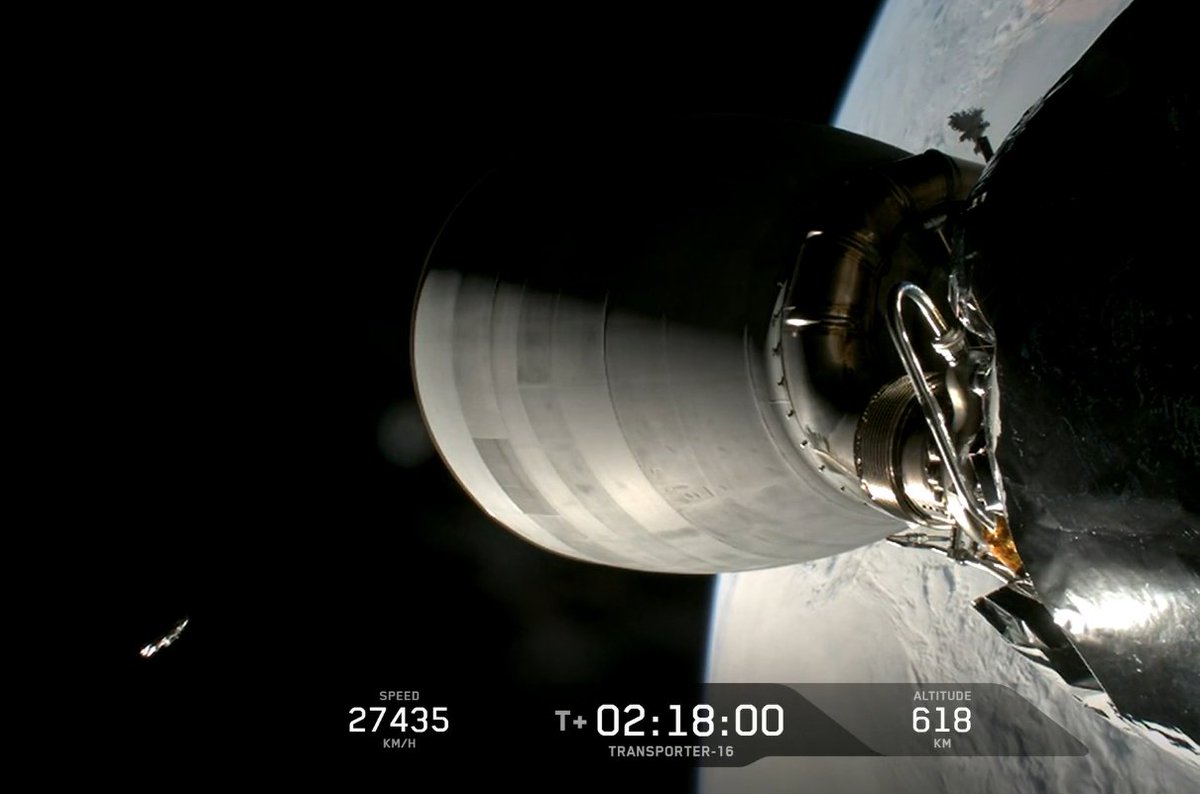
I'm excited to announce we have achieved our Tier 1 mission success criteria and have begun gathering a tremendous amount of data on how this brand new spacecraft performs. On March 30th, 13:17:08Z, the Gravitas spacecraft separated from the SpaceX Transporter-16 stack to begin its mission as one of the highest power free-flying satellites ever launched. Immediately after separation, the spacecraft autonomously: - Executed detumbling maneuvers - Established two-way communications with the ground (on our very first ground station pass) - Deployed its 20kW solar arrays - Slewed to a safe and stable attitude to await further ground commands These actions alone are a testament to the incredible work of our in-house engineering, software, and GNC teams to build a robust spacecraft. Since then, our operations team completed all initial system activations and checkouts, confirming the vehicle is in a power positive and thermally stable state with no major anomalies observed at this time. We completed this phase of the mission ahead of schedule. Next up we will be powering up and downlinking data for all payloads aboard the Gravitas spacecraft in support of our customers and partners while continuing to put the spacecraft through its paces. As we noted ahead of launch: The goal of this mission is to experiment and push our systems to the limit to inform future missions. I look forward to sharing more on our successes and challenges as the mission proceeds. Video of our satellite below; link to full T-16 webcast:

Neel Kunjur

89,343 views • 2 months ago