Video wird geladen...

Video konnte nicht geladen werden

Zur Startseite

358,790 Aufrufe • vor 1 Jahr •via X (Twitter)

9 Kommentare

Profilbild von Salle Pierre Lamy
Salle Pierre Lamyvor 1 Jahr

Come on guys, this is a magic trick

Profilbild von Buzz Park
Buzz Parkvor 1 Jahr

Massimo, you know that he is a magician, right?

Profilbild von Massimo
Massimovor 1 Jahr

Oh really? I thought he was an Istari from Valinor

Profilbild von Okie
Okievor 1 Jahr

The Carbonaro Effect. Actually a really good show, dude has some of the best magic tricks I've seen

Profilbild von Sam Charles
Sam Charlesvor 1 Jahr

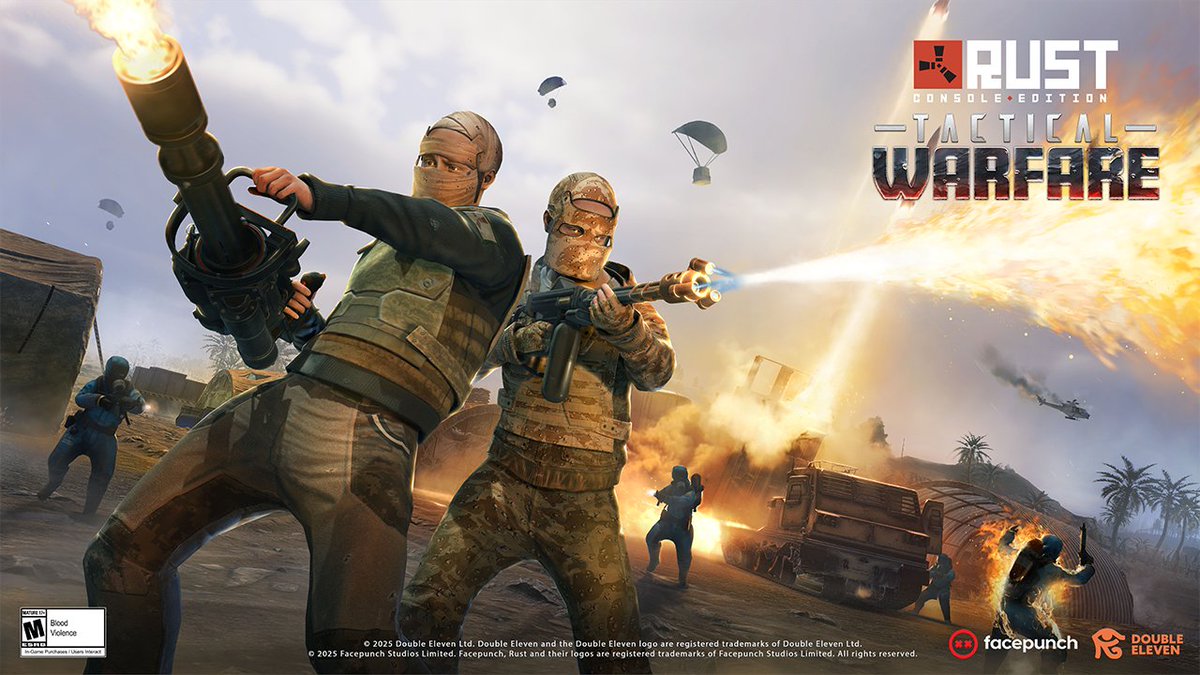
Ah, the tactical suit because sometimes you need to look sharp and be prepared for a surprise ninja ambush. Style meets stealth, and the boardroom will never see it coming. 🕶️💼🕴️

Profilbild von Sharks
Sharksvor 1 Jahr

You got some coffee in there I’ll take 10

Profilbild von Blue Shirt Project
Blue Shirt Projectvor 1 Jahr

The bonus pack comes with an evening gown and a matching date.

Profilbild von Philipp Seeger
Philipp Seegervor 1 Jahr

Also comes with a +1

Profilbild von Elyas Noor
Elyas Noorvor 1 Jahr

ayone who thinks this is a magic trick obviously has never seen a super thin pocket suit before. I have one of these good luck folding it back into pocket size though

Ähnliche Videos

Blast off into the far reaches of space and stake your claim in the endless frontier. Influence invites you to leave mundane life behind and embark on an epic journey among the stars. This groundbreaking blockchain-based MMO game on Starknet propels the space strategy genre lightyears ahead. Get ready to be immersed in a breathtaking 3D universe filled with adventure and opportunity. As the captain of your destiny, travel to the uncharted Adalia system and explore over 250,000 unique asteroids. Each one is procedurally generated to offer untold treasures just waiting to be uncovered. Send out core sampling missions and discover the precious ores and minerals hidden beneath the surface. Construct an expanding network of mines, factories, shipyards, and research labs. Design and build dozens of ship classes to suit every need, from swift fighters to hulking cargo haulers. Advance through multiple tech trees to equip your vessels with hyperdrives, lasers, missiles, and more. Trade resources and finished goods across the farthest reaches, but be ready to protect your empire. When conflict arises, engage in epic tactical ship battles to defend your assets and expand your influence. At every step this vast living universe adapts to your decisions and ambitions. Everything you do shapes the destiny of the Adalia system. Write your name across the stars and leave a lasting legacy. Influence blockchain backbone Starknet, means total ownership of every asset. Trading is direct, with no middlemen or fees. Form alliances and corporations to marshal even greater strength. A thousand paths lie before you. How will you traverse the void? Where will you forge your stellar empire? Find out in the most ambitious space strategy game of a generation - Influence. Your future among the stars awaits. Coming soon to Starknet!

Starknet

30,664 Aufrufe • vor 3 Jahren

Hasan coaches his audience to show charitably to MoistCr1TiKaL in his coverage regardless if Piker thinks Moist gave too much charitability to Ethan Klein Also confirms the Frogan default "He did the first video, I didn't think he gave a fair shake to the situation..I chalked it up to him not being super in tune with what's going on..I even said if Moist knew the extent of the harassment campaigns conducted by Ethan Klein that he would have a different attitude on it..or if he knew about the actual timeline of events" "I think we gotta be tactical here and tactically speaking u gotta think about the utility of assuming MoistCr1TiKaL is perfectly knowledgeable..whether that's the case or not, doesn't matter..Idk if there's a lot of utility bringing that to the forefront rather than being like hey this video was great, there's a lot more information out there..if u take a look at it, I think u would have a diff perspective" "I say this as someone who has been on the receiving end of MoistCr1TiKaL's commentary that I found to be not so nuanced, he very quickly did the Kayagate video and I'm still saying that" "Ethan Klein is a menace..has done everything he claims is being done to him and far worse to numerous content creators..he's vicious..a bully..his community loves it..his community is a snark subreddit" "I do think he's being nicer to Ethan Klein and he should be, in an effort to maintain a fair position while not siding too much with unfavorable parties bc let's be real in the spaces that Moist occupies, in the spaces we all occupy, we are the minority position..in the real world, we're not the minority position" "And that's literally the reason why he was launching this suit against as opposed to xQc, Asmongold, and numerous other ppl..who didn't offer anything extravagant as far as reactions goes in comparison to Morgan, Denims, or even Kaceytron" "I don't know why he always like qualifies it, it's 100% that is the case..u don't have to qualify it this hard, its ur show I'm not implying anything but it's just confusing to me why there is this layer of qualification every time"

yeet

76,394 Aufrufe • vor 2 Monaten

**MH370x Update** Ode to Edward C. Lin, Agent 370 Recap; ● Special Projects Patrol Squadron Two ‘Wizards’ (VPU-2) ● Flew in Lockheed Martin EP-3E Aries II (Real-time tactical SIGINT and full motion video intelligence) ● Experience in Signals Intelligence (SIGINT) ● Last deployment February 2014 to March 2016 ● Reassigned March 25th, 2014 ● Investigation began April 2nd, 2014 ● In 2014, Lin had accidentally left two flight manifests in his flight suit from a deployment that included search and rescue code names ● Defense argued the classified information in question is available on the Internet ● Charges that could have resulted in life in prison Lieutenant Commander Edward C. Lin is the one who leaked the MH370 videos. He is the hero we deserve, and one that we need to honor. A patriot who made a sacrifice to reveal the truth to the world. Edward Lin was watching as MH370 disappeared and knew that the only way anyone would ever get the truth is if the surveillance videos leaked to the public. The videos and coordinates corroborate the real location of the Nicobar Islands and the fire emergency event that happened to the plane. Edward Lin didn't believe he was harming national security. He thought he was revealing 'UFOs,' only later to be told that he revealed technological superiority that renders the military industrial complex a breakaway civilization. For the crime of revealing the true fate of MH370 and advanced technology hidden to us, Edward Lin spent six years in prison, after a plea deal and having his spirit broken. This injustice must be rectified. We did a disservice to you, Lieutenant Commander. Despite the evidence, we refused to believe in what seemed impossible to us. As Arthur C. Clarke wrote, “Any sufficiently advanced technology is indistinguishable from magic.” We owe you a debt of gratitude, one that we can never repay. We don't blame you for not wanting to relive the pain that was inflicted upon you. You deserve a full pardon and reinstatement of rank for what you've suffered. Dear Lieutenant Edward C. Lin: We need you, as a hero, to step forward into the light. It would be an immeasurable service to humanity if you were to claim whistleblower status and tell the truth to the Intelligence Community Inspector General. We know the risks this requires. Being a hero isn't about glory, it's about sacrifice. We have your back. We are MH370x. -Ashton #MH370x #MH370

Ashton Forbes

298,150 Aufrufe • vor 2 Jahren

Leonid Ivashov, a heavy-hitting retired Russian Colonel General, recently went rogue and started saying out loud what most people in the Kremlin only dare to whisper. He didn't hold back, basically calling things out for being a mess. The Big Picture: "We're in Trouble" Ivashov starts by basically saying Russia is a mess right now. He’s not sugarcoating it: we’re lonely on the world stage (only a handful of countries even talk to us at the UN), and we’ve lost our influence over our neighbors. He even compares putin’s era to the start of the Soviet collapse under Gorbachev—lots of talk, but everything is breaking. 1. The "Broken Stuff" List He goes through a laundry list of things that aren't working: * Planes: We can't build our own passenger jets. We’re basically cannibalising old Boeings for parts. * Space: He tells a wild story about how the last working manned launchpad at Baikonur was accidentally torched because of poor maintenance. Now, Russia effectively can't send people to space. * Food: He warns that the food in the shops is becoming toxic garbage filled with palm oil because the economy is so squeezed. * Corruption: He mentions that 11 trillion rubles were allegedly stolen by the Ministry of Defense. He points out that almost every big corrupt official is a member of the ruling party. 2. The "Spectacle" (The Press Conference) He calls putin’s annual "Direct Line" a brilliant theatrical performance. The Setup: Everything was staged—the suit, the tie, even the camera angles to hide putin’s nervous leg twitching. The Script: He says the questions were totally rehearsed. putin knew what was coming. The few "real" questions from foreign journalists were just dodged with "whataboutism" or jokes. The "Reality Gap": While putin was smiling and talking about how great the economy is, the "ticker tape" on the screen was showing real people from the regions begging for water, roads, and enough money to buy medicine. 3. The War (Tactics vs. Strategy) Ivashov is really unimpressed with the military leadership. * Small Thinking: He says putin is stuck at a "tactical" level—bragging about taking one tiny village or a single house. The NATO Gap: He admits that Ukraine, backed by NATO tech and satellite intel, is hitting Russia where it hurts (oil refineries and airfields), while Russia is just throwing shells at the problem. 4. The Demographic "Cliff" He’s really worried that Russians are simply dying out. The birth rate is way below what’s needed to survive, and putin’s excuse is just "well, it's a global trend." Ivashov thinks that's a cop-out for a country that’s literally shrinking. The Verdict Ivashov ends with looking pretty defeated. He basically says: “Look, I’ve been a professor, a general, and a student of geopolitics for decades. I watched this whole 4-hour show, and I didn't see a leader, a commander, or a protector of the people. I just saw a guy living in a fairy tale while the rest of the country is struggling to survive on 16,000 rubles a month." Basically, his message is: The "Spectacle" looks great on TV, but you can't eat a stage play, and you can't fly a museum piece to space. (The transcript for this segment of Russian retired General Ivashov’s video where he critiques the "staged spectacle" of putin’s press conference you will find in the comments.)

Yasmina

554,897 Aufrufe • vor 8 Monaten

A dark theory for the evening. Let's talk about Russian strategy in Ukraine.⬇️ Looking at developments lately, specifically: (1) the Ukrainian casualty leak showing an astronomical 1.7M KIA/MIA; and (2) the Ukrainian collapse north of Pokrovsk - I thought should revisit a dark thought I had a while ago, namely that, "maybe the killing itself is the point of all of this." I've said before that the Russians have fought an extraordinarily clean war in Ukraine, but it should be understood that there is a very legalistic shade on that assessment. They've killed very few civilians, and Ukrainian propagandists are perpetually beclowning themselves trying to pretend that the usual single-digit handful of injured civilians that accompany the latest attack using hundreds of standoff weapons fired into city centers (producing secondary explosions visible from outer space as military targets hidden among civilian infrastructure are destroyed with surgical precision) somehow constitute gEnOCiDe rather than some of the most well-controlled warfighting in the history of the business. There is another and far darker side to Russia's "clean" war, however. Let us consider the fate of the Armed Forces of Ukraine - legal combatants all, whom the Russians can and do target and kill without limit. I mentioned the casualty leak earlier, but I feel this needs to have a line drawn under it - one point seven million personnel killed or missing in action in the AFU, over the course of the war. 1.7 MILLION. Seven or eight percent of Ukraine's prewar population, probably something like a quarter of the entire national cohort of military-aged males, dead or missing. Casualties on the scale of a genocide, sufficient to permanently cripple any postwar Ukrainian nation. Casualties multiple times that which I assessed two years ago as sufficient to shatter the AFU based on the experience of Nazi Germany. This brings me to the Ukrainian collapse north of Pokrovsk two weeks ago, in which a run-of-the-mill Russian attack walked through twenty kilometers of Ukrainian defensive belts and into open country. The Ukrainian propagandists coped by whining about how the single most important front sector for the AFU had somehow "run out of infantry." But did the Russians throw in a mobile reserve to collapse the front and chase the AFU back to the Dniper, despite doubtless knowing full well what was going on? No, they did not - they consolidated in the breach and awaited the inevitable, panicked Ukrainian counterattack, in which they would have the opportunity to destroy Ukraine's remaining elite troops. Which brings me to my conclusion. The Russians have had countless opportunities to make large advances in this war, especially recently - the Ukrainian front line is an absolute shambles and their "drone wall" tactic will falter against any serious attack. So ineffectual is the AFU that very few Russian moves at the front even face serious opposition these days, with most geolocations of Russian advances showing them already established in place and dealing with harassment by kill drones after having seized positions bloodlessly. The Russians have in fact consistently foregone breaking the front and taking swathes of ground in favor of killing the largest possible number of Ukrainian soldiers on the existing front line under the existing attritional combat dynamic. This "tactical directive" held true even during the Battle of Sudzha-Korenevo, fought in prewar Russia. Rather than counterattacking aggressively to evict the AFU, the Russians saw the opportunity to kill gigantic numbers of Ukrainians in a trap the enemy wouldn't be able to extract themselves from for ideological reasons, and they took it. That battle ended up being nine months of hideously lopsided butchery that broke the back of the AFU. All of this makes observing the war more than a little maddening, but it's a consistent pattern of behavior that begs for explanation. So here's my theory. The Russian government has consistently sought to end the war via peace treaty with the existing Ukrainian government, not via regime change, outright conquest, or even killing enough of that government to find a more flexible interlocutor among the Maidanites. Putin apparently wants a treaty with Zelensky. The Russians have also consistently made demands of the Ukrainian government - and its NATO sponsors - that are absolute political nonstarters for the Maidan-era regime and which that regime, by its very nature, simply cannot accept. Russian language rights, Orthodox religious rights, demilitarization, large territorial concessions which would see the AFU surrender vast urban areas without a shot fired. And yet the Russians insist, and they're going to continue killing Ukrainian soldiers at ever-more lopsided ratios until they get their way. Which leads me to the brutal conclusion: Putin doesn't want to see Ukraine conquered. He's never publicly expressed any desire for that. The consistent Russian policy is instead to see Ukraine - a "free" and "independent" Ukraine, having come to this impasse of its own sovereign will - utterly humiliated. Putin wants to make Zelensky put on a suit, come groveling to the Kremlin, and sign a treaty that will see the Maidanite government surrender its arms, disgorge huge amounts of territory, and reverse every single anti-Russian policy position it ever had. Ukrainian nationalism will be discredited overnight by the hands of those very nationalists, and the economically irrelevant, demographically shattered rump state will be sucked back into Russia's political orbit in a matter of days. So of course the Russians are only advancing in the most leisurely way possible. Their goal is to place the Ukrainian government into a militarily untenable situation so as to force a flamboyantly humiliating peace treaty upon them that includes large territorial concessions beyond the line of control - the ultimate Ukrainian taboo - so as to discredit Ukrainian nationalism by the hands of the very ultranationalists who took their nation to war in the first place.

Armchair Warlord

515,546 Aufrufe • vor 1 Jahr

The tragedy of Zimbabwean politics is that there is reality, and then there are aspirations, aspirations that often drift into political delusions that hope for miracles. Too often, our people choose the latter. Instead of confronting the hard political realities before us, they cling to the hope that events will somehow unfold in their favour miraculously, regardless of the evidence saying otherwise. I have listened carefully to Vice President General Constantino Chiwenga’s latest remarks, given to us through a parable of Lazarus and the other biblical analogies he has shared at different intervals. He has demonstrated that he understands religion, reads the Bible extensively, and is comfortable using scripture to communicate political ideas and messages to the Zimbabwean citizenry. That, however, does not change our political reality. In 2017, General Chiwenga successfully marshalled the military, worked hand in glove with other senior figures within the security establishment, mobilised ordinary citizens onto the streets with the help of the opposition, and carried out the military coup that removed former president Robert Mugabe from power after forcing him to write a resignation letter with a gun over his head. Today, however, General Chiwenga faces a far steeper challenge because Zimbabweans are deeply disillusioned by what followed. Fairly or unfairly, many do not see what happened after November 2017 simply as Mnangagwa’s project. They see it as General Chiwenga’s military intervention because he was the Commander of the Zimbabwe Defence Forces who executed it; he was the poster boy of the military coup. Zimbabwean citizens jokingly called him General Bae. “Bae” is an affectionate term for someone you love or care about deeply. Whether one agrees with that assessment or not, that General Chiwenga bears responsibility for what followed the coup is a political perception that remains ingrained in the country’s memory. Anything that emerged from that military coup inevitably falls, to some extent, on his shoulders. That leaves him with an enormous task if he hopes to redeem himself politically. His biggest challenge is that, unlike Robert Mugabe, President Emmerson Mnangagwa is an exceptionally patient, calculating, and tactical politician who plans years ahead of eventual execution, and who does so ruthlessly, without any mercy for his political opponents. Today, we are confronted with Constitutional Amendment Bill No. 3, which is now on President Mnangagwa’s desk awaiting his signature. Once enacted, it will, barring a political miracle, effectively extinguish Chiwenga’s path to the presidency and also extinguish the little prospect of an opposition president. But this story did not begin in 2026. It began in 2021 with Constitutional Amendment Bill No. 2, which abolished the running mate clause. That provision would have significantly strengthened General Chiwenga’s prospects of automatically succeeding President Mnangagwa. When Amendment No. 2 was introduced, I argued that it was unmistakable evidence that President Mnangagwa had no intention whatsoever of handing over power to Chiwenga. As usual, because many people preferred comforting illusions to uncomfortable facts, many disagreed with that political assessment. Some within ZANUPF accused me of talking political nonsense. Others insisted that Mnangagwa and Chiwenga were inseparable political brothers who would always work together. Even sections of the opposition dismissed my political analysis, arguing that Mnangagwa would never have the political capacity to sideline Chiwenga because powerful forces would stop him. Reality has partly answered that debate. The results are before us. The so-called forces have not been able to stop him so far. Today, the Vice President increasingly relies on biblical parables to communicate his political messaging while Mnangagwa steadily and ruthlessly tightens his grip on every important lever of state power. The military itself illustrates this shift. The Zimbabwe National Army is now commanded by Major General Walter Tapfumaneyi. His rise is politically significant to the story so far and to where the story might take us as it continues to unfold. General Tapfumaneyi left the army as a colonel after falling out with the military establishment during General Chiwenga’s tenure as Commander of the Zimbabwe Defence Forces. He was made a Brigadier General upon retirement from the army. He joined the Central Intelligence Organisation, where he rose to become Deputy Director-General. He also commanded Forever Associates Zimbabwe (FAZ), the organisation widely associated with supporting President Mnangagwa’s electoral machinery during the 2023 elections. When President Mnangagwa returned him to the Zimbabwe National Army, he was promoted to the rank of Major General. He leapfrogged several Major Generals who had served longer at that rank when he was appointed Commander of the Zimbabwe National Army. President Mnangagwa was now building the army in his own desired image and dismantling General Chiwenga’s army management network. His appointment strengthened Mnangagwa’s influence over one of the country’s most important institutions, the military. He was appointed after President Mnangagwa fired General Chiwenga’s right-hand man, General Anselem Nhamo Sanyatwe, who had been the commander who supervised the 2017 coup when he was commander of the Presidential Guard. He was appointed as Sports Minister, replacing Kirsty Coventry. Today’s Presidential Guard presents a similar picture. It has also been reshaped to suit President Mnangagwa’s political pursuits. The same formation that played a decisive role during the 2017 military intervention, then commanded by Colonel Anselem Sanyatwe before his subsequent promotion to Brigadier General, is today under a commander aligned with Mnangagwa. Major General Fidelis Mhonda, who commands today’s Presidential Guard, was promoted a few days ago to the rank of Major General, reinforcing the widespread perception that the Presidential Guard is now firmly within Mnangagwa’s sphere of influence and political control. Above them sits the Commander of the Zimbabwe Defence Forces, General Emmanuel Matatu, from the Midlands province. Unlike Chiwenga during his tenure, General Matatu has generally not been viewed as an overt political operator. His role has largely been seen as maintaining institutional continuity rather than building an independent political constituency within the military, as General Chiwenga did during his time in the army. Taken together, these developments are seen by President Mnangagwa and his close associates as significantly reducing the prospects of another military coup to remove him. Over time, President Mnangagwa has systematically reshaped the senior military command structure. Military officers perceived to be close to Chiwenga have either retired, died, been reassigned, or gradually lost influence, while others considered more acceptable to Mnangagwa have risen through the ranks. Whether intentional or simply the natural evolution of military succession, the result has been the steady consolidation of presidential influence over the security establishment, weakening General Chiwenga’s influence. Meanwhile, many Zimbabweans have begun looking to Chiwenga for a viable counterforce because they see little prospect of meaningful change emerging from the fragmented opposition. Yet Chiwenga’s recent biblical parable appears to carry a different message. Rather than suggesting that salvation will come through him and his military associates alone, he seems to be telling Zimbabweans that they must act for themselves instead of waiting for someone else to rescue them. If that is indeed his message, it presents a political dilemma. Zimbabweans have repeatedly been encouraged to “wait and watch,” with suggestions that decisive, overwhelming action was imminent. Now they are being reminded that they themselves must participate. The difficulty is that many Zimbabweans remain traumatised by the state’s historical response to public demonstrations using the same military. When Chiwenga commanded the Zimbabwean military, those who protested often encountered overwhelming force. In August 2018, when he had become Vice President, soldiers shot civilians during post-election protests in Harare. The global media and British politicians like Kate Hoey directly blamed General Chiwenga for those killings because of Zimbabwe’s army history of dabbling in politics. Emmerson Mnangagwa’s public relations machine kicked into action and blamed General Chiwenga when speaking to diplomats and international businessmen about the circumstances surrounding what had taken place. A very powerful narrative was created that pointed to General Chiwenga as the culprit. President Mnangagwa told African presidents that when the killings took place, he was actually in a meeting with the former Ethiopian Prime Minister, Hailemariam Desalegn and the former Ethiopian dictator, Mengistu Haile Mariam. In 2008, while he was Commander of the Zimbabwe Defence Forces, the military killed hundreds of opposition supporters during the post-election violence that ultimately led to the formation of the Government of National Unity (GNU). Those events remain deeply embedded in the political memory of Zimbabwean citizens. Consequently, many Zimbabweans today are understandably reluctant to return to the streets for fear of being killed. Ironically, it is a political environment that Chiwenga himself helped create. Successful military interventions that seek public legitimacy usually require significant civilian mobilisation. Unless one is contemplating an outright seizure of power through force alone, public participation matters. Today, however, fear has largely replaced mobilisation. Across Zimbabwe and throughout the diaspora, many people hold General Chiwenga partly responsible for the political situation the country now finds itself in. They argue that in 2017 he possessed both the military authority and the political leverage to shape Zimbabwe’s future differently. Former president Robert Mugabe sent former central bank governor Dr Gideon Gono during the coup in November 2017 to engage General Chiwenga and other senior military officers with proposals that would have allowed General Chiwenga himself to assume power. General Chiwenga refused this offer and remained loyal to President Emmerson Mnangagwa during the coup. President Mnangagwa, by contrast, has demonstrated unwavering commitment to securing his own political future in a ruthless and Machiavellian way. Every major constitutional change, every strategic appointment, and every restructuring of the security establishment point in the same direction. His political objectives have been pursued with remarkable political discipline, patience, and clarity, coupled with an iron fist. Regardless of how objectionable his actions have been, he continues to execute them, and so far he has been succeeding. That is why I return to where I began. Zimbabwean politics has become a contest between reality and aspiration or delusion. Many continue to believe that somehow events will take a different course through a political messiah despite the evidence accumulating before them. But politics rewards those who deal with reality and political actors who are not scared of executing their plans, regardless of how controversial they are. It does not reward those who substitute objective reality with hope. Whatever one thinks of President Emmerson Mnangagwa or General Constantino Chiwenga, the evidence available today points overwhelmingly in one direction. Mnangagwa has spent years methodically consolidating power, while many of his opponents have spent those same years believing circumstances would somehow change in their favour. The other element that helped the ascension of President Emmerson Mnangagwa was the main opposition political party of the day, the MDC. Former Prime Minister and founding MDC leader Morgan Tsvangirai and his successor, Nelson Chamisa, worked with Mnangagwa in sanitising the coup by putting their supporters on the streets to make it look like it was a popular uprising against the sickly geriatric leader, Robert Mugabe. Today, the opposition is in disarray, crippled and, in many cases, comfortably ensconced in ZANUPF pockets. To put it more accurately, it is in Emmerson Mnangagwa’s pockets. The country’s most popular opposition leader, Nelson Chamisa, has also made his position clear through one of his own parables on social media. In a recent post, he suggested that he would not allow himself to be made to write Paper Two, in other words, another military coup. His argument is based on the fact that the first military coup delivered nothing but grief for the opposition. The opposition was promised a lot of things and as the coup ended successfully, former Finance Minister Patrick Chinamasa told Zimbabweans that it was a strictly ZANUPF affair. Chamisa believes that repeating the same approach, when there is already evidence of what the first coup produced, would be politically futile. He is therefore clearly not prepared to marshal his supporters onto the streets on behalf of one ZANUPF faction against another because he sees this primarily as an internal ZANUPF power struggle as he sees it. Another important element is that President Emmerson Mnangagwa has been able to create massive wealth through public procurement for a coterie of loyal political backers. That wealth has played a significant role in securing political favours, consolidating power, and extending influence across many facets of Zimbabwean society. Mnangagwa loyalists have publicly donated luxury vehicles and other expensive gifts to senior military commanders, universities, churches, celebrities, and many related key institutional figures. In the religious sector, which has millions of fanatic followers, influential church leaders have received financial support and gifts. In the entertainment industry, prominent musicians such as Jah Prayzah, Alick Macheso, and others have also received gifts from wealthy Mnangagwa loyalists who openly support President Mnangagwa’s political agenda to extend his term of office. Taken together, these patronage networks have helped consolidate political influence well beyond the structures of the state itself. The odds facing the Vice President are therefore enormous. Barring a miracle, his path to the presidency appears increasingly very difficult. The irony is that part of the political architecture he helped build over the past two decades has created the very climate of fear that now stands in his way. If he were ever to seek public mobilisation, many Zimbabweans would be reluctant to take to the streets because of the state’s historical response to protests, much of which occurred while he occupied positions of immense power in the security sector. The other risk is that, if nothing changes, he could eventually be dismissed. Some of his ardent supporters like Knox Chivero have already gone onto public social media platforms claiming that there are plans to remove him from office. That possibility does not surprise political analysts at all. At some point, Mnangagwa may conclude that there is little political value in retaining a deputy whom he believes has been politically and militarily neutralised. Many political analysts now say, barring a political miracle powered by a military coup, Chiwenga could ultimately find himself leaving office as an ordinary civilian. Any attempt to remove a government through a military coup carries enormous risks and requires tonnes of money, as we saw with the 2017 military coup, which was reportedly funded by fuel tycoon Kudakwashe Tagwirei. Such an attempt must succeed because, historically, failed coups often have severe, and sometimes fatal, consequences for those who participate in them. It is a kill-or-be-killed situation once it unfolds. So, Vice President Chiwenga finds himself in an extraordinarily difficult position. His own faction is looking to him to lead and deliver. At the same time, many opposition supporters who now feel politically orphaned, with no credible political home, are also looking to him in the hope that he can bring about change but are terrified of the streets. As all this drama unfolds, President Emmerson Mnangagwa continues to tighten his grip on power. Constitutional Amendment Bill No. 3 now sits on his desk awaiting his signature, and it could be signed into law at any moment. Yet, for General Chiwenga, this is a make-or-break moment. If the Bill is signed into law and the General does nothing, many will conclude that his political presidential ambitions have come to an undignified end. If he attempts to act and fails, he could place himself in mortal danger. And if he simply waits, the political outcome may ultimately be the same, he risks being removed once Mnangagwa concludes that he no longer serves a useful political purpose. Time, as always, will be the ultimate judge. Reality and aspiration are now facing each other, and we have not a long time left for the ultimate showdown, or, as many suspect, little resistance.

Hopewell Chin’ono

105,734 Aufrufe • vor 2 Monaten