Loading video...

Video Failed to Load

Go Home

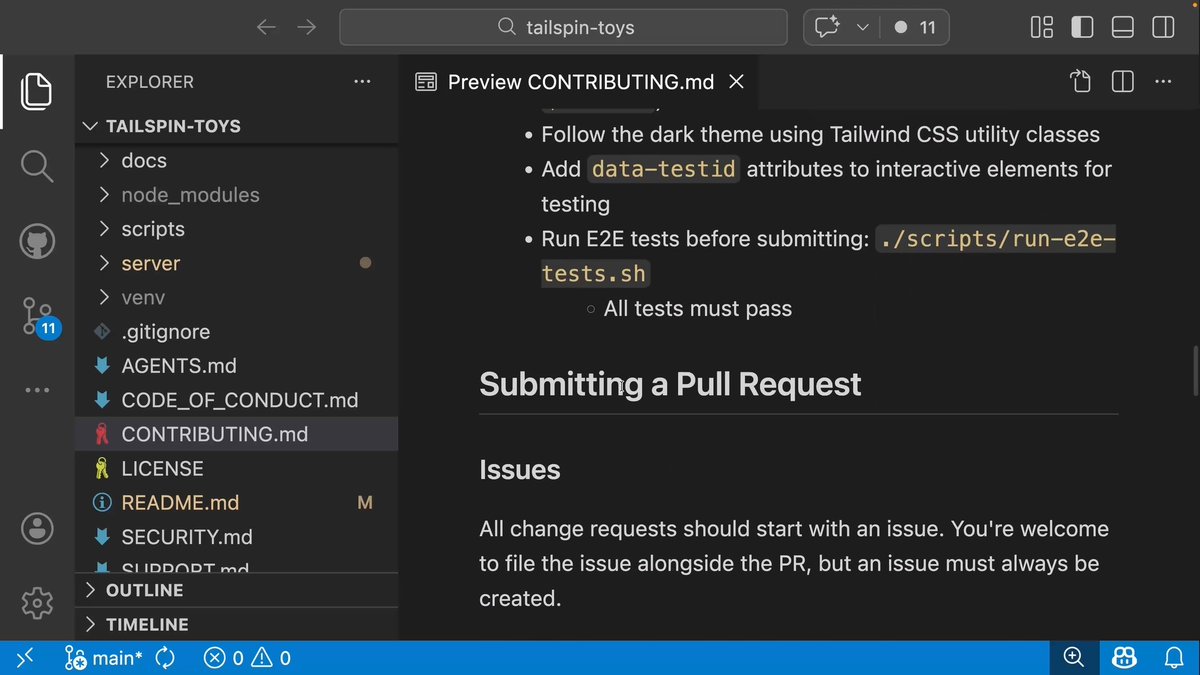
Teach an agent a workflow once. Have it remember after every rebuild. This tutorial shows how to deploy Nous Research Hermes Agent with NVIDIA NemoClaw and OpenShell, connect it to Slack, Outlook, GitHub, and NVIDIA developer forums, then turn a chat correction into a reusable skill. Private data stays...

70,146 views • 2 months ago •via X (Twitter)

0 Comments

No comments available

Comments from the original post will appear here

Related Videos

HERMES AGENT + STRIPE PAYMENTS + NVIDIA NEMOTRON. YOUR AGENT CAN NOW RUN A BUSINESS. ACCEPT PAYMENTS. PAY FOR SERVICES. PROVISION ITS OWN INFRASTRUCTURE. ALL INSIDE A SECURITY SANDBOX. two years ago the question was: can an AI agent run a business autonomously? the answer shipped this week. Hermes already handles workflows: cron jobs, sub-agents, kanban orchestration, multi-profile pipelines, scheduled research. what it couldn't do: spend money and prove it's safe. Stripe solved the first problem. Nvidia solved the second. WHAT AUTONOMOUS BUSINESS OPERATIONS LOOK LIKE: → customer sends a request via email → agent reads, scopes the project, estimates cost → provisions the infrastructure it needs (pays via Stripe, you approve on your phone) → builds and deploys the deliverable → sends the result to the customer → creates a payment link via Stripe (Stripe API integration, separate from Link CLI) → tops off its own API credits when balance drops → reports daily costs and progress to your Telegram → all within security policies you set once you set the rules. the agent runs the operation. you review revenue reports. not tasks. this is already happening. Dark Factory: autonomous software factory. send an idea before bed. wake up to a deployed URL. live entry in the Hermes Accelerated Business Hackathon. HOW STRIPE MAKES THE AGENT FINANCIALLY AUTONOMOUS: Stripe Link CLI gives your agent a scoped wallet. not your credit card. one-time-use virtual cards. → agent finds a product or service it needs → creates a spend request via Stripe Link → you get a notification on your phone (Link app) → you review: merchant, amount, context → one tap to approve or reject → agent receives a one-time virtual card → completes the purchase → card expires after single use your real card details never enter agent context. never printed in chat. never exposed to the merchant. Hermes cannot self-approve. you confirm every spend. install: hermes install skills/optional/payments/stripe-link-cli link-cli auth login what the agent can pay for: → API credits (Nous Portal, OpenRouter) → SaaS subscriptions it needs for operations → domain names, hosting, cloud credits → products from any online store currently US only. HOW NVIDIA MAKES THE AGENT SAFE TO TRUST: an agent with spending authority and no security boundaries is a liability. NemoClaw solves this. three layers: 1. OPENSHELL (sandbox) kernel-level isolation. controls network, filesystem, syscalls. default deny. you whitelist what's allowed. agent tries to reach a blocked domain = rejected. agent has no idea it's sandboxed. 2. NEMOTRON (private models) open-weight models on your own hardware. Nemotron 3 Super 120B MoE (48GB+ VRAM). Nemotron 3 Nano 4B (8GB VRAM, edge). fully private. no data leaves your machine. without GPU: inference routes to cloud via Privacy Router. 3. PRIVACY ROUTER (automatic split) decides per query: local or cloud. private data → local Nemotron. general web research → Claude, GPT, Gemini. automatic. per query. no manual routing. install: export NEMOCLAW_AGENT=hermes curl -fsSL https:// www.nvidia. com/nemoclaw.sh | bash requires Docker. NemoClaw is alpha software. APIs may change. test in non-production first. THE FULL PICTURE: before this stack: → agent could work but couldn't pay for anything → agent could pay but couldn't be trusted → agent could be trusted but couldn't operate 24/7 now: → Hermes runs the business logic (workflows, memory, skills, cron, sub-agents) → Stripe runs the financial layer (Link CLI for spending, Stripe API for receiving) → NemoClaw runs the trust layer (sandbox, policies, private routing) → VPS keeps everything always on → Telegram keeps you in the loop TYPES OF BUSINESSES THIS ENABLES: → autonomous software factory (customer request → build → deploy → payment link) → content agency (brief → research → draft → deliver → bill) → lead generation service (scrape → qualify → outreach → book calls) → SaaS monitoring and maintenance (detect issues → fix → deploy → report) → e-commerce operations (inventory → pricing → fulfillment → support) each one: Hermes profiles handle the workflows. Stripe handles the payments (in and out). NemoClaw handles the security. you handle the strategy. THE HACKATHON: Hermes Agent Accelerated Business Hackathon with Nvidia and Stripe. cash prizes + Stripe credits + Nvidia DGX Spark. ends June 30. the goal: build agents that earn, spend, and run real operations autonomously. link in the Nous Research Discord. full Hermes architecture deep-dive in the article 👇

YanXbt

37,709 views • 1 month ago

HERMES AGENT LEARNS FROM ITS OWN MISTAKES. UPDATES ITS MEMORY. CREATES ITS OWN SKILLS. NO CLOUD. EVERYTHING STORED LOCALLY. THIS IS HOW THE SELF-IMPROVING LOOP WORKS. most agents start from zero every session. Hermes carries forward what it learned. THREE MEMORY SYSTEMS: 1. PROCEDURAL MEMORY (how to act) stored in ~/.hermes/skills/ as SKILL.md files. when the agent repeats a complex workflow, it saves the procedure as a reusable skill. next time the same task comes up, it follows the skill instead of figuring it out again. you can also create skills explicitly: "create a skill called video-prep that captures how I format my video scripts. spoken english, define jargon inline, no em-dashes, close with a catchphrase." the agent writes the SKILL.md. available as a slash command from that moment. Hermes ships with 90+ skills. the number grows the longer you use it. 2. SEMANTIC MEMORY (durable facts about you) stored in ~/.hermes/memory/memory.md the agent scans conversations for facts worth remembering. preferences, habits, corrections, project details. real example from the video: agent tried to scrape a YouTube channel. URL was wrong. it failed. it updated memory.md with the correct URL pattern so it never makes the same mistake again. you can also save explicitly: "save to memory that my favorite testing framework is pytest" the agent updates memory.md immediately. this file loads into context on every session. the agent knows you better every week. 3. EPISODIC MEMORY (chat history) stored in ~/.hermes/state.db (local SQLite). every conversation. every tool call. every result. searchable with FTS5 full-text search. "search our past sessions. what was the first thing I ever said to you?" the agent queries state.db and finds it. over time, auxiliary models consolidate episodic memory into semantic memory. distilling recurring patterns into durable facts. THE SELF-IMPROVING LOOP: every agent run follows this cycle: → you send a prompt → working memory loads: SOUL.md + memory.md + relevant skills + chat history → agent calls tools (terminal, browser, delegate_task) → agent completes the task, replies to you → AFTER the reply: agent checks "did I learn something worth saving?" → if yes: updates memory.md or creates a new skill → next session starts smarter than the last this happens automatically. you don't ask the agent to learn. it decides what to remember on its own. WHAT MAKES THIS DIFFERENT FROM CLAUDE CODE: Claude Code has memory too. but Hermes stores everything locally. no cloud. your data never leaves your machine. Claude Code doesn't auto-create skills from experience. Hermes turns repeated workflows into reusable procedures. Claude Code memory is instruction-based. Hermes memory is conversational and self-updating. over months of usage, Hermes builds a knowledge base of your preferences, your projects, your mistakes, and the procedures that work for your specific workflow. the agent that remembers your birthday also remembers why your last deploy failed. NO EMBEDDINGS. PLAIN TEXT. Hermes does not use embeddings or RAG for memory. skill and memory search runs on plain text keyword matching. simpler. faster. no vector database to maintain. works entirely offline on your local machine. DELEGATE TO CLAUDE CODE: Hermes can spawn a sub-agent that runs Claude Code in headless mode: "spawn a sub-agent using Claude CLI to build a Python script that fetches the top 5 Hacker News stories to markdown." Hermes delegates. Claude Code writes the code. result returns to Hermes. Hermes runs the script and delivers the output. use Hermes for orchestration. use Claude Code for heavy coding. both tools. not competitors. WHAT HERMES DOES NOT HAVE: no built-in eval or LMOps system. no LangSmith, no LangFuse integration out of the box. trajectory export and logs exist but there is no automated quality tracking. if you need eval, build it yourself or connect external tools. the loop is self-improving. measuring how well it improves is on you. comment LOOP and I'll send you the configs that control how fast Hermes learns and what it remembers. memory limits, skill auto-creation triggers, and the auxiliary model that runs the learning. Replace your entire team with 8 hermes agents👇

YanXbt

22,720 views • 1 month ago