Video yükleniyor...

Video Yüklenemedi

Ana Sayfaya Dön

Testing Electromag Nodes on Apple M4 mac mini, very impressed with its performance in handling a complex scene like this. The magnetic field calculations are updated in realtime with no lag in EEVEE with a compositor node setup. The video shows the magnetic field of an embedded rogowski current...

48,749 görüntüleme • 1 yıl önce •via X (Twitter)

10 Yorum

Asger Bjørn Jørgensen profil fotoğrafı
Asger Bjørn Jørgensen1 yıl önce

This is truly remarkable, Sam 😍. And we wish to expand our design verification tools of power modules and PCBs in this direction. We understand that the CPU/GPU markets are way beyond us, but believe that efficient SiC/GaN design will require similar efforts. Thank you.

Michael Toutonghi (Mike.vrsc@) profil fotoğrafı
Michael Toutonghi (Mike.vrsc@)1 yıl önce

Can you recommend how I might get started if I have some high voltage inductive actuators that I’d like to either optimize or redesign?

LiamHz profil fotoğrafı
LiamHz1 yıl önce

@MasterTimBlais blender science vis!

Dagan Schoen profil fotoğrafı
Dagan Schoen1 yıl önce

wait you use blender for sims?

Peter Mathia ✈ profil fotoğrafı
Peter Mathia ✈1 yıl önce

How do you run Blender?

Christian Simon profil fotoğrafı
Christian Simon1 yıl önce

Can you tell us more about the pipe-line / integration ? From KiCAD to FEM (?) to Blender ?

Guttural Prayer profil fotoğrafı
Guttural Prayer1 yıl önce

Love your massive work

Mark Ankcorn profil fotoğrafı
Mark Ankcorn1 yıl önce

@DanielleFong Which one? Plain M4 or the Pro and how much RAM? Don’t leave the nerds hanging!!

Sam M profil fotoğrafı
Sam M1 yıl önce

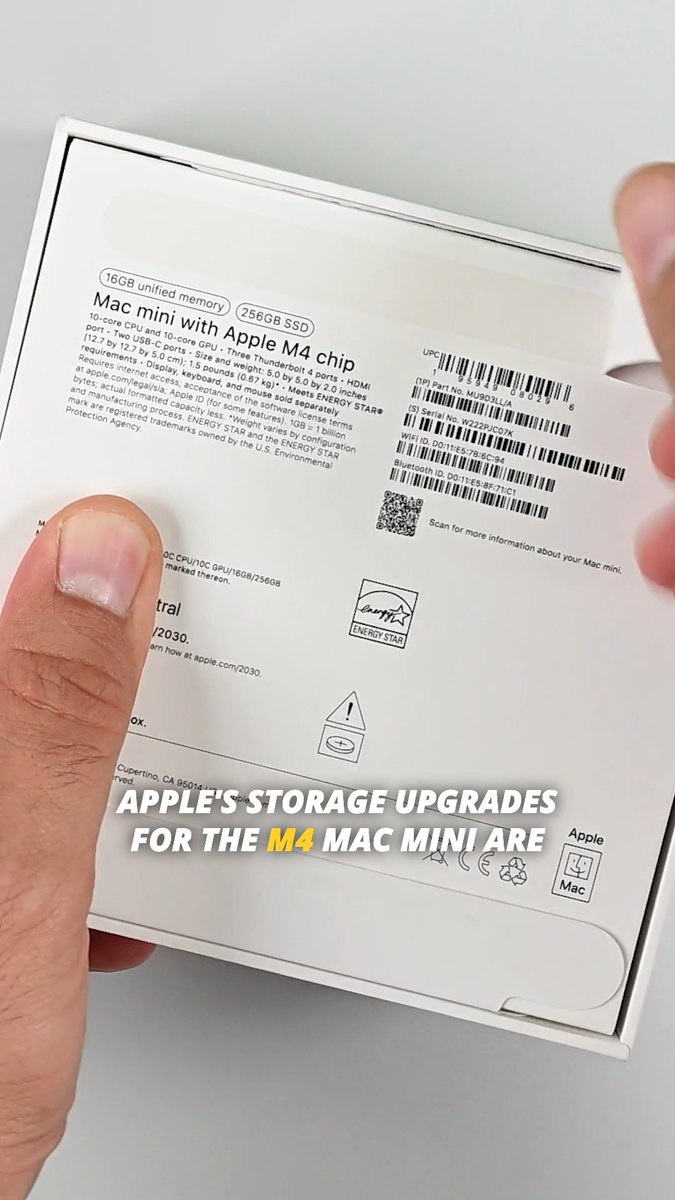
@DanielleFong plain M4 mac mini, base cheapest model. 16GB unified RAM

darthur profil fotoğrafı
darthur1 yıl önce

Okay, I guess I need a new laptop now....

Benzer Videolar

D-Wave announced a scientific breakthrough published in the esteemed journal Science Magazine, confirming that its annealing quantum computer outperformed one of the world’s most powerful classical supercomputers in solving a complex magnetic materials simulation problem with relevance to materials discovery. The new landmark peer-reviewed paper, “Beyond-Classical Computation in Quantum Simulation,” validates this achievement as the world’s first and only demonstration of quantum computational supremacy on a useful problem. An international collaboration of scientists led by D-Wave performed simulations of quantum dynamics in programmable spin glasses—a computationally hard magnetic materials simulation problem with known applications to business and science—on both D-Wave’s Advantage2™ prototype annealing quantum computer and the Frontier supercomputer at the Department of Energy’s Oak Ridge Lab. D-Wave’s quantum computer performed a complex simulation in minutes and with a level of accuracy that would take nearly a million years using the supercomputer. In addition, it would require more than the world’s annual electricity consumption to solve this problem using the supercomputer, which is built with graphics processing unit (GPU) clusters. For decades, scientists have aspired to build a quantum computer capable of solving complex materials simulation problems beyond the reach of classical computers. D-Wave's advancements in quantum hardware have made it possible for its annealing quantum computers to process these types of problems for the first time. Magnetic materials simulations, like those conducted in this work, use computer models to study how tiny particles not visible to the human eye react to external factors. Magnetic materials are widely used in medical imaging, electronics, superconductors, electrical networks, sensors, and motors. This is an incredibly important achievement. Please join us in congratulating the D-Wave team and our global collaborators on this remarkable milestone. It’s a significant moment for the quantum computing industry. Learn more about this monumental achievement: Read the press release here: #QuantumSupremacy #QuantumRealized #QuantumComputing #DWave #Technology #Innovation #Optimization #MaterialsDiscovery #ScientificBreakthrough $QBTS

D-Wave

65,039 görüntüleme • 1 yıl önce

For decades, biologists argued that birds migrate using magnetic fields, and that cryptochrome proteins in their eyes help them figure out where to fly. But the evidence for this has always been flimsy. In 1972, Wolfgang and Roswitha Wiltschko captured migratory European robins, put them in cages, covered the cages with a blanket, and wrapped electric coils around them. Once the birds lost their view of the sky, they still tried to move, or "hop," in the direction of their normal migration route. But when the Wiltschkos flipped the magnetic field around, the robins started hopping in random directions. They took this as evidence that, somehow, birds migrate using a magnetic sense. (Not bad!) In 2000, three theoretical biophysicists in Illinois, Ritz, Adem, and Schulten, proposed a mechanism for that magnetic sense. They argued that when blue light hits a receptor in the eye, it might create something called a "radical pair," locking two electrons into a spin state that a magnetic field could then nudge. They suggested that cryptochromes, light-sensitive proteins in the retina, might be responsible. (Speculative!) And then, in 2021, researchers apparently confirmed this! They took cryptochrome proteins from a type of migratory robin and put them in a test tube. They shone blue light at the proteins and found that this light induced them to form that transient "radical pair" state. And finally, they showed that magnetic fields could change this photochemistry where, in the presence of a magnetic field, the proteins formed fewer of these radical pairs, because the field forced a larger fraction of the excited molecules to ‘collapse’ back to their resting state. The experiment they used to measure this, though, has almost nothing to do with biology. You literally isolate the proteins, bombard them with a blue laser and, after each pulse, measure how much light the proteins absorb. For the robin cryptochrome protein, adding a magnetic field changed the absorbance *slightly.* But here’s the caveat: All of this was done in vitro, in a test tube, in a water-based buffer (rather than a cell). And, even worse, the experiment was done at 5 degrees Celsius (waaaay colder than the bird’s normal temperature) and at a low pH. And even after all this tinkering, they still *barely* saw a magnetic response! The news media didn't report many of these caveats. I randomly pulled one story from Science News and another from the University of Oxford, and neither even mentioned that the researchers ran the experiment at low temperature. The Oxford writeup actually hyped the result up more than the paper itself; that author wrote: “…the authors think the proteins involved could be significantly more sensitive in their native environment. In cells in the retina, the proteins are probably fixed and aligned, increasing their sensitivity to the direction of the magnetic field. Moreover, they are also likely to be associated with other proteins that could amplify the sensory signals." (Wow!) When Andrew York and Maria Ingaramo, two scientist working at Calico, heard about these results, they grew skeptical and decided to search for magnetically-responsive proteins — that actually work under physiological conditions — on their own. And that search, in turn, gave rise to Nonfiction Laboratories, a company that not only has created such proteins, but is now trying to commercialize them to make magnetically controlled cancer therapies that are only active near a tumor. The clip below is from my podcast.

Niko McCarty.

21,405 görüntüleme • 18 gün önce