Loading video...

Video Failed to Load

Go Home

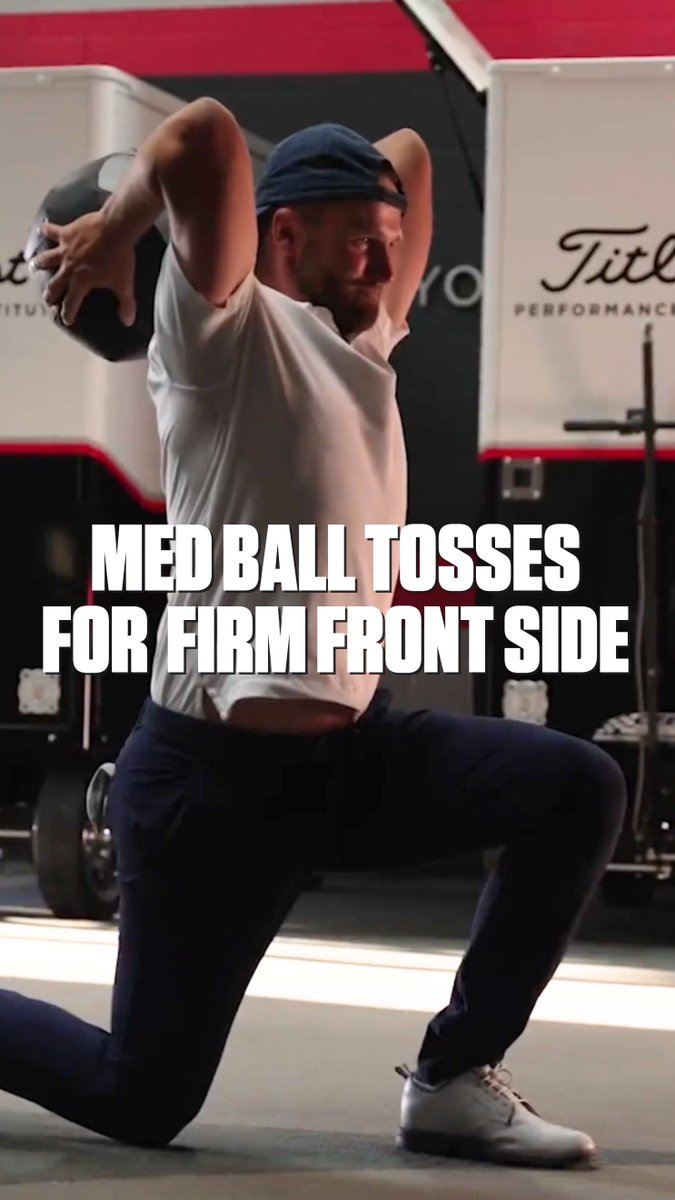
Testing out the new 2026 Ghost Advanced with 14 year old Fatima by going through a little hitting circuit. 1) Start hands and feet together. Slowly load + stride and pause in launch position. Tosser will then toss. This helps work on feeling a slow and controlled load while...

34,784 views • 1 year ago •via X (Twitter)

4 Comments

Patrick⚾️🚀🎾⚽️🏁's profile picture
Patrick⚾️🚀🎾⚽️🏁1 year ago

She hammers it

Mortgage Oracle 🏘️💰💳's profile picture
Mortgage Oracle 🏘️💰💳1 year ago

Do you recommend the CRBN bat for 14U ? Seems more reasonable, plus have seen that bat used in the College WS

Megan Rembielak's profile picture
Megan Rembielak1 year ago

I personally did not like the CRBN 1. I felt it had no pop. A lot of colleges are on deals with brands so that could be too why you’re seeing it so much! I like Marucci Echo DMND for a reasonable bat with good pop.

amaury monsalve's profile picture
amaury monsalve1 year ago

Good swing but too much head movement, only advice please stop tracing the ball , just keep eye on the contact…

Related Videos

A common hitting flaw that is rarely corrected and can exposes certain hitters at higher levels, is “leaking” … the player’s front side is “running away” from contact prematurely. Sometimes also called “spinning off” the ball. This means energy is escaping the swing because of a chain of events that usually begins with the incorrect action of the stride foot. Correctly engaging the stride foot into the ground, called “foot-plant,” allows the body to efficiently sequence. As a result, the swing is shorter and barrel stays in the hitting zone longer. The BIG key is we have to be able to ***control our front knee*** before starting to swing. If a hitter can control their front knee and their front side a hair longer, stay behind contact, and attack the inside of the ball, it creates more whip.…(bat speed) and improves plate coverage. You might need to watch the video a couple times, because there are various ways to stride that allow the hitter to control their front knee. It is not a one size fits all action. And hitters who have sick power and want to pull the ball intentionally might actually “leak and clear” on purpose. But players who like to stay to middle of the field, might want to see what the initial movement into foot plant looks like. **** Remember, what happens to the front foot (stride foot) AFTER contact has little consequence. Often heavy torque causes it to fly open, or roll on side of foot. That’s all ok.

Trent Mongero

106,068 views • 3 years ago

Fernando Tatis Jr is hitting .242 with a 3.5° average launch angle and a career-low 20% pull rate. Everyone has ideas and analysis on how to fix Fernando Tatis Jr’s swing. It’s pretty awful and I can’t take anymore of this, I have to say something because I haven’t seen a single person give the right answer. I’ve seen multiple people talk about timing mechanisms like toe tap, stride, and leg lift in his swing mechanics that have absolutely nothing to do with his problem. That reverting to past timing mechanisms would somehow help him. THEY ARE ALL WRONG Because they’re all looking in the wrong place. This isn’t a stride problem or timing problem. It’s a tilt problem. Stride, leg lift, and toe tap are timing mechanisms. They control WHEN the hips fire not HOW the bat moves through the zone. A hitter with a Sosa leg kick and a no-stride Ichiro stance can produce identical launch angles.Timing has no lever that touches the bat at contact. What actually sets launch angle is attack angle or the vertical direction the bat is traveling at the moment it meets the ball. Swing up through the zone = ball lifts Swing flat = grounders Swing down = choppers Attack angle is the only mechanical input that matters for elevation and attack angle isn’t random. It’s a direct output of shoulder tilt. When the trail shoulder drops below the lead shoulder at contact, the entire swing axis tilts. The bat is now forced to travel upward through the zone. More tilt > steeper attack angle > higher launch angle. Period. Tatis’s attack angle tells the entire story: 2023: +12° attack angle, +1° pull-side direction/25 HRs 2024 : +10° attack angle. -2° oppo direction 21HRs in 104 games 2025: +8° attack angle, 0° direction/25 HRs, healthy 2026: +5° attack angle, −5° oppo direction His swing has flattened AND drifted away from his pull side. Both are tilt collapse. That −5° oppo attack direction is the giveaway. When you lose tilt, your bat doesn’t just flatten it also gets steered toward the opposite field, because a level swing naturally pushes the barrel away from your pull side. He’s not late. He’s not under-striding. His axis collapsed Over the last few years and it’s worse than ever this year. This explains the 20% pull air rate too. Pulling the ball in the air requires positive attack angle AND a contact point out front. (Ramon Laureanos 2025 attack Angle was +14) If you tinker with timing on a flat swing, an earlier contact point just produces a pull-side grounder. The direction changes. The launch angle does not. Let me break it down for you: Stride > Weight Shift > Hip Rotation >TILT > ATTACK ANGLE > BAT PATH > Contact > Launch Angle Stride is four steps upstream. Tilt is the gate. Attack angle is the output that actually moves the ball. So now we know what’s wrong, how do we fix him? Souza and the Padres staff need to focus on the following; 1.Restore 8–12° rear-high shoulder tilt 2.Get attack angle back to +10° to +12° with neutral or +1° pull direction 3.THEN evaluate timing tweaks 4. If someone is telling him to flatten out his swing or to let the ball travel more PLEASE STOP DOING THAT. That doesn’t work for him You cannot time your way to elevation. Fix the tilt. Attack angle returns. Pull air follows. Please watch the video to see how his swing has gotten worse and flatter. We only have bat path data starting in 2023

Mission Valley Mafia

159,246 views • 2 months ago

INF Kodey Shojinaga (Kansas Baseball) is an intriguing Sophomore-eligible prospect. Was outstanding as a true Freshman and hit .378/.421/.526 with 11 2B, 6 HR, and 32 RBIs. Also slashed .326/.396/.349 across 11 games on the Cape. Shojinaga was named Co-Freshman of the Year in the Big 12 and earned a Team USA invitation. Medium build at 5'10", 190-lbs with some physicality in the lower-half. Slightly open front side in the box with a normal handset. Holds bat horizontally over his back shoulder with the barrel pointed slightly back. Medium-high leg kick, but the stride itself is small. Little bit of a bat wrap, but he's consistently on time. Average bat speed. Hit over power profile right now, but Shojinaga has an advanced feel for the barrel and plus bat-to-ball skills. Last season, he sported a 93% overall IZ contact rate. Approach is sound, but sometimes chases down/away. Does a nice job of using the whole field and working inside the baseball. Would put a 55 on the pure hit tool. Sound defender at 2B with above average arm strength and makes the plays he needs to make. He has quick hands and some range in either direction. Shojinaga also has experience catching, and got some reps behind the plate this summer for Team USA. Will be interesting to see what it would look like if he focused on catching - actions need refining, but the arm strength is there. Shojinaga will need to really hit, and he's capable of doing so. This July, he profiles as a 5th-8th round pick.

Peter Flaherty III

17,308 views • 2 years ago