Загрузка видео...

Не удалось загрузить видео

На главную

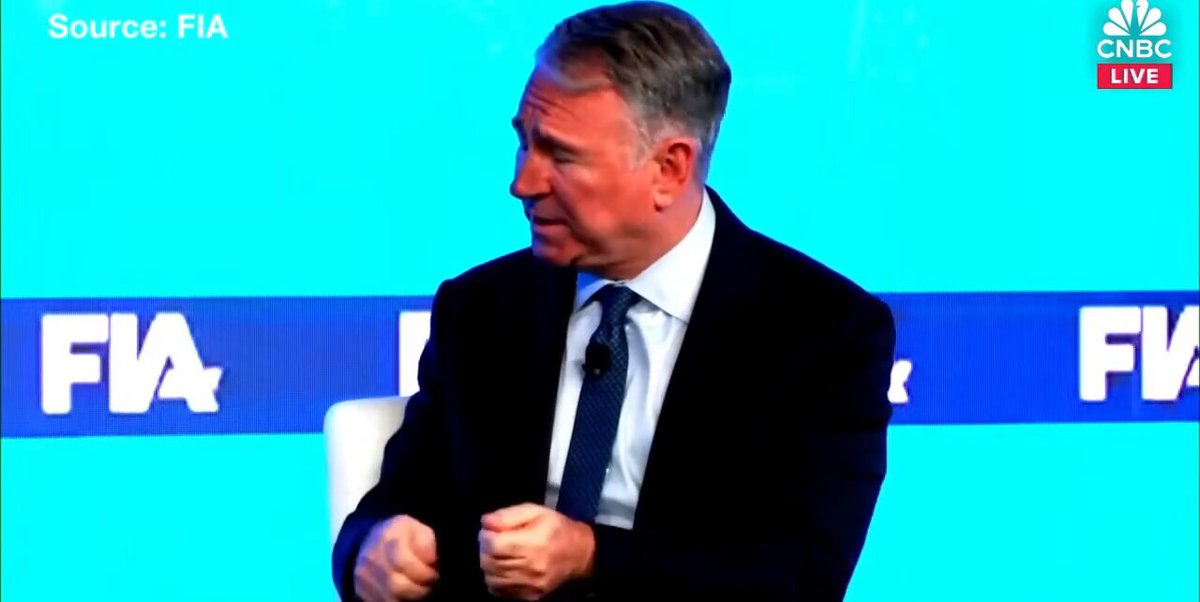
The Financial Times reported that NVIDIA is going to backstop a $50B lease for a data center in Texas. But tae kim argues the headline doesn't tell the full story. The $50B figure only applies if NVIDIA renews the lease after 15 years, bringing the total lease value to...

44,413 просмотров • 2 месяцев назад •via X (Twitter)

Комментарии: 0

Нет доступных комментариев

Здесь появятся комментарии из оригинального поста

Похожие видео

BREAKING: Michael Burry just compared Nvidia to the company that lost 90% of its value in the dot-com crash and took 25 years to recover. "I stand by my analysis. I am not claiming Nvidia is Enron. It is clearly Cisco." Here's the most recent warning from the investor who called the 2008 crash: Michael Burry built his reputation on one trade. He saw the housing market collapse before anyone else and bet against it. "The Big Short" made him famous. Now he's looking at Nvidia. And he says it looks like Cisco in March 2000. That comparison is not a casual insult. Cisco was the most valuable company in the world at the peak of the dot-com bubble. Its valuation crossed $500 billion. Then the bubble burst. The stock fell roughly 90% from its 2000 peak. Its market cap collapsed to about $60 billion by 2002. And it took roughly 25 years for the stock to climb back to where it started. An entire generation of investors waited a quarter century just to break even. That is the company Burry is comparing Nvidia to. Now here is the number that triggered the warning. In Nvidia's fiscal 2026 results, the company disclosed its purchase obligations. These are the commitments Nvidia makes to its suppliers to lock in future manufacturing capacity. A year ago, that figure sat at $16.1 billion. This year it jumped to $95.2 billion. Total supply obligations now sit at roughly $117 billion. Nvidia is committing $117 billion to build capacity for demand that has not arrived yet. Burry's argument is simple. A company does not lock in $117 billion in supplier commitments unless it is betting the demand keeps climbing. If that demand slows even slightly, Nvidia is holding billions in obligations it cannot unwind. And that is exactly what happened to Cisco. Cisco overcommitted to supplier capacity expecting roughly 50% annual growth. Then tech spending slowed. The inventory piled up. The stock cratered. Burry is not calling Nvidia a fraud. He is not saying it is the next Enron. He is saying it could be the market's Cisco. The single stock that becomes the symbol of an AI spending unwind that drags everything down with it. And the dot-com comparison carries weight because of what happened to the broader market. When that bubble burst, the Nasdaq 100 fell 77%. The S&P 500 dropped 49%. It was not just one stock. It was the whole market. Now here is the other side of the argument. Nvidia's supporters say the Cisco comparison is too simple. Because Cisco was riding hype. Nvidia is riding actual revenue. Nvidia reported fiscal 2026 revenue of $215.9 billion, up 65% year over year. Data center revenue alone hit roughly $193.7 billion, up 68%. Record quarterly data center revenue of $62.3 billion in the fourth quarter, up 75%. These are not promises. These are realized sales, booked and collected. The bulls argue that pricing power and margins this strong do not exist inside a pure bubble. In their view, Burry is warning about a future slowdown that has not shown up in a single quarterly report. So the debate splits into two clean halves. The bears say the $117 billion in commitments makes Nvidia dangerously sensitive to any demand slowdown. The bulls say the revenue is real, the growth is accelerating, and the buildout is justified by the orders already on the books. Both sides are looking at the same company. Both sides are looking at the same numbers. They just disagree on what those numbers mean. And there is a second force pulling at this market that has nothing to do with Nvidia's earnings. A wave of mega-IPOs is reportedly coming. SpaceX. OpenAI. Anthropic. Some estimates suggest the market may need to absorb close to $200 billion in fresh equity supply. That creates a quieter question underneath the Burry debate. Even if AI demand stays strong, capital is finite. When the next wave of private giants goes public, money has to come from somewhere. And the easiest place to pull it from is the stock that already tripled. The real test is not whether Burry is right or wrong today. It is whether demand growth, margins, and contract utilization keep matching the $117 billion that Nvidia and its entire ecosystem are committing right now. If the demand keeps climbing, the commitments look like foresight. If it stalls, they look like Cisco. The man who saw the last crash before anyone else just put a name on the risk. A company that was once worth over $500 billion, then lost 90%, then made its investors wait 25 years to get back to even. The numbers say Nvidia is booking record revenue. The same numbers say Nvidia is committing $117 billion to a future nobody can see. One of those facts ages well. The other one is the entire question.

Insider Trackers

285,425 просмотров • 4 месяцев назад