Video yükleniyor...
Video Yüklenemedi
The human brain contains approximately 100 billion microscopic cells called neurons - about the same as the number of stars in the Milky Way galaxy. This is how they communicate [🎞️ Helix Animations]

1,570,401 görüntüleme • 2 yıl önce •via X (Twitter)
10 Yorum

Upregulation and Downregulation of Receptors A mechanism for the increased or decreased sensitivity to agonists (molecules that attach to receptors easily & initiate a response; like doing heroin (agonist) and getting high (response)) and antagonist drugs (molecules that attach to receptors but do not initiate a response). This mechanism suggests that decreased exposure to an agonist results in an increase in the number of receptors (upregulation), while increased exposure to an agonist can result in a decrease in the number of receptors (downregulation). Basically the more you use something, less effective it gets because your brain receptors are used & exhausted by those molecules & brain is unable to recycle those receptors fast enough to accommodate the increased use of that substance. very generic unrealistic hypothetical example lol: Let's say you started out with 14 receptors & 1 gram of substance, and after repeated daily usage of 1g, your brain has completely destroyed 7 of its molecules due to exhaustion and no maintenance period to recycle those receptors, so now you only have 7 receptors. This decrease in receptors is called downregulation. While you use more and more, lets say 2 grams now but it doesn't matter because you're playing a losing game where only 7 receptors can be activated so no matter how much you increase your intake of the substance, you can never go back to the original experience (tolerance) until you give your brain some maintenance time to generate new receptors, this is called upregulation. But if you do "substance holiday" every sunday per week to mingle with some people or for a month every year maybe during festivals or celebrations, while you're creating a habit of using regularly at the same time you're also creating a habit of not using it regularly, and slowly overtime you may be able to build the strength needed to upregulate more than downregulate, and be free one day lol good luck to all

Wow! It seems the human brain is like a galaxy within us, but instead of stars, it's got neurons. Just think, your brain is a cosmic cocktail of thoughts, ideas, and the occasional "brain freeze" when you eat ice cream too fast :) So, when someone says you're out of this world, they might be more right than they realize – you've got a whole Milky Way up there! :)

Every thought you've ever had is a cosmic dance of these neurons. To put it in perspective, if each neuron was a second, it would take over 3,000 years to count them all. Mind literally as vast as the galaxy!

Despite its small size relative to the body, the brain consumes a significant amount of energy. It accounts for about 20% of the body's total energy expenditure, despite making up only about 2% of its weight.

It is time for mainstream biologists to become aware that biomechanical processes of this extreme complexity, and still far from being fully understood, cannot have arisen randomly in such a short period of time. Complexity close to infinity requires time close to infinity to accidentally emerge.
The brain is highly adaptable and capable of changing its structure and function in response to learning and experiences. This ability, known as neuroplasticity, allows for lifelong learning and recovery from injuries.

We are the greatest piece of technology to exist.
Neurons communicate with each other through chemical signals called neurotransmitters. It's estimated that there are over 100 different types of neurotransmitters in the human brain, each with specific functions.
Neurons form an extensive network of synaptic connections. The average human brain is believed to have trillions of synapses, which are the points of connection between neurons.

Human body is just amazing . It's just a miracle that how everything is on time and in place .The human body is an astounding and sophisticated machine with 100,000 blood vessels and trillions of microbial cells on it.

![Mirror neurons are among the most mysterious cells in the brain. They activate both when you perform an action and when you watch someone else do the same thing, allowing your brain to internally simulate another person’s experience. [🎞️ thebrainmaze]](https://image.24vids.com/tw-2058159386535551295/ext_tw_video_thumb/2058156386719010816/pu/img/_KnQyqoPP3MSeYdq.jpg)


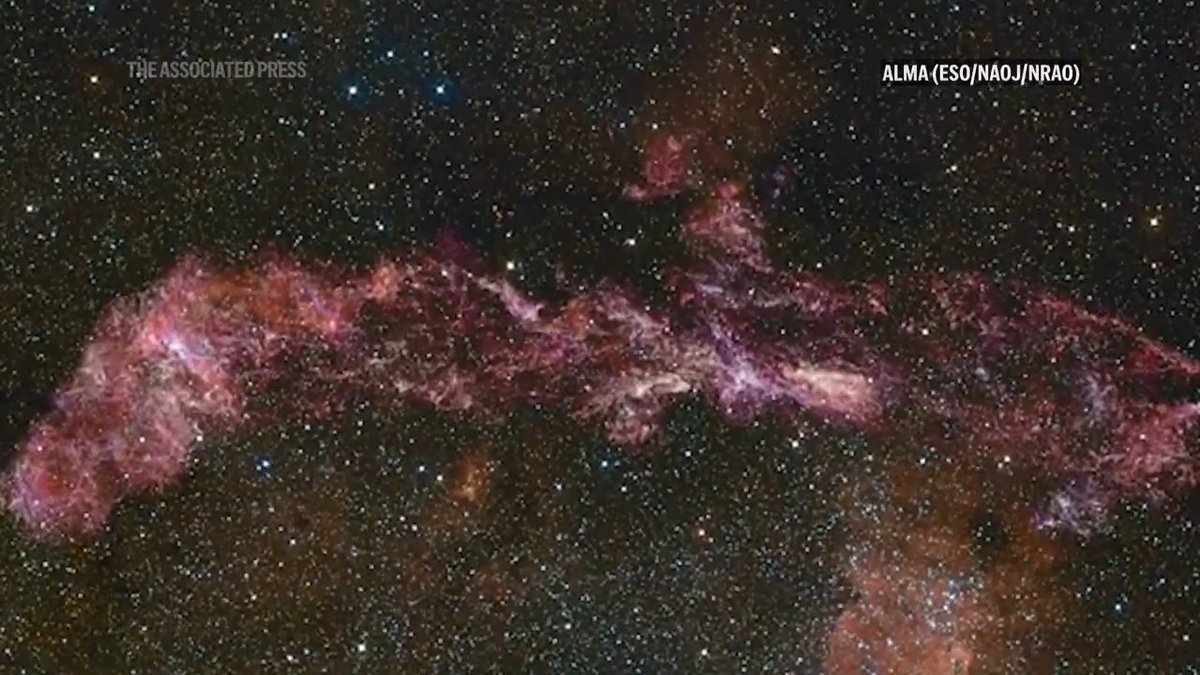


![ESO 383-76, a colossal supergiant elliptical galaxy, 654 million light-years away Spanning 1.76 million light-years (approximately 17 times the size of the Milky Way), it’s a cosmic titan with a mass 100 time our galaxy’s. [🎞️quantumxparadox]](https://image.24vids.com/tw-1954110646770958481/amplify_video_thumb/1954087178104946688/img/MY6tcmZdFPiFZV98.jpg)


