Video wird geladen...

Video konnte nicht geladen werden

Zur Startseite

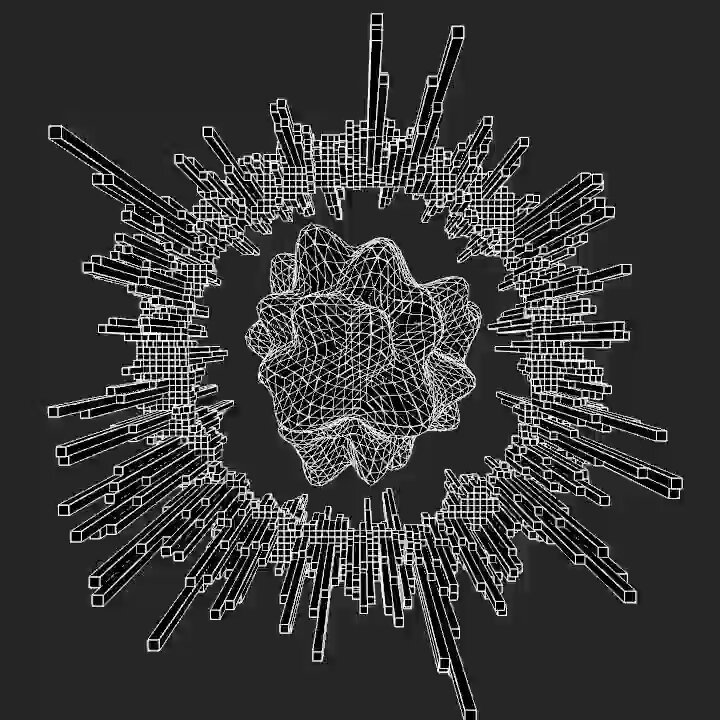
The three ways to solve Fokker-Planck equations: PDE evolution, stochastic (independent) or deterministic (coupled) particle systems.
85,288 Aufrufe • vor 2 Jahren •via X (Twitter)

0 Kommentare

Keine Kommentare verfügbar

Kommentare vom Original-Post werden hier angezeigt

Ähnliche Videos

The three-body problem is a classic and notoriously difficult question in physics and mathematics. It asks: How do three objects, such as stars, planets, or moons, move under the influence of each other’s gravity? Unlike the simpler two-body problem, which has precise and predictable analytical solutions (like the Earth orbiting the Sun in an ellipse), the three-body problem quickly becomes chaotic and unpredictable. This complexity arises because each object's motion constantly affects, and is affected by, the other two. These gravitational interactions form a tangled and unstable system. In fact, there's no general formula that can solve all three-body scenarios exactly. This was first demonstrated in the 19th century by Henri Poincaré, whose work laid the foundations for chaos theory. While exact solutions remain elusive, scientists have discovered certain special cases where the motion is stable or periodic. One well-known example is the Lagrange points, where three bodies can maintain a stable triangular configuration. However, such neat solutions are rare. Today, thanks to powerful computers, researchers can simulate three-body systems with remarkable accuracy, helping us study triple-star systems, exoplanets, and asteroid dynamics. Yet even small changes in the starting conditions can lead to dramatically different outcomes, highlighting the sensitive dependence on initial conditions that defines chaotic systems. The three-body problem is actually a specific case of the broader n-body problem, where n can be any number of interacting bodies. As n increases, the complexity and unpredictability rise even further. The three-body problem serves as a vivid example of how simple laws of nature, like Newton’s law of gravity, can produce behavior that is intricate, unexpected, and profoundly difficult to predict.

Erika 

215,521 Aufrufe • vor 1 Jahr

Beauty should be a core pursuit of biotechnology. There should be companies and nonprofits that engineer organisms solely for the sake of crafting beautiful things. A few reasons why: 1/ Biotechnology has historically worked in reductionist ways, but many useful functions only emerge at the systems level. By engineering a systems-level outcome, like beauty, we will get much better at engineering organisms in predictable ways. When I say "reductionist," I mean that most useful things in biotechnology (drugs and tools) were discovered by stripping molecules from their natural contexts. Scientists collect organisms from soil or wherever and then study their molecules in isolation. This basic approach has yielded everything from rapamycin to antibiotics and CRISPR. This reductionism, though, means that that we know disturbingly little about how life actually works at a systems-level. My core argument is that, by studying beauty, we can remedy this. Beauty has persisted through tens of millions of years of evolution because it is functional; bright colors help attract pollinators to a plant, for example, which helps the plant breed. If evolution has created all of this beauty for functional reasons, then it stands to reason that by trying to create **new** forms of beauty, we'll be able to discover and understand how these systems-level functions work! Indeed, we may even be able to create entirely new functions that biology hasn't evolved yet. These functions will not possible to understand via isolated molecules or reductionism. Therefore, a company pursuing engineered beauty for the sake of beauty will probably make many fundamental discoveries about how organisms develop, interact, adapt to their surroundings, and so on. 2/ Beauty is a way to grow the field and bring more people into biotechnology. Nick Desnoyer’s flower design work, for example, has probably reached hundreds of thousands of people. The glowing plants from Light Bio, too, were featured in the mainstream press. You may not think that these examples are “important” for the universe relative to, say, an incrementally better cancer therapeutic, but there’s no question that they are way more popular to mainstream audiences and good, overall, for the field. 3/ The market is huge! Breeding is already widely used to engineer beauty, or at least to select for aesthetic preferences. Pugs are evolutionarily suboptimal, but they've been bred precisely to satisfy a certain aesthetic desire are now a multi-billion dollar industry. The Juliet Rose, developed via breeding over a 15-year period, debuted at the 2006 Chelsea Flower Show and is enormously profitable today. Why should deliberately engineered forms of beauty be any different? If you are building a biotech company or nonprofit that is pursuing beauty, please reach out! I’d love to help.

Niko McCarty.

18,291 Aufrufe • vor 2 Monaten

What is the RAT? The RAT is a small wind turbine stowed within the aircraft fuselage and deployed automatically when certain failure conditions are met. Once extended into the airstream, it uses the forward motion of the aircraft to spin and generate power—mechanical, hydraulic, or electrical. Primary Functions of the RAT on the 787-8 1. Hydraulic Backup Power On deployment, the RAT drives a variable displacement inline hydraulic pump. It pressurizes the center hydraulic system, enabling continued operation of critical flight control surfaces such as the ailerons, elevators, and rudder. This is vital in maintaining aircraft controllability if normal hydraulic sources are lost. 2. Supplementary Electrical Power While the RAT is primarily a hydraulic power source on the 787-8, it can also, in some configurations, drive an emergency generator. This generator provides sufficient AC and DC power to support essential avionics, flight displays, and communications systems. Deployment Scenarios: When Does the RAT Automatically Deploy? The RAT on the Boeing 787-8 deploys automatically—without crew input—under the following emergency conditions: 1. Dual Engine Failure If both engines fail, resulting in the loss of engine-driven electrical and hydraulic generation, the RAT deploys to maintain critical flight control power. 2. Complete Electrical Loss to Flight Instruments If there’s a total loss of electrical power to both the captain’s and first officer’s primary flight instruments, the RAT ensures these systems remain powered. 3. Low Pressure in All Three Hydraulic Systems If all three systems—Left, Center, and Right—lose hydraulic pressure, the RAT provides emergency hydraulic power through the center system. 4. EMP Failure + Engine Loss During Takeoff or Landing If all four Electric Motor Pumps (EMPs) fail and an engine fails during takeoff or landing, the RAT deploys to sustain flight control power during these critical phases. Automatic and Autonomous Operation One of the RAT’s key advantages is its fully autonomous activation. Pilots do not need to manually deploy it; the system is designed to react immediately to predefined failure logic, reducing workload and ensuring flight-critical systems remain powered. In Summary The Ram Air Turbine (RAT) on the Boeing 787-8 is not just a backup—it's a lifesaving last resort. It deploys automatically to supply hydraulic and limited electrical power when all other power sources fail. Designed with layered redundancy in mind, it is one of the unsung heroes of modern aircraft systems, ensuring that even in worst-case scenarios, pilots retain control to guide the aircraft—and its passengers—safely to the ground.

Turbine Traveller

293,307 Aufrufe • vor 1 Jahr