正在加载视频...
视频加载失败
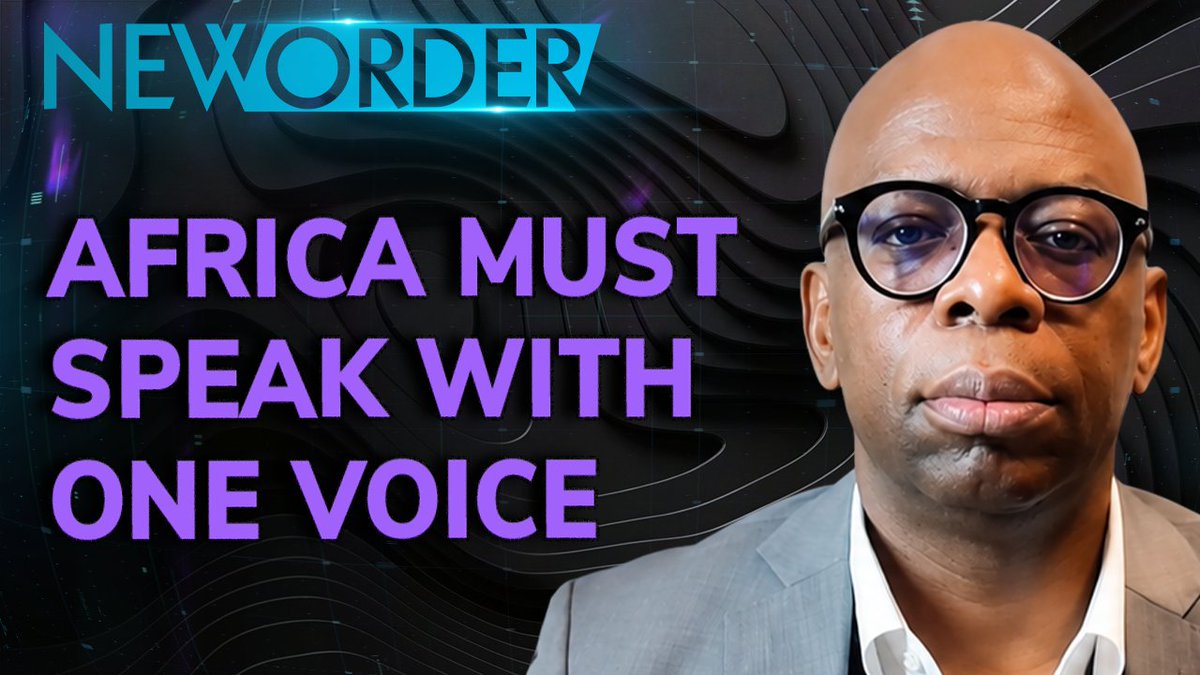
This is masterclass lecture on Artificial Intelligence, Africa, and the Global South’s place in AI, revealing mind-blowing insights, including how the generative AI economy is already bigger than the entire African continent’s GDP. It was delivered with intellectual authority by Prof Arthur Mutambara at the launch of his new... show more

31 条评论

A very powerful presentation

@matigary 👇🏿👇🏿👇🏿 whenever he sees a Mutambara post 🤣🤣🤣.

Prof Shared this talk at UCT few days ago! Incredibly thought provoking. He actually showed with data that Africa is missing in action regarding AI Economy.

This Studio 263 minister cannot comprehend... I will bet all my meagre savings on this

what a great presenter!

Critical question tinodya AI here might seem ignorant but it's a reality for an African what I just need is stable income weither it's a job or informal employment fend for my kids and family will it solve that and please let's not go in hypothetical scenarios

A.l is the future and the final reckoning ! Impressed by the statistics of 87% UJ Graduates Employed and 12% founding their own companies ! Imagine a vision 2030 when you can't produce enough electricity or water as a nation to run an A.I Plant due to corruption.

How is Zimbabwe moving into this AI It's true we have capable minds but they are not at the helm!!!

AI is growing fast but incredibly opaque. What's your thoughts on verifiable AI ?

Thank you for sharing.

Insightful!

@matigary huyai mudzidze pano

Thank you for sharing. @AfCFTA @AfCFTA_Expert @_AfricanUnion @SADC_News @pabwa_afcfta @AfCFTAVision @UNMalawi

Hi Hopewell. I can help this Prof solve this quagmire...we can help.. :) esp in the African context...

I will listen to the lecture, working for a global corporate which has embraced AI , I wonder what his argument is to asser this miraculous upsurge

How do l get the book and what cost

Sounds like a wake-up call for the continent! Time to turn those insights into action.

We really need this

Great presentation, would recommend it for anyone in tech like myself

Definitely masterclass 🔥🔥🔥
What a presentation very insightful

AI is not the technological gold line it's being set out to be. Buddy like with any technological boom, the bubble is going to pop. AI has a very few useful cases in which it's implementation are actually cost effective.

Every technological revolution has been met with the same scepticism; electricity, the internet, even mobile phones were once dismissed as bubbles. Yes, hype cycles exist, but beneath the noise AI is already transforming healthcare, finance, logistics, and creative industries in measurable, cost-effective ways. The bubble will not “pop”; the froth will clear, and what will remain is a new foundation of the global economy, just like every other so-called “fad” technology that ended up changing the world.
Yeah buddy you're bringing up false equivalences, no one met electricity, the Internet or mobile phones with skepticism because those inventions were solving current major world problems that needed solutions. Generative Ai has no meaningful application for the average person
That is where you are off the mark—electricity, the internet, and mobile phones were all dismissed in their early days as luxuries with “no meaningful application for the average person.” People once asked why anyone outside the military would need the internet, or why households would want a telephone when letters worked just fine. Generative AI is already in people’s daily lives: autocomplete on your phone, spam filters in your email, translation tools, personalised recommendations, even customer service chatbots. These may not feel revolutionary day to day, but they are quietly reshaping how the “average person” works, shops, learns, and communicates. The big shifts never announce themselves as revolutions at first—they creep in until you realise the whole world has changed.
You have a source to cite, because I do? You can't make claims based off of "people said". Anyone can do that to substantiate any claim or statement that they make.
Go back and read newspaper archives from the late 19th and early 20th century: electricity was described as dangerous and unnecessary in ordinary homes; the telephone was mocked as a toy for the rich; the internet was dismissed as a fad. These are not vague impressions—they are documented reactions from the times. So yes, I can cite history: skepticism has always accompanied transformative technologies. What seemed frivolous at first often turned out to be world-changing. Generative AI is following that same pattern.
😭uncs im doing a degree in software engineering specialising in artificial intelligence at the University of Birmingham. Its not the gold mine or highly disruptive invention it's being put out to be. You shall see, that's all imma say. The bubble will pop

That’s the future of IT and sadly the leaders busy changing the school curriculum to uselessness programs. There was an Ai seminar in Zim held by the Google VP James Manyila and he offered to help us but the govt has no appetite for the project. 🙉

Yizo

Ummm this is very great, i have to get all his books ...thank you for the encouragement sir Hopewell