Loading video...

Video Failed to Load

Go Home

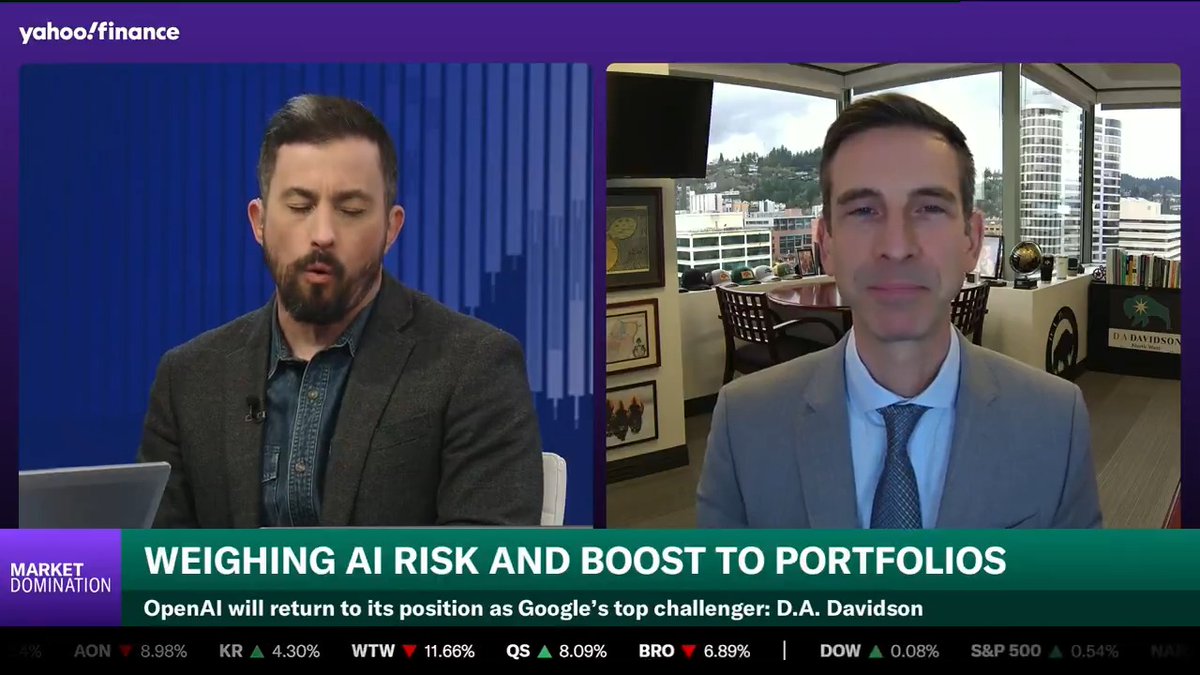
"This is the first time that OpenAI has released a new model that was not decisively the best." @jason and Gavin Baker discuss OpenAI's GPT-5 release: Jason: " Sam did this tweet, it kind of built a lot of expectation that this would be otherworldly. It wasn't." "Are we...

49,179 views • 10 months ago •via X (Twitter)

0 Comments

No comments available

Comments from the original post will appear here

Related Videos

Sam Altman on the Paul Graham advice that saved Open AI: “Always make an API” Four years into OpenAI, Sam Altman and the team realized that they would have to build a really big company to fund the development of their increasingly capital-intensive foundation models. “We had this model called GPT-3,” Sam recalls. “I was turning up the urgency on the company to try and figure out a product, and we just couldn’t. It was cool, but it wasn’t good enough to make something that worked.” Then Sam remembered a piece of advice from Y Combinator founder Paul Graham that stuck with him: “You should always make an API. No matter what, you should make an API. Good stuff will happen.” Out of ideas for a product, the OpenAI team decided to make GPT-3 available as an API. “Maybe somebody will figure out something to do with it,” Sam thought. A few copywriting applications like Jasper and Copy AI did take off using the GPT-3 API, but OpenAI also noticed interesting behavior that eventually became a sleeper hit: “Some people — not a lot — would just chat with that thing all day,” Sam explains. “It wasn’t very good but there was clear user signal that people wanted to talk to the models. And given that that was the only thing besides copywriting that had real traction, we said, ‘Maybe this is just he product we should build.’” On November 30, 2022, ChatGPT was released to the public as a “research preview” using a model from the GPT-3.5 series. It reached over a million users in five days. Source: Khosla Ventures (Sep 2025)

Startup Archive

63,078 views • 19 days ago

Sam Altman on the Paul Graham advice that saved Open AI: “Always make an API” Four years into OpenAI, Sam Altman and the team realized that they would have to build a really big company to fund the development of their increasingly capital-intensive foundation models. “We had this model called GPT-3,” Sam recalls. “I was turning up the urgency on the company to try and figure out a product, and we just couldn’t. It was cool, but it wasn’t good enough to make something that worked.” Then Sam remembered a piece of advice from Y Combinator founder Paul Graham that stuck with him: “You should always make an API. No matter what, you should make an API. Good stuff will happen.” Out of ideas for a product, the OpenAI team decided to make GPT-3 available as an API. “Maybe somebody will figure out something to do with it,” Sam thought. A few copywriting applications like Jasper and Copy AI did take off using the GPT-3 API, but OpenAI also noticed interesting behavior that eventually became a sleeper hit: “Some people — not a lot — would just chat with that thing all day,” Sam explains. “It wasn’t very good but there was clear user signal that people wanted to talk to the models. And given that that was the only thing besides copywriting that had real traction, we said, ‘Maybe this is just he product we should build.’” On November 30, 2022, ChatGPT was released to the public as a “research preview” using a model from the GPT-3.5 series. It reached over a million users in five days. Video source: Khosla Ventures (2025)

Startup Archive

219,208 views • 9 months ago

How can OpenAI with $13 billion in revenues make $1.4 trillion of spend commitments? (Source: Bg2 Pod ) Sam Altman: “First of all. We’re doing well more revenue than that. Second of all, Brad, if you want to sell your shares, I'll find you a buyer. I just, enough. I think there's a lot of people who would love to buy OpenAI shares. I think people who talk with a lot of breathless concern about our compute stuff or whatever, that would be thrilled to buy shares. So I think we could sell your shares or anybody else's to some of the people who are making the most noise on Twitter about this very quickly. We do plan for revenue to grow steeply. Revenue is growing steeply. We are taking a forward bet that it's going to continue to grow and that not only will ChatGPT keep growing, but we will be able to become one of the important AI clouds, that our consumer device business will be a significant and important thing, that AI that can automate science will create huge value. There are not many times that I want to be a public company, but one of the rare times it's appealing is when those people are writing these ridiculous OpenAI is about to go out of business. I would love to tell them they could just short the stock, and I would love to see them get burned on that. But we carefully plan. We understand where the technology, where the capability is going to grow and how the products we can build around that and the revenue we can generate. We might screw it up. This is the bet that we're making and we're taking a risk along with that. A certain risk is if we don't have the compute, we will not be able to generate the revenue or make the models at this kind of scale.” Satya Nadella: “And let me just say one thing as both a partner and an investor. There is not been a single business plan that I've seen from OpenAI that they've put in and not beaten it. So in some sense, this is the one place where in terms of their growth and just even the business, it's been unbelievable execution, quite frankly. I mean, obviously, OpenAI, everyone talks about all the success and the usage and what have you. But even I'd say all up, the business execution has been just pretty unbelievable.”

tae kim

1,565,901 views • 8 months ago

Sam Altman just handed every startup founder a one-question autopsy. Altman: “If you’re building something on GPT-4 that a reasonable observer would say we’re going to steamroll you.” Not might. Not could. Going to. He said it with the calm of someone describing weather. Because to him it is weather. The model improves. Whatever was built on the old version’s weaknesses gets washed away. That is not strategy. That is erosion. And most founders are building on the erosion line. They find a gap in the current model. They wrap a product around it. They raise money. They hire. They scale. Then OpenAI releases the next version and the gap closes and the product has no reason to exist anymore. Altman: “When we just do our fundamental job, which is make the model better with every crank, then you get the ‘OpenAI killed my startup’ meme.” He is telling you directly. They are not hunting you. They are not even thinking about you. They are just improving the model. You happen to be standing where the improvement lands. That is the part founders refuse to hear. OpenAI does not need to compete with you. It just needs to keep doing exactly what it was already doing and your entire company disappears as a side effect. You are not a competitor. You are a temporary symptom of incomplete intelligence. The moment the intelligence completes you become nothing. Then Brad Lightcap delivered the cleanest diagnostic ever spoken in venture capital. Lightcap: “Ask if a 100x improvement in the model is something they’re excited about.” One question. The entire investment thesis reduced to a single binary. Does the next model make your company more powerful or does it make your company pointless. There is no middle ground. Lightcap: “We know the companies that come to us saying, ‘We want the next model. When is it coming out? I want to be the first to try it.’” These companies built something that feeds on intelligence. The smarter the model gets the more their product can do. They are not threatened by progress. They are starving for it. Then there are the companies Lightcap never hears from. The ones who go quiet when a new model drops. The ones who read the release notes like a death sentence. The ones privately praying the next generation takes longer because every improvement shrinks the ground beneath them. If you are hoping the model stays roughly where it is you have already told the market everything it needs to know about your company. You are not building on intelligence. You are building on the absence of it. Altman: “95% of the world should be betting on the latter category.” The latter category is simple. Assume the model keeps getting better at the pace it has been getting better. Build for that world. Not the world where GPT-4 is the ceiling. The world where GPT-4 is the floor and the ceiling has not been built yet. Then Altman told a story that should be framed on the wall of every startup in the country. A medical AI company came to him that morning. They were not complaining about the model. They were not worried about being replaced. They were demanding it improve faster. Altman: “Here’s how many people are dying every day you delay.” That is what alignment with the trajectory looks like. A company so deeply built on intelligence improving that every day the model stays the same is a day someone dies who did not have to. They are not building on a flaw. They are building on a future that has not arrived fast enough. That is the difference. The wrapper startup patches what the model cannot do today. The real company builds what the model will unlock tomorrow. One is running from the train. The other is laying the track. Altman told you the train is not slowing down. Lightcap told you exactly how to know which side you are on. One question. Does a 100x smarter model make you more valuable or erase you. If you had to pause before answering you already did.

Dustin

39,109 views • 2 months ago