Sensitive content

This media may contain sensitive content.

Loading video...

Video Failed to Load

Go Home

This look? Somewhere between Aphrodite and main character energy, adopting modern Greek Goddess vibes Tops : Siren High Neck by SHELOUETTE Shoes : Miss Jaguar Ultraslim Wedges in 10cm... New vid alert 📲💦

157,773 views • 5 days ago •via X (Twitter)

3 Comments

Joe_haikal467's profile picture
Joe_haikal4675 days ago

enak body kamu

Ucok's profile picture
Ucok5 days ago

Col yoh

Christ's profile picture
Christ5 days ago

Hi

Related Videos

PHOTON COUNTING CT is NOT a better CT It is a NEW imaging modality Photon Counting CT (PCCT) represents a transformative leap in medical imaging, not only as a molecular imaging modality but also as a technology offering ultra-high resolution and functional imaging capabilities. It is fundamentally more than just an enhanced version of traditional CT—PCCT introduces new ways of seeing and understanding the human body, providing critical insights at the molecular, structural, and functional levels. This positions PCCT as a unique imaging modality that requires a fresh approach to technical implementation, operational workflows, and financial planning. Despite the larger upfront investment, PCCT’s ability to drastically reduce downstream healthcare costs makes it a highly valuable investment in the long run. 1. Technical Innovations • Molecular Imaging and Energy Discrimination: Unlike traditional CT, which simply measures the total absorbed energy, PCCT counts individual X-ray photons and differentiates their energy levels. This allows for precise molecular imaging, revealing the composition of tissues and materials at a biochemical level. By distinguishing between different tissue types and contrast agents, PCCT opens up new diagnostic possibilities, such as identifying molecular biomarkers in tumors or distinguishing between stable and unstable plaque in coronary arteries. This capability shifts the focus of imaging from purely anatomical to both anatomical and molecular, offering more comprehensive diagnostic information. • Ultra-High Spatial Resolution: PCCT features significantly smaller detector elements compared to conventional CT scanners, allowing for ultra-high resolution imaging. This means clinicians can visualize fine structures such as microcalcifications in arteries, small lesions in soft tissues, or the intricate architecture of bones. This level of detail was previously unattainable with traditional CT. When combined with molecular imaging, this ultra-high resolution allows for the precise localization and characterization of disease at very early stages, which is essential for early diagnosis and intervention. • Functional Imaging Capabilities: PCCT also excels as a functional imaging modality. By capturing energy-resolved information, PCCT can provide insights into tissue functionality and dynamic physiological processes. For instance, it can detect changes in blood flow, tissue perfusion, and oxygenation without the need for additional contrast agents or scans. This functionality allows for real-time assessment of physiological processes, making it particularly valuable in cardiology, oncology, and neurology for evaluating organ function and monitoring disease progression. • Reduced Noise and Artifact Reduction: Photon-counting technology dramatically reduces electronic noise and imaging artifacts, such as beam hardening, resulting in clearer and more accurate images. The ability to deliver ultra-high resolution images with minimal artifacts improves diagnostic accuracy, reducing the need for repeat scans and ensuring that even subtle abnormalities are detected. 2. Operational Considerations • New Workflow for Molecular, High-Resolution, and Functional Imaging: The integration of molecular, ultra-high resolution, and functional imaging into routine clinical workflows introduces complexity that requires adaptation. Radiologists and technicians need specialized training to interpret and analyze multi-energy datasets that include molecular and functional information. PCCT produces a vast amount of detailed data, requiring clinicians to adopt new imaging protocols and refine their diagnostic approaches to fully leverage its capabilities. • Post-Processing and Data Management: PCCT generates richer, more complex datasets, which necessitates advanced post-processing tools and data management systems. Existing PACS and imaging software may not be equipped to handle such large volumes of data or to process functional and molecular information effectively. This means healthcare institutions must invest in robust IT infrastructure, including upgraded software and storage solutions, as well as provide additional training for staff on new imaging analysis techniques. • Revised Clinical Protocols: The molecular, functional, and ultra-high resolution imaging capabilities of PCCT will likely prompt changes in clinical protocols. For instance, the need for contrast agents may be reduced, simplifying patient preparation and decreasing the risk of adverse reactions. Additionally, the ability to monitor physiological functions in real-time through functional imaging could lead to more dynamic diagnostic procedures, such as assessing the effectiveness of interventions or treatments in real-time. 3. Financial Impact • Higher Initial Investment: PCCT systems are more expensive than traditional CT scanners due to their advanced technology, which includes photon-counting detectors and the computational power required for high-resolution, molecular, and functional imaging. While this upfront cost is significant, it is crucial to view it in the broader context of the downstream benefits and cost reductions that PCCT offers. • Downstream Cost Reductions: Although the initial capital investment is higher, PCCT’s ability to combine molecular, functional, and ultra-high resolution imaging leads to substantial reductions in downstream healthcare costs. Its superior diagnostic accuracy minimizes the need for follow-up tests, repeat scans, or invasive diagnostic procedures, such as diagnostic coronary angiographies. For example, in cardiology, PCCT can precisely differentiate between types of coronary plaque, reducing the need for invasive procedures to assess risk. • Lower Overall Healthcare Expenditures: By enabling earlier, more accurate diagnoses, PCCT can reduce the overall cost of patient care. Early detection of disease, particularly through its molecular and functional imaging capabilities, allows for more targeted treatments, potentially preventing the need for more aggressive and expensive interventions down the line. For instance, early-stage tumor detection via molecular imaging could lead to less invasive treatments, reducing hospital stays and improving patient outcomes, ultimately driving down healthcare costs. • Increased ROI Through Enhanced Patient Outcomes: Over time, the combination of molecular, functional, and ultra-high resolution imaging enhances diagnostic precision, which translates into better patient outcomes. Improved diagnostic accuracy reduces the incidence of unnecessary procedures, minimizes treatment delays, and results in more personalized and effective care. This leads to increased patient satisfaction, better healthcare outcomes, and greater patient throughput—all factors that improve the institution’s return on investment (ROI). • Competitive Advantage and New Revenue Streams: By adopting PCCT, healthcare institutions position themselves at the forefront of advanced imaging technologies. The ability to offer molecular, functional, and ultra-high resolution imaging creates a competitive advantage, attracting more complex and high-value cases. This can boost the institution’s reputation for excellence in diagnostics, leading to increased referrals, new patient populations, and expanded revenue opportunities. Summary Photon Counting CT (PCCT) is not just an evolution of existing CT technology—it is a molecular, ultra-high resolution, and functional imaging modality that fundamentally transforms the diagnostic landscape. Its ability to capture detailed molecular data, visualize minute anatomical structures with ultra-high resolution, and provide real-time functional imaging opens new possibilities for earlier and more precise diagnoses. While the financial investment in PCCT is larger, the reduction in downstream healthcare costs through improved diagnostic accuracy, fewer unnecessary interventions, and earlier disease detection far outweighs the initial expense. For institutions committed to advancing patient care and improving long-term financial outcomes, PCCT is an essential investment in the future of medical imaging. The video attached shows a patient accessing the Hospital for ACS. PCCT can provide ALL the imaging information of the concurrent imaging modalities (CXR, CAG, Echo, CMR) that you see around it... that's a lot! #PhotonCountingCT #MolecularImaging #UltraHighResolution #FunctionalImaging #FutureOfImaging #AdvancedMedicalImaging #EarlyDiseaseDetection #InnovativeCT #CuttingEdgeHealthcare #PrecisionDiagnostics #HealthcareInnovation #MedicalTechnology #CostEffectiveImaging #NextGenCT #PatientCareRevolution

Dr. Filippo Cademartiri

11,849 views • 1 year ago

🚨 SPACEX IPO COULD SHAKE U.S. MARKETS... Everybody's acting like $SPCX IPO is a guaranteed print Heard that same story before That's exactly energy around Meta back in 2012 And then what happened? Stock bled out over 70% in first 100 days after listing Retail chased narrative Meanwhile insiders and VCs quietly cashed out their bags History doesn't repeat but it sure rhymes Same playbook is loading up right now SpaceX supposedly drops June 12 at somewhere between $1.75T and $2T valuation Day one it becomes one of the largest market cap companies in America But that's not headline you should care about Real story is what this IPO actually is Not a company going public A $1.6 TRILLION wealth transfer event Insiders are reportedly sitting on roughly 95% of all shares Public float? A measly 5% Right now that's all paper. Unrealized. Locked up Second this thing lists, the exit door opens And $1.6 trillion worth of paper starts looking for somewhere real to land Michael Burry saw this coming and said it out loud His take - SpaceX, OpenAI, Anthropic together could hoover up more capital than top 300 dot-com IPOs combined at peak 2000 mania And he's not just posting takes Dude is already short $PLTR and $NVDA with size. He's putting real money behind the thesis Now run the tape Meta IPO → dump city after the hype faded AI names already stretched, crowded, priced for perfection A $2T IPO doesn't create liquidity. It vacuums it From everything retail is bagholding right now - Equities - Crypto - High beta tech garbage - Speculative small caps All of it Crowd sees Elon on the cover of every magazine and hits buy button I'm watching $1.6 trillion in insider supply looking for an exit This could be single largest coordinated insider liquidation event in history of modern capital markets Been studying macro for a decade. Called major tops repeatedly - including October BTC all time high Follow. Notifications on I'll flag it before financial press figures out what's happening

Klarck

38,029 views • 3 months ago

how to make ai ads for your brand that actually get spend Give gpt astra your >product >avatar >problem youre solving > step 1 : build a viral hook In a world full of brainrot how do you make a viral hook with intention? Take an expression your customer uses to describe their problem and make it happen at the worst possible moment You want to show them a feeling they recognize through something they've never seen Heres how -> ask astra: “Identify familiar expressions people facing this problem might say or think to describe how it feels. Think of examples like: "my heads going to explode", "my heads not screwed on straight, " im falling apart", my heads going to explode" Create viral hook concepts by putting the character in a personally high stakes environment, where that problem causes immediate failure, embarrassment or meaningful loss. Amplify it by taking the strongest expression and turn it into a high-impact literal physical action version that is instantly understandable and impossible to miss, even if the problem itself is invisible.” > step 2 : design the character prompt: “Using the chosen expression and hook create character concepts that visually embody the problem and. Explore how their shape, materials, textures, movement, or interaction with their surroundings could make that expression literal. Choose details that explain the problem at a glance and naturally lead to the consequence shown in the hook.” > step 3 : visualize the scenes Using the character concept and hook and script , create a visual scene for each beat prompt: “Translate what the character is saying or feeling into something we can physically see happening. Use their design, actions , familiar objects , and interactions with other people to make abstract ideas immediately understandable even on mute. Carry the established metaphor through the story. Show how it expresses the problem in everyday situations, then visually connect the product's use to a transformation the benefits deliver. Revisit earlier situations to so the contrast is immediately clear. For each beat, include the script line, the visible action and what the viewer should understand from it. Keep each scene focused on one main idea, with clear cause and effect. Preserve character and setting continuity, and make every action move the story forward.” This is how you make AI ads with taste, where every line and visuals connects your customer, the problem they want solved and your product It's not just making videos that look cool Taste looks different for every brand and thats why its hard to outsource Luckily for brand owners, I cracked a workflow that automates this process and makes it repeatable

ZED

28,733 views • 2 days ago

A closer look at, and the story behind the food truck that Jennie, Jisoo, and Rosé sent for Lisa at the Tygo filming site! ✨ ⸻ Hello! This is Daall Kitchen ❤️ The support event we worked on this time was at the 🎬 “Tygo” 🎬 movie filming site, where we visited to support ❤️ actress Lisa ❤️ 🚛🚚 BLACKPINK IN YOUR AREA~! When you think of BLACKPINK, you can’t help but feel that exciting energy 🎈 For Lisa, the members prepared a coffee truck, grilled chicken skewers, fish cakes, and bungeoppang (fish-shaped pastries)! They even prepared padded neck warmers so she could stay warm during the winter ✌🏻 Since this was Lisa’s first support event, we put in extra care and attention while preparing it! After everything was set up, during break time, all the actors and staff came out together..! Everyone was amazed and busy taking photos, and actor Ma Dong-seok also took a verification shot with the coffee truck and chicken skewers 🤣 Because it was cold, we served warm coffee first, followed by fish cakes and bungeoppang. The cast kept saying it was so delicious, and everyone enjoyed a really pleasant time together! ✨ Today’s main character: Lisa ✨ She never stopped smiling and made sure to take verification photos 📸 She also took group photos together with the actors! While waiting for her drink, she even video-called the members, showed them the support site, and left New Year’s greetings and words of thanks — such a thoughtful Lisa ❣️ We generously prepared plenty of chicken skewers and bungeoppang! For Lisa’s drink, we prepared a rich and smooth double chocolate latte. The padded neck warmers were given to the production team after the support ended 😝 It was a successful support event where both the actors and staff enjoyed their time and ate happily! Thanks to BLACKPINK, the site shone even brighter! We will always support the “Tygo” staff, actors, director, and BLACKPINK’s Lisa, Jisoo, Jennie, and Rosé 🫡

✨ELEVEИDIGITS ꫂ ၴႅၴ✨

66,177 views • 8 months ago

Why the character movement in my custom game engine felt janky and how I fixed it. In a game engine, most often, a character moves using the physics engine. Meaning, the player is not just a coordinate in space but a physical body. It has velocity, it handles collisions, and it interacts with the world. Now, as you might know, physics engines need stability. If you run them at variable framerates, things start breaking. Objects phase through walls or fly off into space because the math becomes unpredictable. This is why most game engines lock their physics loop to a 60Hz fixed rate. But here’s the problem: If you have a high-end system, you don't want to limit it at 60 FPS. That's a waste of good hardware. Now, that said, if the GPU is rendering at 144 FPS but the player's position (physics driven) only updates 60 times a second, it creates a micro-stutter that ruins the "smooth" feel of the game. A good way to fix this is to treat the character as two separate things: 1. The Physics Body (Invisible part): This is the "real" character. It lives in the 60Hz physics world, it moves the player and handles collisions. 2. The Visual Model and Camera (Visible part): This is what the player actually sees. It doesn't care about collisions, its only job is to look nice and smooth at whatever framerate the GPU is pushing. Once you have this separation, you can use interpolation to keep them in sync. Every time the physics clock ticks, you save the previous position of the invisible body before moving it to the new one. Between those ticks, calculate how far we are between the last physics update and the next one. By using this to drive the visible parts of the game, the stutters disappear. The physics loop stays fixed behind the scenes, while the visuals slide smoothly between the snapshots. Example: - Right after a tick: blend_weight= 0.0 (The visual model stays at the old physics position). - Halfway to the next: blend_weight= 0.5 (The visual model slides to the middle point). - Just before the next: blend_weight= 0.9 (The visual model is almost at the new physics position). Pro-Tip A critical mistake I made initially, and one many devs make, is parenting the camera and visible parts directly to the player body. If you do this, the camera inherits the discrete 60Hz physics movement by default. In that setup, interpolation won't work because the camera is "stuck" to the physics clock. For this fix to work you must decouple the camera and visuals from the body and move them separately. Player movement processing in Detis Engine: - fixed_process: Physics runs at 60Hz. Handles collisions and raw movement. - process: Variable rate. Mainly used for player input caching in the player case. - late_process: Variable rate. Handles interpolated camera movement after physics and everything else is done being processed. - render. Submits the final interpolated transforms to the GPU. The test environment in the video is running on an old 2070-based laptop. Hopefully the video compression won't introduce any stutter... I’m sharing this in hopes it helps a fellow dev. Cheers.

Ioannis Koukourakis

48,703 views • 8 months ago

Agamemnon had provoked the wrath of the goddess Artemis by killing her sacred deer, resulting in the goddess causing a calm sea so that the fleet of the Achaeans could not sail from Aulis to Troy. They asked the seer Calchas what they should do, and he replied that the goddess's wrath would only subside if Agamemnon sacrificed his daughter Iphigenia. Initially, Agamemnon refused to do it, but he was pressured by Menelaus and Odysseus, and as the months passed, he summoned his daughter from Mycenae under the pretext that he would arrange her marriage to Achilles. Iphigenia arrived at Aulis, and then Agamemnon handed her over to Calchas to sacrifice her to Artemis. The scene in the video is from the Greek film "Iphigenia" of 1977 by Michael Cacoyannis. The entire film and its dialogues were exclusively based on the work of Euripides without any additional exaggerations or nonsense. The ancient text writes: IPHIGENIA: "Look, mother, how rightly I speak; upon me great Greece casts its eyes; from me depend the sailing of the ships and the destruction of the Phrygians; from me, the prevention of future barbarian attempts to abduct women from wealthy Greece henceforth, the payment for the abduction of Helen, whom Paris has stolen. Such is the salvation my death brings, and immortal fame I shall have; they will say I liberated Greece. And it does not befit me to be so fond of life; you bore me for the good of all Greeks and not for yourself alone. Thousands of shield-bearers, thousands of oarsmen, seeing their homeland wronged, will strike boldly at the enemies, and will die for Greece’s honor, and shall all this be hindered by one life, mine? Where is the justice in that? How could I oppose them? And another thing: for a stranger to enter war with all the Argives and die for one woman is unjust. The life of one man is more valuable than that of ten thousand women. And if Artemis wishes to take my body, shall I, a mortal, become an obstacle to the goddess? How could that be? I give my body to Greece; come, sacrifice me, take Ilion. These things will be my memorials for years to come: my marriage, my children, and my glory. It is right for Greeks to rule over barbarians, and not barbarians over Greeks; because barbarians are slaves, and Greeks are free." ACHILLES: "Some god would have made me blessed, if I were to take you, daughter of Agamemnon. Fortunate is Greece, which has you, fortunate are you, being Greek. You spoke well and in a manner worthy of your homeland; you do not wage war against the goddess who rules you; your mind turned both to reason and to fate. I saw your character, and thus my desire to unite with you is even greater; for you are a noble soul. And consider this: I want to help you and make you my wife; it will be a great burden for me, I swear by Thetis, if I do not fight the Argives to save you. A terrible evil is death, know that." IPHIGENIA: "I speak clearly before everyone. Helen ignites battles, and blood flows for her body; let her suffice; you, stranger, do not get killed for me and do not kill; and let me, if I can, save Greece." Source: Ἰφιγένεια ἡ ἐν Αὐλίδι (1402-1432) "Iphigenia at Aulis" was written by Euripides, which was performed in the year 405 BC, one year after the death of Euripides in 406 BC, by his son. It was written in the year 407 BC during the poet’s stay at the court of King Archelaus in Macedonia. It formed one part of a trilogy, along with the works "The Bacchae" and "Alcmaeon in Corinth", which won first prize. Amid all this, this text is yet another proof that the Greeks always knew where the limits (borders) of Greece reached and who belongs within them as well as who is Greek. Films based on the works of the Greeks promote patriotism, heroism, glory, and emphasize that everything revolves around the nation (έθνος) and religion (θρησκεία), around values and sacrifices for your country and your people. Modern society is afraid of these films. Those who control the "arts" hate them. Do you know why?

Homer Pavlos

182,780 views • 2 months ago

Adding an immense segment in modern-road connectivity of Goa, inaugurated a 8-Lane cable-stayed bridge spanning the Zuari River and laid the foundation stone for Observatory Towers & Viewing Galleries atop the New Zuari Bridge, accompanied by a 6-Lane Elevated Corridor on NH-66 at Porvorim. The ceremony was presided over by Chief Minister of Goa Shri Dr. Pramod Sawant Ji in the presence of Union MoS General Shri Gen VK Singh Ji, Union MoS Shri Shripad Y. Naik Ji, State Transport Minister Shri Mauvin Godinho Ji, Ministers of State, Members of Parliament, MLAs, and Senior Officials. The New Zuari Bridge boasts an 8-Lane cable-stayed design, standing as India's second bridge on two pillars with a 340m length. Utilizing 4.5 lakh cubic meters of concrete and 63,000 tons of steel, this engineering marvel underscores a commitment to robust infrastructure with a total cost of 2530 Cr. The Observatory Towers & Viewing Galleries featuring 125-meter-high Tourist Observatory Towers, a Revolving Restaurant, and an Art Gallery, the iconic bridge promises to be a cornerstone in state tourism. These projects hold multifaceted benefits, including catalyzing the Mumbai-Kanyakumari economic corridor, boosting tourism through innovative observatory features, reducing travel time between North and South Goa, facilitating connectivity to Dabolim & MOPA airports and Mormugao port, leading to substantial fuel consumption savings. Under the leadership of PM Shri Narendra Modi Ji, we are ensuring streamlined, energy-efficient, and eco-friendly mobility in the state of Goa. #PragatiKaHighway #GatiShakti #Goa #ZuariBridge #Inauguration

Nitin Gadkari

85,353 views • 2 years ago

Spiderwoman in your town Seedance 2.0 on FlovaAI prompt 45-Second Cinematic AI Video Prompt** 45 seconds, photorealistic, cinematic superhero film, ultra-detailed, 8K HDR, realistic physics, dynamic camera movement, fast-paced editing, dramatic lighting, natural facial expressions, high-end VFX, Japanese female lead, no text, no watermark. **Main Character:** A beautiful young **Japanese woman** in her early 20s with fair skin, soft natural makeup, expressive dark brown eyes, and shoulder-length black hair tied into a low ponytail. She wears an **oversized light blue knit sweater**, loose gray pants, and white sneakers throughout the story. Maintain identical facial identity, hairstyle, body proportions, and outfit consistency across every scene. ### Scene 1 (0–6s) – The Spider Bite Inside a cozy modern apartment during the afternoon. Extreme macro close-up as a glowing crystal-like translucent spider slowly crawls onto the back of the Japanese woman's neck. The spider sparkles with iridescent blue light before gently biting her. A glowing blue spider-shaped mark appears beneath her skin, sending shimmering energy across her neck. She gasps softly and turns in surprise. Cinematic macro lens, shallow depth of field, dramatic lighting. ### Scene 2 (6–12s) – Powers Awakening She walks through her apartment wearing her oversized **light blue sweater** and gray pants. Suddenly books, mugs, and small household objects begin floating around her. Confused, she raises her hands, and a metallic glowing spider web suddenly shoots from her wrist, sticking to a distant wall. Her eyes widen in shock before she smiles with excitement. Fast push-in camera, floating debris, cinematic energy effects. ### Scene 3 (12–21s) – First Leap She steps onto the balcony of a towering skyscraper overlooking a massive modern metropolis under bright daylight. Without hesitation she leaps into open air. The camera rotates as she freefalls upside down between towering glass skyscrapers. Just before reaching another building, she fires brilliant silver-blue web lines from both wrists and swings powerfully through the city. Dynamic drone shots, rapid FPV movement, realistic wind simulation, superhero movie energy. ### Scene 4 (21–31s) – Web Acrobatics An adrenaline-filled montage of spectacular web-swinging through narrow urban streets, soaring between skyscrapers, performing flips above busy intersections, landing gracefully on rooftops, vaulting across glass towers, and gliding over a luxurious rooftop infinity pool overlooking the skyline. The camera alternates between cinematic tracking shots, aerial drone views, slow-motion hero moments, and fast FPV chase sequences. Bright daylight, highly realistic reflections, cinematic action. ### Scene 5 (31–36s) – Sunset Break Golden-hour sunset. A peaceful wide cinematic shot shows her sitting comfortably on a high steel construction beam far above the city. She casually eats a sandwich while admiring the glowing skyline. Gentle breeze moves her ponytail and oversized **light blue sweater**. Warm orange sunlight creates a calm contrast to the previous action scenes. Emotional cinematic composition. ### Scene 6 (36–41s) – Neon Night Nighttime in a vibrant neon-lit alley filled with colorful reflections after light rain. She hangs upside down from a single web line, smiling warmly. A curious black cat sits calmly on a nearby windowsill staring back at her. Blue and pink neon lights reflect across her face and sweater while the city glows behind her. Slow cinematic camera orbit with soft depth of field. ### Scene 7 (41–45s) – Home Again She swings effortlessly back toward her apartment building, lands smoothly on her balcony, performs a stylish flip into the living room, and collapses onto the sofa laughing happily. She pulls out her phone, starts chatting excitedly, and smiles as the camera slowly pulls away through the apartment window while the city lights sparkle outside. End with a cinematic superhero-style closing shot. **Visual Style:** Hollywood superhero movie aesthetic, photorealistic, cinematic color grading, realistic cloth simulation, physically accurate web physics, dynamic lighting, volumetric sunlight, realistic facial animation, expressive emotions, smooth character consistency, high-speed action choreography, premium VFX, ultra-detailed environments, crisp reflections, motion blur, dramatic camera transitions, IMAX-quality visuals, 8K HDR.

Aaliya

56,907 views • 1 month ago

Most of my video work is heavily rely on character sheets. Originally my character sheets were pretty simple, just 3 views made in Nano Banana. But I wanted something neater that actually feels like a proper production character sheet. So here's how I do it now in LovartAI Step 1: Create the base image of your character in Nano Banana. It can be anything. I just describe mine conversationally, something like "create a Thai high school student." That's enough to get started. Step 2: Once you have the base image, feed it into the template below. I run this in GPT o2 Image because the detail output is really good. And that's genuinely it. The template below is fully adjustable. Make it yours. And please note that everything happens conversationally with LovartAI which the best part 😉 + + + Prompt Example: [STYLE]: cinematic realism, Wong Kar-Wai atmosphere, high contrast, film grain, warm humid haze, 35mm anamorphic feel [LAYOUT]: single unified MASTER CHARACTER REFERENCE SHEET, two-page-spread feel, neutral off-white background, sections clearly separated with bold headers [CHARACTER]: - Name: Mira - Alias / role: The Woman - Age descriptor: young adult - Build: slender, natural proportions - Face: warm brown skin, natural beauty, no makeup, subtle imperfections, sweat sheen, half-lidded eyes, slightly parted lips - Hair: messy ponytail, tortoiseshell claw clip - Wardrobe: faded sage-green T-shirt, clinging, damp at collarbone, casual shorts - Props: none - Distinguishing features: sweat on temples and neck, natural skin texture - Personality (drives micro-expressions): intensely seductive, confident, teasing, deliberate [LEFT PAGE]: [SECTION 1 — TITLE + INFO BLOCK, top-left]: large character name header + 6 short stat lines (Name / Alias / Height / Build / Role / Archetype). Sans-serif, each line under 20 words. [SECTION 2 — MAIN IDENTITY + SCALE, dominant left column]: full-body front view, neutral pose, even lighting. THIS PANEL DOMINATES. [SECTION 3 — VIEWS, top-right]: 3/4 angle and full side view, two figures side by side, identical outfit/lighting [SECTION 4 — WARDROBE & ACCESSORIES, mid-left]: each item on flat surface with short label [SECTION 5 — COLOR PALETTE, bottom-left]: 6 horizontal swatches — skin / hair / shirt / shorts / clip / accent — each with short label [RIGHT PAGE]: [SECTION 6 — EXPRESSION PROGRESSION, top row]: 8 head shots — neutral / warm smile / laugh / sad / angry / surprised / determined / vulnerable. Single-word emotion tags. [SECTION 7 — MICRO EXPRESSIONS, second row]: 5 head shots showing subtle muscle changes — slight eye tension / jaw clench / subtle brow tightening / lower eyelid tension / lip compression [SECTION 8 — HEAD DETAIL, third row left]: one large close-up, chest up. Most detailed shot. [SECTION 9 — POSTURE VARIATIONS, third row right]: 4 small full-body in characteristic postures — standing relaxed, seated alert, mid-action, walking with intent [SECTION 10 — NOTES PANEL, fourth row left]: short text block (max 3 lines, each under 20 words) describing behavior [SECTION 11 — HAND GESTURES, fourth row center]: 3 close-ups of hands in characteristic poses [SECTION 12 — SILHOUETTE GUIDE, fourth row right]: 2 black silhouettes side by side — NEUTRAL and ACTION, pure black on white [CONSTRAINTS]: same character, face, outfit pieces, proportions across all sections. MAIN IDENTITY + SCALE must dominate. Final image should look like a premium production visual bible matching the selected style. [CONSTRAINTS]: no watermark, no extra unspecified text, natural realistic body proportions, identical body shape across all panels.

MXVDXN // DAN

31,144 views • 3 months ago

In a deleted scene from The Godfather, Vito and his sons visit Genco, the family’s original consigliere, as he is dying of cancer in the hospital. Genco also appears in Vito’s flashback sequences in The Godfather Part II, where he is identified as the son of the grocer Vito once worked for. He is a key figure bridging the gap between Vito’s early years in Part II and the events of the first film. After the murder of Don Fanucci, Genco became Vito’s right-hand man and helped establish the Genco Pura Olive Oil Company, which served as the family’s main front for its criminal operations. He also advised Vito during the major conflict with Salvatore Maranzano, Fanucci’s former boss and the most powerful crime figure in New York. This is the war Clemenza refers to in The Godfather when he prepares Michael to kill Sollozzo: “It’s been ten years since the last one.” Genco’s advice came from an instinctive understanding of Sicilian psychology and the realities of New York Mafia politics. In the novel, it's implied that Genco would have recognized the trap set by the Five Families in 1945. Tom Hagen read their quietness as peace and a willingness to negotiate, but Genco would have seen it as the silence that comes before an ambush. His death is therefore significant, as it reveals the Corleone's’ vulnerability: they have lost one of their most valuable assets, an experienced Sicilian strategist, and are now moving toward Tom Hagen, a capable lawyer but not a true wartime consigliere. This frustration is later voiced by Sonny when he says, “If I had a wartime consigliere, a Sicilian, I wouldn’t be in this shape. Pop had Genco, look what I got.” The scene was cut for pacing reasons. It would have taken place after Connie’s wedding, when Vito meets with Johnny Fontane (the character loosely based on Frank Sinatra) before the scene in which Tom Hagen visits the producer in Los Angeles.

Gangster Cinema Central

272,768 views • 5 months ago

Ferro Concepts and Spiritus Systems propose the Universal Carrier Attachment Standard (UCAS) as a new open standard for modular attachments. Currently, a universal standard for front flap and back panel attachment systems on plate carriers does not exist. This gap in product synchronicities leads to significant compatibility issues between brands, creating challenges for both end-users and procurement logistics. The primary focus of inconsistencies in the proposal include: · Zipper Spacing & Length Variations: Inconsistent zipper spacing, which is the measurement between the two zippers when mounted to the rear plate bag, and lengths, which is the measured length of the zipper itself. · Incompatible Zipper Teeth: Different zipper tooth sizes (e.g., T8 vs T10) used by various brands prevent zippers from mating together and make cross-brand integration impossible, even with similar zipper placement. · Front Flap/Placard Attachment Methodologies: Much like the back panel, inconsistent attachment methods are used across the marketplace. Varying mounting heights, widths and techniques exist that achieve essentially the same end state but are not compatible with one another. The proposed UCAS establishes a set of clear, open-source guidelines that manufacturers can utilize to create solutions compatible across the board. Adopting the UCAS will deliver: · Interoperability: Seamless interfacing of back panels and front flaps from one manufacturer with carriers from another. · Operational Flexibility: Enables units to adopt best-in-class equipment without overhauling entire vest systems. · Cost Efficiency: Simplifies acquisition and replacement logistics, reducing overall spending. Working together, we and Ferro Concepts look to enable universal compatibility to support efficient modernization efforts for the modern warfighter. Once adopted, the UCAS will be publicly published to both the Ferro Concepts and Spiritus Systems' websites, to fully equip manufacturers for seamless universal adaptation.

Spiritus Systems

25,652 views • 8 months ago

The most feared predator in the Western Hemisphere just swam up to armed men and asked them not to shoot. Read that again. Not a house cat. Not a stray dog. The single most powerful bite of any big cat on Earth — stronger than a lion's, stronger than a tiger's, strong enough to punch through a turtle shell or a crocodile's skull in one clamp — swam, on its own, toward a boat full of armed soldiers. And it didn't attack. It asked. If you know anything about apex predators, you already know how insane that sentence is. Apex predators do not approach armed humans voluntarily. Every instinct wired into 12 million years of evolution tells them the opposite: humans mean guns, humans mean traps, humans mean pain. A healthy jaguar in the wild will not let you get within 200 meters before it vanishes into cover so completely you'll swear it was never there. That's not fear, that's mastery. Jaguars are the ghosts of the Amazon. Biologists who've spent entire careers in the field have gone years without a confirmed sighting of a wild one, despite knowing exactly which territory it patrols, despite finding its tracks every single week. So when the apex predator of an entire continent breaks 12 million years of instinct and swims TOWARD the thing it's engineered to avoid — something has gone catastrophically wrong. This is that story. And by the end of it you're going to need to see the footage for yourself, because no description does it justice. — Let's talk about what a jaguar actually is, because most people have the wrong animal in their head right now. You're picturing a leopard. You're wrong. Jaguars are built like tanks — shorter, stockier, more muscle packed onto a heavier frame than any other big cat pound for pound. Where a leopard or a cougar kills by suffocating its prey, clamping the throat and waiting, a jaguar doesn't bother. It bites straight through the skull. Through bone. In one motion. It's the only big cat on the planet that regularly kills this way, because it's the only one with the jaw strength to pull it off. Scientists have measured jaguar bite force at up to 1,500 PSI. A lion's is around 650. Compare that number twice, because it doesn't feel real the first time. This is an animal that eats caimans. It eats anacondas. It has been documented dragging a full-grown black caiman — an armored reptile that can grow past 13 feet — out of the water like it was nothing. There is functionally no animal in its ecosystem that is safe from it, including the largest and most heavily armored reptiles on the continent. The jaguar is not just at the top of the Amazon's food chain. It IS the food chain. Every other predator in that rainforest — the caimans, the anacondas, the ocelots — exists underneath it, and every prey species has evolved specifically around avoiding it. That's the animal we're talking about. Indigenous cultures across the Americas didn't worship jaguars because they were pretty. The Maya believed the sun turned into a jaguar every night to fight its way through the underworld so it could rise again at dawn. Olmec rulers carved themselves with jaguar features because there was no higher symbol of power available to them. Amazonian shamanic traditions across dozens of tribes describe the jaguar as the one animal capable of moving between the world of the living and the world of spirits at will. You don't build three thousand years of mythology around something that isn't genuinely, undeniably the most dangerous thing in the room. Even today, biologists who track jaguars for a living describe the same experience over and over: you can walk within a hundred feet of a wild jaguar and never know it. It sees you first. It always sees you first. It decides, every single time, whether you're worth the energy of a confrontation — and almost every single time, it decides you're not, and simply disappears. Camera traps left in the same stretch of forest for years will capture a resident jaguar walking past the exact same tree, week after week, and the researchers who set those traps will never once encounter that animal in person. That's not luck. That's a predator so completely in control of its environment that avoiding you costs it nothing. Now picture that animal exhausted. Picture it with nothing left. Picture it choosing, out of every option available to it in an entire river system, to swim toward the one thing on Earth that should terrify it more than anything else. That's not an animal being brave. That's an animal that has run out of other options. — Here's the part that should make you angry. This wasn't an accident, and it wasn't old age, and it wasn't disease. When veterinarians finally got their hands on this animal, what they found wasn't a natural injury. It was evidence of a crime scene. Multiple gunshot wounds. Broken teeth, almost certainly from trying to bite or fight its way out of something. And buried in its skull and neck — not one bullet, not two, not five — more than THIRTY separate lead fragments. Thirty pieces of shrapnel embedded in the head and neck of a living, breathing apex predator that somehow, against every statistical likelihood, was still alive when it was found. Read that number again. Thirty. That's not one shot. That's not a warning fired into the air. That's sustained, close-range violence against an animal that is legally protected, nationally symbolic, and — despite its raw physical power — has no defense whatsoever against a firearm. A 1,500 PSI bite means nothing against a bullet. All that evolutionary power, all those millions of years of becoming the perfect killing machine, and it is completely, totally helpless against a human with a gun and bad intentions. Somebody did this. Somebody stood close enough to unload more than thirty rounds' worth of lead into this animal's head and neck and left it to die in a river. And it almost worked. Sit with the mechanics of that for a second, because it matters. Thirty-plus fragments in the skull and neck doesn't happen from one clean shot fired from a safe distance by someone who wanted this over quickly. That pattern is the signature of sustained fire — of someone who kept shooting after the animal was already down, or shooting in a panic, or shooting because they wanted to make absolutely sure. None of those explanations are good. All of them describe a human being standing over one of the rarest, most protected animals on the continent and choosing, again and again, pull after pull of the trigger, to keep going. A fractured jaw on top of that isn't just collateral damage from gunfire, either — it's consistent with an animal that was still fighting back at some point in whatever happened before that river. This wasn't necessarily an animal that surprised someone and got shot in self-defense. The physical evidence tells a story closer to a hunt, or a trap, or a retaliation killing that went further than "scare it off." We don't get to know exactly what happened in the hours before this jaguar hit the water. What we do know, written directly into its body, is that whatever happened was not quick, and it was not merciful. — Picture the hours before this footage was recorded, because nobody filmed those hours, and they're the part of the story that actually explains everything you're about to see. A wounded jaguar, bleeding, in agony, with a fractured jaw and a skull full of metal, trying to cross one of the widest rivers in the Amazon basin. Not a stream. Not a creek. A river so enormous in places it looks like open ocean, with currents that professional boat crews respect and plan around. It didn't have a choice. Injured, disoriented, likely running from the exact humans who shot it, the water was probably the only route away from more gunfire. So it went in. And it swam. For how long, nobody who filmed the final moment actually knows — but long enough that by the time it was spotted, eyewitnesses on the water described an animal that was completely spent. Not swimming with purpose anymore. Barely staying above the surface. The kind of exhausted where the next few minutes were going to decide everything, one way or another, with or without anyone there to see it. That is the state this jaguar was in when it spotted the boat. And this is the part your brain refuses to accept: it didn't turn away. — Try to actually sit with the decision this animal made, because it is not a small one. A jaguar in that condition has two options. Option one: keep swimming, alone, and hope the river runs out before its strength does. Statistically, in open water, against a current, with a fractured jaw and a body full of shrapnel — that bet does not favor the jaguar. Option two: swim toward the only object breaking the surface of the water for miles in any direction, a floating hunk of metal covered in the same species that just tried to kill it. It chose option two. Not because it trusted humans. It had every reason on Earth not to. It chose the boat because drowning was now more certain than the risk of getting close to people. When your body is failing and your training says "avoid this at all costs," but the alternative is certain death — the calculation changes. That is not tameness. That's not a "friendly" jaguar. That is a wild animal making the most desperate call available to it, betting its life on the tiny, statistically insane chance that the next humans it encountered would be different from the last ones. It had no way of knowing who was on that boat. It gambled anyway. Ask yourself honestly what that decision would have looked like from inside the animal's head, if you can even attempt that exercise. Every muscle memory it has ever built tells it that boats mean people, people mean danger, danger means run. It has almost certainly encountered humans before in a way that reinforced exactly that lesson — possibly hours earlier, possibly from the very people who put thirty pieces of lead into its skull. And yet, with the last of its strength, faced with a binary choice between a slow death by exhaustion in open water or a gamble on the species that had just tried to end its life, it picked the gamble. That is not an animal "trusting" a boat the way a dog trusts a familiar hand. That is an animal doing cost-benefit analysis under lethal pressure and concluding that the smallest available risk was still better than the certainty of drowning. If you've ever wondered what raw, unfiltered survival instinct actually looks like when it's stripped of every comfortable assumption — this is it. No safety net. No guarantee. Just a wild, wounded predator betting its own life on a stranger, because the alternative had already stopped being a choice at all. — And here's where the story turns, because the people on that boat were not the people who shot it. This wasn't a random tourist boat. This was a Brazilian Military Police Environmental Battalion patrol — units whose entire job is protecting the Amazon and the animals in it from exactly the kind of violence this jaguar had just survived. They had been alerted that a jaguar had been struggling in the water for hours. They went looking. And when they found it, weak, barely afloat, right at the edge of giving out completely, they didn't hesitate. No tranquilizer gun. No cage. No net thrown over its head. A crew of armed officers, face to face in open water with the most powerful bite in the hemisphere, made a split-second decision to try something almost unbearably tender: they offered it something to hold onto instead of trying to force it. An apex predator, at the absolute end of its strength, reached out and took it. Think about the physics of that moment for one second. This is an animal capable of crushing bone in a single bite, choosing, in its most vulnerable state, not to lash out at the nearest living thing — but to accept help from it. Every ounce of instinct built for survival by not trusting anything that looks like a human, overridden in real time by pure, desperate necessity. That single moment — an apex predator and armed men, face to face, and nobody fighting — is one of the rarest things you will ever see captured on camera. Not because it's cute. Because it should not be possible. And yet there it is, recorded, real, happening. Think about the training those officers actually had to override in that moment, too, because it wasn't just the jaguar taking a risk. Standard protocol around a wounded wild predator, especially one capable of killing a grown man in seconds, does not say "get close enough to hand it something." It says keep distance, call a specialist, wait for proper equipment, minimize risk to personnel. Every part of a textbook response would have kept that boat well back from the animal until trained handlers with tranquilizers arrived. But a jaguar in open water, that far gone, might not have had that kind of time. Somebody on that boat made the same kind of split-second calculation the jaguar did — that the measured, official, by-the-book response might not get there fast enough, and that the smaller, riskier, human option was worth trying anyway. Two completely different species, in the same sixty seconds, independently deciding that the safe, predictable choice wasn't good enough, and that trusting a stranger was worth the risk. That's the part of this story that never makes it into the caption. It's not just a jaguar getting saved. It's two sets of instincts, built by evolution and training to keep their owners as far away from each other as possible, both breaking pattern at the exact same moment, for the exact same reason: because doing nothing was worse. There's a version of this story where the boat crew plays it safe. Where they keep their distance, radio it in, wait for a specialist unit with proper sedation equipment, follow every protocol to the letter — and by the time backup arrives, the outcome is simply different. Nobody would have blamed them for that choice. It's the defensible choice, the one that protects everyone involved from risk and liability. It is also, very possibly, the choice that doesn't end with a living jaguar in a Manaus clinic a few hours later. The margin between those two versions of this story was measured in minutes, not hours, and somebody on that boat understood that in real time and acted on it anyway. — This is the point where I'd normally tell you how it ends. I'm not going to. Not because I'm trying to be dramatic — because the ending has to be seen, not summarized. There is a specific second in this footage where the outcome is still completely uncertain, where you genuinely do not know if this is about to become a rescue or a tragedy, and reading about it in a tweet will never replicate watching it happen in real time. The tension in that clip is not manufactured. It's not edited for effect. It is exactly as unbearable live as it reads on paper, and somehow more so, because you can see it on the animal's face. What I will tell you is what happened after the cameras kept rolling: this jaguar did not die in that river. It was pulled from the water, transported, and placed under intensive veterinary care in Manaus. Doctors went to work pulling more than thirty pieces of lead out of its skull and neck. It survived surgery. It survived recovery. And an animal that, hours earlier, had been given essentially no chance by anyone who saw the state it was in, is alive today because a handful of people refused to let the story end in that river. An investigation into who did this to it is ongoing. — Here's what almost nobody talks about when this kind of footage goes viral: how close we are, right now, to a world where moments like this stop happening — not because the violence stops, but because there's no jaguar left to survive it. Jaguars once ranged from the southern United States all the way to northern Argentina. That range has collapsed by roughly half. In some regions it's fallen off a cliff entirely — over 95% of the historic range in places like the western U.S., simply gone. The IUCN lists the species as Near Threatened, and in country after country across its range, "Near Threatened" is a polite way of describing an animal on a countdown. The two biggest killers aren't disease and they aren't old age. It's habitat destruction — cattle ranching and agriculture chewing through the rainforest one cleared acre at a time — and it's people with guns. Retaliation killings after livestock attacks. Poaching for the illegal wildlife trade, where jaguar teeth and bones get trafficked as substitutes for tiger parts in markets that don't ask questions. Estimates on the illegal jaguar parts trade have climbed for years, with parts of the animal's own body turned into inventory the second it stops breathing. This particular jaguar didn't get shot thirty-plus times by accident. Somewhere behind this footage is a human decision, made by someone who looked at the most powerful predator in the hemisphere and decided the appropriate response was sustained gunfire. That decision happens more than people realize. Most of the time, nobody's there with a camera. Most of the time, there's no boat crew nearby, no rescue, no recovery, no viral clip forcing millions of people to pay attention for thirty seconds. Most of the time, the story just ends in the water, and nobody outside a five-mile radius ever finds out it happened. This time, someone was there. This time, it was filmed. This time, the ending is one you can actually watch. That's exactly why you should. — Let's talk numbers for a second, because numbers are the part of this story that doesn't trend, and they're the part that actually explains why this one clip matters so much more than thirty seconds of video usually should. Researchers estimate the wild jaguar population across the entire Americas has fallen to somewhere in the range of 64,000 individuals, spread across seventeen countries, most of them concentrated in shrinking pockets of the Amazon and the Pantanal. Spread that number across a landmass that stretches from the U.S. border with Mexico down to northern Argentina, and the animal that once ruled an entire hemisphere starts to look less like an apex predator and more like a population hanging on by a thread across a handful of strongholds. Brazil holds the largest share of that population, which is exactly why what happens in rivers like the Rio Negro matters so much. Lose enough individuals here, in the stronghold, and there's nowhere left for the species to retreat to. This isn't a story about one unlucky animal in one unlucky river. It's a story about the literal center of the species' last remaining territory, and what's still happening inside it. The illegal trade in jaguar parts — teeth, claws, pelts, skulls — has been documented expanding for years, driven in part by demand that shifted toward jaguar parts as tiger populations became harder to poach and tiger parts became harder to move. Investigators have traced trafficking routes carrying jaguar teeth out of South America toward markets on the other side of the planet, sold as substitutes in traditional medicine and status-symbol markets that don't particularly care which big cat the teeth came from, as long as they came from one. Every jaguar killed for this trade is killed quietly, without a camera, without a rescue boat, without thirty seconds of footage forcing anyone to pay attention. Retaliation killings make up another huge share of the losses. A jaguar takes a cow from a rancher's herd — which happens, because cattle ranching has eaten enormous stretches of the jaguar's traditional hunting territory — and the response, in far too many cases, isn't a fence or a guard dog. It's a rifle. The animal that gets blamed for adapting to a shrinking habitat is the same animal being punished for the shrinking itself. This particular jaguar, the one in this footage, was found with wounds inconsistent with a single clean kill shot. Multiple gunshot wounds. A fractured jaw. Over thirty fragments of lead. That is not the profile of an accident. That is the profile of exactly the kind of violence conservationists have been documenting and warning about for years — and for once, instead of disappearing into the statistics, it ended up on video, mid-rescue, with a happy ending you can actually confirm happened. — Here's a question worth sitting with before you watch this: what do you think the odds actually were, walking into that moment, that this ends well? Realistically? Low. An animal that far gone, that many injuries, that much blood loss, crossing that much open water — most wildlife rescuers will tell you, off the record, that by the time footage like this starts circulating, they're often watching an animal that's already lost too much ground to recover. The fact that this jaguar made it not just to the boat, but through surgery, through recovery, through the transfer to a zoo where it's now receiving ongoing care, is not the expected outcome. It's the outlier. It's the version of this story that almost didn't happen, that had a dozen different points where it could have gone the other way, and somehow didn't. That's what makes this different from the thousand other animal clips you've scrolled past this month. This isn't staged cuteness. This isn't a dog getting a bath. This is a genuine, unscripted, life-or-death moment, with real stakes, a real crime behind it, and a real ending that could have gone either way — captured, start to finish, on camera. — I've spent years studying what actually makes something go viral, what makes millions of people stop scrolling and actually watch something to the end. Most of the time it's manufactured — a hook engineered in an editing room, a fake cliffhanger, a thumbnail that promises more than the video delivers. This isn't that. This is unscripted, unplanned, real-time footage of the exact moment when the most dangerous predator on the continent decided, in the single worst moment of its life, to trust the species that had just tried to kill it. Nobody storyboarded that decision. No director yelled action. An animal that could kill every person on that boat in seconds chose, instead, to hold on. You will not see the actual moment described accurately in any caption, including this one. You have to watch it. The stillness right before it happens. The tension in the water. The exact second everything could still go wrong. And then the second it doesn't. This is the kind of footage people are still going to be sending to their group chats next year with no caption at all, just the video, because some things don't need one. Think about how few times in your life you'll ever get to watch genuine trust form in real time between a species that could kill you and a species it has every reason to fear. Not trust that was trained over years, like a zoo animal raised on bottle feeding and familiar handlers. Trust built in seconds, under maximum stress, with zero prior relationship, purely because both sides ran out of better options at the exact same moment. That kind of footage doesn't get remade. You can't restage it, you can't fake the tension in the water, you can't CGI the specific stillness of an apex predator deciding, in real time, whether the hand in front of it is a threat or a lifeline. Most of what goes viral on this platform is manufactured urgency — a countdown that isn't real, a cliffhanger built in post-production, a thumbnail promising a payoff the video doesn't deliver. This is the opposite of all of that. Nobody scripted this. Nobody could have. The stakes were real, the animal was really dying, the people on that boat really didn't know if this was going to work, and none of that uncertainty is something you can manufacture after the fact. It either happened or it didn't. It happened. It's on camera. And you haven't actually watched it yet. Sound on. Full screen. Don't skip to the end. Watch it. #Jaguar #Amazon #RioNegro #WildlifeRescue #Brazil #ApexPredator #Nature #Rescue #Conservation #WildlifeCrime #AmazonRainforest #BigCats #AnimalRescue #Viral

Earth Unveiled

1,383,472 views • 3 days ago

🩷 euno yaaa.. euno yaa ❤️ do you have something to say to me? 🩷 sikki* (tableware)…you bought it 🩷 sikki…you bought it 🩷 when you bought tableware please use it well and cleanly 🩷 hope everything goes well in 2026 🩷 and talk less pls, talk less ❤️ 🤣🤣🤣🤣🤣🤣🤣🤣🤣 🩷 hyung’s energy getting drained lately due to certain someone 🩷 pls save me 🩷 but I'm happy and glad you're here ❤️ okay ❤️ bmby ssi ❤️ in 2026, keep your eyes open ❤️ why are your eyes so unfocused like that ❤️ keep your eyes wide open while we’re streaming ❤️ keep your eyes wide open ❤️ cut down on those useless thoughts ❤️ got it? 🩷 yes~ ❤️ and may this be a year where you let go of thinking you're so special ❤️ you think you're the main character in a movie all by yourself and that everything revolves around you ❤️ if you've decided to go out shopping ❤️ don’t ever look back ❤️ i hope you become a hyung who can just do something concisely and certainly without a doubt 🩷 i even waited for you when you bought the PS but you couldn't wait even for that one thing? 🩷 and you kept it bottled up inside like that ❤️ hyung was somewhere else, wasn't you? 🩷 that was me finding my own way 🩷 i waited for you ❤️ don’t get so annoyed about it 🩷 i’m not getting annoyed 💜 is this a conversation? or New Year's blessings? ❤️ please take care of me 🩷 please take care of me notes: *sikki sounds similar to saekki (bastard) mby tried to play around with that word bcs they can’t curse on livestream

sha ❤️💗

19,223 views • 8 months ago

Rolled credits on Yakuza Kiwami 3 & Dark Ties: Review: A massive visual and technical overhaul that brings the sunny beaches of Okinawa to life. The new combat system and Morning Glory minigame are the stars of the show, the latter of which has been transformed into a surprisingly addictive farming sim. Kiwami 3 starts out with Kiryu and Haruka leaving Kamurocho to take over the Morning Glory orphanage in Okinawa. Kiryu grew up in an orphanage, so it's only right that he gives back. The early hours of the game are spent introducing you to the new characters, and building bonds with them through the expansive new minigame. Morning Glory is a crucial location to Kiryu's story, and the new storyline gives it impact, rather than just being a backdrop. The pacing is kind of slow in the beginning, but the payoff is a high-stakes thriller that puts both the orphanage and the Tojo Clan at risk. It quickly goes from a slice of life to a CIA thriller. If you've played the original, then some of the character redesigns lack the same charm IMO. Rikiya is supposed to be clumsy and a bit of a goofball, but extremely loyal, and eager for Kiryu's approval. The new character model (although he was great in Tokyo Vice) feels more 'serious' and loses some of the original's energy. Similar can be said about old man Nakahara. Combat has been overhauled however. Dragon of Dojima Style feels refined and heavy, and is probably the best implementation of the classic 'Dragon Style' combat system yet, ideal for taking down bosses 1v1. The new Ryukyu Style is built for taking down mobs. It lets you cycle through an arsenal of weapons, each with unique special effects, and large AoE attacks that can take out entire groups in seconds. In addition to Morning Glory, The "Haisai Girls" minigame is a surprisingly deep minigame that essentially turns this into Dynasty Warriors! You manage a biker gang, recruit members, and fight massive real-time battles against dozens of enemies at once. It has an entire storyline, and I'm surprised it wasn't marketed more! As for Dark Ties, it's a roughly 3 hour playthrough that's a must play for Yakuza fans. It dives deeper into Mine’s backstory and explains some of the... plot twists that were featured in the base game. The soundtrack is also excellent (better than the main game), and the faster pace is a refreshing break from the base game’s slower burn. Final Verdict: Kiwami 3 is the logical next step for those coming off Kiwami 2, one of my favorites in the series. Fans of the original may be disappointed with some of the changes, but the expanded Morning Glory and the refined combat system makes this the definitive way to experience Kiryu's Okinawa chapter. Returning to the streets of Kamurocho always feels like home and Dark Ties was a nice bonus that leaves questions for the future of the series. Kagawa should have been recast, and I'm still not sure why they changed up such key characters to the game, but it's a solid remake that ushers in a new era for the franchise. 🟢 Combat is at an all time high 🟢 Morning Glory content steals the show 🟢 Dark Ties is an added bonus that's mandatory for fans 🟢 Character models look excellent 🔴 Kagawa should have been recast 🔴 New character redesigns lack the charm of the original Final Score: 7.5/10 (Good) Playtime: 30 hours Platform: Steam Thank you to SEGA and RGG Studio for providing review code. #YakuzaKiwami3 #LikeADragon

KAMI

13,900 views • 7 months ago

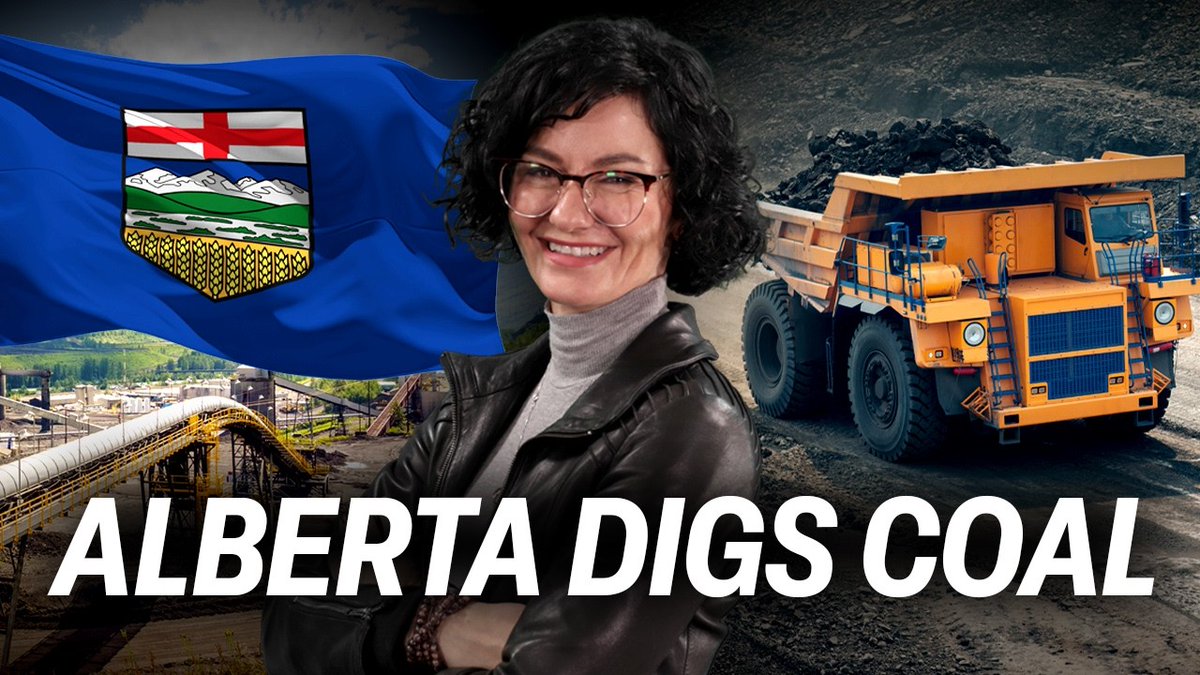
Steel builds the modern world — and Alberta digs the coal to create it! Steel builds the modern world: bridges, hospitals, railways, even wind turbines. But steel doesn’t just appear out of thin air. It starts with metallurgical coal, and Alberta happens to have some of the best deposits of it anywhere on Earth. So, when activists say Alberta shouldn’t develop it… I have to say something pretty simple. Alberta digs coal, and we’re proud of it If you grew up anywhere near the oil patch in this province, there's a song you know. It’s four in the morning outside some extended-stay hotel in Grande Prairie or Bonnyville. There’s frost on the windshield of a diesel pickup warming up before shift. And blasting out of the speakers? “The Roughest Neck Around.” That song is practically the anthem of the oil patch. A tribute to the people who built modern Alberta with their hands and their backs. People like my dad, and just about every single man in my family. People who sacrifice being at home to work in forbidding conditions to earn a living, to give us something we all need to live comfortably. The line that always stuck with me is the one where he says the rig hand “brings the power to the people.” And that’s exactly what Alberta’s resource workers do. Oil, gas, coal. All of it powers the modern world. So, imagine my surprise when the man who wrote that song — Corb Lund — launched a campaign opposing coal development in Alberta. Look, I want to be clear about something. I’ve seen Corb Lund in concert many times. I’m a huge fan. And honestly, if all of my musical tastes had to perfectly align with my political views, my playlist would get pretty small, pretty fast. Most of us don’t listen to music that way. We listen because the songs feel true. Because they tell the story of where we come from, and Corb Lund has always done that for Alberta. Which is why this whole thing actually makes me a little sad. Because the man who wrote the anthem of the oil patch — a song celebrating the grit and sacrifice of the people who power this province — is now repeating some of the same environmentalist talking points that were are used to try to shut down the oil patch itself and the jobs that go along with it. The roughnecks. The welders. The truck drivers, and now the miners. The folks waking up at four in the morning to keep the lights on. I just can’t square that, and I won't abide the lies. Because the truth about coal in Alberta is very different from what people are hearing right now. First, not all coal is the same. The coal being discussed in Alberta’s eastern slopes isn’t coal for power plants — it’s metallurgical coal, essential for producing steel. And steel, at any meaningful industrial scale, cannot be produced without metallurgical coal. Countries around the world understand this. The United States, the European Union, South Africa, and New Zealand have all recognized metallurgical coal as a strategic resource tied directly to infrastructure and national security. Because if you don’t control the materials needed to make steel, you don’t control your industrial future, and Alberta happens to have some of the best undeveloped metallurgical coal deposits in the world. That’s an opportunity. But the conversation around coal mining in Alberta has been flooded with misinformation about a lack of oversight and polluted water. A lot of what people picture when they hear “coal mining” comes from images of mines that operate under completely different environmental rules. But modern mining in Alberta operates under strict regulatory oversight. Projects are monitored by the Alberta Energy Regulator, which enforces environmental standards covering water, land, air quality, and reclamation. Companies are required to post financial security to guarantee that mines are reclaimed when operations end. Cleanup isn’t optional — it’s mandatory. And there’s another key detail that often gets lost in the debate: not all mining is the same. Some new proposed coal projects in Alberta are underground mines, not large open-pit surface operations. That means a much smaller surface footprint and dramatically less disturbance compared to the old mining methods people still picture. Technology evolves. Regulations evolve, and responsible resource development evolves, too. But beyond all the technical arguments, there’s something even more important that gets forgotten in this debate: the people. Coal miners, heavy equipment operators, tradespeople, truck drivers. These aren’t villains. They're the heroes. These are the same kinds of workers who built modern Alberta. They’re the people who built the schools, the roads, the hospitals, the communities we all live in today. The jobs created by responsible coal development are good, high-paying jobs. Jobs that support families in communities like Grande Cache, Hinton, and the Crowsnest Pass. Jobs that keep small towns alive. The product those workers produce isn’t something obsolete. Metallurgical coal is a resource the world still needs, because the world still needs steel. Let’s be clear about what this campaign is actually about. This isn’t about attacking musicians. I like Corb. And it isn’t about pretending there are no environmental standards in Alberta. We have some of the best in the world. This is about standing up for Alberta workers and Alberta resources. They're also the best in the world, and Albertans should not be ashamed of that. Because the people who love songs like “The Roughest Neck Around” understand something that sometimes gets forgotten in these debates. The men and women working in Alberta’s resource industries don’t just produce energy. They produce the materials that build civilization. The choice here isn’t between the environment and the economy. The real choice is between facts and fear. And around here, we choose facts. If the world still needs the resources we produce — and it does — then Alberta should be proud to provide them, because Alberta digs coal. REPORT by Sheila Gunn Reid:

Rebel News

39,166 views • 6 months ago