Video yükleniyor...
Video Yüklenemedi
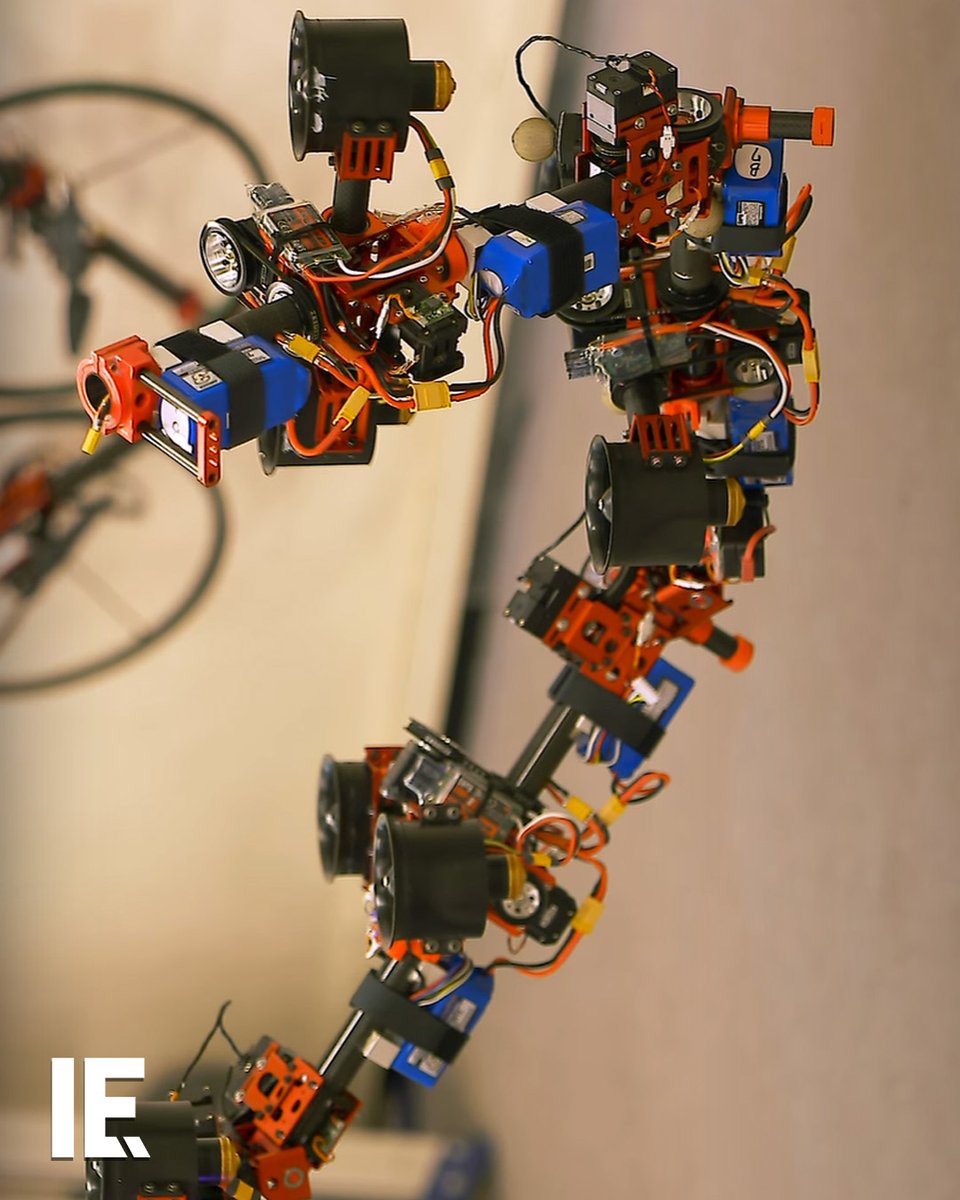
This prototype wing features a shape-shifting design that can actively adjust its form during flight in response to changing aerodynamic conditions.✈️✈️

375,186 görüntüleme • 11 ay önce •via X (Twitter)
35 Yorum

not sure about this one. too many moving parts => the probability of component failure increases exponentially compared to the static one

Very old news - the Wright Flyer worked by Wing Warping, as did many of the Early Birds, as they are known. Re-visited in the 1980's by NASA, particularly with the F-111 AFTI.

By dynamically altering its surface geometry in real time, such as modifying camber, twist, or span, the wing optimizes lift and reduces drag throughout different phases of flight.
These continuous adaptations enhance overall flight efficiency, stability, and maneuverability while significantly decreasing fuel consumption compared to traditional fixed-wing designs.

This isn’t the first time, nor the last to be discarded when they realize the issue with highly flexible large wings at any decent aircraft speed.

Here is the NASA morphing project from years ago

The issue is going to be making a flexible skin for it at scale and in practice. There is a reason we stopped variable geometry wings after the F-14 and B-1. It's a massive failure point, and now we are talking about the entire airfoil of the wing, which means a failure can lead to falling out of the sky when your lift disappears. Let's not get into the maintenance costs either. Still super cool for small scale, slow speed applications.

Good luck storing fuel in that.... The Airbus A330/340 was initially supposed to the a variable camber wing, but that was changed to a conventional one after it turned out that, aside of the challenges designing and certifying it , it may not be worth it fuel consumption wise.

Wouldn’t even that design be better with flaps?

AND THEY SAY FUEL IS STORED THERE., @sashuwa77246 @truthache68 @ZeteticV3 @BrockRiddickIFB

Since fuel is stored in the wings of commercial airliners, would this even be feasible? Would it reduce fuel storage? Could the added weight for all the controls be worth it?

The Wright brothers did this, it never caught on.

Wing deformation was one of the first methods used to steer aircraft. While more efficient aerodynamically, it proved far less practical.

Hey ! I worked also on one design once :

Metal fatigue is caused by repeated cyclic loading, which leads to the initiation and growth of microcracks in the material. Factors such as stress concentrations, temperature changes, and environmental conditions can also contribute to the development of fatigue in metals.

If the skin is not stressed then this is a non starter.

With a flexible wing skin, fuel tank volume in the wings may be negatively affected.

Bro... have you ever heard about flutter? There is a reason why flexible wing designs (historically first, by the way - brothers Wright used it on their airplane) have been rejected in favor of rigid ailerons, flaps, and slats.

yeah!..more complex systems into an already complex system...what can go wrong!?...
Cool but old and bad idea, issue being the weight, complexity, and time for making it reliable which will set back any benefit the design has

The Wright Brothers invented a wing-warping approach and battled in court against Curtiss who invented the typical elevator. They eventually became partners.

Where are the fuel tanks

Does it still work with the jet fuel? Those wings are the fuel tank BTW

Wing warping. Everything old is new again!

Cool concept but very limited practicality in my estimation. Sincerely good luck, but extremely limited practicality. Why? 1. Actuators weigh something. Weak actuators fail. Strong actuators get heavy, plus the linkages. 2. Flexible surfaces flex. This likely leads to excessive vibration and noise of the surface material between the actuator linkage connection points. Also elevated localized stresses at the regions where the linkages meet the flexible surfaces, resulting in failure.

Yep have fun incorporating that into an actual structure that’s more than 6 inches wide and now has to carry a load.
Like O ring wings design... In reality this could be used in like performance planes. Not widespread ones.

Sick! Even more possible modes of failure!

Ailerons, and flaps do the same thing. This is a much more complicated design

No they aren't

X-02S?? 😭😭😂😂

That’s wild and makes sense why they would use them!

So basically internalizing the Flaps and making them harder to work on?
Don’t miss out on cool updates from @Jane_ahib follow right away!

The more complex the structure, the greater the likelihood of its failure and a plane crash.