Video wird geladen...

Video konnte nicht geladen werden

Zur Startseite

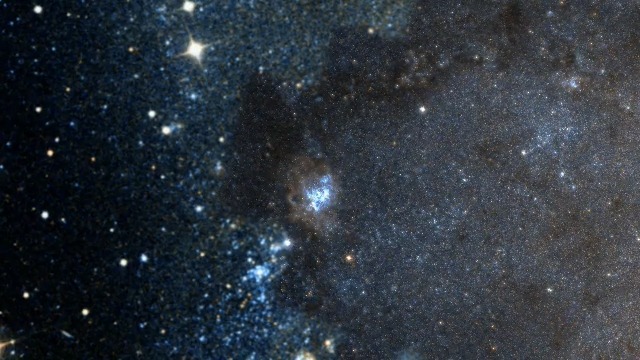
🚨: This star exploded when dinosaurs still roamed Earth, and its light didn’t reach us until 2015. SN 2015F, a Type Ia supernova, is located roughly 81 million light-years away.

247,769 Aufrufe • vor 1 Monat •via X (Twitter)

0 Kommentare

Keine Kommentare verfügbar

Kommentare vom Original-Post werden hier angezeigt

Ähnliche Videos

A one-in-a-million chance—and it happened. A team from the Technical University of Munich spent six years compiling a list of promising gravitational lenses and waiting for a supernova to explode behind one of them. In August 2025, it happened. A superluminous supernova 10 billion light-years away was located precisely behind two foreground galaxies—and its light, bent by gravity, produced five images of the same explosion. Typically, lenses produce two or four—five was a surprise even to the authors. The supernova was named SN Winny. The odds of such a coincidence are less than one in a million. But the value of the discovery is enormous. Light from the supernova travels to us along different paths around the lensing galaxies, and each path has its own length. Because of this, the five copies appear with different time delays. By measuring these delays and knowing the mass distribution in the lensing galaxies, one can directly calculate the Hubble-Lemaître constant, or the rate of expansion of the Universe. How is this better than existing methods? The classic "cosmic distance scale" is a multi-step process, with errors accumulating from step to step. Microwave background radiation measurements are precise, but depend on models of the evolution of the Universe. The lensed supernova method is a single-step process, with completely different sources of error. SN Winny is particularly convenient: it is lensed by just two individual galaxies with a simple mass distribution, rather than a complex cluster. SN Winny is currently being observed by telescopes around the world. The results could bring us closer to resolving the Hubble controversy—the discrepancy between the two main methods for measuring the expansion rate.

Black Hole

180,949 Aufrufe • vor 4 Monaten

You're looking at the longest X-ray timelapse of a supernova ever captured. In 1604, a brilliant new star suddenly blazed in the night sky, surpassing Jupiter in brightness for weeks. This spectacle marked the explosive death of a white dwarf in a Type Ia supernova—one of the universe's most energetic cataclysms. Over 400 years later, astronomers continue to observe its expanding aftermath. Drawing on 25 years of X-ray observations from NASA’s Chandra X-ray Observatory (spanning 2000 to 2025), scientists have created the longest-ever X-ray timelapse of Kepler’s Supernova Remnant. This glowing shell of debris, located about 17,000 light-years away in our Milky Way, appears as it plows through interstellar space. The remnant expands unevenly: the lower edge races outward at up to 13.8 million miles per hour (22.2 million km/h)—roughly 2% the speed of light—while the upper regions move more slowly, around 4 million miles per hour (6.4 million km/h), due to encounters with denser surrounding gas. These asymmetries allow researchers to map the pre-explosion environment and refine models of the blast itself. Beyond destruction, such supernovae enrich the cosmos by forging and dispersing heavy elements essential for forming new stars, planets, and ultimately, life. Through enduring missions like Chandra, we gain a front-row view to these ancient events, revealing how the echoes of stellar deaths persistently sculpt the evolving universe. ["Supernova Remnant Video From NASA’s Chandra Is Decades in Making." NASA, 2026]

Massimo

32,866 Aufrufe • vor 6 Monaten

[Heo Seongbeom Youtube] 260305 Jin - Moon 🌕🌏 (part1) 👨‍🏫It’s a solo song by Jin, and BTS are also preparing for a comeback in March. I’m really looking forward to it. I’m the moon, and you are the Earth. So it becomes a kind of love triangle. Earlier the sea loved the moon, but who does the moon love? The moon loves the Earth. That idea is reflected in this song, so let’s try interpreting it. Since when have the moon and the Earth been together like this? We’ve been together for so long, but when did it start? About 4.51 to 4.53 billion years ago. Scientists figured this out through radioactive isotope analysis, which showed that the Moon is about 4.51 to 4.53 billion years old. “Shining just by existing.” This line is directed at the Earth. But does the Earth actually shine just by existing? No. Because the Earth is a planet and does not produce its own light. If the Earth appears to shine, it’s probably because of artificial lights made by humans. “Can I stay by your side and protect you?” It sounds shy, but in reality the moon can’t help staying there, because it’s bound by gravity. And here we see the main line of the song. “You are my Earth, and to you I’m just a moon. Your small star that lights up your heart.” It’s poetic, but is the moon actually a star? No. Celestial bodies are generally divided into two categories. First, there are stars (stellar bodies). These produce their own light. Second, there are planets. Planets do not produce their own light. Instead, planets usually orbit around a star. The Earth is a planet. From our perspective, the star in our system is the Sun. So when you look at the night sky and see stars, those lights are actually other suns, each producing their own light. But sometimes when you see a particularly bright “star,” it may actually be a planet like Mercury, Venus, Mars, or Jupiter. Then you might ask: if planets don’t produce their own light, why do they shine? Because they reflect sunlight. The Moon also appears bright because it reflects the Sun’s light. #JIN #방탄소년단진 방탄소년단

star_jin

19,019 Aufrufe • vor 4 Monaten