Video yükleniyor...

Video Yüklenemedi

Ana Sayfaya Dön

“To fulfil responsibilities properly requires knowledge, good judgment, and the right conduct. It is not simply a matter of following the law. It goes beyond that, to the values and standards that should guide how people conduct themselves. This is particularly important when we consider the problems that need...

29,213 görüntüleme • 1 ay önce •via X (Twitter)

4 Yorum

Kayinamura Joseph profil fotoğrafı
Kayinamura Joseph1 ay önce

President Paul Kagame’s message to public servants is clear: responsibility comes with standards. Knowing the law is essential, but it is not enough. Good judgment, ethical conduct, discipline, and commitment to solving citizens’ problems are equally important in effective public service.

Dove 🕊️ profil fotoğrafı
Dove 🕊️1 ay önce

Excellently stated by His Excellency

Faustin RUKERIBUGA profil fotoğrafı
Faustin RUKERIBUGA1 ay önce

#Rwanda

فتى مجهول profil fotoğrafı
فتى مجهول1 ay önce

.

Benzer Videolar

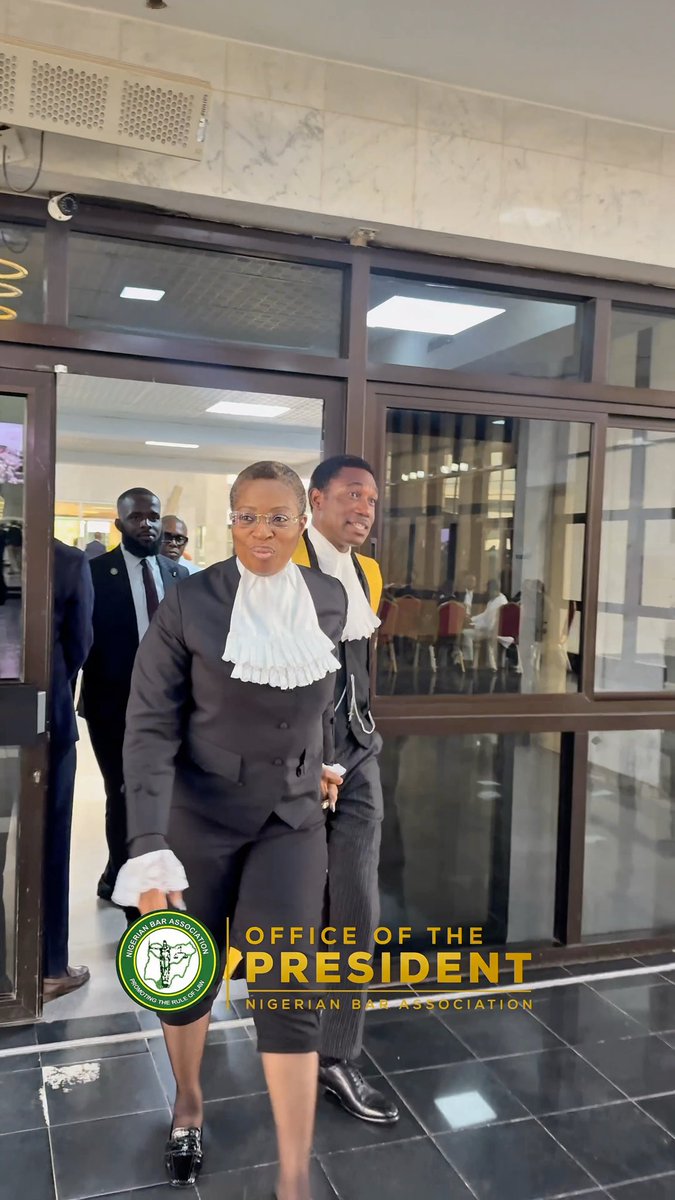
THE LAW MUST BE MORE THAN A PROMISE. IT MUST BE A REALITY PEOPLE CAN FEEL. Returning to the Supreme Court a year after my conferment as a Senior Advocate of Nigeria, this time as President of the Nigerian Bar Association, was a moment of profound reflection and gratitude to God. It was also a reminder that every milestone carries a responsibility beyond the honour itself: the responsibility to make our institutions, our profession and our collective service count for something greater. At the opening of the 2026/2027 Legal Year, I reflected on a question that must remain central to our work as lawyers: what value is a right guaranteed by law if the person entitled to it cannot enjoy its protection? The distance between a right written into law and a right truly enjoyed remains one of the most important tests of our justice system. It is reflected in the delays that deny people timely remedies, the barriers that limit access to justice, and the experiences that shape public confidence in our courts. Closing that distance requires more than declarations of commitment. It requires accountability, institutional reform and a consistent willingness to make justice work as it should. It also requires us to look inward. A profession that advocates dignity, fairness and justice must embody those principles in its own practices: in our ethical conduct, in how we treat young lawyers, in the remuneration we offer and in the opportunities we create for the next generation of the Bar. As we begin another Legal Year, our task is not simply to celebrate the law, but to strengthen its capacity to protect, to resolve, to restore and to serve. The credibility of our profession will ultimately be measured not only by the principles we defend, but by the lives those principles improve. We must measure our work by what changes in people’s lives, not by how many declarations we make. One experience of justice at a time. Oyinkansola Badejo Okunsanya, SAN, FCIArb President, Nigerian Bar Association

Oyinkansola Badejo-Okusanya, SAN, FCIArb

93,757 görüntüleme • 27 gün önce

Jensen to AI Leaders: “We have to be far more thoughtful” when communicating to the public Jensen Huang: “(AI) is not a biological being. It is not alien. It is not conscious. It is computer software.” “We say things like, ‘We don't understand it at all.’ It is not true. We understand a lot of things about this technology.” Chamath: “If you were in the seat in the boardroom of Anthropic over that whole scuttlebutt with the Department of War, what do you think you would've told Dario and that team to do, maybe, differently to try to change some of this outcome and some of this perception?” Jensen: “The first thing that I would say about Anthropic is, first of all, the technology is incredible. We are a large consumer of Anthropic technology.” “The desire to warn people about the capability of the technology is also really terrific.” “We just have to make sure that we understand that the world has a spectrum, and that warning is good, scaring is less good because this technology is too important to us.” “I think that it is fine to predict the future, but we need to be a little bit more circumspect. We need to have a little bit more humility, that, in fact, we can't completely predict the future.” “And to say things that are quite extreme, quite catastrophic, that there's no evidence of it happening, could be more damaging than people think.” “And of course we are technology leaders.” “There was a time when nobody listened to us, but now because technology is so important in the social fabric, such an important industry, so important to national security, our words do matter.” “And I think we have to be much more circumspect, we have to be more moderate, we have to be more balanced, we have to be far more thoughtful.”

The All-In Podcast

57,581 görüntüleme • 7 ay önce