Загрузка видео...

Не удалось загрузить видео

На главную

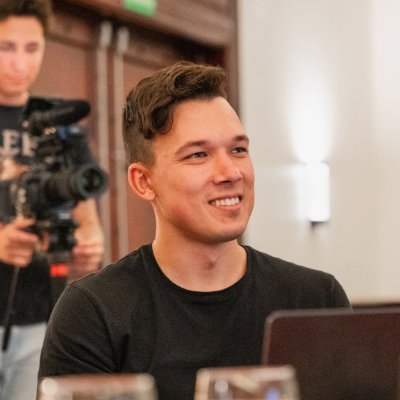
Today, we're announcing Launchpad: the first-ever founder bootcamp that teaches you how to build in public. This October, we're bringing 30 teams to upstate New York, where they'll take their ideas from zero to revenue in just 14 days. You'll be mentored by Stan and by speakers who've built...

217,491 просмотров • 5 дней назад •via X (Twitter)

Комментарии: 0

Нет доступных комментариев

Здесь появятся комментарии из оригинального поста

Похожие видео

Don’t start with the product. Start with distribution. I give this advice to entrepreneurs all the time because distribution is the hardest part of building a company. “Build it and they will come” almost never works. And even if you expect distribution to be hard—it’ll be 10× harder. HotelTonight started with a distribution insight. In 2009, we saw that the App Store about to become a massive channel. Billion-dollar companies would be built there, and early movers could earn free distribution before the competition showed up. From that insight, we worked backwards to the product: - A use case uniquely suited to mobile: last-minute hotel booking - Designed to win App Store ranking and retention: beautiful UI, lightning-fast 8-second bookings - Clear, curated choices and amazing deals that fit the mobile moment That combo—a unique distribution edge + a product tailored to it—powered our growth. As you think about your next company, begin with your edge in distribution. Maybe you are an expert at selling into a specific vertical. Maybe you're great at creating authentic content. Maybe you’ve spotted an emerging channel before anyone else. Only then decide what to build—the product that best amplifies your distribution advantage. At speedrun, we’re seeing teams win with GEO, founder-led content, and high-intent launch videos. So I’ll leave you with a prompt: What’s your unique approach to distribution—and what product could you build that maximizes it? If you’re working on this, I’d love to hear from you. Apply to a16z speedrun 🧊 at sr [dot] a16z [dot] com.

Sam Shank

328,277 просмотров • 11 месяцев назад

Here we go again 🚀! Excited to announce that we're building A1Zap (YC W25) with Pennie Li and that we're in the Y Combinator W25 batch in San Francisco! What is A1Base? A1Base gives AI Agents a real world identity for work. We do that by rebuilding Twilio and Okta from the ground up, putting AI Agents first. This means developers can make AI-first agentic applications 10x easier with our API's. ⁉️ Why are we doing this? Because there's a huge torrent of new valuable companies possible with AI agents, but to get their AI Agents to users, they have to chain custom apps, chat interfaces, awkward Slack integrations, browser bots, and wrestle with Twilio’s legacy API (which is built for marketing). We solve this by providing developers with an easy to use API to interface your AI agent with humans/coworkers/users where they are in this case in Whatsapp, Slack, Teams, SMS and more) - with AI Agent features built in. These digital workers are poised to transform how we work and we're the critical infrastructure to help them interact naturally in human workflows. We're not just building another AI tool. We're creating the infrastructure that will enable AI agents to become a natural part of the workforce - handling everything from customer support to sales development to creative work. We're backed by Y Combinator and working with founding teams who share our vision. We believe that in the near future, AI Agents with human coworkers will enable us to pursue more creative and impactful work. Our mission is to help developers build AI Agents that people can partner with and rely on as trusted allies—always with a human-first mindset. If you're thinking about the Agentic future of your company reach out! If you're looking to build your first AI Agentic company - reach out too - we have some amazing open source templates to get you started on the journey. Excited to share more of what we're up to soon 🔜.

Pasha Rayan

53,950 просмотров • 1 год назад

Evan Spiegel on the lesson that killed his first startup and led to Snapchat: "We focused on building the perfect product for way too long before we got feedback. We worked for like eighteen months to build this perfect full-featured product, which was in direct contravention to how I was always taught to build things. Build a prototype, build an MVP, get it in front of people, learn as quickly as possible. But we had spent all this time building this perfect piece of software and we hadn't thought enough about distribution. While we built this great piece of software, our competitor at the time, Naviance, had secured distribution through all the different college counselors. What piece of software are you going to choose to help your kid get into college? The one recommended by the college counselors or the one from two kids at Stanford? I think it's a pretty easy choice. So we saw very early that we had no distribution advantage. Even if we loved our software, people weren't going to use it because we didn't have a scalable way to get it in people's hands. Around that time when we saw the emergence of the App Store on iPhone, it was very clear that was a distribution channel we could really use and benefit from. But we also needed to build things we could build quickly, things we really were going to use together with our friends so we could be the first early customers. Ultimately Peekaboo and Snapchat represented that." This is exactly the asymmetry Peter Thiel describes in Zero to One: superior distribution by itself can create a monopoly, even with no product differentiation. The converse is not true. Thiel puts an even finer point on it: most businesses get zero distribution channels to work. Poor sales rather than bad product is the most common cause of failure. If you can get just one distribution channel to work, you have a great business. Estée Lauder said: it's not enough to have the most wonderful product in the world. You must be able to sell it. Many founders over-index on product perfection and under-invest in distribution. The world is full of great products nobody knows about, and mediocre products with massive distribution that dominate markets. Evan Spiegel lived it. He built the better product, watched it lose, and then built something he could actually distribute.

David Senra

27,151 просмотров • 4 месяцев назад

Nebius will be a trillion dollar company (Save this). The neocloud market, purpose-built AI cloud infrastructure, separate from legacy hyperscalers generated roughly $25 billion in revenue in 2025, up 223% year over year. Synergy Research projects it will approach $400 billion by 2031, compounding at 58% annually one of the fastest sustained growth rates ever recorded for an infrastructure category of this scale. The CEO's explanation for why they win is worth understanding in detail. GPU compute is scarce and that part everyone knows but Nebius is not simply renting GPUs by the hour and marking them up, which is what most neocloud imitators do. They have built their own physical capacity for inference, optimized the full technology stack from the software layer all the way down to the rack hardware and recently acquired a company called Agen specifically to push inference latency even lower and throughput even higher. The CEO frames the core problem directly that in 2026, every product you build is powered by tokens, AI intelligence and while you can get those tokens from OpenAI or Anthropic via a simple API call, the moment you want to run open source models, specialized vertical models, or anything other than the two dominant frontier labs, you run into a wall. You can download the weights from Hugging Face and assemble the pieces. But getting those workloads to run at scale, at the economics you need, with the reliability your product requires, is an extraordinarily complex engineering challenge that most companies cannot staff or afford to solve in-house. That is the problem Nebius is solving, and that is why their inference product called Token Factory exists. The financial results are among the most dramatic growth numbers reported by any public company this year. In Q1 2026, Nebius posted $399 million in revenue, a 684% increase from the same quarter a year earlier. In the span of twelve months, the company swung from a $104 million net loss to $621 million in net income. Cash from operations went from negative $184 million to positive $2.26 billion in the same period meaning this is not growth funded by burning investor capital, it is growth that is now generating its own fuel. For the full year 2026, Nebius is guiding for an annualized revenue run rate of $7 billion to $9 billion, with pipeline creation tracking to surpass $4 billion. The contracted backlog sits at $49 billion, anchored by a $27 billion agreement with Meta, a deal worth up to $19.4 billion with Microsoft, and a public endorsement from Jensen Huang at NVIDIA's GTC conference in 2026. The current market cap is approximately $56 billion. A company with $7 to $9 billion in annualized revenue, growing at 684%, turning cash-flow positive, sitting on $49 billion in contracted backlog, operating in a market compounding at 58% annually toward $400 billion, that company has a credible path to 20x from its current valuation if execution holds. That is the trillion dollar case, and it does not require any heroic assumptions and it requires Nebius to keep doing what it is already demonstrably doing. Milk Road Pro called this one early. Our analysts added Nebius to the portfolio when it was still flying under the radar, and we are sitting on a massive gain on that position right now. If you want to see what else we are building conviction on before the rest of the market catches up, come join us at Milk Road Pro using the link below!

Milk Road AI

28,622 просмотров • 3 месяцев назад

Wow. Classic Jensen style, he ended the Nvidia vs. custom ASIC competition for good. 🫡 The level of confidence with which he explains. 🎯 He was answering to UBS research analyst question on how custom ASICs will affect NVIDIA or how they are going to compete with custom ASIC. Basically he says - Your custom chip is a science project in a world where NVIDIA is building revenue-generating AI factories. While the competition is still desperately trying to copy Nvidia's last generation, their roadmap is already at the limits of physics. They don't just sell silicon; they deliver the entire, impossibly complex platform that the industry has already surrendered to and standardized on. When you must bet hundreds of billions on your company's future, there is no alternative—they are the only platform to build on, and everyone knows it. Full transcript below. Question by the Analyst - "Jensen, I wanted to ask about customer ASIC. And I ask because if, you know, we listen to some of the same CSPs that you put up on that slide, and we listen to some of the companies who are making custom ASICs, some of the deployment numbers sound pretty big. So, I wanted to just hear your position, how you're going to compete with custom ASICs, how they can possibly compete with you, and maybe how some of your conversations with these same customers would sort of form your view in terms of how competitive custom ASIC will be to you." Jensen's response "First of all, just because something gets built doesn't mean it's great. Number two, if it's not great, all of those companies are run by great CEOs who are really good at math. And because these are AI factories, it affects your revenues, not just your costs. It affects your revenues, not just your cost. It's a different calculus. Every company only has so much power. You just have to ask them. Every single company only has so much power, and within that power, you have to maximize your revenues, not just your cost. So this is a new game. This is not a data center game, this is an AI factory game. So when the time comes, that simple calculus, as I was using yesterday, that simple math that I was showing yesterday, still has to be done. Which is the reason why so many projects are started and so many are not taken into production. Because there's always another alternative. We are the other alternative, and that alternative is excellent. Not normal excellent, as you know. Everybody's still trying to catch up to Hopper. I haven't seen a competitor to Hopper yet. And here we're talking about 40x more. And so our roadmap is at the limits of what's possible. Not to mention we're really good at it and completely dedicated to it. A lot of people have a lot of businesses to do. I've got this one business to do. And we're all in on this. 35,000 people doing one job. Been doing it for a long time. The depth of capability, the scope of technology, as you saw yesterday, is pretty incredible. And it's not about building a chip; it's building an AI factory. We're talking about scale up, scale out. We're talking about networking and switches and software. We're talking about systems, and these system architectures are insane. Even the systems themselves. Notice, 100% of the computer industry, 100% of the computer industry has standardized on NVIDIA's system. Why? Because try to build an alternative. Building the alternative is not even thinkable because look at how much investment we put into building this one. And so even the system's hard. What people used to think, system is just sheet metal. Hardly sheet metal. 600,000 parts, it's hardly sheet metal. And so all of the technology is hard. We're pushing every single dimension to the limit because we're talking about so much money. The world is going to lay down hundreds of billions of dollars of investment in the next just a couple of two, three years. Let's do the thought experiment. Let's say you want to stand up a data center and you want it to be fully operational in two years' time. When do you have to place the PO on that? Today. So let's suppose you have to place a hundred billion dollar PO on something. What architecture would you place it on, literally based on everything you have today? There's only one. You can't reasonably build out giant infrastructures with hundreds of billions of dollars behind it, hoping to turn it back on and to get the ROIC on it, unless you have the confidence that we are able to provide you. And we can provide you complete confidence. And singularly so. We're the only technology company where if I had to go place a hundred billion dollars on an AI factory... Oh, that's interesting, I did. Literally the only company who's willing to place hundred billion dollar POs across the industry to go build it out. And you guys know, that's our, that's the depth of our supply chain. And we are, and we have. Give me another. Give me another one that has that depth and that length. And now to the point where we've got to go and work with the supply chain upstream and downstream to prepare the world for hundreds of billions of dollars working towards trillions of dollars of AI infrastructure build-out. Our partnerships with power companies and all of the cooling companies, the Vertivs, the Schneiders, our partnerships with BlackRock... The partnership network necessary to prepare the world to go build out trillions of dollars of AI infrastructure, that's undergoing as we speak. What architecture and what ASIC chip do you go select? That doesn't even make sense. It's a weird conversation even. And so, I think that one, the game is quite large. The investment level, therefore the risk level, is quite high. And so the certainty that you're selecting the best is quite important. And the certainty that you can execute, vital. We are the company you can build on top of. We're the company, we're the platform that you can build your AI infrastructure on. And we're the company that you can build your AI infrastructure strategy on. And so, I think it includes chips, but it's much, much more than that." --- From 'GTC Financial Analyst Q&A' session (full link in comment)

Rohan Paul

208,032 просмотров • 9 месяцев назад