正在加载视频...

视频加载失败

Touch alone isn’t enough. 🖐️ For robotics, tactile intelligence truly levels up when touch gains spatial meaning. At #ICRA2026, we dove into the core concept behind SaTA: Spatially-anchored Tactile Awareness for robust, dexterous manipulation. Read it here: The challenge is fundamental: a robot shouldn’t just register a touch, it...

14,772 次观看 • 12 天前 •via X (Twitter)

0 条评论

暂无评论

原始帖子的评论将显示在这里

相关视频

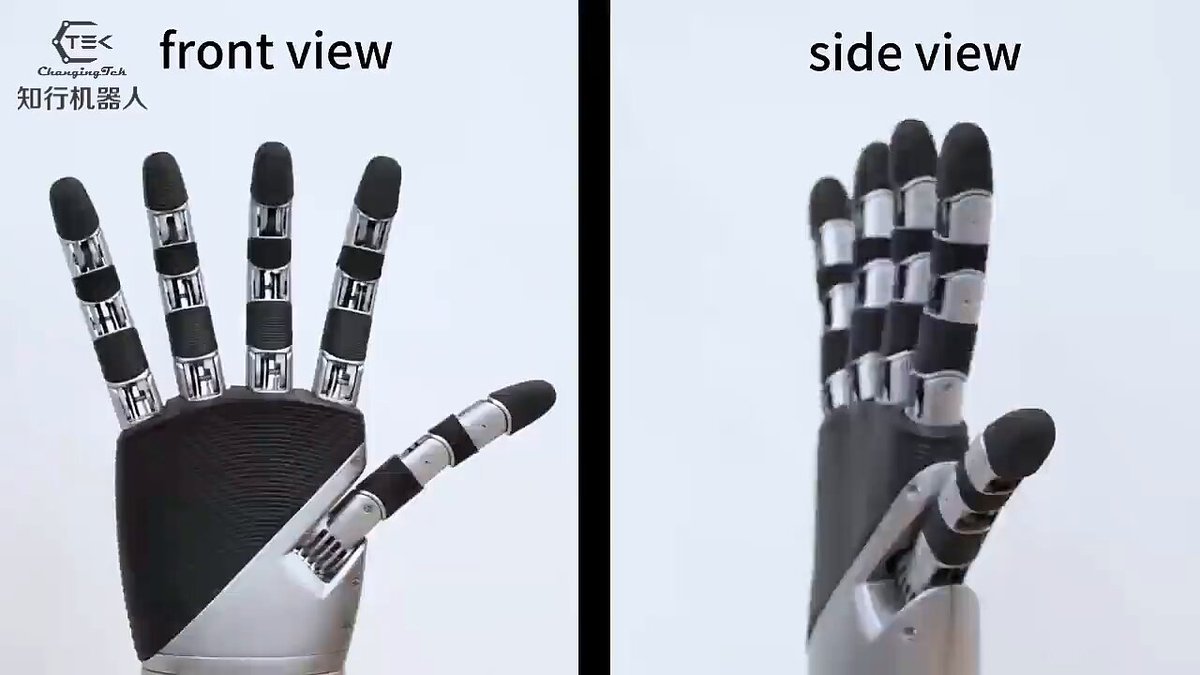
A policy that teaches robot hands to touch things the way humans do... not just grab and move, but feel and adjust in real time. Robot manipulation research often stops at picking up objects and placing them. CGP goes further: it handles tasks like opening jars, flipping objects in-hand, wiping dishes, and grasping fragile eggs, the kind of dexterous, contact-rich skills that require constant micro-adjustments based on what the fingers are actually feeling. The robot doesn't just see what it's doing; it predicts what contact should feel like at each step, then checks whether reality matches the prediction. If a finger is slipping, the policy knows before the object drops. Works on real robot hands (both 4-finger and 5-finger designs) with tactile sensors embedded in the fingertips Robust to visual distractions! The robot keeps flipping a box correctly even when the camera view is disrupted, because it's grounding decisions in touch, not just vision. Baseline policies without contact grounding fail in predictable ways: slipping mid-task, incomplete motions, loss of grasp, CGP avoids these This is a meaningful step toward robots that can handle the physical world with the kind of reliable, adaptive grip that humans take for granted. Relevant for manufacturing, logistics, assistive robotics, and anywhere fragile or irregular objects need to be handled carefully. Published at RSS 2026, developed with Meta Reality Labs Research. Thanks for sharing, Zhengtong Xu / Zhengtong Xu ——- Weekly robotics and AI insights. Subscribe free:

Ilir Aliu

12,756 次观看 • 16 天前