Video wird geladen...

Video konnte nicht geladen werden

Zur Startseite

Tri-fold concept phone unveiled by TECNO 🤩 Phantom Ultimate 2 It has a 6.48-inch display when folded and opens up to a 10-inch 3K OLED panel that can be arranged in different ways. Prototype measures just 11mm thick when folded. Galaxy Z Fold6 is 12.1mm. No release date yet.

167,424 Aufrufe • vor 2 Jahren •via X (Twitter)

9 Kommentare

Profilbild von Alec 🤨
Alec 🤨vor 2 Jahren

The Westworld tablet!

Profilbild von frog
frogvor 2 Jahren

yeah put that plastic fragile display directly on the table

Profilbild von Ben Geskin
Ben Geskinvor 2 Jahren

💀

Profilbild von Ross Young
Ross Youngvor 2 Jahren

Similar to upcoming Huawei Multi-Fold. Panel shipments for that one started a couple of months ago...

Profilbild von Frebby
Frebbyvor 2 Jahren

Cool! Reminds me of several Samsung prototypes I wished were real products I could buy! 😩

Profilbild von Maykr
Maykrvor 2 Jahren

nobody does important shit on their phones if ppl wanna do important shit, they use a laptop or a pc

Profilbild von Ben Geskin
Ben Geskinvor 2 Jahren

A lot of people do important stuff on their phone. @bencsin

Profilbild von Thinborne
Thinbornevor 2 Jahren

Stop, man. I don't need it I don't need it I don't need it

Profilbild von Soldat de la Democratie 🇺🇦🇪🇺💉x6
Soldat de la Democratie 🇺🇦🇪🇺💉x6vor 2 Jahren

@ExtremEnigma1 @DontReviveMe i guess que c’est trop dur d’acheter un ipad

Ähnliche Videos

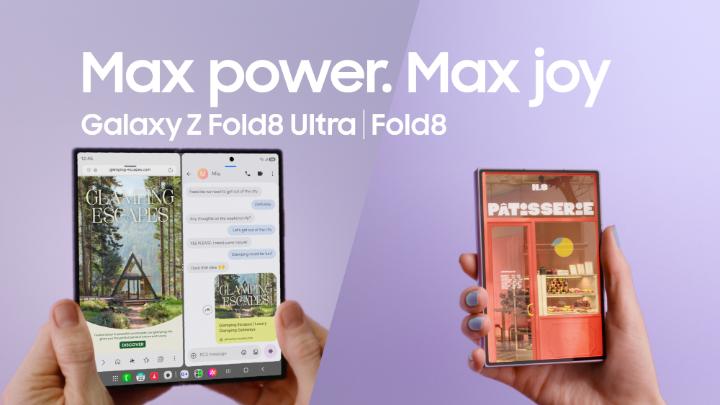
First, the conclusion: the so called Galaxy Z Fold8 Ultra leak from last night turned out to be a false alarm. After watching the original video over and over again, I'm convinced it isn't a Galaxy Z Fold8 Ultra. It's actually the blue version of the Galaxy Z Fold7. Because of the lighting and color temperature, the blue frame appeared black on camera, which led to the confusion. Here are the three biggest clues: 1. The inner display camera cutout is too large. Compared with the official Galaxy Z Fold8 Ultra renders, the inner camera hole on the Fold8 Ultra is noticeably smaller. The one in the leaked video is still the larger Fold7-style cutout. 2. The rear camera housing doesn't match. The cylindrical camera housing reflects light with a bright metallic sheen, which is much more consistent with the blue Galaxy Z Fold7 than the black Galaxy Z Fold8 Ultra. Some of the hardware details also don't line up. 3. The inner display is still highly reflective. The device in the video shows obvious screen reflections. However, the Galaxy Z Fold8 Ultra is the first Fold to feature an anti reflective inner display film. Anyone familiar with Samsung foldables should immediately notice that the reflections don't look like this. Based on these three points, I'm confident the device in the video is a blue Galaxy Z Fold7, not the Galaxy Z Fold8 Ultra. The confusion is understandable because the two generations are incredibly similar. They share the same overall dimensions and aspect ratio, making them very easy to mix up. The good news is that the real Galaxy Z Fold8 Ultra will be even better. It will have an even less visible crease than the Fold7, along with the new anti reflective inner display film.

Ice Universe

127,679 Aufrufe • vor 2 Monaten

The Galaxy S26 Ultra display looks like absolute garbage next to the iQOO 16. Honestly, it looks like shit. The S26 Ultra uses M14 OLED, while the iQOO 16 has moved on to the newer M16 OLED, so the latter already has an advantage at the panel level. But the real disaster is Samsung’s privacy display design. Look at this comparison. The moment you tilt the S26 Ultra, the woman’s skin tone starts turning yellow and green. At wider angles, she almost looks like a ghost. Meanwhile, the iQOO 16 keeps her skin tone remarkably accurate, with excellent clarity and color consistency even from extreme angles. And please pay attention to this: I did NOT enable Privacy Display. This is the S26 Ultra in its normal display mode. The privacy feature is completely off, yet the viewing angles are already this bad. That means even if you never use Privacy Display at all, you still have to live with the side effects of this optical structure every single day. Tilt the phone a little and colors shift. Skin tones collapse. A flagship display that cannot even maintain basic color consistency at normal viewing angles is simply unacceptable. The first thing I checked after getting the iQOO 16 was its viewing angle performance, because this issue matters a lot to me. And honestly, I was so happy. This finally feels like a proper flagship OLED again. Then I looked back at my S26 Ultra and almost wanted to cry. Samsung has some of the best OLED technology in the world, and M14 OLED itself is perfectly capable of looking excellent. Yet Samsung sacrificed viewing angles, transparency, and color consistency for a privacy feature that most people will only use occasionally. Ruining hours of daily viewing quality for a feature you may need for a few minutes is absurd. I really hope other smartphone brands do not blindly copy this trend. Privacy protection can be achieved with software, accessories, or other solutions. Do not destroy the fundamentals of a great display for it. And this is exactly why I am already worried about the S27 Ultra. Even if Samsung upgrades it to M16 OLED, if it keeps the same privacy display structure, I do not expect it to match the clean, transparent, and consistent color performance of the iQOO 16. A great display should first get the basics right: accurate color, clarity, and viewing angles. If a normal human face turns yellow green the moment you tilt the phone, no advanced OLED material can save it.

Ice Universe

378,876 Aufrufe • vor 15 Tagen

I’ve been following the evolution of foldables for a while, and what I find interesting is that the category is finally moving beyond the question of “How many screens can we fit into a phone?” The new HUAWEI Mate XT 2 ULTIMATE DESIGN caught my attention for a different reason, Huawei seems to be asking what a foldable phone should actually feel like in everyday life. The feature that stood out most to me is the new folding architecture. Instead of simply improving the previous design, Huawei has changed the way the device folds altogether. The two sides fold inward, fully enclosing the flexible display, while an independent outer screen lets you use the phone normally when it’s closed. That feels like a meaningful design decision to me. A foldable is only truly useful if you don’t have to think about the folding mechanism every time you use it. For calls, messages or quick tasks, it behaves like a phone. When you need more space, you open it up and suddenly have a much larger canvas. The other feature I found genuinely interesting is Lingdun Privacy Display. With increasingly work from our phones, emails, financial information, business documents, conversations. The idea of having hardware-level privacy that can help shield the screen from people looking from the side feels surprisingly practical. And perhaps that’s what I like most about this generation. The impressive part isn’t simply that it looks futuristic, it’s that some of the engineering appears to be focused on solving very ordinary problems: How do I use a large screen without carrying a tablet? How do I protect what I’m looking at in public? How do I make a sophisticated device feel natural? That, to me, is where technology becomes interesting when innovation stops being about showing what’s possible and starts making everyday life a little easier.

Alvin Foo

49,100 Aufrufe • vor 23 Tagen

Evolution says you can turn anything into anything if you tweak it long enough. But that house of cards collapses immediately when you realize what it takes to make even a single cell. They say new cell types arise one mutation at a time. Is that plausible? Here is the issue: Different cell types are created through a massive coordinated stack of genetic information, and it's not all just about DNA sequences. First you need a whole suite of new genetic systems related to the cell: new genes for the cell’s internal systems, instructions for its specific functional role in the body, the regulators that coordinate everything, markers to tell them where to go and when, and the controls that keep the wrong programs off. But the DNA structure itself must also be manipulated. You see, every cell in your body contains the DNA instructions to make any other cell. So how does a bone cell become a bone cell instead of a skin cell? Because of how the DNA is folded. DNA is folded in certain ways for different cell types, so that only the "bone cell instructions" are able to be read by the "cell construction program." The DNA fold decides which programs are open for each cell type. This is critical. If DNA is not folded properly so that specific cell-type information can be read, catastrophe ensues. Then you need placement blueprints, so the cells form in the right place, in the right number, and lock together to form a functional tissue. These developmental instructions are passed from parent to offspring - but research shows that tweaking these master developmental programs ends badly for the child. One mutation at a time cannot invent that entire programming stack and keep it coordinated. Research has confirmed this. To convert one cell type into another in the lab, researchers have to force many changes to happen at the same time in coordination. And even when directed by the researcher, cell conversion almost always fails. Change the sequence without the fold and you cannot get a new cell type. Fold the DNA without the new systems and you can only rearrange old programs. Make the cell without the map and it shows up in the wrong place. Break one layer in the stack and the others do not patiently wait - they fail. So creating a new cell type is not simply "tweak a gene one at a time." It requires a coordinated stack of entirely new programmed instructions: > New suite of internal systems, programmed into the DNA > New functional DNA fold so only the right systems are activated > New mapping blueprints so everything goes where it's needed Step-by-step mutation does not coordinate those layers. It produces broken cells before it produces new ones. Coordination of this level of complexity has only ever been known to come from one place: Intelligence.

Divinely Designed

22,570 Aufrufe • vor 1 Monat

Things have gotten so expensive in America, this woman says “I have my Masters in Business Administration. My husband is an Engineer — We are living paycheck to paycheck, like it is so hard - Our mortgage has gone up $500 since when we first bought it - Property taxes, they just keep going up and up. So with that, our mortgage just keeps climbing too - We have two kids. With kids comes diaper prices, comes formula, comes everything else that comes with it - Daycare, we were able to find a daycare that's actually pretty inexpensive compared to a lot of other daycares. And even with that, it is still costing more than our mortgage does every month. I'm just so tired, and I know everybody is in the same boat too. Prices are going up for literally everything.Everything. But when it comes to pay, our paychecks will go up, what, a couple percent, but nothing compared to inflation on everything. I just don't understand how we keep doing it. And where's the breaking point? Where does that come in? When do things turn around because there's no end in sight. — We're given this promise basically when we're younger that if you get the degree and you do this and do that right, then like, you'll be set, you'll be golden when it comes to money and not have to worry about it. And then to grow up and face the fact that all of that's bullsh*t, like they fed it into being such a lie in such a trap basically, that everybody is just buried in different student loans. Everybody is buried in different kinds of debt that we'll never get out of, that they promised us would create a safe and happy thriving future. None of it's there. So thanks, boomers and beyond. You set us up great.”

Wall Street Apes

1,344,456 Aufrufe • vor 1 Jahr