正在加载视频...

视频加载失败

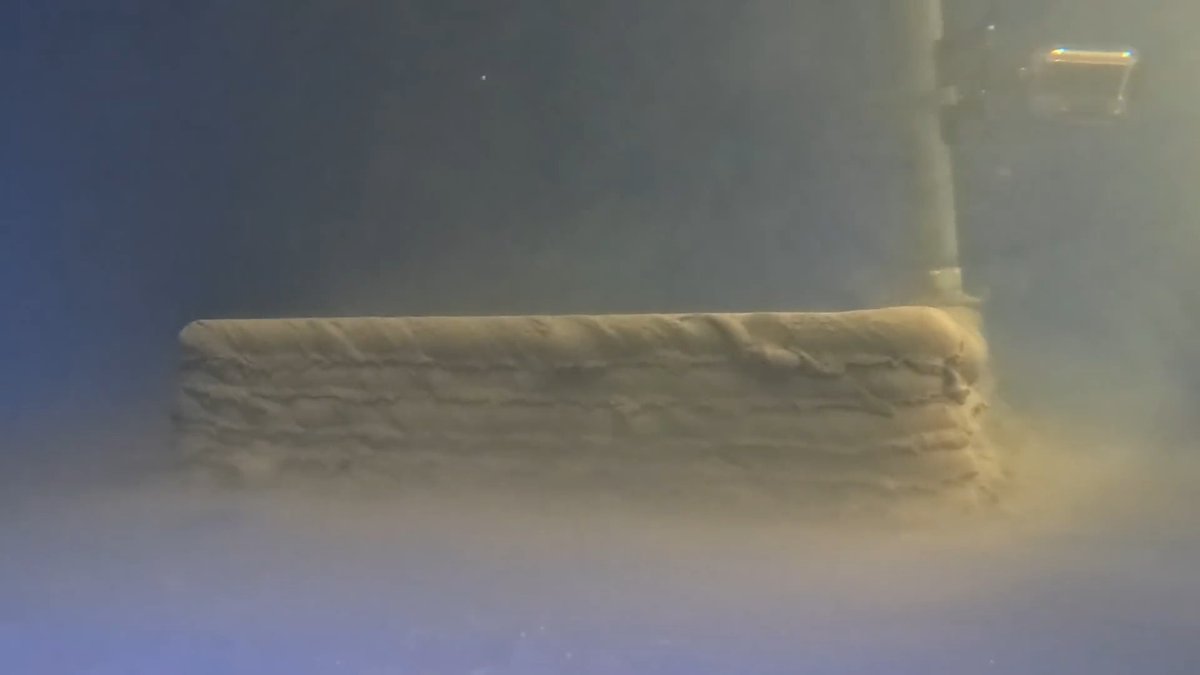
Underwater Construction!!!!

157,966 次观看 • 1 个月前 •via X (Twitter)

0 条评论

暂无评论

原始帖子的评论将显示在这里

相关视频

🚨🇷🇺 U.S. NAVY IN PANIC: RUSSIA’S SUBMARINE BUILT TO LAUNCH POSEIDON NUCLEAR DRONES BEGINS SEA TRIALS Russia’s Project 09851 Khabarovsk special-purpose nuclear submarine appears to have begun its first factory sea trials after being photographed leaving Severodvinsk on August 17. The voyage takes Russia’s first submarine designed from the outset around the Poseidon underwater weapon from shipyard construction into at-sea testing. 🔸 Khabarovsk was laid down at Sevmash on July 27, 2014. It was rolled out of its construction hall on November 1, 2025, and physically lowered into the water later that month before undergoing final outfitting and dockside tests. 🔸 Russia’s Defense Ministry said the submarine was built to deploy modern underwater weapons, including robotic systems. Its detailed specifications remain classified, but it is widely assessed to carry up to six Poseidon vehicles. 🔸 Poseidon is an autonomous, nuclear-powered and nuclear-capable underwater drone designed to travel across intercontinental distances. Instead of flying through the radar and interceptor networks built to detect ballistic missiles, it approaches its target beneath the ocean. 🔸 In October 2025, President Vladimir Putin announced that Russia had launched a Poseidon from a carrier submarine and activated its onboard nuclear reactor for the first time. The vehicle then operated under its own nuclear power for a period of time, demonstrating that the system had progressed beyond launch-only testing. 🔸 The challenge for the United States begins before Poseidon even enters the water. Preventing a launch would require the U.S. Navy to locate and continuously track Khabarovsk across an enormous ocean area without losing contact with the submarine. 🔸 Once released, Poseidon creates a separate detection problem. American forces would have to find and follow a fast, deep-running autonomous vehicle traveling along an unpredictable underwater route that existing missile-defense interceptors cannot cover. 🔸 Russia already operates Belgorod, a converted Oscar-class submarine accepted by the Navy in 2022 and used as the first Poseidon carrier. Khabarovsk is more significant because it is the first submarine designed from the keel up specifically to deploy the weapon. Khabarovsk must still complete factory and state trials before entering service, but its first voyage marks the transition from construction to an active sea-testing program. Once commissioned, it would give Russia a dedicated platform capable of delivering strategic nuclear weapons along ocean routes outside the architecture of U.S. missile defense. Does the U.S. have any realistic way to stop Poseidon once Khabarovsk launches it?

NewRulesGeopolitics

26,789 次观看 • 1 天前

Nigeria Set to Build Africa’s First Underwater Tunnel President Bola Ahmed Tinubu continues to redefine Nigeria’s infrastructure landscape with another bold and historic initiative, the construction of Africa’s first underwater tunnel. This groundbreaking project, announced by the Federal Ministry of Works under Engr. David Umahi will connect Ahmadu Bello Way on Victoria Island through Snake Island to the Badagry corridor. The tunnel, estimated at 2.9 to 3.5 kilometres in length, represents a major leap in engineering innovation and urban connectivity, a feat never before attempted on the continent. The proposed tunnel is more than a piece of infrastructure; it is a symbol of President Tinubu’s unwavering commitment to modernization and national transformation. Just as he turned Lagos into West Africa’s economic hub during his time as governor, PBAT is now extending that same visionary leadership to the entire nation. By linking the Lagos–Calabar Coastal Highway with the Sokoto–Badagry Superhighway, this project will not only ease transportation but also connect northern and southern Nigeria in ways that will supercharge trade, tourism, and industrial growth. This initiative perfectly aligns with the President’s Renewed Hope Agenda, a roadmap for prosperity anchored on innovation, infrastructure, and inclusive economic growth. With this project, PBAT is proving that Nigeria can dream big and execute world-class developments. The tunnel will decongest Lagos traffic, boost marine and logistics efficiency, and improve access to key economic zones like the Lekki Deep Sea Port, Snake Island, and the Badagry Free Trade Area. Each of these nodes will drive investment, create jobs, and position Nigeria as a leading player in Africa’s blue economy. Critics often talk, but PBAT acts. While others debate or recycle slogans, this administration is turning ambitious ideas into tangible realities from roads, rails, ports, and now, an underwater tunnel. It’s a clear testament that leadership is not about noise but about results. This project stands as another reminder that under PBAT, Nigeria is no longer waiting for the world to bring development; Nigeria is building it with its own hands, technology, and courage. In every sense, the proposed underwater tunnel is a legacy in motion, one that will outlive this administration and transform Nigeria’s infrastructural identity. From Lagos to Badagry, from north to south, President Tinubu’s Renewed Hope is no longer a slogan; it’s a visible revolution taking shape under the ground and across the nation. With bold projects like this, PBAT is not just connecting roads, he’s connecting dreams, people, and the promise of a stronger, more united Nigeria.

PBAT SIGNAL

50,528 次观看 • 9 个月前

The AI infrastructure race just went underwater. A Portland, Oregon startup called Panthalassa just raised $140 million in a Series B round led by Peter Thiel, the idea sounds wild until you understand the physics. Every AI data center on Earth has the same three problems, it needs massive amounts of electricity, it generates enormous heat that has to be cooled, and it requires land in places that are already running out of grid capacity. Panthalassa's answer is to eliminate all three constraints at once by taking the data center off the grid, off the land, and into the open ocean. And here's how it works, the company builds autonomous, self-propelled floating nodes made from plate steel, no anchor, no fuel, no cable to shore. As waves lift the platform, water is forced through an internal turbine, generating electricity continuously. That electricity runs AI inference chips onboard and the results go back to shore via low-Earth-orbit satellite. The surrounding ocean provides free supercooling, which one investor estimates could generate power at roughly two cents per kilowatt-hour. For context on why this matters, land based data centers spend up to 40% of their total energy budget just on cooling. Microsoft's Project Natick found that submerged servers had a failure rate of just 0.7% compared to 5.9% on land. The ocean doesn't just solve the cost problem but it solves the reliability problem too. Panthalassa's Ocean 3 pilot nodes are already under construction, with deployment in the northern Pacific targeted for August 2026 and commercial operations in 2027. The company has been building toward this for a decade with Ocean-1, Ocean-2, and Wavehopper prototypes already validated at sea, including a test in Puget Sound in 2024. The global underwater data center market was $3.2 billion in 2025 and is projected to reach $14.8 billion by 2034. China has already launched commercial-scale undersea data centers. The race to compute off the grid whether in space, underwater, or on the open ocean is no longer theoretical, it's being funded, permitted, and in Panthalassa's case, it's being built right now. The future is bright!

Milk Road AI

133,232 次观看 • 3 个月前

Astro Bot | New Hands-On Previews and Details ▪️"Primed to be a big hit", "feels like a 3D Mario game" ▪️"Tight, responsive experience", Astro still has his trusty jump, attack, charged spin attack, and versatile laser-hover ability ▪️Difficulty Modes: Easy, Normal, Hard (hard will "challenge seasoned platforming fans") ▪️Overworld consists of multiple galactic maps, each full of colorful planets with their own unique levels ▪️Some planets are harder than others. Hovering over them reveals their difficulty level ▪️Completing some 'hard' levels unlocks other, new hard levels ▪️80 levels to visit packed with hidden bots, puzzle pieces, boss battles, goofy power-ups, coins, and challenges that lead to other secrets ▪️Levels are full of fun, interactive bits: bouncy inflatable balls roll down a waterslide with you, gooey paint buckets, shiny bolts, and colorful spray paint cans all with detailed physics ▪️Sky Garden Level: Consists of multiple connected floating islands giving a vision of idyllic paradise with pink robo-flamingos in blue ponds, cherry blossom trees whose petals float across the ponds ▪️Swinging Sentries Level: "Hard" level featuring multiple platforms with enemies swinging spiky ball-and-chain weapons ▪️Slowdown Showdown Level: Astro throws an hourglass item to slow down enemies, platforms, and environmental hazards "that move impossibly fast" ▪️Construction Derby Level: A miles-high construction site with cranes, beams, scaffolding, etc. A "sumo-bot" guards a helipad halfway through the level, forcing Astro to target his vulnerable backside ▪️Astro can collect a new item that pumps him full of air in order to reach new hidden heights ▪️Astro can now explore underwater for hidden bots and treasures ▪️Exploration is rewarded - for example, an underwater area concealed by a bubble holds a secret bot whose themed after Rivet (Ratchet & Clank) surrounded by enemies you have to defeat in order to rescue ▪️New ability: A robotic dog partner clings to Astro’s back, granting a jet-powered boost that serves as both an attack and air boost ▪️Tons of PlayStation themed bots to discover - a game menu indicates how many bots are hidden throughout each stage, and PlayStation symbols mark hidden cameo bots ▪️DualSense haptics and adaptive trigger implementation as great as Astro's Playroom was ▪️Wako Tako: Big octopus boss battle seen in the trailer - Astro lands on a shipwreck and gets a new item: "extend-o frog boxing gloves". These allow Astro to punch from far away, swing across grapple points, do slingshot style attacks, etc. Boss fight has many "twists and turns" ▪️Mythical companions join Astro's journey, like discovering bot versions of Kratos and Atreus under a capsized floating canoe #AstroBot #PS5

Shinobi602

353,912 次观看 • 2 年前

Underwater Archaeologists discovered the Roman mosaics in the ruins of the ancient sunken city 'Baiae' : More than 2000 years ago, Baia was the Las Vegas of the Roman Empire; a resort town 30km from Naples on Italy’s caldera-peppered west coast that catered to the whims of poets, generals and everyone in between. The great orator Cicero composed speeches from his retreat by the bay, while the poet Virgil and the naturalist Pliny maintained residences within easy reach of the rejuvenating public baths. Powerful statesmen built luxurious villas on its beach, with heated spas and mosaic-tiled pools where they could indulge their wildest desires. One resident even commissioned a nymphaeum - a private grotto surrounded by marble statues, dedicated solely to ‘earthly pleasure’. “There are many tales of intrigue associated with Baia,” said John Smout, a researcher who has partnered with local archaeologists to study the site. Rumour has it that Cleopatra escaped in her boat from Baia after Julius Caesar was murdered in 44 BC, while Julia Agrippina plotted her husband Claudius’ death at Baia so her son Nero could become emperor of Rome. “She poisoned Claudius with deadly mushrooms,” Smout explained. “But he somehow survived, so that same night, Agrippina got her physician to administer an enema of poisonous wild gourd, which finally did the trick.” Mineral waters and a mild climate first attracted Rome’s nobility to Baia in the latter half of 2nd Century BC, and town was known to them as the Phlegraean (or ‘flaming’) Fields, so named because of the calderas that pockmark the region. The calderas were revered by the ancient Greeks and Romans as entrances to the underworld, but they also fuelled a number of technological advancements: the local invention of waterproof cement, a mixture of lime and volcanic rock, spurred construction of airy domes and marbled facades, as well as private fish ponds and lavish bath houses. But given Baia’s sinful reputation, it is perhaps fitting that the abundance of volcanic activity in area was also its downfall. Over several centuries, bradyseism, the gradual rise and fall of the Earth’s surface caused by hydrothermal and seismic activity, caused much of the city to sink into a watery grave, where it still sits today. Tourist interest in once-popular coastline was only renewed in the 1940s when a pilot shared an aerial photo of an edifice just below the ocean’s surface. Soon, geologists puzzled over boreholes left by molluscs on ruins found near the shore, tell-tale signs that parts of the hillside had once dipped below sea level. Two decades later, Italian officials commissioned a submarine to survey the underwater parts of the city. Since Roman times, underground pressure has caused the land surrounding Baia to continuously rise and fall, pushing the ancient ruins upwards towards the sea’s surface before slowly swallowing them again – a kind of geological purgatory. The ruins beneath the sea’s surface were the province of just a few intrepid archaeologists until recently. The underwater archaeological site was not formally designated a marine protected area and until 2002, which is when it opened to the public. Since then, 3D-scanning technology and other advances in marine archaeology have offered first-time glimpses into this chapter of antiquity: divers, historians and photographers have captured submerged rotundas and porticos, including the famed Temple of Venus (not a temple, but a thermal sauna) - discoveries that have in turn provided clues to Rome’s most outrageous debauchery. 🎥© thisisancient (IG) #archaeohistories

Archaeo - Histories

81,636 次观看 • 2 年前